
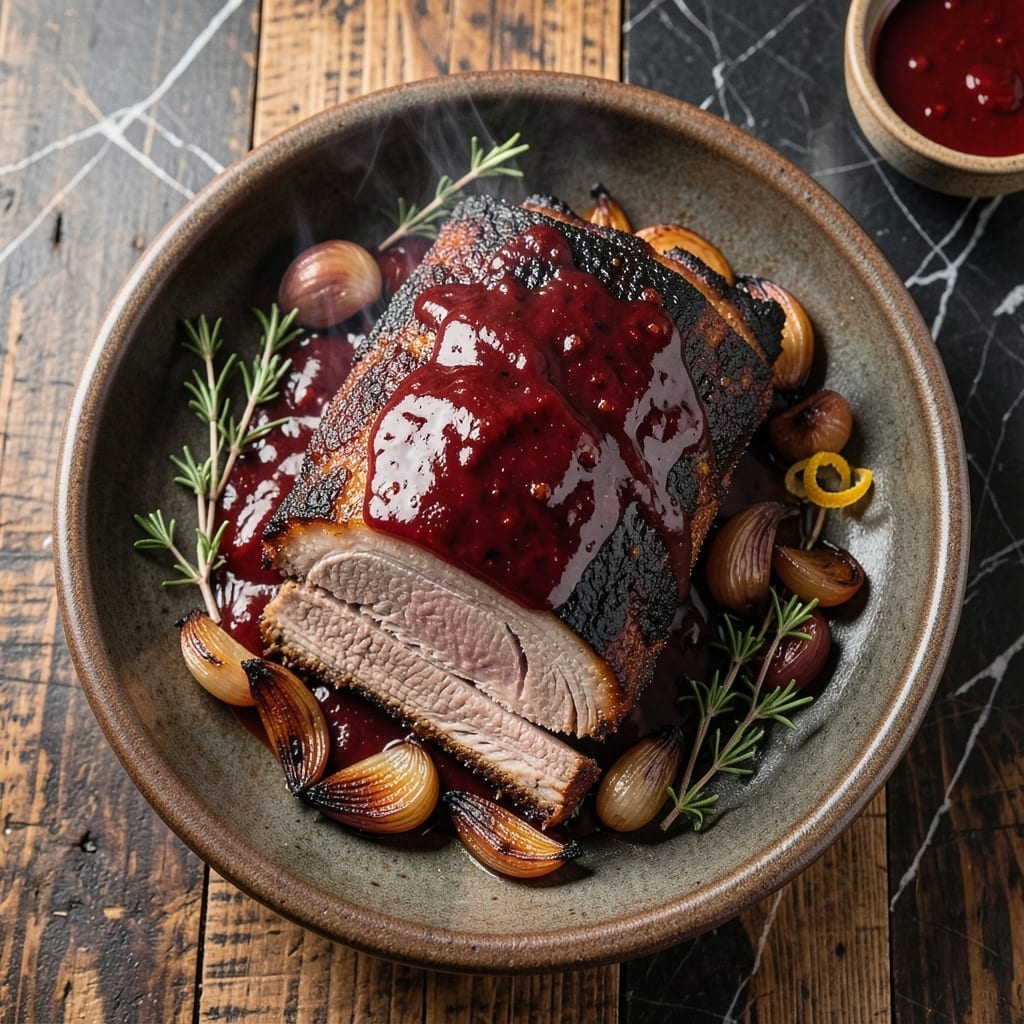
This smoked pork shoulder delivers meltingly tender meat with a dark, crispy bark that BBQ lovers dream about. The low-and-slow smoking process transforms tough pork into pull-apart perfection.
I’ve refined this method over years of weekend smoking, focusing on temperature control and timing to achieve consistent results. The key is maintaining a steady 225°F in your smoker for 12-14 hours.
What sets this apart is the balance between the smoky exterior and juicy interior. Each bite offers layers of flavor from the rub, smoke, and natural pork richness.
The bark forms a perfect crunchy shell that gives way to the silky meat beneath. Serve with classic BBQ sides for a meal that impresses every time.
Ingredients for Smoked Pork Shoulder Bbq
Big, bold flavors start with a simple rub and one perfect cut of meat.
| Ingredient | Amount | Notes |
|---|---|---|
| Pork Shoulder 🐖 | 8 lb | Bone-in, skin removed |
| Brown Sugar 🍚 | ½ cup | Light or dark variety |
| Paprika 🌶️ | 3 tbsp | Smoked or sweet variety |
| Garlic Powder 🧄 | 2 tbsp | Not garlic salt |
| Onion Powder 🧅 | 2 tbsp | Fresh ground preferred |
| Kosher Salt 🧂 | 2 tbsp | Diamond Crystal preferred |
| Black Pepper 🌶️ | 2 tbsp | Freshly ground preferred |
| Ground Cumin 🌿 | 1 tbsp | Toasted for deeper flavor |
| Cayenne Pepper 🔥 | 1 tsp | Adjust for heat preference |
| Yellow Mustard 🟡 | ½ cup | For binder in rub |
| Apple Cider Vinegar 🍏 | ½ cup | For spritzing during cook |
| Hickory Wood Chunks 🪵 | 4 pieces | Or chips for smoking |
| Apple Juice 🍎 | 2 cups | For spritzing during cook |
The pork shoulder is the star—go for bone-in with good marbling. Most butchers will remove the skin for you (ask for the fat cap to stay on). Costco has great pre-trimmed shoulders, or hit up local BBQ supply shops for competition-grade meat. Look for 8-10 lbs for the best bark-to-meat ratio. The rub ingredients are all pantry staples, but check your spices—if they’re more than a year old, they’ve lost their punch.
No hickory? Cherry or pecan wood both add great flavor. Short on a spice? Substitute equal parts of what you have—just keep the total rub volume the same. The mustard in the binder is just for adhesion, so Dijon or spicy brown work too. The apple juice spritz can be swapped for cider or even beer—whatever you’d drink with the finished product.
The rub keeps in a jar for 6 months (if it lasts that long). Trim and season the pork the night before for deeper flavor penetration. Leftover pulled pork freezes beautifully for 3 months—portion into meal-sized bags for easy reheating.
Why You’ll Love This Recipe
- Set It and Forget: I rub the pork with brown sugar, paprika, and those powdered garlic and onion, then let the smoker do the work for hours.
- Pure Smoky Bliss: The bark gets this deep, caramelized crust from the sugar and spices—sweet, smoky, and just a little heat.
- Feeds the Whole Crew: I’ve served this at summer cookouts and Sunday suppers, and it’s always the first thing to disappear.
- Leftovers for Days: One shoulder gives me pulled pork for tacos, sandwiches, even nachos—honestly, it tastes better the next day.
Step-by-Step Instructions for Smoked Pork Shoulder BBQ
Here’s the method. Straightforward, tested, works every time.
Step 1: Apply the Rub to the Pork Shoulder
Pat the 8 lb Pork Shoulder dry with paper towels, ensuring the surface is completely free of moisture. This helps the rub adhere better and promotes a superior bark. In a bowl, mix together the 0.5 cup Brown Sugar, 3 tbsp Paprika, 2 tbsp Garlic Powder, 2 tbsp Onion Powder, 2 tbsp Kosher Salt, 2 tbsp Black Pepper, 1 tbsp Ground Cumin, and 1 tsp Cayenne Pepper.
Spread the 0.5 cup Yellow Mustard evenly over the surface of the pork shoulder—this acts as a binder for the rub. Press the spice mixture generously onto all sides of the meat, ensuring it sticks completely. Let the seasoned pork sit at room temperature for 30-45 minutes while you prepare the smoker.
Step 2: Set Up the Smoker with Hickory Wood
Prepare your smoker according to manufacturer instructions, aiming for a consistent temperature of 225-250°F. Add the 4 pieces Hickory Wood Chunks to the smoker to create a steady flow of smoke. I prefer hickory for its strong, classic BBQ flavor that pairs perfectly with pork.
Once the smoker reaches the target temperature and you see thin, blue smoke, place the pork shoulder on the grill grates, fat-side up. The fat cap will render down during cooking, basting the meat and enhancing the flavor. Close the lid and let the smoking process begin undisturbed.
Step 3: Smoke and Spritz for Moisture
Smoke the pork shoulder for 6-8 hours, maintaining the temperature between 225-250°F. After the first 3-4 hours, begin spritzing the pork every 45-60 minutes with a mixture of 0.5 cup Apple Cider Vinegar and 2 cups Apple Juice. This keeps the surface moist and builds layers of flavor.
Use a spray bottle for even distribution, and avoid opening the smoker more than necessary to maintain a consistent temperature. You’ll notice the bark starting to form and darken—this is exactly what you want. The spritz also helps regulate the internal temperature and prevents the meat from drying out.
Step 4: Wrap and Continue Cooking
When the internal temperature of the pork shoulder reaches 160-170°F (usually after 8-10 hours of smoking), it’s time to wrap. This is known as “the stall,” where the temperature plateaus as moisture evaporates. Wrap the pork tightly in pink butcher paper or aluminum foil to push through this phase.
Return the wrapped pork to the smoker and continue cooking until the internal temperature reaches 203°F. This ensures the connective tissues break down completely, resulting in that melt-in-your-mouth tenderness. Wrapping also helps retain moisture and speeds up the cooking process.
Step 5: Rest and Shred the Pork
Once the pork reaches 203°F, remove it from the smoker and let it rest, still wrapped, for at least 1 hour. This resting period allows the juices to redistribute throughout the meat, ensuring every bite is juicy and flavorful.
Unwrap the pork and shred it using two forks or meat claws. The meat should pull apart effortlessly, with a beautiful bark on the outside and tender, moist flesh inside. Serve immediately, or let it sit in its juices for up to 2 hours to absorb even more flavor before serving.
Pro Tips For Making Smoked Pork Shoulder Bbq
- Rest the Shoulder: Let the smoked pork shoulder rest for at least 30 minutes under foil before pulling—this keeps the juices from running all over your cutting board.
- Dry the Meat First: Pat the pork shoulder completely dry with paper towels before applying the rub; the brown sugar and spices stick better to a dry surface.
- Skip the High Heat: I learned this the hard way—keep your smoker between 225-250°F; any hotter and the outside burns before the inside gets tender.
- Double the Rub: Sounds like overkill, but a heavy coat of that brown sugar and paprika mix forms a better bark—just press it in hard so it doesn’t all fall off.
Best Sauces and Condiments for This Dish
Classic BBQ Sauce
For traditionalists, a tangy-sweet Kansas City-style sauce complements the smoky pork beautifully. I recommend Sweet Baby Ray’s for its balanced flavor profile—2 tbsp per sandwich is perfect. The molasses and vinegar notes enhance the bark’s complexity without overpowering the meat. 💪
Vinegar-Based Sauce
If you prefer a brighter, sharper bite, try a North Carolina vinegar sauce. Mix 1 cup apple cider vinegar with ¼ cup water, 2 tbsp brown sugar, and 1 tbsp crushed red pepper. This cuts through the pork’s richness and adds a refreshing contrast.
Alabama White Sauce
This creamy, peppery sauce is a game-changer for pulled pork. Blend 1 cup mayonnaise, ¼ cup apple cider vinegar, 1 tbsp horseradish, and 1 tsp black pepper. It adds a cool, tangy element that pairs surprisingly well with the smoky depth of the meat. ✨
Spicy Mustard Sauce
For heat lovers, a South Carolina mustard-based sauce delivers. Combine ½ cup yellow mustard, ¼ cup honey, 2 tbsp apple cider vinegar, and 1 tsp cayenne. This bold, slightly sweet sauce complements the pork’s richness without masking it.
Pickled Vegetables
Serve your pork with pickled red onions or jalapeños for a bright, crunchy contrast. The acidity from ½ cup apple cider vinegar and 1 tbsp sugar in the brine cuts through the fat, while the texture adds a satisfying bite to each forkful.
Nutrition Facts
Frequently Asked Questions
What’s the best wood for smoking?
Hickory delivers that classic BBQ flavor, but cherry or pecan work beautifully too. Each wood adds its own character, so pick based on your preference. Hickory is strong and traditional, while fruit woods like apple or cherry offer a sweeter touch.
How do I know when it’s done?
Use a meat thermometer to check for an internal temp of 203°F. The meat should pull apart effortlessly with forks. Don’t rush it—low and slow ensures that perfect tenderness.
Can I speed up the cooking time?
You can wrap the shoulder in foil at 160°F to push through the stall, but avoid increasing the smoker temp above 250°F. Higher heat risks drying out the meat and ruining the bark.
Why rest the meat after smoking?
Resting for at least 1 hour lets juices redistribute for maximum moisture. Skipping this step means losing flavorful drippings to the cutting board instead of your plate.

- 6 Egg Cake Recipe with Oil: Light as Air With Buttery Moisture - October 4, 2026
- 4 Bean Casserole Recipe: One-Pan Heartiness With Smoky Paprika Depth - October 4, 2026
- 3-Ingredient Keto Mug Cake Recipe: Microwave Magic in 2 Minutes - October 4, 2026