
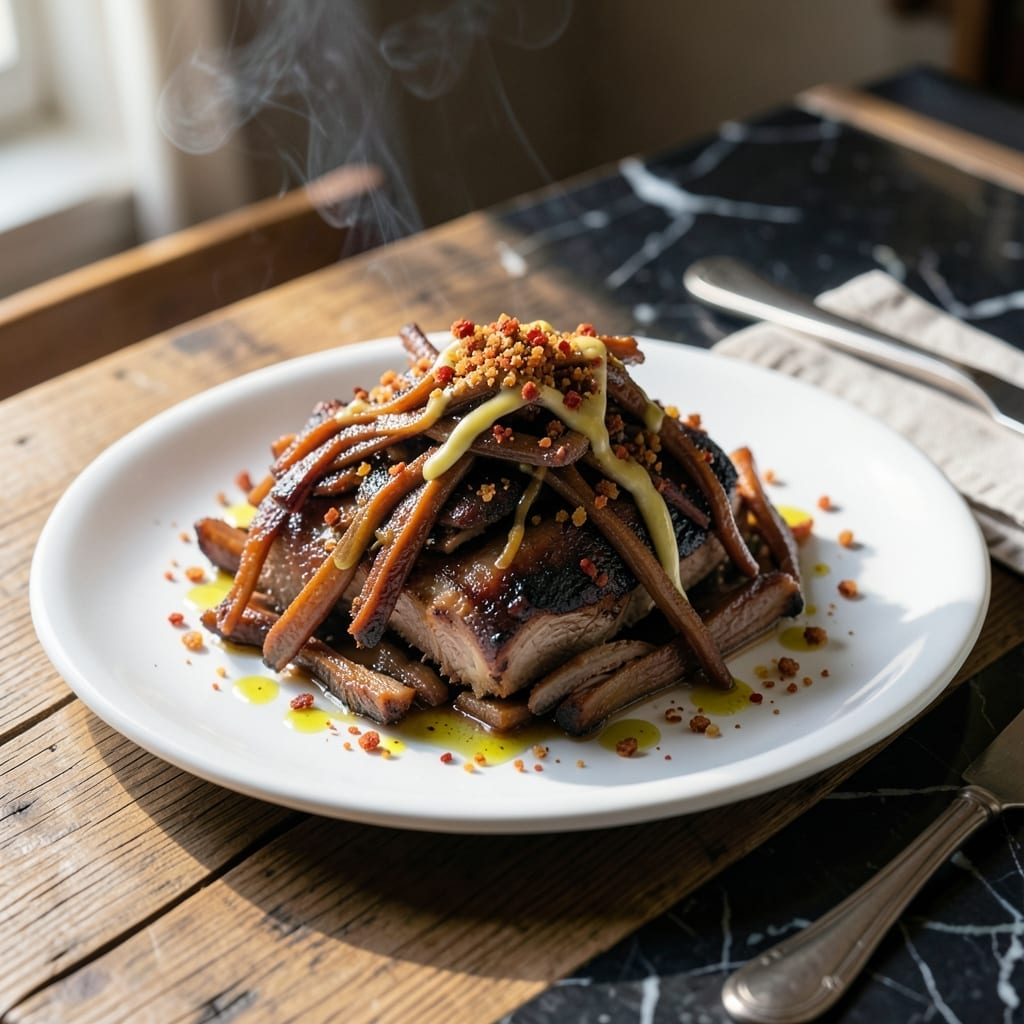
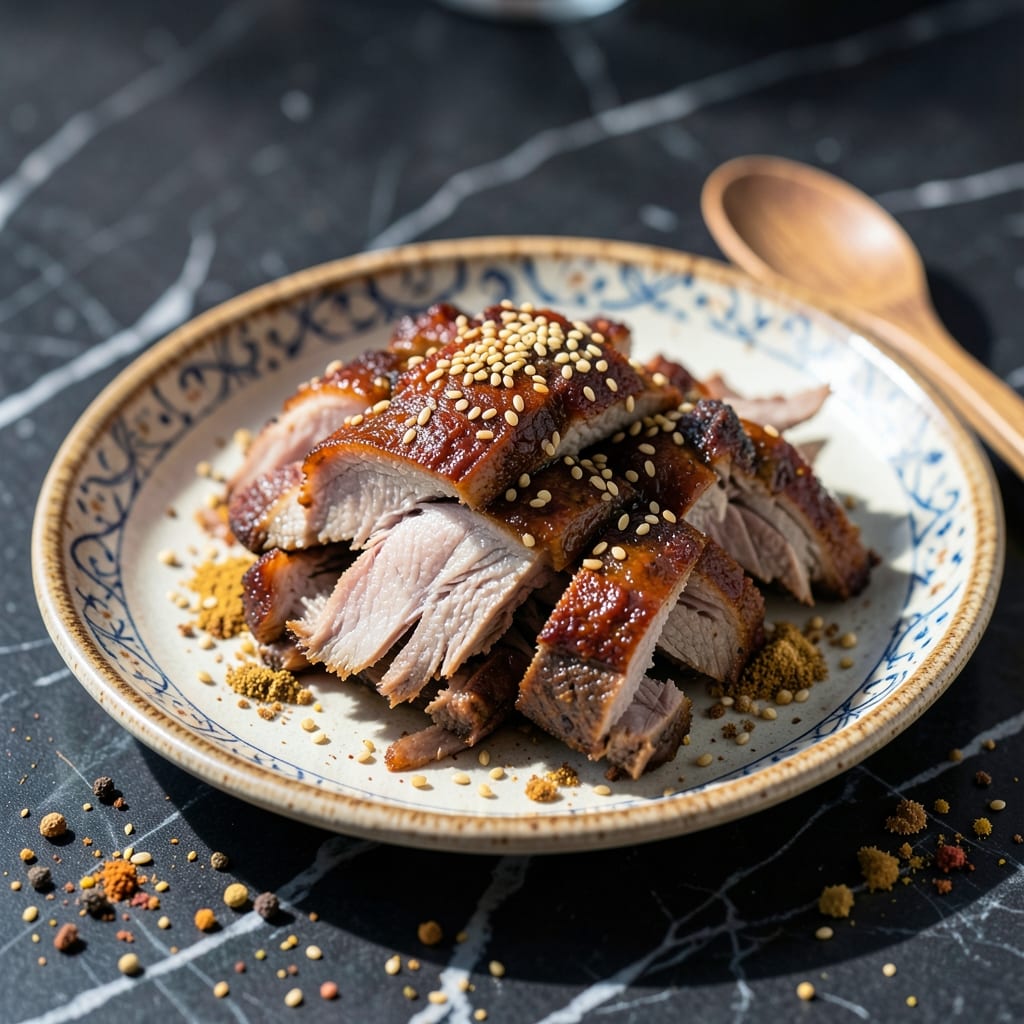
This method delivers melt-in-your-mouth results every time through precise low-and-slow smoking. The key is maintaining consistent 225°F heat and allowing the pork shoulder to cook undisturbed for hours.
Patience transforms tough cuts into tender, flavorful pulled pork that falls apart with minimal effort. Apple or hickory wood chips add the perfect smoky depth to this classic dish.
Ingredients for Smoked Pulled Pork Recipe Smoker
Low and slow transforms these ingredients into tender, smoky perfection every time.
| Ingredient | Amount | Notes |
|---|---|---|
| Pork Shoulder 🥩 | 4 lb | Bone-in preferred for moisture |
| Yellow Mustard 🟡 | ¼ cup | Binder for dry rub |
| Brown Sugar 🏝️ | ½ cup | Light or dark variety |
| Paprika 🌶️ | 2 tbsp | Sweet or smoked variety |
| Garlic Powder 🧄 | 1 tbsp | Freshly ground preferred |
| Onion Powder 🧅 | 1 tbsp | Fine grain for even coating |
| Kosher Salt 🧂 | 1 tbsp | Diamond Crystal preferred |
| Black Pepper 🌶️ | 1 tbsp | Freshly ground coarse |
| Cayenne Pepper 🔥 | ½ tsp | Adjust for heat preference |
| Apple Cider Vinegar 🍏 | ½ cup | For mopping during smoke |
| Apple Wood Chips 🌳 | 2 cups | Soaked in water for 30 minutes |
| Hickory Wood Chips 🌳 | 1 cup | Soaked in water for 30 minutes |
| Butter 🧈 | ½ cup | Unsalted, for finishing |
| Barbecue Sauce 🍯 | 1 ½ cups | Store-bought or homemade |
[recipeingredientscaler]
The pork shoulder is non-negotiable for authentic results. Bone-in cuts retain moisture better than boneless during the long cook. Source from Costco or Sam’s Club for consistent quality and better pricing per pound. Look for good marbling—fat equals flavor. For the wood chips, apple and hickory combo delivers that classic sweet-smoky balance (avoid mesquite, which can overpower).
No pork shoulder? Pork butt (same cut, different name) works identically. Short on wood chips? Apple alone keeps it sweet; hickory alone adds deeper smoke. For the dry rub, turbinado sugar can sub for brown sugar in a pinch. The vinegar mop can be replaced with beer or apple juice for a milder tang. Always adjust cayenne to taste—start with less, you can add heat later.
Store pork shoulder in the fridge for up to 3-4 days before cooking, or freeze for 6 months. Soaked wood chips keep in a sealed bag for 1 week if unused. Finished pulled pork stays juicy in the fridge for 4-5 days, or freeze portions for 3 months (reheat in sauce to refresh).
Why You’ll Love This Recipe
- Set It and Forget: The smoker does most of the work—just rub the pork shoulder with mustard, sugar, and spices, then let it low and slow for hours.
- Smoky Sweet Crust: That brown sugar and paprika rub caramelizes into the most addictive bark, and the garlic powder ties it all together.
- Feeds a Crowd: I’ve served this at summer BBQs and Sunday suppers alike—it’s a guaranteed hit every time.
- Leftovers for Days: Honestly, I love making a big batch because the pulled pork tastes even better the next day in sandwiches, tacos, or straight from the fridge.
Step-by-Step Instructions for Smoked Pulled Pork
Master the art of low and slow smoking for fall-apart tender results every time.
Step 1: Prepare and Season the Pork Shoulder
Begin by patting the 4 lb Pork Shoulder completely dry with paper towels to ensure the rub adheres properly. Apply a thin, even layer of 0.25 cup Yellow Mustard all over the surface—this acts as a binder for the dry rub. The mustard flavor will cook off, leaving only its adhesive properties.
In a bowl, combine 0.5 cup Brown Sugar, 2 tbsp Paprika, 1 tbsp Garlic Powder, 1 tbsp Onion Powder, 1 tbsp Kosher Salt, 1 tbsp Black Pepper, and 0.5 tsp Cayenne Pepper. Press this mixture firmly onto the mustard-coated pork, ensuring an even layer on all sides. Let it rest at room temperature for 30 minutes while you prepare the smoker.
Step 2: Set Up the Smoker with Wood Chips
Soak the 2 cups Apple Wood Chips and 1 cup Hickory Wood Chips in water for at least 30 minutes to prevent them from burning too quickly. Preheat your smoker to 225°F using a combination of the soaked wood chips for a balanced, fruity smoke profile. The apple and hickory blend creates a sweet, robust flavor that complements the pork perfectly.
Once the smoker reaches 225°F and produces thin, blue smoke, place the pork shoulder directly on the grates, fat-side up. The fat will render down during cooking, basting the meat and keeping it moist. Insert a meat thermometer into the thickest part of the pork, avoiding the bone if using a bone-in cut.
Step 3: Smoke Low and Slow with Occasional Mopping
Smoke the pork at 225°F for 8-10 hours, or until the internal temperature reaches 195-203°F. Every 2 hours, spritz the pork with 0.5 cup Apple Cider Vinegar mixed with an equal amount of water to keep the surface moist and enhance the bark formation. This step is crucial for achieving that coveted dark, flavorful crust.
Resist the urge to peek or open the smoker unnecessarily—each time you do, you lose heat and smoke, extending the cooking time. The pork is ready when it probes like butter with no resistance. This low-and-slow method breaks down the connective tissue, resulting in melt-in-your-mouth tenderness.
Step 4: Rest, Shred, and Finish with Sauce
Remove the pork from the smoker and wrap it tightly in aluminum foil. Let it rest for at least 1 hour—this allows the juices to redistribute throughout the meat, ensuring every bite is moist and flavorful. The internal temperature will continue to rise slightly during this time, so don’t rush this step.
After resting, shred the pork using two forks, discarding any large fat chunks. Toss the shredded pork with 0.5 cup Butter and 1.5 cups Barbecue Sauce to coat evenly. The butter adds a rich, velvety finish, while the barbecue sauce provides the perfect balance of sweetness and tang. Serve immediately on buns or as a standalone dish.
Pro Tips For Making Smoked Pulled Pork Recipe Smoker
- Rest the Meat: I learned this the hard way—pulling pork straight from the smoker means it’ll shred unevenly and lose juices. Give it a solid 30-45 minutes wrapped in foil or a towel in a cooler before pulling.
- Pat It Dry: Sounds weird, but it works: dry the pork shoulder thoroughly with paper towels before applying the mustard and rub. That yellow mustard slather sticks way better to a dry surface.
- Low and Slow: After burning my first shoulder at 275°F, I finally figured out 225°F is the sweet spot. Anything hotter and the outside dries out before the inside gets tender—patience is non-negotiable here.
- Double the Rub: That brown sugar, paprika, and garlic powder mix tastes mild until you taste the bark. Go heavier than you think—about ¼ cup total for a 8lb shoulder—so the crust actually changes the outcome.
Common Mistakes When Making smoked pulled pork recipe smoker
🔥 Skipping the Resting Period
Letting your pork rest after smoking is crucial. If you slice or pull it too soon, the juices will spill out, leaving you with dry meat. This step ensures the flavors meld and the meat reabsorbs its moisture.
Fix: Tent the pork with foil and let it rest for at least 30–60 minutes before shredding.
⏰ Rushing the Cook Time
Smoked pulled pork needs low and slow heat to break down the collagen. Cooking it too hot or fast results in tough, chewy meat instead of tender perfection.
Fix: Maintain a smoker temperature of 225–250°F and plan for 1.5–2 hours per pound.
🌡️ Ignoring Internal Temperature
Guessing doneness by time alone often leads to undercooked or overcooked pork. Pulled pork is safe and tender only when it reaches the right internal temp.
Fix: Use a meat thermometer and pull the pork at 195–203°F for ideal tenderness.
🍖 Overloading the Smoker
Crowding the smoker disrupts airflow, causing uneven cooking and temperature spikes. Some pieces may dry out while others stay undercooked.
Fix: Leave at least 1–2 inches of space between each piece of meat for consistent heat circulation.
Nutrition Facts

- 6 Egg Cake Recipe with Oil: Light as Air With Buttery Moisture - October 4, 2026
- 4 Bean Casserole Recipe: One-Pan Heartiness With Smoky Paprika Depth - October 4, 2026
- 3-Ingredient Keto Mug Cake Recipe: Microwave Magic in 2 Minutes - October 4, 2026