
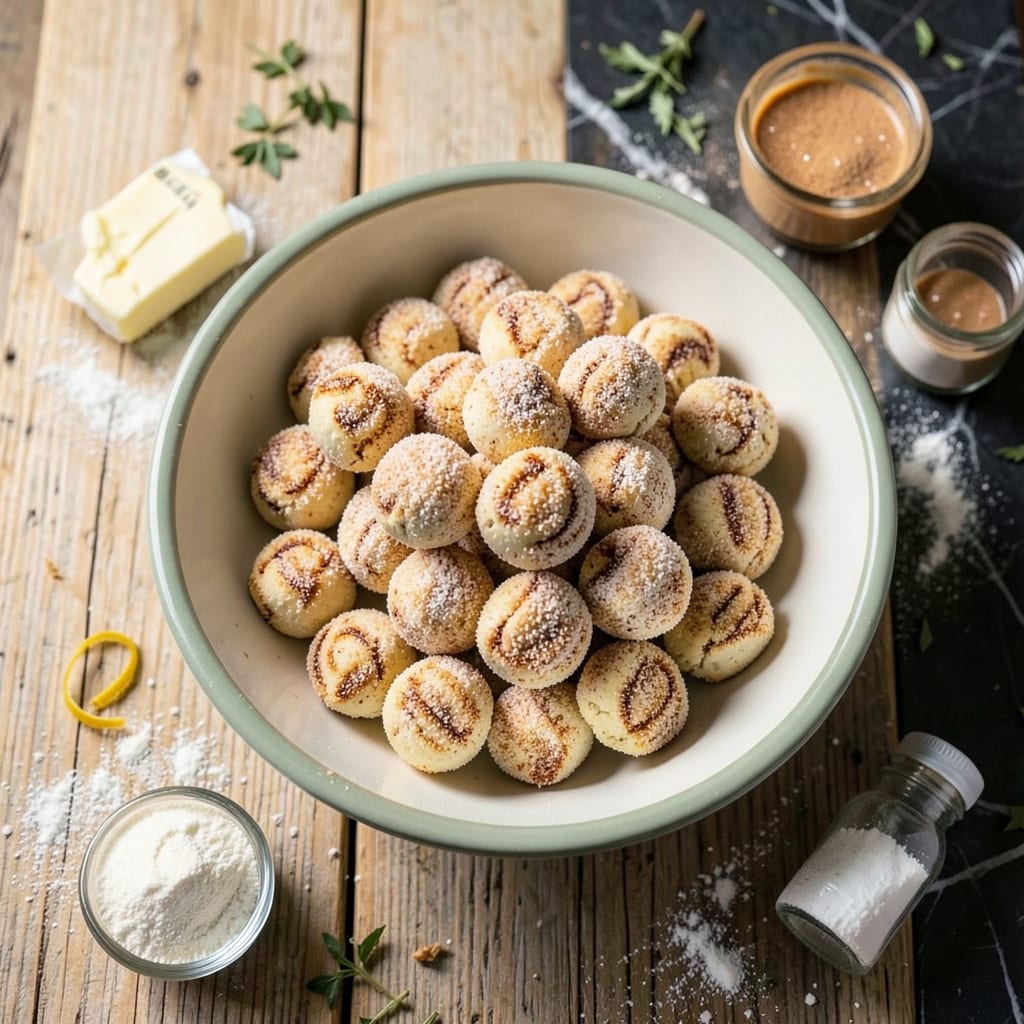
There’s something timeless about snickerdoodles—those soft, pillowy cookies rolled in cinnamon sugar that fill the kitchen with warmth. This recipe delivers perfectly tender cookies with just the right amount of spice, all in under 25 minutes. No fancy equipment required, just simple ingredients and straightforward technique.
The secret lies in the creaming process and proper dough handling. By mixing the butter and sugar until light and fluffy, then coating each dough ball generously in cinnamon sugar, you ensure that signature crackly exterior and melt-in-your-mouth texture. It’s the kind of recipe that makes baking feel effortless while producing results that taste anything but.
Ingredients for Snickerdoodle Recipe Pioneer Woman
These classic ingredients transform into perfectly tender snickerdoodles with signature cinnamon-sugar crackle in under 25 minutes.
| Ingredient | Amount | Notes |
|---|---|---|
| All-Purpose Flour 🌾 | 2 ¾ cups | Spoon and level for accuracy |
| Cream of Tartar 🧂 | 2 tsp | Essential for tangy flavor |
| Baking Soda 🧂 | 1 tsp | Fresh for optimal rise |
| Sea Salt 🧂 | ½ tsp | Fine grain preferred |
| Unsalted Butter 🧈 | 1 cup | Softened to room temperature |
| Granulated Sugar 🍚 | 1 ½ cups | For creaming with butter |
| Large Eggs 🥚 | 2 whole | Room temperature preferred |
| Pure Vanilla Extract 🌿 | 1 tsp | High-quality for best flavor |
| Ground Cinnamon 🌿 | 1 ½ tbsp | Freshly ground if possible |
| Granulated Sugar 🍚 | ¼ cup | For cinnamon-sugar coating |
The butter quality is paramount for proper creaming—European-style unsalted butter (like Plugrá or Kerrygold) yields superior texture due to higher fat content. Cream of tartar is non-negotiable; check expiration dates as it loses potency over time. For the cinnamon, Penzeys or Simply Organic brands offer superior aroma. Measure flour by spooning into cups rather than scooping directly from the bag to avoid compacting.
No cream of tartar? White vinegar or lemon juice (1 tsp) can substitute in a pinch, though flavor may vary slightly. For a deeper cinnamon flavor, Vietnamese cinnamon (higher oil content) works beautifully. The granulated sugar can be swapped for turbinado sugar in the coating for added crunch. If using salted butter, omit the added salt—this recipe is calibrated for unsalted.
Store dough balls (uncoated) in an airtight container for up to 3 days refrigerated, or freeze for 2 months. Baked cookies keep 5 days at room temperature in sealed containers. For optimal freshness, place a slice of bread in the container—it absorbs excess moisture while keeping cookies soft.
Why You’ll Love This Recipe
- No Mixer Needed: I’ve made these with just a wooden spoon and a bowl—no fancy equipment, no overmixing stress. The butter softens fast (10 minutes on the counter, tops), and the dough comes together like a dream.
- That Cinnamon-Sugar Crunch: Here’s what sold me—the cream of tartar gives them that slight tang, while the sea salt in the dough balances the sweetness. Warm from the oven? The edges crackle, the center stays pillowy, and the cinnamon sugar clings just right.
- Bakes Like a Pro: Honestly, this is my “I forgot about book club” recipe. The dough balls freeze beautifully (bake straight from frozen, add 2 minutes), and they’re just as good day-two—if they last that long.
- Pantry Staples Only: No weird ingredients. Flour, butter, sugar—stuff I always have. The cream of tartar might seem niche, but it’s cheap, lasts forever, and makes these taste like a bakery spent hours on them. (Spoiler: You didn’t.)
Step-by-Step Instructions for Snickerdoodle Cookies
Follow this precise method to achieve bakery-quality snickerdoodles with perfect texture and cinnamon-sugar coating.
Step 1: Prepare the Cinnamon-Sugar Mixture
Begin by combining the 1.5 tbsp ground cinnamon with the 0.25 cup granulated sugar in a small bowl. Whisk thoroughly until evenly distributed and no streaks of cinnamon remain visible. This mixture will create the signature coating that gives snickerdoodles their distinctive flavor and appearance.
Set the cinnamon-sugar mixture aside. I recommend using a shallow dish for easy rolling later. The fine grain of the granulated sugar ensures even distribution and proper adhesion to the dough balls, creating that perfect crackly exterior we all love in snickerdoodles.
Step 2: Cream Butter and Sugar for Optimal Texture
In a stand mixer fitted with the paddle attachment, beat the 1 cup unsalted butter and 1.5 cups granulated sugar on medium speed for 3-4 minutes. The mixture should become noticeably lighter in color and fluffy in texture. This creaming process incorporates air, which is essential for achieving the cookies’ characteristic soft yet slightly chewy texture.
Stop occasionally to scrape down the sides of the bowl with a silicone spatula to ensure even mixing. The butter should be properly softened to room temperature (about 65°F) before beginning – it should yield slightly when pressed but not be greasy or melted. This step is crucial for proper cookie structure.
Step 3: Incorporate Wet Ingredients and Dry Components
Add the 2 whole large eggs, one at a time, mixing on low speed until each is fully incorporated before adding the next. Then add the 1 tsp pure vanilla extract and mix for an additional 15-20 seconds. The mixture should appear smooth and homogeneous at this stage.
In a separate bowl, whisk together the 2.75 cups all-purpose flour, 2 tsp cream of tartar, 1 tsp baking soda, and 0.5 tsp sea salt. Gradually add this dry mixture to the wet ingredients, mixing on low speed just until combined. Be careful not to overmix – stop as soon as you no longer see dry flour pockets, typically after 45-60 seconds of mixing.
Step 4: Shape and Coat the Cookie Dough
Using a cookie scoop or tablespoon, portion the dough into 1.5-inch balls (about 1.5 tbsp of dough each). Roll each ball between your palms to create smooth spheres. This uniform shaping ensures even baking and consistent results across all cookies.
Roll each dough ball in the prepared cinnamon-sugar mixture until completely coated. Place the coated balls on parchment-lined baking sheets, spacing them 2 inches apart to allow for spreading. The cinnamon-sugar coating should be generous but not excessive – you want complete coverage without clumping.
Step 5: Bake to Perfect Doneness
Preheat your oven to 375°F and position racks in the upper and lower thirds. Bake the cookies for 9-11 minutes, rotating the pans halfway through the baking time. The cookies are done when the edges are set and just beginning to turn light golden brown, while the centers still appear slightly soft and underbaked.
Remove from the oven and let the cookies cool on the baking sheets for 5 minutes before transferring to a wire rack. This brief resting period allows the cookies to set properly while maintaining their soft, chewy interior. The finished cookies should have a slight crackle on the surface from the cinnamon-sugar coating and a tender, pillowy center.
Common Mistakes When Making This Dish
Overmixing the Dough
Once you add the flour mixture, mix just until the ingredients come together—about 45-60 seconds on low speed. Overmixing develops gluten, which makes cookies tough instead of tender. I stop the mixer as soon as I see no dry flour pockets remaining. Trust me, less mixing means softer cookies. 💡
Incorrect Butter Temperature
Your butter should be softened to about 65°F—it should dent when pressed but not be greasy. Too-cold butter won’t cream properly, while melted butter creates flat, greasy cookies. I test by pressing my finger into the butter; it should leave a slight indentation without sinking through.
Skipping the Creaming Step
Creaming butter and sugar for 3-4 minutes is non-negotiable. This incorporates air that makes cookies light and tender. I set a timer and watch for the mixture to turn pale yellow and fluffy. Rushing this step results in dense, flat cookies that lack that signature snickerdoodle texture.
Uneven Dough Balls
Use a 1.5-inch cookie scoop for uniform dough balls. Inconsistent sizes lead to uneven baking—some cookies burn while others stay underdone. I roll each scoop between my palms to create perfect spheres before coating in cinnamon sugar. Uniformity ensures every cookie bakes perfectly in the same time.
Overbaking the Cookies
Pull cookies from the oven when edges are just set but centers still look slightly underdone—usually 9-11 minutes. They’ll continue cooking on the hot baking sheet. I check for light golden edges and a soft center that springs back when gently touched. Overbaked snickerdoodles lose their signature softness.
Stale Cream of Tartar
Check your cream of tartar expiration date—it loses potency over time. Old cream of tartar won’t provide the signature tangy flavor. I replace mine every 6 months for best results. If yours is expired, substitute 1 tsp lemon juice or white vinegar in a pinch, though flavor may vary slightly. ✨
Nutrition Facts
Frequently Asked Questions
Why do my cookies turn out flat instead of puffy?
Flat cookies usually result from butter that’s too warm or skipping the creaming step. Make sure your butter is softened but not melted (65°F ideal). Cream it with sugar for the full 3-4 minutes to incorporate air. Also, check your baking soda isn’t expired—it’s crucial for proper rise.
Can I make the dough ahead of time?
The dough keeps beautifully in the fridge for up to 3 days or freezes for 2 months. Store uncoated dough balls in an airtight container. Let refrigerated dough sit at room temperature for 30 minutes before baking for even results.
What’s the secret to that perfect cinnamon-sugar crackle?
Roll dough balls thoroughly in the cinnamon-sugar mixture right before baking—don’t coat them too early. Use fine granulated sugar for even distribution. The key is a generous but even coating that creates that signature crackly top as the cookies bake and spread.
Why does this recipe use cream of tartar?
Cream of tartar gives snickerdoodles their signature tangy flavor and helps create their soft texture. It also stabilizes the egg whites in the dough. Without it, you lose that distinctive taste. If you must substitute, use 1 tsp lemon juice or white vinegar, but flavor may vary.
How do I know when they’re perfectly baked?
Look for edges that are just set and lightly golden, with centers that appear slightly underdone (9-11 minutes total). They’ll continue cooking on the hot sheet after removal. The perfect cookie springs back when gently touched but leaves a slight fingerprint.

- 6 Egg Cake Recipe with Oil: Light as Air With Buttery Moisture - October 4, 2026
- 4 Bean Casserole Recipe: One-Pan Heartiness With Smoky Paprika Depth - October 4, 2026
- 3-Ingredient Keto Mug Cake Recipe: Microwave Magic in 2 Minutes - October 4, 2026