
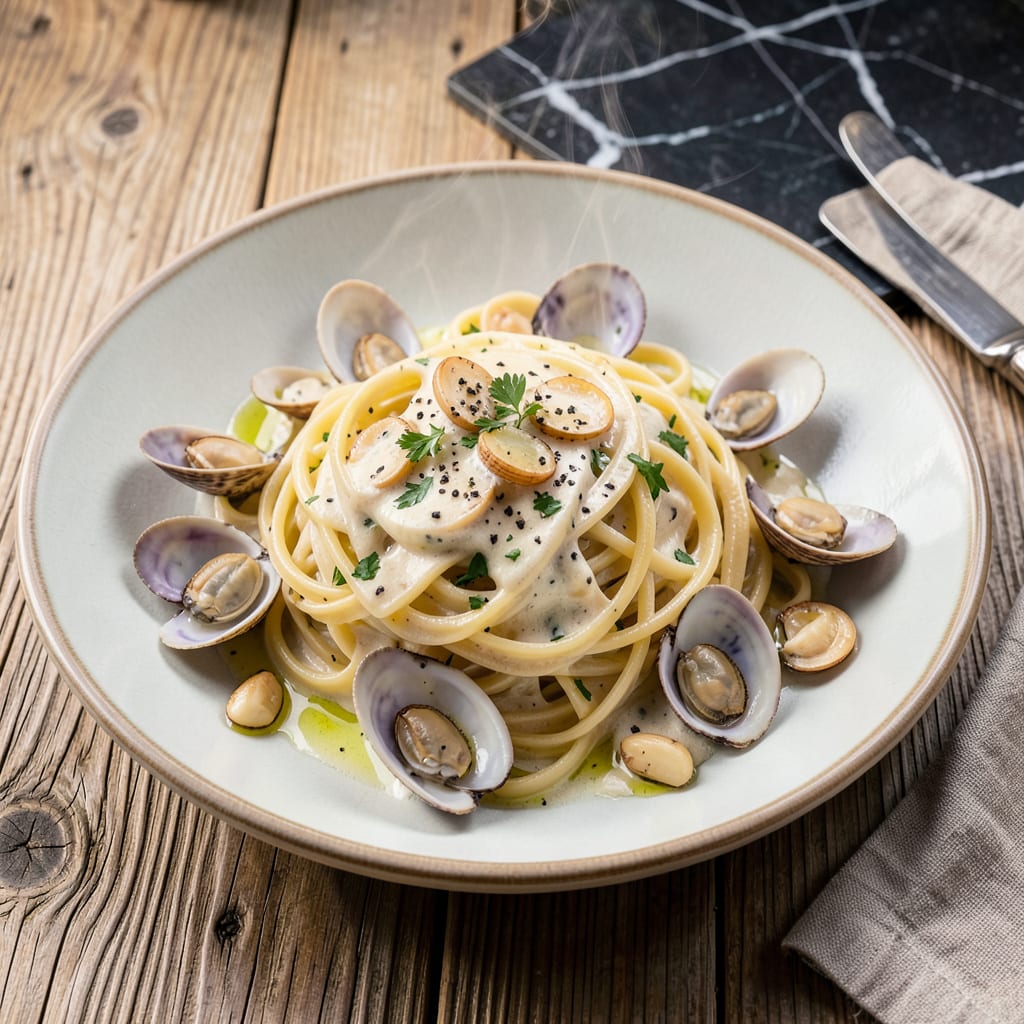
This white clam sauce captures the essence of Italian-American coastal cooking, where briny clams meet garlic, white wine, and cream for a sauce that’s both elegant and deeply flavorful. Developed as a staple in classic NYC trattorias, the dish balances richness with brightness, making it perfect for special occasions or weeknight indulgence.
The secret lies in the simplicity: fresh clams steamed in aromatic garlic and wine, finished with a touch of cream for velvety texture. Served over al dente linguine, each bite delivers the ocean’s essence with every forkful. Ready in under 30 minutes, it’s a restaurant-quality dish made effortlessly at home.
Ingredients for Snow’s White Clam Sauce
Fresh clams, aromatic garlic, and white wine form the foundation of this elegant coastal-inspired sauce.
| Ingredient | Amount | Notes |
|---|---|---|
| Littleneck Clams 🐚 | 2 lb | Scrubbed clean, discard any open shells |
| Linguine Pasta 🍝 | 12 oz | Dried, or substitute fresh if preferred |
| Extra-Virgin Olive Oil 🫒 | ¼ cup | High-quality for best flavor |
| Garlic Cloves 🧄 | 6 cloves | Thinly sliced for even cooking |
| Dry White Wine 🍷 | ¾ cup | Sauvignon Blanc or Pinot Grigio recommended |
| Heavy Cream 🥛 | ½ cup | Full-fat for velvety texture |
| Unsalted Butter 🧈 | 4 tbsp | European-style preferred |
| Fresh Parsley 🌿 | ¼ cup | Finely chopped for garnish |
| Red Pepper Flakes 🌶️ | ½ tsp | Adjust for heat preference |
| Kosher Salt 🧂 | 1 tsp | Diamond Crystal preferred |
| Freshly Ground Black Pepper 🌶️ | ½ tsp | Coarsely ground for texture |
| Clam Juice 💧 | ¼ cup | Optional for intensified briny flavor |
| Lemon Zest 🍋 | 1 tsp | From 1 medium lemon |
[recipeingredientscaler]
The clams are the centerpiece—littlenecks or manilas are ideal for their sweet, briny flavor. Source from reputable fishmongers like Whole Foods or local seafood markets, ensuring they’re alive and tightly closed (discard any open shells). The wine selection matters: a crisp Sauvignon Blanc or Pinot Grigio balances the richness without overpowering. Opt for European-style butter (like Plugrá) for its higher fat content, which creates a silkier emulsion.
No clam juice? Use additional wine or seafood stock at a 1:1 ratio. For a dairy-free version, substitute the cream with full-fat coconut milk (unsweetened) or cashew cream. Fresh parsley is non-negotiable for brightness, but fresh basil can work in a pinch. The red pepper flakes are optional but recommended—they add subtle heat that complements the brininess. If using bottled clams, drain and rinse thoroughly to remove excess sodium.
The sauce is best served immediately but can be refrigerated for 24 hours—reheat gently to avoid curdling. Clams should be stored in a mesh bag in the fridge (covered with damp paper towels) for no more than 2 days. The wine and clam juice can be kept for 1 month unopened; once opened, use within 3 days. Always cook pasta fresh when ready to serve.
Why You’ll Love This Recipe
- One-Pot Magic: Honestly, this might be my laziest weeknight win. The clams steam right in the wine and garlic broth while the pasta cooks—no extra pots, no fuss, just a single pan to scrub after.
- Garlic-Wine Alchemy: That first whiff when the garlic hits the olive oil? Pure gold. Then the wine reduces with the clam juices into this briny, aromatic sauce that clings to every strand of linguine—simple but so, so good.
- Date Night or Solo: I’ve served this to guests with crusty bread and a salad (fancy!) and also eaten it straight from the pan in sweatpants. The clams feel special, but the effort? Barely more than boxed mac and cheese.
- Leftovers? Rarely.: Between us, I’ve never actually had leftovers—my husband “finishes” them for a midnight snack. But if you do, the flavors deepen overnight. Cold linguine with clams? Surprisingly solid the next day.
Step-by-Step Instructions for Snow’s White Clam Sauce
This elegant dish comes together quickly with careful timing and attention to detail.
Step 1: Prepare the Clams and Linguine
Begin by scrubbing the 2 lb Littleneck Clams thoroughly under cold running water to remove any sand or grit. Discard any clams with broken or open shells that don’t close when tapped. This ensures only fresh, viable clams make it into your sauce.
Bring a large pot of salted water to a rolling boil for the 12 oz Linguine Pasta. Cook the pasta until 1 minute shy of al dente according to package instructions. Reserve 1 cup of pasta water before draining, then set the pasta aside. The slightly undercooked pasta will finish perfectly when combined with the sauce later.
Step 2: Build the Aromatic Base
In a large, deep skillet, heat the 0.25 cup Extra-Virgin Olive Oil over medium heat. Add the 6 cloves Garlic Cloves, thinly sliced, and the 0.5 tsp Red Pepper Flakes. Cook for 1-2 minutes, stirring constantly, until the garlic turns light golden brown and becomes fragrant. Be vigilant—garlic burns easily and bitter garlic will ruin the sauce.
Immediately add the 0.75 cup Dry White Wine to deglaze the pan, scraping up any browned bits from the bottom. Increase the heat to medium-high and simmer for 3-4 minutes until the liquid reduces by about half. This concentration of flavors creates the foundation for your briny, garlicky sauce.
Step 3: Steam the Clams and Create the Sauce
Add the cleaned clams to the skillet along with the 0.25 cup Clam Juice. Cover the pan and cook for 5-7 minutes until all the clams have opened. Discard any clams that remain closed after this time. The clams will release their briny liquid, which forms the base of your sauce.
Using tongs, transfer the opened clams to a bowl, leaving their juices in the skillet. Reduce the heat to medium-low and stir in the 0.5 cup Heavy Cream and 4 tbsp Unsalted Butter. Simmer gently for 2-3 minutes until the sauce begins to thicken slightly and the butter fully incorporates.
Step 4: Combine and Finish
Return the drained linguine to the skillet with the sauce, tossing to coat evenly. Add 1 tsp Kosher Salt and 0.5 tsp Freshly Ground Black Pepper, adjusting to taste. If the sauce seems too thick, add some of the reserved pasta water 1 tablespoon at a time until it reaches your desired consistency.
Gently fold in most of the clams (reserve some for garnish) and cook for an additional 1-2 minutes just to heat through. The pasta should glisten with sauce, and the clams should be plump and fragrant. Remove from heat and stir in the 1 tsp Lemon Zest for a bright finish.
Step 5: Garnish and Serve
Transfer the linguine and clams to serving bowls, arranging the reserved clams on top. Sprinkle generously with the 0.25 cup Fresh Parsley, finely chopped. The parsley adds freshness and color contrast against the creamy sauce.
Serve immediately while hot, with crusty bread to soak up every last bit of the garlicky, briny sauce. Each bite should deliver tender clams, perfectly cooked pasta, and a balance of rich creaminess with bright citrus notes from the lemon zest.
Essential Equipment for Perfect Results
Essential Skillet
For this sauce, I swear by my 12-inch stainless steel skillet—it’s the perfect size for even heat distribution and gives you enough room to toss the linguine later. Look for one with a heavy base like All-Clad D3 or Cuisinart MultiClad Pro. The high sides prevent splattering when the clams release their juices. 🔥
Pasta Pot Matters
A 5-6 quart pasta pot with a fitted colander insert makes draining linguine effortless while reserving that precious starchy water. I use my OXO Good Grips pot—it’s lightweight but durable. The colander’s fine mesh catches every strand, so you don’t lose pasta to the drain.
Tongs for Clams
Don’t underestimate the value of locking tongs when transferring clams. I keep a pair of OXO 12-inch tongs dedicated to seafood—they grip clams securely without crushing shells. The silicone tips prevent scratching your skillet while protecting delicate clams.
Microplane for Zest
A fine microplane is essential for the lemon zest—it captures just the aromatic outer layer without the bitter pith. My Microplane Premium has lasted years. The ultra-sharp blades make quick work of citrus, and the non-slip handle keeps it steady even with slippery lemons.
Thermometer for Wine
While not mandatory, an instant-read thermometer helps monitor wine reduction temperature. I use my ThermoWorks Thermapen to ensure the wine stays between 160-180°F during reduction. This prevents burning while concentrating flavors perfectly.
Garnish Tools
For the parsley garnish, I keep a pair of herb scissors (like Kuhn Rikon) handy—they chop herbs evenly in seconds. A fine-mesh sieve also helps dust reserved clams with extra parsley for that restaurant-quality presentation. ✨
Nutrition Facts

- 6 Egg Cake Recipe with Oil: Light as Air With Buttery Moisture - October 4, 2026
- 4 Bean Casserole Recipe: One-Pan Heartiness With Smoky Paprika Depth - October 4, 2026
- 3-Ingredient Keto Mug Cake Recipe: Microwave Magic in 2 Minutes - October 4, 2026