
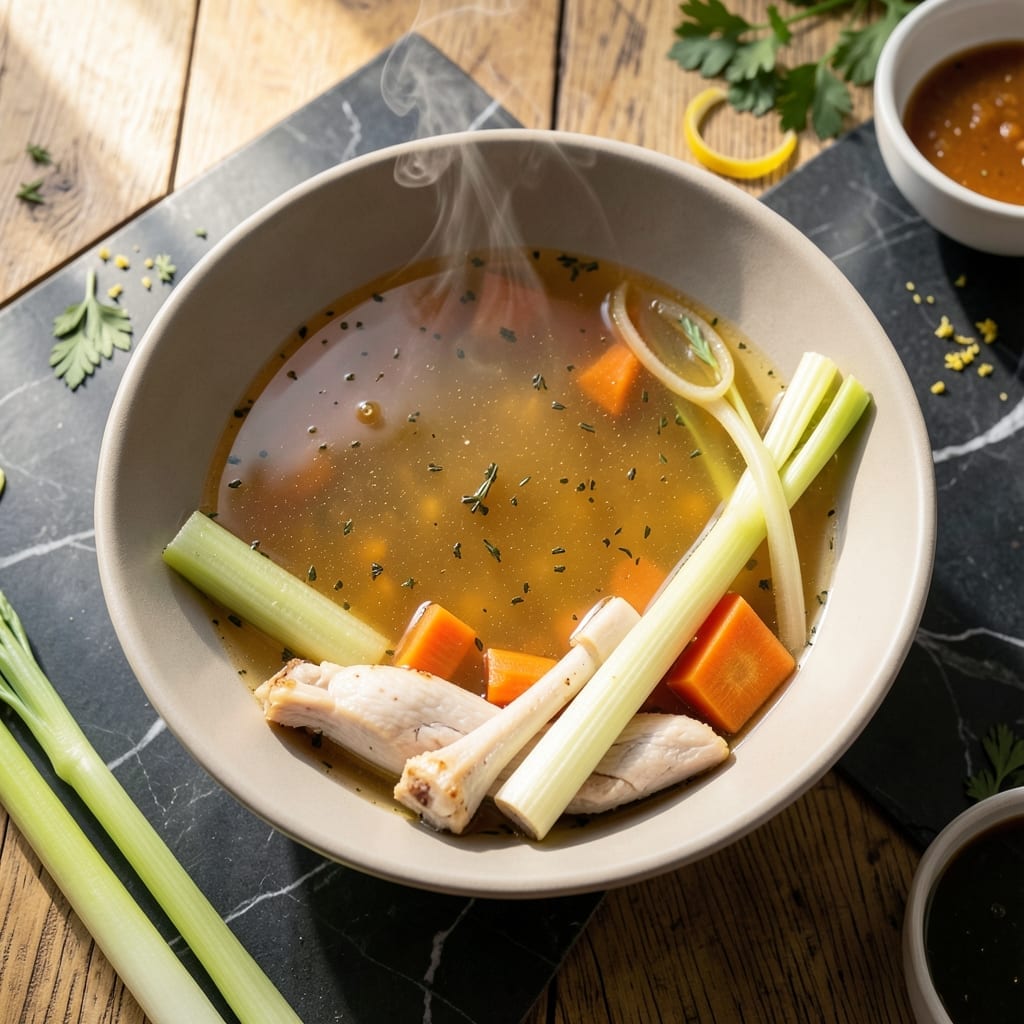
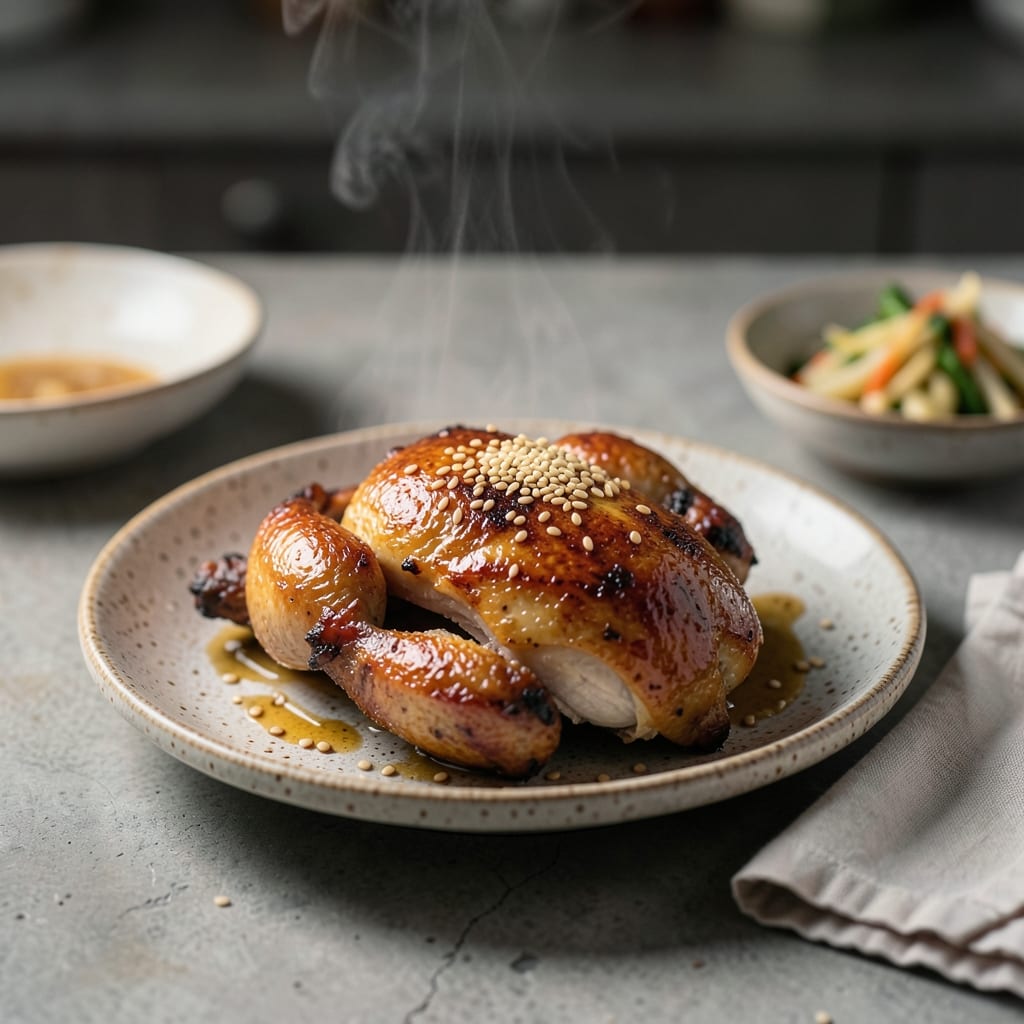
A rich chicken stock is the backbone of exceptional soups, stews, and sauces. This method transforms simple ingredients into a golden, flavorful liquid that elevates every dish it touches.
With just bones, vegetables, and herbs simmered low and slow, you’ll create a deeply aromatic base. The process is straightforward but rewards patience and attention to detail.
Ingredients for Soup Stock Recipe Chicken
Simple ingredients transformed into golden, aromatic liquid for soups, stews, and sauces.
| Ingredient | Amount | Notes |
|---|---|---|
| Chicken Bones 🍗 | 3 lb | Necks, backs, or carcass preferred |
| Cold Water 💧 | 12 cups | Enough to cover ingredients by 2 inches |
| Yellow Onions 🧅 | 2 whole | Quartered, skins on for color |
| Carrots 🥕 | 3 whole | Cut into large chunks |
| Celery Stalks 🌿 | 3 whole | Cut into large chunks |
| Garlic Cloves 🧄 | 6 cloves | Unpeeled, smashed |
| Bay Leaves 🍃 | 2 whole | Dried, whole leaves |
| Fresh Thyme Sprigs 🌿 | 4 pieces | Or 1 tsp dried thyme |
| Fresh Parsley Stems 🌿 | 1 whole | Reserve leaves for garnish |
| Whole Black Peppercorns 🌶️ | 1 tsp | Lightly crushed |
| Apple Cider Vinegar 🍏 | 2 tbsp | Balances richness |
| Kosher Salt 🧂 | 1 tsp | Adjust to taste at end |
[recipeingredientscaler]
The chicken bones are critical—necks, backs, or carcasses yield the most gelatin and depth. Butcher shops or Whole Foods often sell them cheaply, or save them from roasted chickens. Look for bones with some meat still attached for richer flavor. Cold water is essential; hot water can make stock cloudy. The onion skins add a beautiful golden hue (don’t peel them).
No chicken bones? Beef or turkey bones work but change the flavor profile. Missing fresh herbs? Dried thyme at one-third the amount is fine, but fresh parsley stems are worth hunting down—they add a clean, bright note. Apple cider vinegar can be swapped for white wine or lemon juice. The vinegar helps extract minerals from the bones.
Stock keeps 5 days refrigerated, 6 months frozen. Strain and cool quickly to preserve freshness. For the clearest stock, avoid boiling—keep it at a gentle simmer. Skim foam as it rises for the cleanest flavor.
Why You’ll Love This Recipe
- Set It and Forget: I toss the bones and veggies in a pot, add cold water, and let the stove do the work for hours.
- Rich, Clean Taste: The slow simmer pulls every bit of flavor from the chicken bones and mirepoix—no shortcuts, just pure, golden depth.
- Meal Prep Hero: Between us, this stock is the backbone of my weekly soups, stews, and even risotto.
- Pennywise Powerhouse: I use scraps—bones from a roast, onion peels, celery ends—and turn them into liquid gold for pennies.
Step-by-Step Instructions for Chicken Soup Stock
Master this fundamental technique for a rich, flavorful base that elevates any soup or sauce.
Step 1: Prepare and Par-Cook the Chicken Bones
Begin by rinsing the 3 lb Chicken Bones under cold water to remove any blood or bone fragments. Place them in a large stockpot and cover with the 12 cups Cold Water. Bring to a boil over high heat, then reduce to a simmer.
Allow the bones to par-cook for 5-10 minutes. You’ll notice foam and impurities rising to the surface—this is normal. Skim this off with a fine-mesh strainer or spoon. This step ensures a clear, clean stock by removing blood and marrow that would otherwise cloud the final product.
Step 2: Add Aromatics and Seasonings
Once the water is clear, add the 2 whole Yellow Onions, 3 whole Carrots, 3 whole Celery Stalks, 6 cloves Garlic Cloves, 2 whole Bay Leaves, 4 pieces Fresh Thyme Sprigs, and 1 whole Fresh Parsley Stems.
Include the 1 tsp Whole Black Peppercorns, lightly crushed to release their oils, and the 2 tbsp Apple Cider Vinegar. The vinegar helps extract calcium from the bones, resulting in a richer, more gelatinous stock. Stir to combine and return to a gentle simmer.
Step 3: Simmer Low and Slow
Reduce the heat to low to maintain a bare simmer—small bubbles should occasionally break the surface, but the liquid should not boil vigorously. A hard boil will make the stock cloudy and can break down the collagen in the bones too quickly, resulting in a less flavorful, less gelatinous stock.
Partially cover the pot and let it simmer undisturbed for 3-4 hours. The longer simmer time allows the connective tissues and bones to release their gelatin, giving the stock body and a rich mouthfeel. You’ll know it’s ready when the stock has a deep amber color and a robust aroma.
Step 4: Strain and Finish
Carefully ladle the stock through a fine-mesh strainer into a clean pot or large bowl, discarding the solids. Avoid pressing on the solids, as this can make the stock bitter. You should have roughly 8-10 cups of liquid.
Stir in the 1 tsp Kosher Salt, adjusting to taste if needed. Let the stock cool slightly, then skim off any fat that rises to the surface. For the clearest stock, refrigerate it overnight and remove the solidified fat the next day before using or storing.
Pro Tips For Making Soup Stock Recipe Chicken
- Start with Cold Water: Always cover the chicken bones with cold water before heating—this draws out impurities gradually, giving you a clearer, cleaner stock.
- Roast the Bones First: Toss the chicken bones in the oven at 400°F for 20-30 minutes until golden; it deepens the flavor way beyond simmering raw bones.
- Skim Early and Often: I learned this the hard way—scum rises to the top in the first 30 minutes, so skim it off with a spoon to avoid a bitter stock.
- Use Parchment Paper: Sounds weird, but it works: a parchment lid floating on the stock keeps heat even and reduces evaporation, so you don’t have to babysit the pot.
Make-Ahead Tips for This soup stock recipe chicken
🔪 Week Before
Start by shopping for bones—chicken carcasses, wings, or legs work great. Store them in the freezer if you’re not using them immediately. If you have 10-15 minutes, roast the bones at 400°F until golden for deeper flavor. This step can be done ahead and frozen until ready to use. 💡 Pro tip: Save veggie scraps (onion skins, carrot tops, celery ends) in a bag in the freezer for extra flavor.
⏰ Day Before
Prep your aromatics: chop onions, carrots, and celery into large chunks. No need for fine dicing—this is rustic! If using herbs like thyme or bay leaves, bundle them in cheesecloth for easy removal later. Store prepped veggies in airtight containers in the fridge. For a richer stock, consider browning the veggies in a bit of oil for 5-7 minutes before adding liquid. ✨
🥘 Day Of
Simmering is the main event. Combine bones, veggies, and cold water in a large pot, bringing to a gentle boil before reducing to a low simmer. Skim off any foam that rises to the top in the first 30 minutes. Let it cook uncovered for 3-4 hours, occasionally skimming fat. The longer it simmers, the more flavorful your stock will be.
🎯 Last-Minute Tasks
Strain the stock through a fine-mesh sieve, discarding solids. For a clearer stock, strain again through cheesecloth. Let it cool slightly, then refrigerate. Once chilled, remove the solidified fat from the top. 🌡️ Pro tip: Freeze stock in ice cube trays for easy portioning later!
Nutrition Facts

- 6 Egg Cake Recipe with Oil: Light as Air With Buttery Moisture - October 4, 2026
- 4 Bean Casserole Recipe: One-Pan Heartiness With Smoky Paprika Depth - October 4, 2026
- 3-Ingredient Keto Mug Cake Recipe: Microwave Magic in 2 Minutes - October 4, 2026