
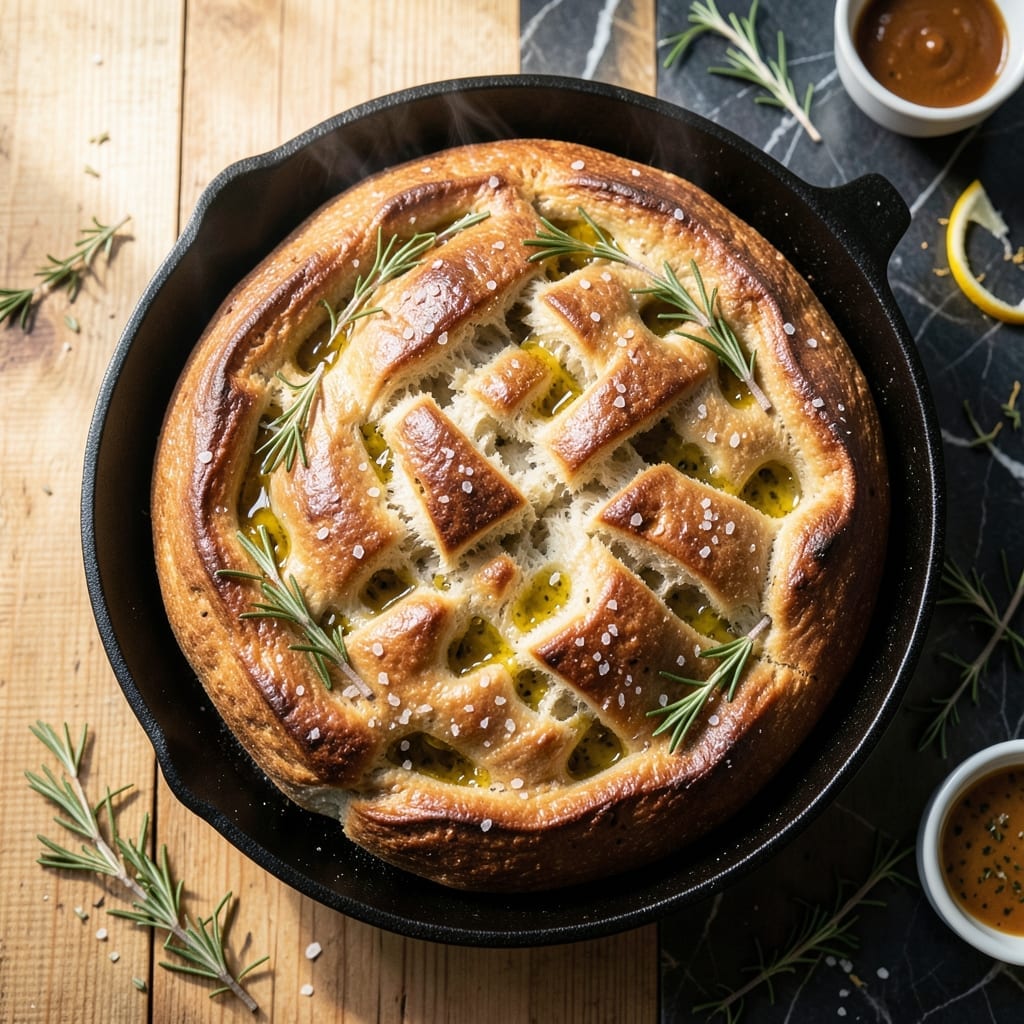
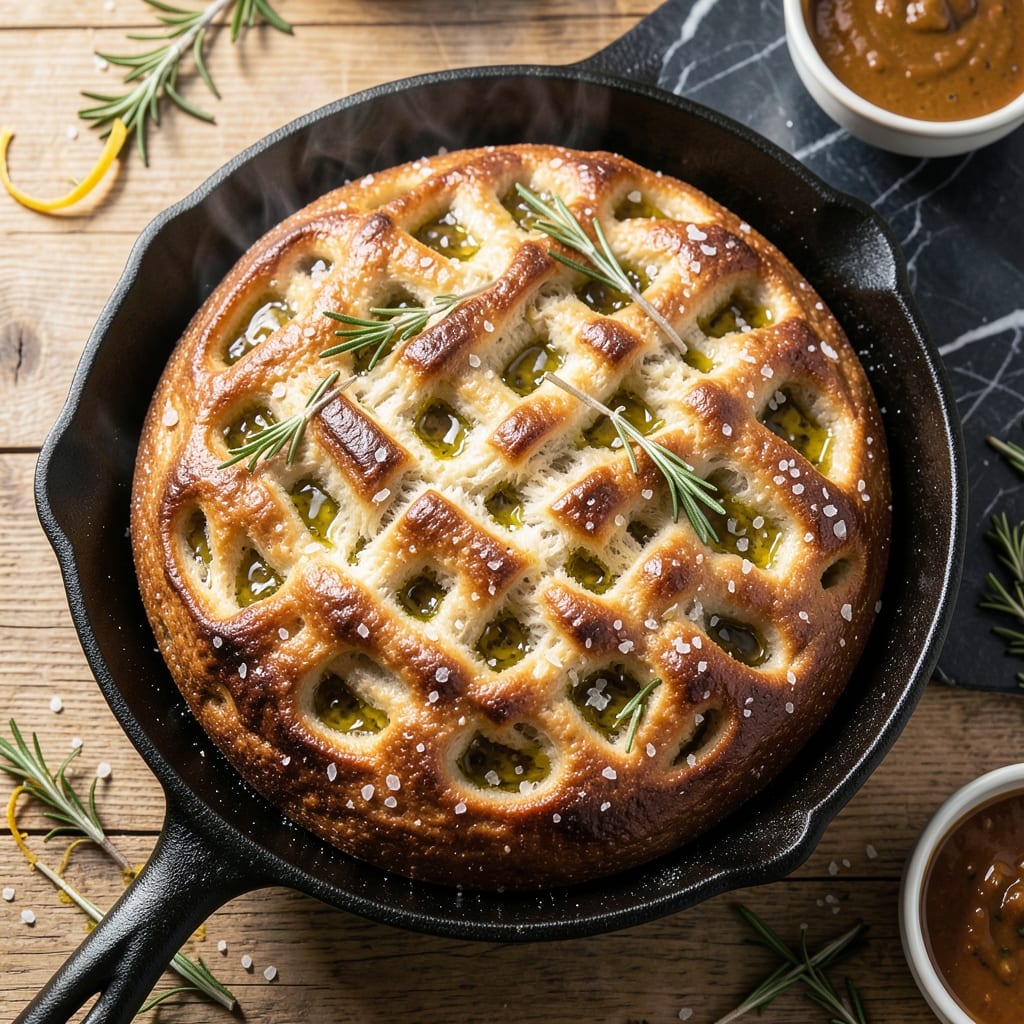
This sourdough focaccia delivers pillowy texture with a crisp, olive oil-kissed crust. The slow fermentation develops complex flavors that store-bought versions can’t match.
With minimal hands-on time and overnight proofing, you’ll achieve bakery-quality bread at home. The dimpled surface catches pools of olive oil, creating irresistible crunch in every bite.
Ingredients for Sourdough Focaccia Bread Recipe Alexandra’s Kitchen
Pillowy focaccia starts with simple ingredients and patience. Nothing exotic required here.
| Ingredient | Amount | Notes |
|---|---|---|
| Active Sourdough Starter 🍞 | ½ cup | Fed and bubbly, at peak activity |
| Bread Flour 🌾 | 4 cups | High-protein for structure |
| Lukewarm Water 💧 | 2 cups | About 105-110°F |
| Extra-Virgin Olive Oil 🫒 | ¾ cup | Divided for dough and dimpling |
| Fine Sea Salt 🧂 | 2 tsp | Diamond Crystal preferred |
| Honey 🍯 | 1 tbsp | Helps feed the starter |
| Rosemary Sprigs 🌿 | 4 whole | Fresh, for topping |
| Flaky Sea Salt 🧂 | 1 tbsp | For finishing, like Maldon |
| Coarse Black Pepper 🌶️ | 1 tsp | Freshly ground preferred |
| Garlic Cloves 🧄 | 3 cloves | Thinly sliced for topping |
| Cherry Tomatoes 🍅 | 1 cup | Halved, for optional topping |
The sourdough starter matters—use one that’s bubbly and active. I feed mine the night before so it’s ready to go. King Arthur’s bread flour is my go-to for consistency, but any high-protein flour works. The olive oil should be good quality (I like California Olive Ranch or Colavita), since it’s doing double duty in the dough and as a topping. For the water, 105-110°F is the sweet spot—too hot kills the starter, too cold slows fermentation.
No sourdough starter? Active dry yeast at 1 tsp gets you close (skip the overnight proof). No fresh rosemary? Dried rosemary at half the amount works—just hydrate it in a little warm water first. Swap honey for maple syrup or sugar if you prefer. The cherry tomatoes are optional but add a nice pop of color and acidity. If using, blot them dry first so they don’t make the dough soggy.
Dough can rest in the fridge for up to 24 hours (great for make-ahead). Once baked, focaccia keeps 2-3 days at room temperature in a paper bag. Reheat slices in a toaster oven to revive the crust. Freeze extras for up to 1 month—thaw and warm before serving.
Why You’ll Love This Recipe
- No-Knead Magic: That sourdough starter does all the work overnight. I just mix, fold, and let the dough rise while I sleep.
- Olive Oil Luxe: The generous pour of extra-virgin olive oil creates a crisp, golden crust with a tender, airy crumb.
- Weeknight Hero: Between us, it’s my secret for turning a simple salad into a full meal or feeding last-minute guests.
- Budget Stretcher: A little flour, water, salt, and my active starter yield a bakery-worthy loaf for pennies. Leftovers? Still gone by day two.
Step-by-Step Instructions for Sourdough Focaccia Bread
This method delivers a crisp, golden crust and airy interior with minimal effort.
Step 1: Mix and Ferment the Dough
In a large bowl, whisk together the 0.5 cup Active Sourdough Starter, 2 cups Lukewarm Water, 1 tbsp Honey, and 0.5 cup Extra-Virgin Olive Oil until the honey dissolves. The water should feel warm but not hot to the touch—around 105-110°F.
Add the 4 cups Bread Flour and 2 tsp Fine Sea Salt, mixing with a wooden spoon until no dry spots remain. The dough will be sticky and shaggy—that’s exactly what you want. Cover the bowl with a damp towel and let it rest at room temperature for 1 hour.
After the initial rest, perform a series of stretch-and-folds every 30 minutes for the next 2 hours. Wet your hands to prevent sticking, then grab one side of the dough, stretch it upward, and fold it over itself. Rotate the bowl and repeat on all sides. This builds structure without overworking the dough.
Step 2: First Rise and Prepare the Pan
After the stretch-and-folds, cover the dough again and let it rise at room temperature for 8-12 hours or until nearly doubled in volume. I like to do this overnight for convenience. The dough should look puffy with bubbles forming on the surface and sides of the bowl.
About 2 hours before baking, pour ¼ cup Extra-Virgin Olive Oil into a 9×13-inch baking pan and spread it evenly. Transfer the dough to the pan, gently stretching it to fit. If it resists, let it rest for 10 minutes and try again. The dough will be extremely soft and elastic.
Step 3: Dimple and Second Rise
Dip your fingers in the remaining Extra-Virgin Olive Oil and press them deeply into the dough, creating dimples all the way to the bottom of the pan. This isn’t just for looks—it ensures the olive oil penetrates the dough, creating that signature focaccia flavor and texture.
Cover the pan with a damp towel and let the dough rise for another 1-2 hours at room temperature. During this time, preheat your oven to 425°F. The dough should rise slightly and the dimples will become more pronounced. If your kitchen is cool, the second rise may take closer to 2 hours.
Step 4: Add Toppings and Bake
Just before baking, press the halved 1 cup Cherry Tomatoes (if using), thinly sliced 3 cloves Garlic Cloves, and 4 whole Rosemary Sprigs into the dimples. Sprinkle evenly with the 1 tbsp Flaky Sea Salt and 1 tsp Coarse Black Pepper. The tomatoes will soften and release their juices into the bread as it bakes.
Bake on the center rack for 25-30 minutes until the focaccia is golden brown on top and the edges are crisp. Rotate the pan halfway through baking for even browning. You’ll know it’s done when the top is deeply golden and a toothpick inserted into the center comes out clean.
Step 5: Finish and Serve
Remove the focaccia from the oven and immediately brush the top with a little more Extra-Virgin Olive Oil if desired. Let it cool in the pan for 10 minutes, then transfer to a wire rack to cool slightly. The bread will deflate a bit as it cools—that’s normal.
Serve warm or at room temperature, tearing pieces directly from the pan. The interior should be light and airy with a crisp, olive oil-rich crust. Leftovers (if there are any) keep well wrapped at room temperature for 2 days, though it’s best enjoyed fresh.
Pro Tips For Making Sourdough Focaccia Bread Recipe Alexandra’S Kitchen
- Use Ripe Starter: Make sure your sourdough starter is at its peak—floating in water and bubbly—before mixing. I learned this the hard way after a few dense loaves.
- Dimple Generously: Press your fingers deep into the dough all the way to the pan when dimpling—about ½ inch deep. Sounds weird, but it works: those pockets hold the olive oil for maximum crispiness.
- Salt the Oil: Mix a pinch of fine sea salt into the olive oil you drizzle over the dough before baking. My grandmother swore by this, and she was right: it seasons every bite.
- Wait for Bubbles: Let the dough proof until it’s jiggly and full of bubbles, at least 1-2 hours in a warm spot. After burning three batches, I finally figured out patience is the thing that matters most here.
Essential Equipment for sourdough focaccia bread recipe alexandras kitchen
Must-Have Tools
To bake Alexandra’s sourdough focaccia, you’ll need a few key tools. Start with a large mixing bowl for bulk fermentation—glass or ceramic works best for temperature stability. A digital kitchen scale (like the OXO Good Grips 11lb Scale) ensures precise measurements, which is critical for sourdough success. 🎯
Don’t skip a bench scraper for dividing dough and a 9×13-inch baking pan (or similar) for that perfect crispy-yet-chewy texture. A dough whisk helps incorporate ingredients without overmixing.
Nice-to-Have Tools
For easier handling, a stand mixer with a dough hook (like the KitchenAid Artisan) speeds up kneading, though hand-mixing works too. A dough proofer (such as the Broil King Proofing Box) maintains ideal warmth for fermentation. An infrared thermometer lets you check dough temperature with precision. ⏰
A banneton basket can shape your dough before baking, and a pizza stone or steel mimics a professional bread oven for even heat distribution.
Budget Alternatives
No stand mixer? Use a sturdy wooden spoon and strong arms! Swap a baking pan for a sheet tray (just add parchment paper). For proofing, your oven with the light on creates a warm environment. A measuring cup and spoon set works if you lack a scale—just note volume isn’t as accurate. 💡
Skip the bench scraper? A butter knife or spatula can divide dough in a pinch. Focaccia is forgiving—improvise with what you have!
Nutrition Facts

- 6 Egg Cake Recipe with Oil: Light as Air With Buttery Moisture - October 4, 2026
- 4 Bean Casserole Recipe: One-Pan Heartiness With Smoky Paprika Depth - October 4, 2026
- 3-Ingredient Keto Mug Cake Recipe: Microwave Magic in 2 Minutes - October 4, 2026