
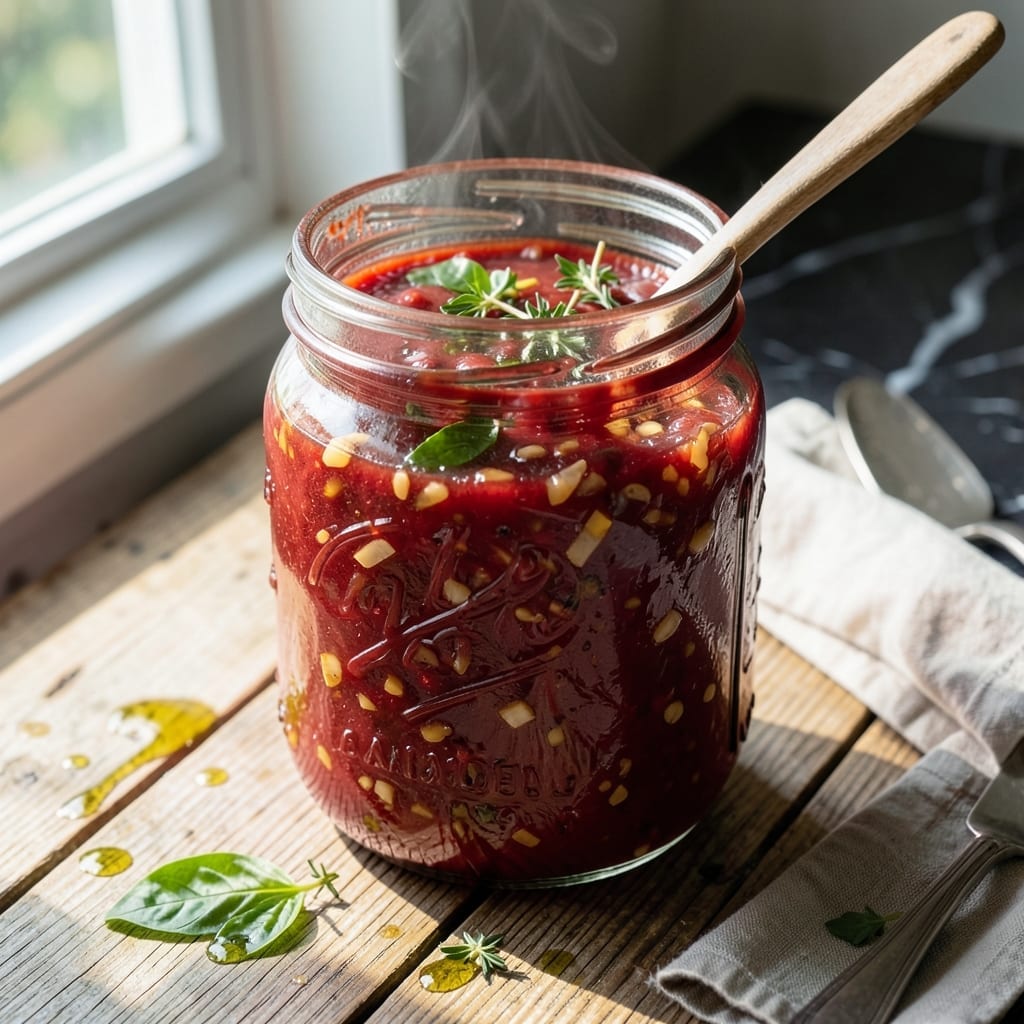
Preserving summer’s bounty in jars is a tradition that brings satisfaction and flavor to every meal. This sauce captures the essence of ripe tomatoes and fresh herbs, ready to enhance pasta dishes year-round.
With simple ingredients and careful canning, you’ll create a rich, flavorful sauce that stays fresh and safe for months. Perfect for stocking your pantry with homemade goodness.
Ingredients for Spaghetti Sauce Recipe for Canning
Ten ingredients transform summer tomatoes into pantry gold. Ready for jars and pasta all year.
| Ingredient | Amount | Notes |
|---|---|---|
| Ripe Tomatoes 🍅 | 8 lb | Roma or San Marzano preferred |
| Tomato Paste 🍅 | ½ cup | Double-concentrated for depth |
| Yellow Onion 🧅 | 2 whole | Finely diced for base |
| Garlic Cloves 🧄 | 8 cloves | Minced for bold flavor |
| Extra-Virgin Olive Oil 🫒 | ¼ cup | For sautéing aromatics |
| Fresh Basil Leaves 🌿 | 1 cup | Packed, stems removed |
| Fresh Oregano 🍃 | ¼ cup | Chopped, or dried at one-third |
| Red Wine Vinegar 💧 | 2 tbsp | For acidity balance |
| Granulated Sugar 🍚 | 1 tbsp | Optional, to balance acidity |
| Kosher Salt 🧂 | 1 tbsp | Adjust to taste |
| Black Pepper 🌶️ | 1 tsp | Freshly ground preferred |
The tomatoes are everything here. San Marzano cans work if fresh aren’t in season, but nothing beats vine-ripened Roma tomatoes from your garden or farmers market. Look for deep red color and a slight give when pressed—they’ll break down perfectly. Whole Foods and Trader Joe’s carry good canned options if you’re not growing your own.
No fresh herbs? Dried basil and oregano at one-third the amount do the trick—just add them earlier in cooking. Out of tomato paste? Simmer down 2 cups of fresh tomatoes until thick. For the vinegar, apple cider works too, but red wine vinegar has that bright, tangy kick that balances the sweetness of the tomatoes.
Sauce keeps in sealed, processed jars for up to 18 months in a cool, dark place. Once opened, use within 5 days or freeze for 3 months. Always check seals before storing—no bulging lids!
Why You’ll Love This Recipe
- One Pot Wonder: I love that I can simmer the tomatoes, onion, and garlic in a single pot while the tomato paste deepens the flavor.
- Rich and Robust: The slow-cooked garlic and olive oil give it that deep, savory taste that’s way better than store-bought.
- Pantry Staple: Honestly, canning a big batch means I’ve got homemade sauce ready for pasta, pizza, or soups anytime.
- Budget Friendly: Ripe tomatoes and a few basics turn into jars of sauce that save me a fortune compared to buying it pre-made.
Step-by-Step Instructions for Spaghetti Sauce for Canning
This method ensures a rich, balanced sauce that’s safe for long-term preservation.
Step 1: Prep and Blanch the Tomatoes
Wash the 8 lb ripe tomatoes thoroughly and remove any stems. Cut a small “X” on the bottom of each tomato—this makes peeling easier. Bring a large pot of water to a rolling boil and prepare an ice bath in a separate bowl.
Blanch the tomatoes in batches for 30-45 seconds until the skins start to split. Immediately transfer them to the ice bath to stop the cooking process. The skins should slip right off when you peel them. Chop the peeled tomatoes into chunks, discarding any tough cores.
Step 2: Sauté the Aromatics
Heat the 0.25 cup extra-virgin olive oil in a large, heavy-bottomed pot over medium heat. Add the finely diced 2 whole yellow onion and cook for 5-6 minutes until softened and translucent. Stir occasionally to prevent browning—this builds a sweet, flavorful base.
Add the minced 8 cloves garlic cloves and cook for 1 minute until fragrant. Be careful not to let it burn. Stir in the 0.5 cup tomato paste and cook for 2-3 minutes, stirring constantly. This step deepens the umami flavor and removes the raw edge from the paste.
Step 3: Simmer the Sauce
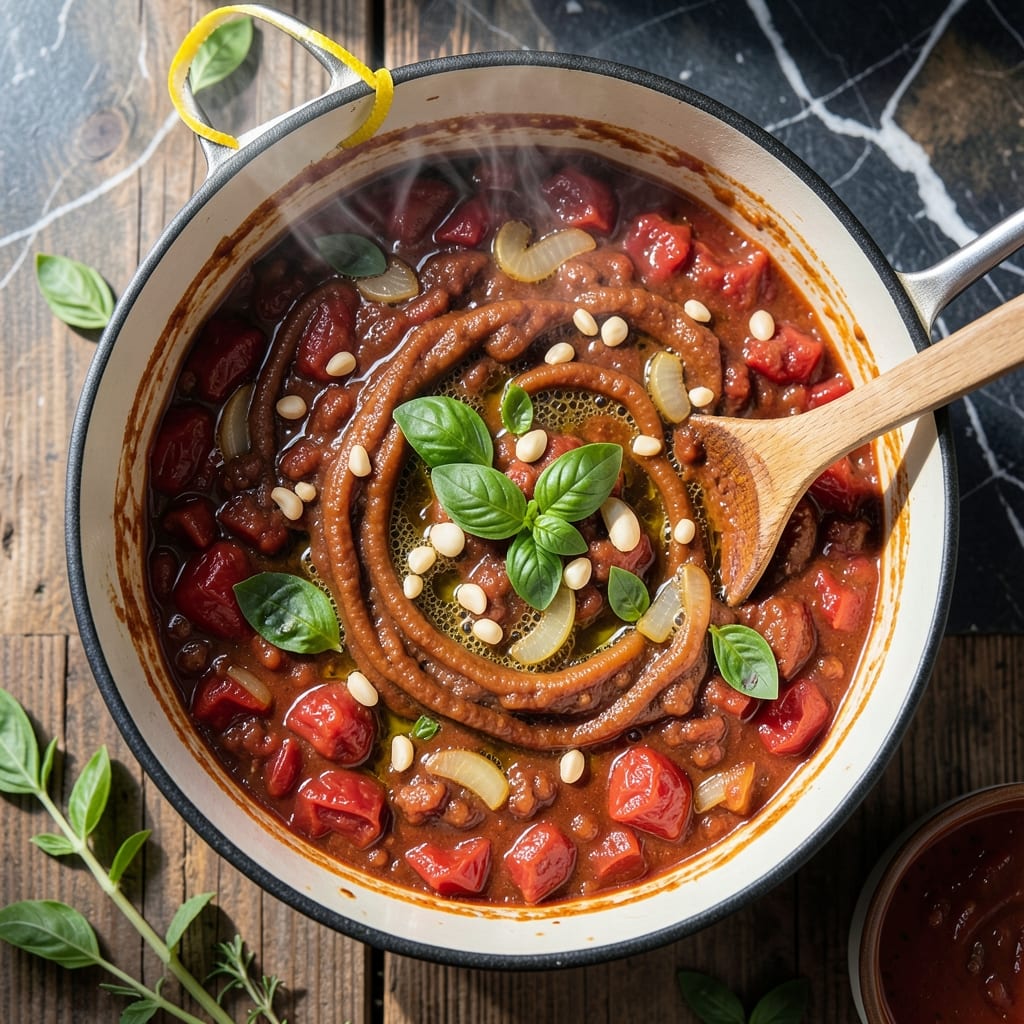
Add the chopped tomatoes to the pot, along with the 1 cup fresh basil leaves, 0.25 cup fresh oregano, 2 tbsp red wine vinegar, 1 tbsp granulated sugar, 1 tbsp kosher salt, and 1 tsp black pepper. Stir well to combine all the ingredients evenly.
Bring the mixture to a gentle boil, then reduce the heat to low. Let it simmer uncovered for 2-3 hours, stirring occasionally. You want the sauce to thicken and reduce by about a third. The tomatoes will break down naturally, but you can help it along with a potato masher if needed.
Step 4: Adjust and Prepare for Canning
Taste the sauce and adjust the seasoning if needed. The flavors should be balanced—sweet from the tomatoes, tangy from the vinegar, and savory from the herbs. If it tastes too acidic, you can add a touch more granulated sugar, but go easy—you can always add more later.
Ladle the hot sauce into sterilized canning jars, leaving ½-inch headspace at the top. Wipe the rims with a clean cloth to ensure a good seal, then place the lids and rings on the jars. Process the jars in a boiling water bath for 35-40 minutes to ensure they’re shelf-stable. Let them cool completely before checking the seals.
Pro Tips For Making Spaghetti Sauce Recipe For Canning
- Simmer Low and Slow: I learned this the hard way—boiling the sauce too hard makes it splatter and turns the tomatoes bitter. Keep it at a gentle bubble for at least 1 hour to concentrate flavors without scorching.
- Sauté Onions First: Cook the yellow onions in olive oil until soft and translucent before adding garlic or tomatoes. This builds a sweet base that makes the whole sauce taste richer.
- Skip Watery Tomatoes: Sounds obvious, but using underripe or pale tomatoes gives you a thin, bland sauce. Only use deep red, fully ripe ones—even if you have to wait a few extra days at the farmers market.
- Add Paste Last: Stir in the tomato paste at the end of cooking instead of the beginning. This prevents it from burning and lets you adjust the thickness right before canning.
Common Mistakes When Making Perfect Results
🔥 Underprocessing the Jars
Not processing your jars for the recommended time can lead to spoilage or unsafe canning. This mistake risks bacterial growth, making your sauce unsafe to store long-term.
Fix: Follow tested recipes and process pints for 20 minutes or quarts for 25 minutes in a boiling water bath.
🍳 Skipping the Acid Test
Tomatoes vary in acidity, and low-acid sauce may not be safe for canning. Without enough acid, harmful bacteria like Clostridium botulinum can thrive.
Fix: Add 1 tablespoon of bottled lemon juice or ¼ teaspoon of citric acid per pint jar to ensure safety.
🥘 Overfilling the Jars
Leaving too little headspace can cause sauce to spill over during processing, leading to seal failures. This also makes it harder for heat to penetrate evenly.
Fix: Leave ½-inch headspace in each jar to allow for expansion and proper sealing.
⏰ Using Unripe or Overripe Tomatoes
Unripe tomatoes lack flavor and acidity, while overripe ones can be mushy and watery. Both affect the sauce’s texture, taste, and safety.
Fix: Use fully ripe, firm tomatoes for the best balance of flavor, acidity, and texture.
Nutrition Facts

- 6 Egg Cake Recipe with Oil: Light as Air With Buttery Moisture - October 4, 2026
- 4 Bean Casserole Recipe: One-Pan Heartiness With Smoky Paprika Depth - October 4, 2026
- 3-Ingredient Keto Mug Cake Recipe: Microwave Magic in 2 Minutes - October 4, 2026