
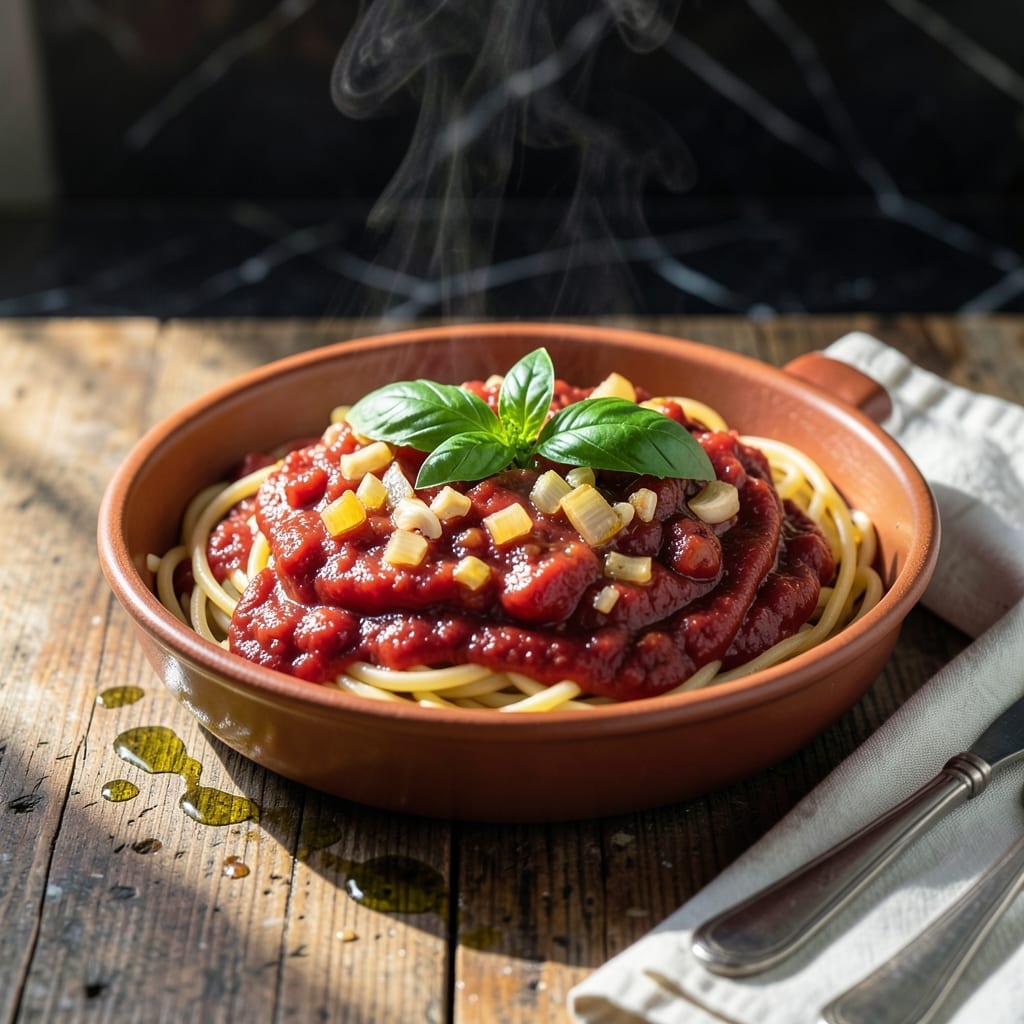
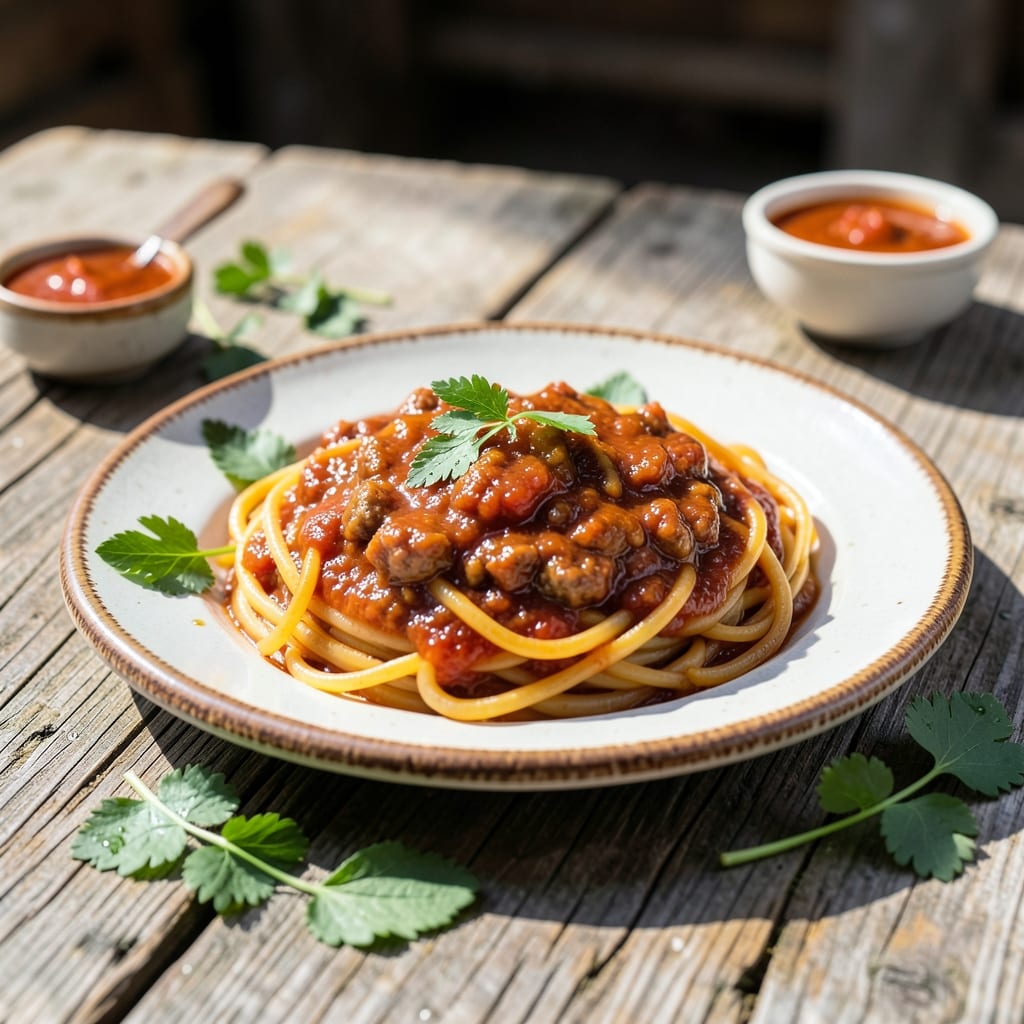
This rich tomato sauce transforms simple ingredients into a deeply flavorful base for pasta. The slow simmer allows herbs and garlic to meld into a velvety, restaurant-quality condiment.
With no meat required, it delivers bold taste through careful seasoning and time. The result is a versatile sauce that works for spaghetti, lasagna, or dipping bread.
Ingredients for Spaghetti Sauce Recipe No Meat
Ten simple ingredients build a complex, meat-free sauce with restaurant-quality depth and versatility.
| Ingredient | Amount | Notes |
|---|---|---|
| San Marzano Whole Peeled Tomatoes 🍅 | 28 oz | Canned, crushed by hand |
| Extra-Virgin Olive Oil 🫒 | ¼ cup | High quality, fruity |
| Yellow Onion 🧅 | 1 whole | Finely diced |
| Garlic Cloves 🧄 | 6 cloves | Minced for depth |
| Fresh Basil Leaves 🌿 | ½ cup | Packed, torn by hand |
| Dried Oregano 🍃 | 2 tsp | Mediterranean variety preferred |
| Red Pepper Flakes 🌶️ | ½ tsp | Adjust for heat preference |
| Sea Salt 🧂 | 2 tsp | Fine grain, Diamond Crystal |
| Freshly Ground Black Pepper 🌶️ | 1 tsp | Coarse grind preferred |
| Tomato Paste 🍅 | 2 tbsp | Double-concentrated preferred |
[recipeingredientscaler]
The tomatoes are non-negotiable for authentic flavor. San Marzano canned tomatoes from Italy deliver the sweet, low-acid base that defines great marinara. Look for the DOP certification on the label—it’s your guarantee of quality. The olive oil should be extra-virgin and robust; California Olive Ranch or Colavita are reliable grocery store options. Fresh basil makes a difference, so grab it from the produce section, not the sad little clamshells.
No fresh basil? Dried basil at one-third the amount works in a pinch, though the flavor won’t be as bright. Out of oregano? Fresh marjoram or thyme can substitute, but use a light hand. For heat without red pepper flakes, a dash of cayenne does the trick. The onion can be white or sweet if yellow isn’t available, but avoid red—it adds unwanted color. Tomato paste in a tube is a pantry savior for small batches.
This sauce actually improves after a day in the fridge as flavors meld. Store in an airtight container for up to 1 week, or freeze for 3 months. For freezing, portion into ice cube trays first, then transfer to bags—perfect for quick meals later.
Why You’ll Love This Recipe
- One-Pot Wonder: I just dump the San Marzano tomatoes, olive oil, and aromatics in a single pot and let it simmer—no fuss, no extra dishes.
- Rich & Simple: The sweetness of the onions and the punch from fresh basil make this taste like it simmered all day, but honestly, it’s ready in 30 minutes.
- Feeds Everyone: I make a big batch for Sunday dinner, then use leftovers for pasta, pizza, or even as a soup base later in the week.
- Pantry Hero: Between us, I always have these ingredients on hand, so it’s my go-to when I need a solid, flavorful meal without a grocery run.
Step-by-Step Instructions for Spaghetti Sauce No Meat
This method delivers a deeply flavorful tomato sauce with perfectly balanced herbs and spices.
Step 1: Sauté Aromatics in Olive Oil
Heat the 0.25 cup Extra-Virgin Olive Oil in a large, heavy-bottomed pot over medium heat. Add the finely diced 1 whole Yellow Onion and cook for 6-8 minutes, stirring occasionally, until translucent and softened but not browned.
This slow cooking process allows the natural sugars in the onion to caramelize slightly, building a sweet, aromatic foundation for the sauce. The oil should gently shimmer but not smoke—adjust heat as needed to maintain this temperature.
Step 2: Bloom Garlic and Tomato Paste
Add the minced 6 cloves Garlic Cloves and cook for 1 minute, stirring constantly, until fragrant. Immediately stir in the 2 tbsp Tomato Paste and cook for an additional 2-3 minutes until the paste darkens slightly in color.
This step is crucial: cooking the tomato paste removes its raw edge and deepens its flavor. You’ll notice the color shift from bright red to a deeper brick red—this visual cue indicates the paste has properly caramelized.
Step 3: Incorporate Tomatoes and Seasonings
Add the 28 oz San Marzano Whole Peeled Tomatoes, crushing them by hand as you drop them into the pot. Stir in the 2 tsp Dried Oregano, 0.5 tsp Red Pepper Flakes, 2 tsp Sea Salt, and 1 tsp Freshly Ground Black Pepper.
Bring the mixture to a gentle simmer, then reduce the heat to low. The sauce should bubble lazily, not vigorously—a hard boil can cause the sauce to splatter and break. Partially cover the pot with a lid to prevent excessive evaporation.
Step 4: Simmer and Finish with Basil
Let the sauce simmer for 45-60 minutes, stirring occasionally, until it thickens and develops a rich, concentrated flavor. You’ll know it’s ready when the sauce has reduced slightly and the oil begins to separate at the edges.
Just before serving, stir in the 0.5 cup Fresh Basil Leaves, torn by hand. The basil should wilt into the sauce within 1-2 minutes. Avoid adding it earlier, as prolonged cooking can turn the herb bitter and dull its vibrant flavor.
Pro Tips For Making Spaghetti Sauce Recipe No Meat
- Crush the Tomatoes: Hand-crush the San Marzano tomatoes as you add them to the pot—it breaks them down faster and releases more flavor than chopping.
- Bloom the Garlic: Cook the minced garlic in the olive oil for just 30 seconds until fragrant, but don’t let it brown or it’ll turn bitter.
- Skip Pre-Cooked Onions: I learned this the hard way—raw, finely diced yellow onion simmered in the sauce tastes sweeter and more integrated than pre-sautéed.
- Add Basil Late: Stir in fresh basil leaves only in the last 5 minutes of cooking to preserve their bright, aromatic flavor.
Common Mistakes When Making spaghetti sauce recipe no meat
🔥 Overcooking the Tomatoes
Cooking tomatoes for too long can break down their natural sugars, leaving your sauce bitter or overly thick. This is especially true for no-meat sauces, where tomatoes are the star.
Fix: Simmer the sauce for 20-30 minutes max on low heat. Stir occasionally to prevent sticking.
🍳 Skipping the Sauté Step
Jumping straight to adding tomatoes without sautéing onions, garlic, or herbs first can result in a flat, underdeveloped flavor. These aromatics build the base of your sauce.
Fix: Always cook onions and garlic in olive oil until soft before adding other ingredients.
🌡️ Ignoring Acid Balance
Tomatoes are naturally acidic, but some varieties can make your sauce taste overly sharp. Without meat to balance it, this can be more noticeable.
Fix: Add a pinch of sugar or a splash of baking soda to neutralize acidity. Taste as you go!
✨ Using Dried Herbs Incorrectly
Dried herbs like oregano or basil can taste harsh if added too late. They need time to rehydrate and infuse the sauce with flavor.
Fix: Add dried herbs at the beginning of cooking, but use fresh herbs (like basil) at the end for brightness.
Nutrition Facts

- 6 Egg Cake Recipe with Oil: Light as Air With Buttery Moisture - October 4, 2026
- 4 Bean Casserole Recipe: One-Pan Heartiness With Smoky Paprika Depth - October 4, 2026
- 3-Ingredient Keto Mug Cake Recipe: Microwave Magic in 2 Minutes - October 4, 2026