
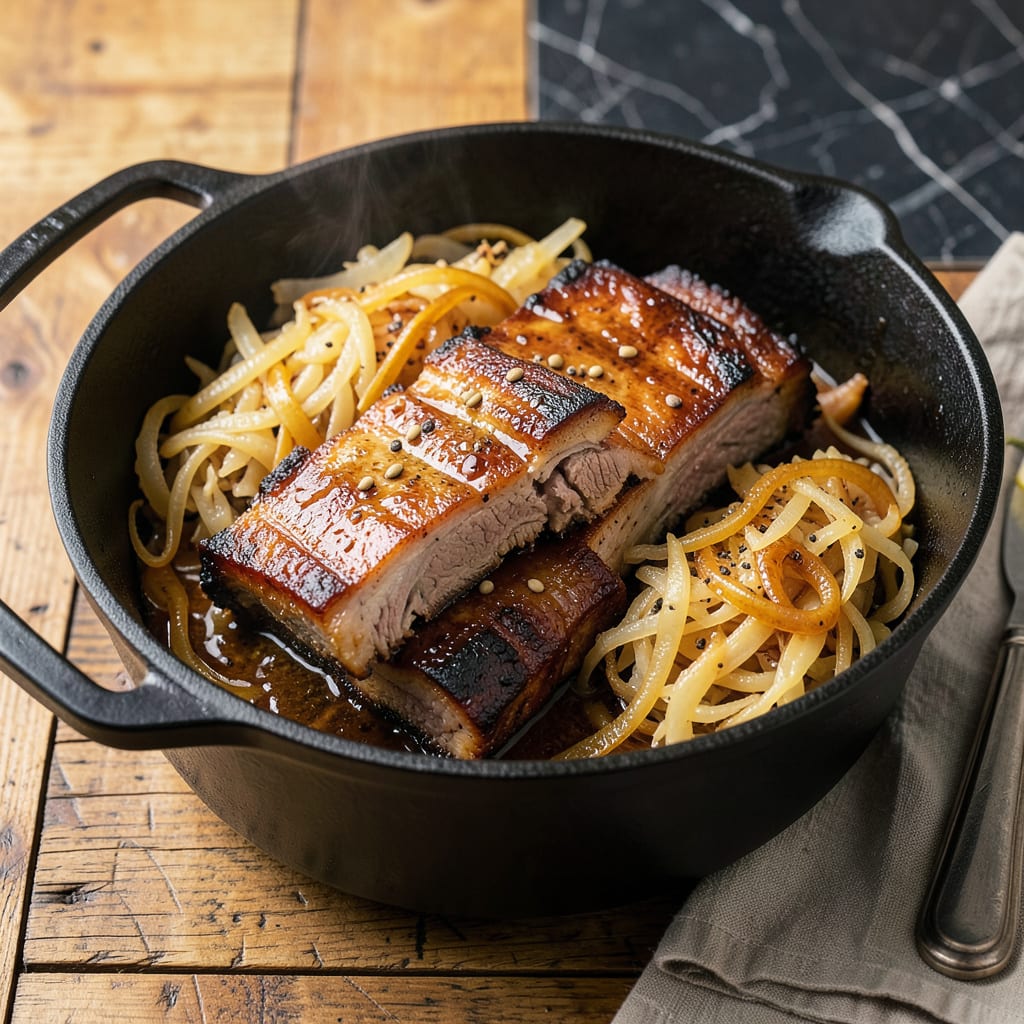
This slow-cooked combination of spare ribs and sauerkraut delivers the perfect balance of tender, fall-off-the-bone meat with the bright, tangy crunch of fermented cabbage. The method is straightforward yet transformative: ribs braise low and slow until reaching ideal 195°F tenderness, while sauerkraut absorbs rich pork flavors without losing its signature bite.
The result is a hearty, one-pot meal where every component enhances the other. Sauerkraut’s acidity cuts through the ribs’ richness, creating a harmony that’s both comforting and complex. Whether for a weekend family dinner or holiday gathering, this dish proves that simple techniques can yield extraordinary results.
Ingredients for Spare Ribs and Sauerkraut
Optimal ingredient selection ensures the perfect balance of tender ribs and vibrant sauerkraut in this transformative one-pot dish.
| Ingredient | Amount | Notes |
|---|---|---|
| Pork Spareribs 🥩 | 3 lb | St. Louis-style, trimmed of excess fat |
| Sauerkraut 🥬 | 2 lb | Fresh-packed, drained but not rinsed |
| Yellow Onion 🧅 | 1 whole | Medium, thinly sliced |
| Granulated Brown Sugar 🍚 | 2 tbsp | Light or dark variety |
| Apple Cider Vinegar 🍎 | ¼ cup | For balancing acidity |
| Dijon Mustard 🧂 | 1 tbsp | Smooth, not whole-grain |
| Caraway Seeds 🌿 | 1 tsp | Lightly toasted for aroma |
| Bay Leaves 🍃 | 2 whole | Dried, for braising liquid |
| Black Peppercorns 🌶️ | 1 tsp | Whole, for infusion |
| Kosher Salt 🧂 | 1 ½ tsp | Diamond Crystal preferred |
| Chicken Stock 🍲 | 1 cup | Low-sodium, homemade preferred |
| Unsalted Butter 🧈 | 2 tbsp | For finishing richness |
| Fresh Flat-Leaf Parsley 🌿 | ¼ cup | Chopped, for garnish |
[recipeingredientscaler]
The pork spareribs are the foundation of this dish. St. Louis-style ribs offer the ideal meat-to-fat ratio for slow cooking, ensuring the 195°F tenderness mentioned in the introduction. Source from a trusted butcher or high-turnover grocery store—look for ribs with even marbling and minimal surface fat. Costco often carries quality pre-trimmed racks. The sauerkraut must be fresh-packed (refrigerated section) rather than shelf-stable; Boar’s Head or Frank’s brands deliver consistent texture and acidity balance required for this preparation.
For the braising liquid, homemade chicken stock provides superior depth, though low-sodium store-bought (such as Swanson’s) works adequately. Caraway seeds are non-negotiable for authentic flavor—toast them briefly in a dry pan before adding. No caraway? Fennel seeds at half the quantity offer a comparable anise note. Apple cider vinegar can be substituted with white wine vinegar, though the fruit undertones will be less pronounced. The Dijon mustard stabilizes the emulsion; whole-grain mustard will alter the final texture.
Prepared sauerkraut maintains quality for 1 week refrigerated in its original packaging. Once combined with the ribs, the complete dish holds for 4 days—reheat gently to preserve texture. Unused caraway seeds store in a cool, dark place for 6 months. For optimal results, portion leftovers with some braising liquid to prevent drying. The flavor profile intensifies overnight, making this an ideal make-ahead meal for gatherings as referenced in the introduction.
Why You’ll Love This Recipe
- I’ll be real: I make this for our annual New Year’s luck feast, but also when I’m too tired to think. It’s hearty enough for a crowd, unfussy enough for a weeknight, and my picky nephew even eats it (after removing the onions, but hey).
- One-Pan Magic: Between us, this is my lazy-day secret. The ribs and sauerkraut simmer together in one pot while I do literally anything else—no babysitting, no last-minute scrambling. Just brown the ribs, toss everything in, and let the oven do the work.
- Sweet-Tang Clash: That first bite where the caramelized brown sugar hits the sharp sauerkraut? Ridiculously good. The apple cider vinegar cuts through the pork’s richness, and the onions turn jammy—it’s the kind of flavor balance I’d pay restaurant prices for (but won’t).
- New Year’s or Tuesday: I’ll be real: I make this for our annual New Year’s luck feast, but also when I’m too tired to think. It’s hearty enough for a crowd, unfussy enough for a weeknight, and my picky nephew even eats it (after removing the onions, but hey).
Step-by-Step Instructions for Spare Ribs and Sauerkraut
This method transforms tough ribs into fall-off-the-bone tenderness while balancing sauerkraut’s tang with subtle sweetness.
Step 1: Prepare the Ribs and Aromatics
Begin by cutting the 3 lb Pork Spareribs into individual ribs or manageable sections. Pat them completely dry with paper towels to ensure proper browning. Season all sides generously with 1.5 tsp Kosher Salt, pressing it into the meat so it adheres during cooking.
In a large Dutch oven, combine the 2 lb Sauerkraut (drained but not rinsed), 1 whole Yellow Onion (thinly sliced), 2 tbsp Granulated Brown Sugar, 1 tsp Caraway Seeds, 2 whole Bay Leaves, and 1 tsp Black Peppercorns. The sugar will caramelize during cooking, balancing the sauerkraut’s natural acidity.
Step 2: Sear and Layer the Ingredients
Heat the Dutch oven over medium-high heat until hot. Add the seasoned ribs and sear for 3-4 minutes per side until deep golden brown. This creates a flavorful fond that will enrich the braising liquid. Remove the ribs and set aside temporarily.
To the same pot, add the 0.25 cup Apple Cider Vinegar and 1 tbsp Dijon Mustard, scraping up any browned bits from the bottom. Stir in the 1 cup Chicken Stock, then return the ribs to the pot, nestling them into the sauerkraut mixture. The liquid should come about halfway up the ribs.
Step 3: Braise to Perfect Tenderness
Bring the mixture to a gentle simmer, then reduce heat to low. Cover and maintain at a bare simmer for 2 to 2.5 hours, checking occasionally to ensure the liquid doesn’t reduce too quickly. The ribs are done when the meat pulls away from the bone with minimal resistance.
During the final 30 minutes of cooking, remove the lid to allow the liquid to reduce slightly. This concentrates the flavors while keeping the sauerkraut moist but not watery. The caraway seeds and bay leaves will have infused their aromatic qualities throughout the dish.
Step 4: Finish and Serve
Once the ribs are tender, carefully remove them from the pot and set aside. Stir the 2 tbsp Unsalted Butter into the sauerkraut mixture, allowing it to melt completely. This adds a velvety richness that balances the dish’s tangy elements.
Return the ribs to the pot and warm through for 2-3 minutes. Discard the bay leaves before serving. Garnish with the 0.25 cup Fresh Flat-Leaf Parsley, which adds a bright, fresh contrast to the rich, braised flavors. Serve immediately while the ribs are at their most tender and the sauerkraut retains its textural contrast.
Flavor Customization for This spare ribs and sauerkraut
Sweet and Smoky
For a deeper flavor profile, add 1 tbsp smoked paprika and 1 tbsp molasses to the braising liquid. The paprika adds a subtle smokiness that complements the pork beautifully, while molasses enhances the caramelization of the sauerkraut. I love how this creates a BBQ-inspired twist without overpowering the dish’s natural balance. 🔥
Spicy Kick
If you enjoy heat, stir in ½ tsp crushed red pepper flakes with the caraway seeds and add 1 tbsp sriracha during the final 30 minutes of cooking. The heat builds gradually and pairs surprisingly well with the tangy sauerkraut. For even more complexity, I sometimes add 1 chopped jalapeño when sautéing the onions.
Herb-Forward Variation
Boost freshness by adding 2 sprigs fresh thyme and 1 sprig rosemary to the braising liquid. Remove them with the bay leaves before serving. This variation works particularly well when serving with crusty bread to soak up the aromatic broth. The herbs add brightness without competing with the dish’s rich foundation.
Beer-Braised Depth
Replace ½ cup of the chicken stock with ½ cup dark beer (like Guinness or a porter). The maltiness caramelizes beautifully with the brown sugar, creating a more complex sauce. I find this works best when using fresh sauerkraut rather than pasteurized, as the live cultures react wonderfully with the beer’s yeast notes.
Apple-Inspired Twist
Add 1 diced Granny Smith apple with the onions for a subtle sweet-tart contrast. The apples break down during cooking, adding body to the sauerkraut while maintaining a hint of freshness. This variation feels particularly autumnal and pairs beautifully with the caraway’s earthy notes.
Creamy Finish
For a richer sauce, stir in ¼ cup heavy cream during the final 10 minutes of cooking. This creates a velvety texture that coats both the ribs and sauerkraut beautifully. I recommend reducing the butter to 1 tbsp if using this method to keep the dish balanced. The cream softens the acidity while enhancing the overall mouthfeel. ✨
Nutrition Facts

- 6 Egg Cake Recipe with Oil: Light as Air With Buttery Moisture - October 4, 2026
- 4 Bean Casserole Recipe: One-Pan Heartiness With Smoky Paprika Depth - October 4, 2026
- 3-Ingredient Keto Mug Cake Recipe: Microwave Magic in 2 Minutes - October 4, 2026