
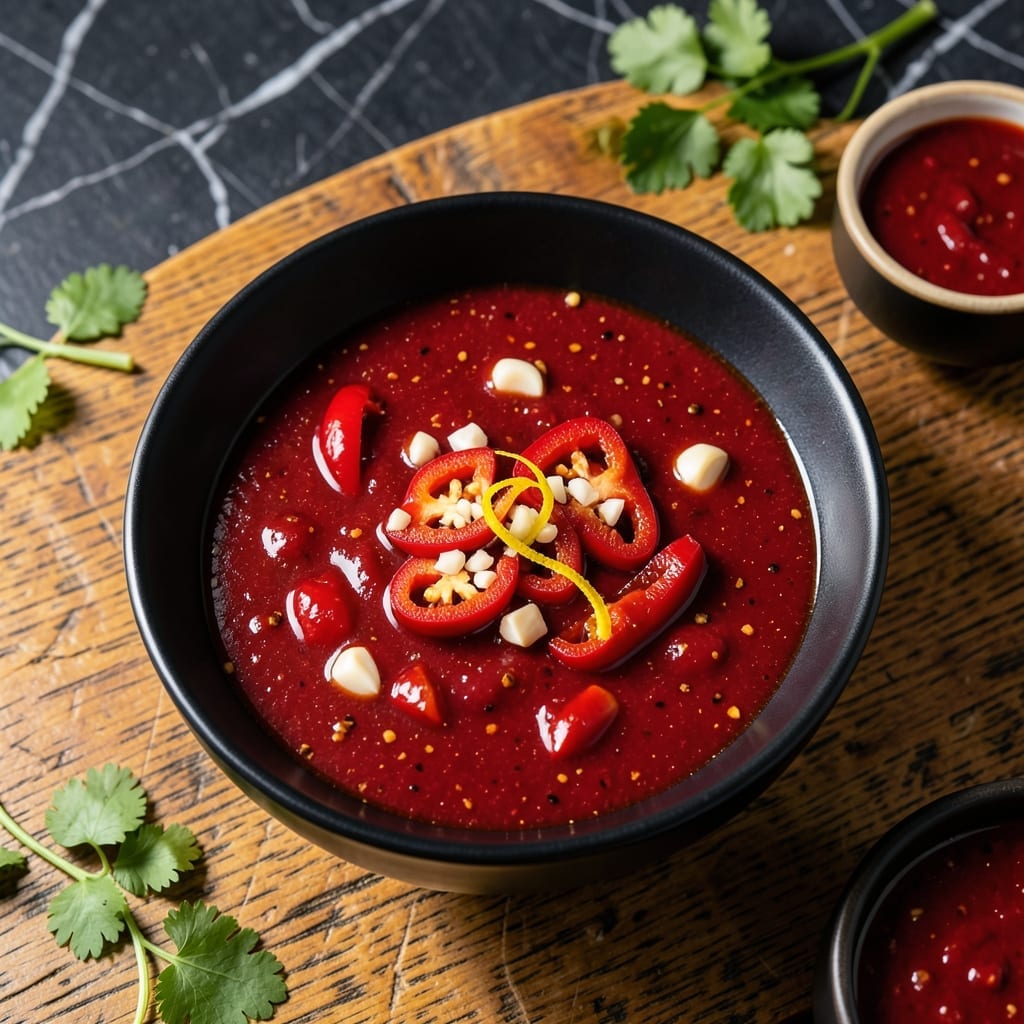
I’ve developed a homemade sriracha that captures the perfect balance of heat, garlic, and tangy vinegar without any preservatives or additives. This version stays true to the classic flavor profile while giving you full control over the ingredients and spice level.
The process begins with fermenting red jalapeños, which deepens their flavor and creates that signature complexity. Garlic and vinegar are blended in after fermentation, ensuring a smooth, vibrant sauce that’s both bold and balanced.
What you’ll get is a versatile condiment that elevates everything from noodles to sandwiches. The fermentation step is key—it transforms the peppers into something far greater than the sum of their parts.
Store it in the fridge for up to six months and use it anywhere you’d reach for the bottled version. This recipe proves that homemade can outshine the original.
Ingredients for Sriracha Recipe Change
Eight simple ingredients transform into bold, fermented homemade hot sauce with classic sriracha flavor.
| Ingredient | Amount | Notes |
|---|---|---|
| Red Jalapeño Peppers 🌶️ | 1 ½ lb | Stems removed, roughly chopped |
| Garlic Cloves 🧄 | 8 cloves | Peeled, ends trimmed |
| Distilled White Vinegar 💧 | 1 cup | 5% acidity minimum |
| Granulated Sugar 🍚 | 2 tbsp | Or substitute coconut sugar |
| Sea Salt 🧂 | 1 tbsp | Non-iodized, fine grain |
| Water 💧 | ½ cup | Filtered for fermentation |
| Paprika 🌶️ | 1 tsp | Sweet or smoked for color |
| Lactic Acid Bacteria Culture 🧫 | ¼ tsp | Optional for fermentation boost |
The peppers are everything here. Red jalapeños give authentic color and medium heat—look for firm, glossy skins at Asian markets or well-stocked grocers. If you find them with green stems, that’s ideal (they’re fully ripe). Avoid any with soft spots or wrinkles. The vinegar should be basic white—Heinz or store brand works perfectly. Don’t waste good apple cider vinegar on this.
Need less heat? Swap in red Fresno peppers for a milder version. No fresh peppers? Frozen jalapeños work in a pinch (thaw first). Short on garlic? Granulated garlic powder at a one-to-four ratio substitutes, but fresh is better. Want it sweeter? Brown sugar or agave instead of white. The paprika is just for color—skip it if you don’t have any.
Fermented sauce keeps for 6 months in the fridge (the flavor just gets better). Store in sterilized glass bottles with tight lids. The fermentation vessel can be any non-reactive container—glass jars work great. Always use clean utensils when scooping to prevent contamination.
Why You’ll Love This Recipe
- 5-Minute Blend: I toss everything in the blender—peppers, garlic, vinegar—and it’s done before the kettle boils.
- Garlic-Pepper Punch: That first hit of fresh jalapeño and roasted garlic is the kind of heat I crave daily.
- Endless Drizzle: I keep a jar in the fridge and it brightens eggs, noodles, even my sad desk salad.
- Pantry Hero: Five shelf-stable ingredients and I’m set for weeks—cheaper than store-bought and twice as bold.
Step-by-Step Instructions for Sriracha
Here’s the method that transforms simple ingredients into bold, fermented heat with perfect consistency every time.
Step 1: Prepare and Blend the Base
Start by roughly chopping the 1.5 lb Red Jalapeño Peppers (stems already removed). I wear gloves for this—jalapeño oils can be relentless on sensitive skin. Add them to a food processor along with the 8 cloves Garlic Cloves.
Pulse until you have a coarse puree. Don’t over-process; you want some texture for character. The mixture should look vibrant green with red flecks, not a smooth paste. This base forms the foundation of your sauce’s heat and aroma.
Step 2: Create the Fermentation Brine
In a large bowl, combine the 1 cup Distilled White Vinegar, 0.5 cup Water, 2 tbsp Granulated Sugar, 1 tbsp Sea Salt, and 1 tsp Paprika. Stir until the sugar and salt dissolve completely—this usually takes 2-3 minutes of vigorous whisking.
The paprika adds depth and color, while the sugar balances the heat. I use fine grain sea salt to ensure it dissolves evenly. The vinegar’s acidity kickstarts the fermentation process that develops the sauce’s complex flavor profile.
Step 3: Combine and Initiate Fermentation
Transfer the pepper-garlic puree to a clean glass jar or fermentation vessel. Pour the brine over the top, ensuring all the peppers are submerged. Add the 0.25 tsp Lactic Acid Bacteria Culture if using—this boosts fermentation and adds tang.
Cover loosely with a lid or fermentation weight. I place a small glass weight on top to keep everything below the liquid surface. Store at room temperature, away from direct sunlight, for 5-7 days to allow fermentation to work its magic.
Step 4: Monitor and Adjust the Ferment
Check daily for bubbles and activity—this is your sign that fermentation is progressing. Stir gently each day to prevent mold growth. You’ll notice the mixture becomes more pungent and the colors deepen as the days pass.
If any mold appears on the surface, skim it off immediately. The liquid should remain clear with vibrant pepper pieces suspended throughout. After 5-7 days, when bubbles slow significantly, the fermentation is complete and ready for the next step.
Step 5: Blend and Strain for Smooth Consistency
Transfer the fermented mixture to a blender and process until completely smooth. This usually takes 1-2 minutes on high speed. The sauce should have a vibrant red-orange color and a thick, pourable consistency.
Strain through a fine-mesh sieve to remove seeds and skins, pressing with a spoon to extract all the liquid. Discard the solids. The resulting sauce should be glossy and uniform. Transfer to a clean bottle and store in the refrigerator, where it’ll keep for up to 6 months.
Pro Tips For Making Sriracha Recipe Change
- Ventilate the kitchen: I learned this the hard way—blending fresh jalapeños releases capsaicin fumes that will burn your eyes and throat. Open windows and turn on the fan before you start, or you’ll regret it halfway through.
- Wear gloves: After making this twice without them, I finally accepted that the oils from the peppers linger on your skin for hours. Save yourself the burning fingers and wear nitrile gloves when handling the jalapeños.
- Ferment 3-5 days: Skipping or rushing the fermentation step gives you a flat, one-dimensional sauce. I was skeptical until I tried it, but letting the mash sit for at least 3 days—stirring daily—actually changes the outcome.
- Strain for smoothness: If you prefer a smoother sriracha, strain the blended mixture through a fine-mesh sieve before cooking. It adds 10 minutes but removes the fibrous bits that can make the texture gritty.
Storing and Reheating This Recipe
Fridge Storage
Once fermented and bottled, your sauce stays fresh in the fridge for up to 6 months. I use sterilized glass bottles with tight-sealing lids to prevent contamination. The flavors deepen over time, so I often wait a week before first use. 🌡️
Freezer Option
For long-term storage beyond 6 months, freeze in ice cube trays. Each cube holds about 1 tbsp, perfect for portioning. Transfer frozen cubes to a freezer bag and store for up to 1 year. Thaw overnight in the fridge.
Reheating Note
This sauce doesn’t need reheating since it’s already shelf-stable after fermentation. If you’ve added it to a cooked dish, simply warm the dish through. Never microwave the sauce alone—it can separate and lose texture.
Container Tips
I prefer swing-top bottles from IKEA or Ball for easy pouring. Always use clean, dry utensils when scooping to prevent mold. Store upright in the fridge door for frequent use.
Fermentation Vessel
The fermentation jar can be reused for your next batch. Wash with hot, soapy water and rinse with a vinegar solution (1:1 water to vinegar) to remove all residue. Air dry completely before storing.
Nutrition Facts
Frequently Asked Questions
What if my fermentation isn’t bubbling after 2 days?
Check the temperature—fermentation works best at 68-75°F. Stir gently and ensure all peppers are submerged. If still inactive, add a pinch more sugar to feed the bacteria.
Can I use apple cider vinegar instead of white?
Yes, but it will alter the flavor slightly, adding fruity notes. Stick to 5% acidity and reduce sugar by 1 tbsp since cider vinegar is sweeter.
How do I fix sauce that’s too thin?
Simmer the strained sauce in a small pot for 5-10 minutes to reduce and thicken. Avoid boiling to preserve the fresh pepper flavor.
Why did my sauce turn brown instead of red?
This happens with over-fermentation or using green peppers. Next time, use fully red jalapeños and ferment for no more than 7 days.

- 6 Egg Cake Recipe with Oil: Light as Air With Buttery Moisture - October 4, 2026
- 4 Bean Casserole Recipe: One-Pan Heartiness With Smoky Paprika Depth - October 4, 2026
- 3-Ingredient Keto Mug Cake Recipe: Microwave Magic in 2 Minutes - October 4, 2026