
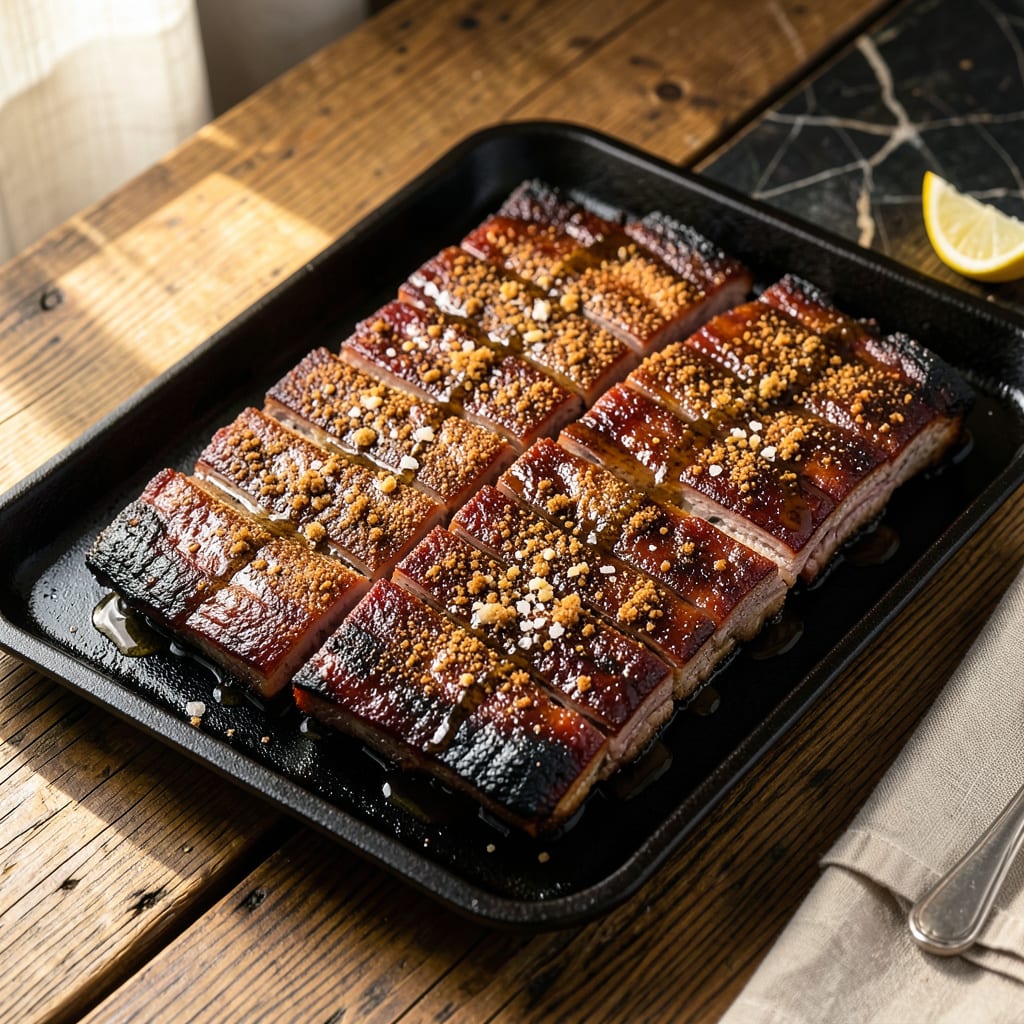
Achieving authentic St. Louis-style ribs in your home oven is entirely possible with the right technique. This method delivers fall-off-the-bone tenderness without requiring a smoker or grill, using a carefully controlled low-and-slow approach that transforms tough ribs into juicy, flavorful masterpieces.
The secret lies in proper preparation—removing the membrane, applying a balanced dry rub, and slow-roasting at 275°F until perfectly tender. Finishing with a quick broil caramelizes the sauce, creating that signature sticky, smoky exterior. These ribs rival any barbecue joint’s, all from your kitchen.
Ingredients for St Louis Style Ribs Bbq Recipe Oven
These carefully selected ingredients transform tough ribs into competition-worthy St. Louis-style barbecue through precise technique and quality components.
| Ingredient | Amount | Notes |
|---|---|---|
| St. Louis-style pork spare ribs 🥩 | 4 lb | Membrane removed, trimmed of excess fat |
| light brown sugar 🍚 | ½ cup | Packed, for dry rub sweetness |
| smoked paprika 🌶️ | 2 tbsp | High-quality for authentic smokiness |
| garlic powder 🧄 | 1 tbsp | Freshly ground preferred |
| onion powder 🧅 | 1 tbsp | Fine granulation for even coating |
| coarse kosher salt 🧂 | 1 tbsp | Diamond Crystal brand recommended |
| freshly ground black pepper 🌶️ | 1 tbsp | Medium-coarse grind |
| ground cumin 🌿 | 1 tsp | Toasted for enhanced aroma |
| cayenne pepper 🔥 | ½ tsp | Adjust for heat preference |
| apple cider vinegar 🍎 | ¼ cup | For tenderizing marinade |
| barbecue sauce 🍯 | 1 ½ cups | High-quality St. Louis-style preferred |
| yellow mustard 🟡 | 2 tbsp | As binder for dry rub |
| worcestershire sauce 🫒 | 1 tbsp | Anchovy-free version if preferred |
| liquid smoke 💨 | 1 tsp | Hickory flavor recommended |
| unsalted butter 🧈 | ¼ cup | For finishing baste |
The ribs are the foundation—St. Louis-style pork spare ribs are essential for authentic results. Optimal quality requires well-marbled slabs with even thickness, available at Costco or specialty butchers. The membrane removal is non-negotiable; use a butter knife to lift and paper towels for grip. For the dry rub, Penzeys offers superior smoked paprika, while Diamond Crystal kosher salt ensures proper seasoning balance without over-salting. Professional kitchens use coarse granulation for even distribution during the extended cooking process.
Substitutions must maintain the flavor profile’s integrity. Dark brown sugar can replace light in the rub, though it imparts deeper molasses notes. For smoke flavor without liquid smoke, increase smoked paprika to 3 tablespoons and add 1/4 teaspoon chipotle powder. The apple cider vinegar is critical for tenderization—white wine vinegar works at equal volume. Barbecue sauce selection dramatically impacts final flavor; Sweet Baby Ray’s St. Louis-style or Stubb’s Original are reliable commercial options that complement the rub’s complexity.
Storage considerations are paramount for food safety. Raw ribs keep 3-4 days refrigerated or 6 months vacuum-sealed and frozen. Prepared dry rub maintains potency for 3 months in airtight containers away from light. Cooked ribs hold 4 days refrigerated or 3 months frozen—reheat gently in 250°F oven with foil to preserve moisture. Standard practice is wrapping ribs in butcher paper post-cooking to retain tenderness during storage.
Why You’ll Love This Recipe
- No Fuss Oven Magic: I’ve tried grilling ribs in the rain, babysitting a smoker for hours—this oven method is my sanity-saver. Just season, wrap, and let the heat do the work while I actually enjoy my weekend.
- That Sweet-Smoky Crust: The brown sugar caramelizes with the smoked paprika into this sticky, slightly crisp edge that’ll have you licking fingers. Honestly, I double the rub now because the first time, my husband scraped the pan clean.
- Feeds a Hungry Table: Whether it’s a Sunday family dinner or my poker night crew, these ribs stretch far—especially with cornbread and slaw. Leftovers? They’re better cold straight from the fridge at midnight. (Yes, I’ve done this.)
- Budget-Friendly Crowdpleaser: Pork spare ribs are half the cost of baby backs, and this recipe turns them into something that tastes like a $20 plate. I’ll be real: I’ve served these to guests who swore I ordered takeout.
Step-by-Step Instructions for St. Louis-Style BBQ Ribs in the Oven
This professional method delivers competition-worthy tenderness with precise oven control and strategic seasoning.
Step 1: Prepare and Season the Ribs
Begin by removing the membrane from the bone side of the St. Louis-style pork spare ribs. Slide a butter knife under the membrane at one end, lift to create separation, then grip with a paper towel and pull it off completely. This ensures the dry rub penetrates directly to the meat and creates better bark formation.
Combine the light brown sugar, smoked paprika, garlic powder, onion powder, coarse kosher salt, freshly ground black pepper, ground cumin, and cayenne pepper in a bowl. Apply the yellow mustard as a binder to both sides of the ribs, then generously coat with the dry rub mixture. The mustard helps the rub adhere while adding subtle tang without overpowering flavor.
Place the seasoned ribs on a wire rack set over a rimmed baking sheet. This elevation allows air circulation on all sides, preventing the ribs from steaming in their own juices. Let them rest at room temperature for 30 minutes while the oven preheats.
Step 2: Slow-Roast for Optimal Tenderness
Preheat your oven to 275°F and position the rack in the lower third of the oven. This lower temperature and placement ensures gentle, even cooking without drying out the exterior. Place the ribs in the oven and roast uncovered for 2.5 hours.
After the initial cooking period, carefully transfer the ribs to a large sheet of heavy-duty aluminum foil. Pour the apple cider vinegar and worcestershire sauce over the ribs, then seal tightly. The vinegar’s acidity helps break down collagen while the worcestershire adds umami depth. Return to the oven and continue cooking for another 1.5 hours.
The ribs should reach an internal temperature of 195-203°F when tested with an instant-read thermometer. At this temperature range, collagen has fully converted to gelatin, creating that signature fall-off-the-bone texture while maintaining structural integrity.
Step 3: Apply the Finishing Glaze
Remove the ribs from the oven and carefully unwrap the foil. Increase the oven temperature to 375°F. Brush the ribs generously with the barbecue sauce, ensuring complete coverage on all surfaces. The higher heat will caramelize the sugars in the sauce, creating a glossy, flavorful crust.
Return the ribs to the oven, uncovered, and cook for an additional 15-20 minutes. This final step develops the signature sticky exterior while allowing the sauce to meld with the existing seasoning layers. Watch carefully to prevent burning – the sauce should bubble vigorously and develop a deep mahogany color.
During this phase, melt the unsalted butter and stir in the liquid smoke. After removing the ribs from the oven, brush them with this butter mixture. The butter adds richness while the liquid smoke enhances the authentic barbecue aroma that oven cooking might otherwise lack.
Step 4: Rest and Serve
Transfer the ribs to a cutting board and let them rest for 10-15 minutes before slicing. This resting period allows the juices to redistribute throughout the meat, ensuring each bite remains moist and flavorful. Tent loosely with foil to maintain temperature without trapping steam.
Slice the ribs between the bones using a sharp chef’s knife. The meat should pull away cleanly from the bone with minimal resistance, revealing the characteristic “smoke ring” just beneath the surface. The exterior should have a slight crust from the caramelized sauce, while the interior remains tender and juicy.
Serve immediately with additional barbecue sauce on the side if desired. The ribs should have a complex flavor profile balancing sweet, smoky, and tangy notes with a subtle heat from the cayenne. The texture should offer initial resistance from the crust, giving way to meat that separates effortlessly from the bone.
Wine and Beer Pairings for This Recipe
Bold Red Wines
Nothing complements the rich, smoky flavors of these ribs like a bold red wine. I recommend a Zinfandel from California’s Dry Creek Valley—its jammy fruit and peppery notes stand up to the barbecue sauce beautifully. For something more structured, try a Syrah with its dark berry and smoked meat characteristics. 🍷
Malty Craft Beers
When I’m serving these ribs, I always reach for a malty craft beer. A brown ale like Cigar City’s Maduro offers caramel and chocolate notes that pair perfectly with the caramelized sauce. For more hop balance, a porter with coffee undertones creates a delicious contrast to the sweetness.
Sweet Tea Pairing
For non-alcoholic options, nothing beats classic Southern sweet tea. The tannins from black tea and the sweetness balance the smoky, spicy flavors of the ribs. I make mine with Luzianne tea bags and a touch of lemon for brightness. The acidity cuts through the richness beautifully.
Whiskey Options
Bourbon lovers will find these ribs pair wonderfully with a Kentucky straight bourbon. I particularly enjoy Buffalo Trace—its vanilla and caramel notes complement the brown sugar in the rub. For a smokier option, try a Tennessee whiskey like Jack Daniel’s Single Barrel.
Crisp Lager Beers
If you prefer lighter beers, a crisp pilsner or Helles lager works surprisingly well. The clean malt profile and slight bitterness refresh your palate between bites. I like Stiegl Radler for its citrus notes that contrast nicely with the smoky ribs.
Dessert Wine Match
For a unique pairing, try a tawny port with its nutty, caramel flavors. The sweetness and alcohol content stand up to the intensity of the ribs. I serve it slightly chilled—about 55°F—to enhance its refreshing qualities against the rich meat. ✨
Nutrition Facts
Frequently Asked Questions
Why remove the membrane from the ribs?
Removing the membrane ensures the dry rub penetrates directly to the meat and creates better bark formation. It also prevents a rubbery texture and allows the seasoning to adhere properly during cooking.
Can I use baby back ribs instead?
While baby back ribs work, St. Louis-style ribs have more marbling and fat, which delivers richer flavor and better texture. Adjust cooking time to 2-2.5 hours for baby backs since they’re smaller.
What if I don’t have liquid smoke?
Increase the smoked paprika to 3 tablespoons and add 1/4 teaspoon chipotle powder for depth. The oven method already develops good flavor, but these boosts mimic smokiness effectively.
How do I know when they’re done?
Ribs are ready at 195-203°F internal temperature. The meat should pull back from the bones by 1/4 inch and bend easily when lifted with tongs. A toothpick should slide in like butter.
Can I make these ahead of time?
Cook ribs completely, cool, then refrigerate up to 4 days or freeze for 3 months. Reheat wrapped in foil at 250°F for 30-45 minutes to restore tenderness.

- 6 Egg Cake Recipe with Oil: Light as Air With Buttery Moisture - October 4, 2026
- 4 Bean Casserole Recipe: One-Pan Heartiness With Smoky Paprika Depth - October 4, 2026
- 3-Ingredient Keto Mug Cake Recipe: Microwave Magic in 2 Minutes - October 4, 2026