
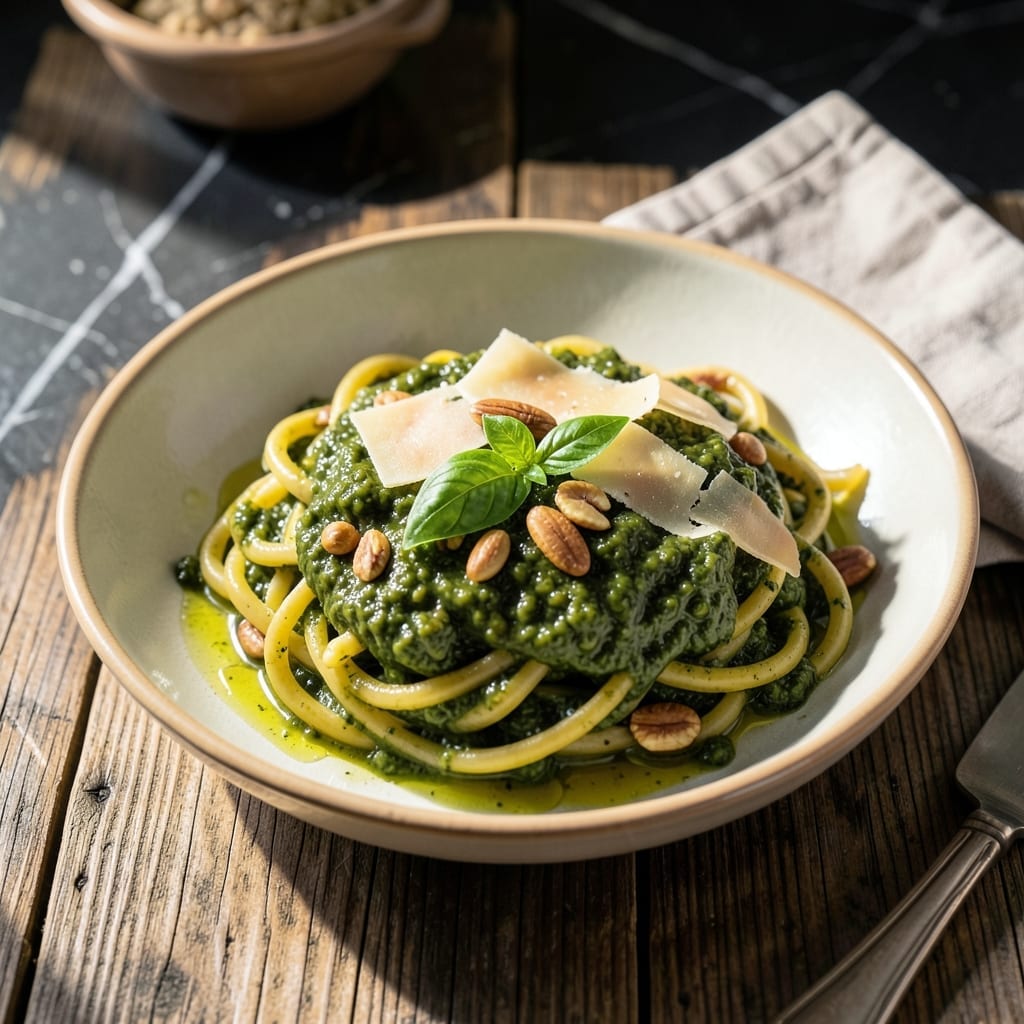
This authentic Genovese pesto delivers the true taste of Liguria with just a handful of simple ingredients. I’ve refined this method to capture the bright, herbal essence that defines traditional preparations.
The key is using fresh basil, toasted pine nuts, and high-quality Parmesan, blended just until smooth but not over-processed. This preserves the vibrant green color and fresh flavor that make pesto so special.
What you’ll get is a rich, aromatic sauce that clings perfectly to pasta or enhances any dish with its bold, herby character. It’s versatile enough for sandwiches, soups, or as a marinade.
Store it properly to keep that fresh-basil brightness for up to a week. Here’s how to make it right.
Ingredients for Stanley Tucci Pesto
Eight authentic Ligurian ingredients blend into this vibrant, aromatic sauce with true Genovese character.
| Ingredient | Amount | Notes |
|---|---|---|
| Fresh Basil Leaves 🌿 | 2 cups | Packed, stems removed, Genovese variety preferred |
| Pine Nuts 🥜 | ⅓ cup | Toasted until golden and fragrant |
| Parmigiano-Reggiano Cheese 🧀 | ¾ cup | Freshly grated from a wedge |
| Pecorino Sardo Cheese 🧀 | ¼ cup | Freshly grated from a wedge |
| Garlic Cloves 🧄 | 2 cloves | Peeled and lightly crushed |
| Extra-Virgin Olive Oil 🫒 | ¾ cup | High-quality, cold-pressed, Ligurian preferred |
| Coarse Sea Salt 🧂 | ½ tsp | Diamond Crystal or Maldon |
| Freshly Ground Black Pepper 🌶️ | ¼ tsp | Cracked just before using |
The basil must be Genovese variety—look for small, tender leaves with a sweet aroma. Trader Joe’s and Whole Foods often carry it fresh. Pine nuts are pricey but essential; Costco offers the best bulk pricing. For cheeses, Parmigiano-Reggiano and Pecorino Sardo are non-negotiable. Seek them out at specialty grocers like Eataly or Italian markets for the authentic flavor profile.
No pine nuts? Walnuts work in a pinch but lack the buttery crunch. The ratio of Parmigiano to Pecorino can be adjusted—some prefer more Pecorino for a sharper bite. Fresh garlic is critical; jarred minced lacks the pungency. If basil is scarce, half parsley and half basil can stretch it, though the flavor changes. Always use high-quality olive oil—this isn’t the time for generic brands.
Pesto oxidizes quickly. Press plastic wrap directly on the surface before sealing to prevent browning. Keeps in the fridge for 5-7 days or frozen in ice cube trays for 6 months. The vibrant green fades over time, but the flavor remains robust.
Why You’ll Love This Recipe
- 5-Minute Magic: I toss everything in the food processor and it’s ready before the pasta boils.
- Cheesy Depth: That mix of Parmigiano-Reggiano and Pecorino Sardo gives it a rich, nutty punch you just can’t get from pre-made.
- Endless Uses: I’ve slathered it on sandwiches, stirred it into soups, even used it as a pizza base.
- Budget Stretcher: A handful of basil and a few nuts transform cheap pasta into a restaurant-worthy dish. Honestly, it feels like stealing.
Step-by-Step Instructions for Authentic Genovese Pesto
Master this traditional technique to preserve the vibrant flavor and silky texture of this classic sauce.
Step 1: Toast the Pine Nuts to Golden Perfection
Begin by toasting the 0.33 cup Pine Nuts in a dry skillet over medium-low heat. Stir constantly for 3-5 minutes until they turn a deep golden brown and release a nutty aroma. Watch closely—they burn quickly once they start to color.
Immediately transfer the toasted pine nuts to a plate to cool. This stops the cooking process and prevents them from becoming bitter. The residual heat in the pan can continue to cook them if left in place, so don’t skip this step.
Step 2: Crush the Garlic with Salt for Maximum Flavor
In a mortar and pestle, combine the 2 cloves Garlic Cloves (lightly crushed) with the 0.5 tsp Coarse Sea Salt. Grind them together into a smooth paste. The salt acts as an abrasive, helping to break down the garlic completely while infusing it with seasoning.
This method ensures the garlic distributes evenly throughout the pesto without leaving large chunks. If you don’t have a mortar and pestle, mince the garlic very finely and mix it with the salt before proceeding.
Step 3: Blend Basil Leaves with Pine Nuts and Garlic
Add the 2 cups Fresh Basil Leaves to the mortar with the garlic paste. Gently crush the leaves against the sides of the mortar, then add the toasted 0.33 cup Pine Nuts. Continue grinding in a circular motion until the mixture forms a coarse paste.
The key here is patience—rushing this step can bruise the basil, turning it bitter. Work the pestle in small circles, pressing the leaves against the sides rather than smashing them. This preserves the bright, fresh flavor of the basil.
Step 4: Incorporate the Cheeses and Olive Oil
Transfer the basil mixture to a bowl and stir in the 0.75 cup Parmigiano-Reggiano Cheese and 0.25 cup Pecorino Sardo Cheese. Both should be freshly grated from a wedge for the best texture and flavor. The Parmigiano-Reggiano adds depth, while the Pecorino Sardo contributes a sharp, tangy note.
Slowly drizzle in the 0.75 cup Extra-Virgin Olive Oil while stirring constantly. The oil should emulsify with the other ingredients, creating a smooth, creamy sauce. Use high-quality, cold-pressed oil for the most authentic flavor.
Step 5: Finish with Black Pepper and Adjust Consistency
Stir in the 0.25 tsp Freshly Ground Black Pepper. Taste and adjust the seasoning if needed, though the salt from the cheeses and the initial grinding should be sufficient. If the pesto is too thick, add a little more Extra-Virgin Olive Oil, one tablespoon at a time, until it reaches your desired consistency.
This sauce should be vibrant green, fragrant, and slightly chunky. For the most authentic experience, use it immediately or store it in an airtight container in the refrigerator for up to 3 days, with a thin layer of olive oil on top to preserve its color and freshness.
Pro Tips For Making Stanley Tucci Pesto
- Toast the Pine Nuts: Lightly toast the pine nuts in a dry pan for 2-3 minutes until golden—I learned this the hard way after using raw ones and ending up with a bitter pesto.
- Blanch the Basil: Drop the basil leaves in boiling water for 10 seconds, then shock in ice water. Sounds weird, but it keeps the pesto that vibrant green color instead of turning muddy.
- Skip the Food Processor: Use a mortar and pestle or pulse very briefly in a blender. Over-processing heats the basil and turns your pesto into a sad, dark paste.
- Grate Your Own Cheese: Pre-grated Parmigiano-Reggiano and Pecorino Sardo have anti-caking agents that make the pesto grainy. Grate it fresh—about ½ cup of each for the right texture.
Best Sauces and Condiments for This Recipe
Classic Pairings
This vibrant sauce is perfect with trofie pasta, a short Ligurian shape that traps pesto beautifully. I also love it with gnocchi or linguine for a more elegant presentation. The key is using just enough to coat the pasta lightly. 🌟
Bread and Dips
Spread on crusty Italian bread for a simple bruschetta, or mix with ricotta cheese for a creamy dip. A focaccia sandwich with pesto, fresh mozzarella, and tomato slices is a quick lunch favorite.
Protein Enhancers
Drizzle over grilled chicken or seared scallops for a bright, herby finish. I often toss shrimp in pesto before grilling—the flavors meld perfectly. It also works wonders as a marinade for lamb chops.
Soup and Salad
Stir a spoonful into minestrone soup or tomato bisque for depth. For salads, thin with 1-2 tbsp olive oil and 1 tbsp lemon juice to create a quick dressing. It pairs especially well with Caprese salad.
Unexpected Uses
Mix into mashed potatoes for a herby twist, or swirl into hummus for a Mediterranean-inspired dip. I’ve even used it as a pizza sauce base—just spread thinly before adding toppings. 💫
Nutrition Facts
Frequently Asked Questions
Can I use a food processor instead of a mortar and pestle?
Yes, but pulse carefully to avoid over-processing. A food processor can work in 10-15 second bursts, scraping down the sides between pulses. The texture won’t be as smooth as traditional methods.
Why does my pesto turn brown after making it?
Oxidation causes the color change. To prevent this, press plastic wrap directly on the surface before sealing. A thin layer of olive oil on top also helps preserve the vibrant green.
Can I substitute walnuts for pine nuts?
Yes, walnuts work in a pinch, though they have a stronger flavor. Toast them first for 3-5 minutes to enhance their nuttiness. The texture will be slightly different but still delicious.

- 6 Egg Cake Recipe with Oil: Light as Air With Buttery Moisture - October 4, 2026
- 4 Bean Casserole Recipe: One-Pan Heartiness With Smoky Paprika Depth - October 4, 2026
- 3-Ingredient Keto Mug Cake Recipe: Microwave Magic in 2 Minutes - October 4, 2026