
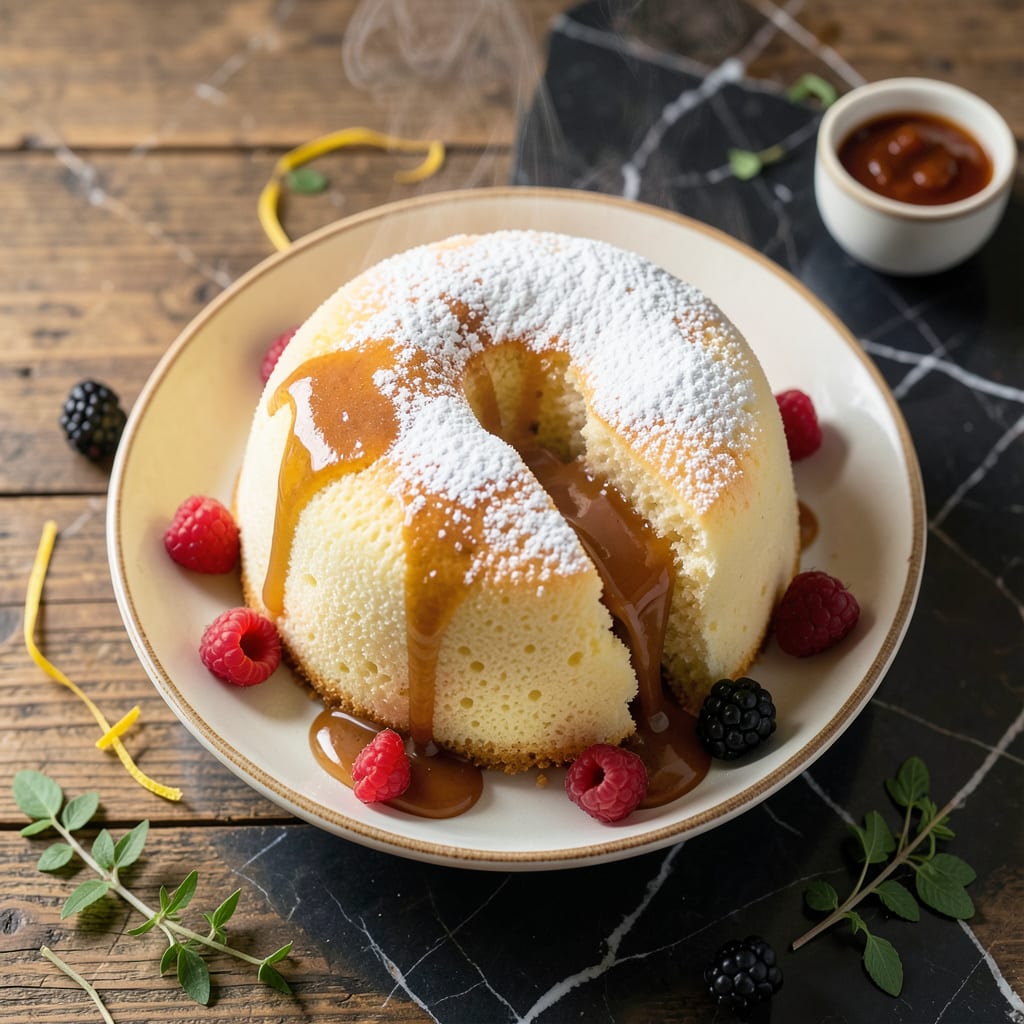
This steam cake recipe delivers pillowy soft texture with a delicate vanilla aroma that fills your kitchen. The gentle steaming method ensures an even, moist crumb that’s impossible to achieve through baking alone.
With just a few basic ingredients and 30 minutes of steaming time, you’ll have a light, fluffy cake that’s perfect for any occasion. The result is a tender, slightly springy dessert that’s as satisfying as it is simple to make.
Ingredients for Steam Cake
Simple ingredients for a pillowy, aromatic cake that steams to perfection.
| Ingredient | Amount | Notes |
|---|---|---|
| All-Purpose Flour 🌾 | 2 cups | Sifted for light texture |
| Granulated Sugar 🍚 | 1 cup | Fine white sugar preferred |
| Large Eggs 🥚 | 4 whole | Room temperature for best results |
| Vanilla Extract 🌿 | 2 tsp | Pure vanilla for best aroma |
| Baking Powder 🧂 | 2 tsp | Ensures light, fluffy rise |
| Salt 🧂 | ¼ tsp | Balances sweetness |
| Vegetable Oil 🫒 | ½ cup | Neutral flavor preferred |
| Milk 🥛 | ¾ cup | Whole milk for richness |
| Water 💧 | 1 cup | For steaming |
| Unsalted Butter 🧈 | 2 tbsp | Melted for greasing |
The flour is the foundation—King Arthur or Gold Medal all-purpose both work beautifully. Use fine granulated sugar for even distribution, and don’t skip sifting the dry ingredients (worth the extra minute). Room temperature eggs incorporate air better, so pull them out 30 minutes before starting. For the vanilla, Nielsen-Massey is the gold standard, but any pure extract will deliver that signature aroma.
No vanilla extract? Vanilla bean paste at half the amount adds speckles and depth. Swap vegetable oil for melted coconut oil if you want a hint of richness. Whole milk is ideal, but 2% works fine (avoid skim—it’s too thin). Need a dairy-free version? Oat or almond milk plus a splash of vinegar mimics the tang. The baking powder must be fresh—test it by dropping a pinch in hot water to check for bubbles.
Store eggs and milk in the coldest part of your fridge. The cake keeps 3-4 days at room temperature in an airtight container, or freeze slices for up to 3 months. Bring to room temp before serving for the best texture.
Why You’ll Love This Recipe
- One Bowl Wonder: I just dump flour, sugar, eggs, vanilla, and baking powder into a bowl—no mixer, no fuss.
- Vanilla Cloud: The vanilla extracts shines through, giving that warm, sweet aroma in every fluffy bite.
- Breakfast to Dessert: Honestly, it works for tea time or as a quick snack after school.
- Pocket-Friendly Treat: Five simple pantry staples, and I’m spending pennies for a cake that feels special.
Step-by-Step Instructions for Steam Cake
This method delivers a light, airy texture with that signature vanilla aroma every time.
Step 1: Prepare the Steamer and Cake Pan
Fill a large pot with the 1 cup Water and bring to a full boil over high heat. You want a vigorous, rolling boil before adding the cake pan—this ensures consistent heat throughout the steaming process.
While the water heats, brush the inside of an 8-inch round cake pan with the 2 tbsp Unsalted Butter melted. I use a pastry brush to coat every crevice, including the sides. A well-greased pan prevents sticking and helps the cake release cleanly after steaming.
Step 2: Whisk Dry Ingredients
In a medium bowl, sift together the 2 cups All-Purpose Flour, 2 tsp Baking Powder, and 0.25 tsp Salt. Sifting is crucial here—it aerates the flour and breaks up any lumps, which contributes to the cake’s light, pillowy texture.
Set this bowl aside. The dry ingredients will be incorporated last to prevent overmixing, which can make the cake dense. Keep them nearby but separate until the wet ingredients are fully combined.
Step 3: Combine Wet Ingredients
In a large mixing bowl, whisk together the 1 cup Granulated Sugar and 4 whole Large Eggs until pale and slightly thickened, about 2-3 minutes. The mixture should ribbon off the whisk when lifted.
Slowly drizzle in the 0.5 cup Vegetable Oil, 0.75 cup Milk, and 2 tsp Vanilla Extract while continuing to whisk. This emulsifies the fats and liquids, creating a smooth, homogeneous base for your batter. The vanilla aroma should be noticeable at this stage.
Step 4: Fold and Steam
Gently fold the dry ingredients into the wet mixture using a silicone spatula. Mix just until no flour streaks remain—overmixing will develop gluten and make the cake tough. The batter should be thick but pourable.
Pour the batter into the prepared pan and smooth the top with the spatula. Place the pan in the steamer, making sure it doesn’t touch the water. Cover with a tight-fitting lid and steam over medium heat for 45-50 minutes.
Step 5: Check and Cool
To test doneness, insert a toothpick into the center—it should come out clean with no wet batter clinging to it. The cake should also spring back lightly when pressed with a finger.
Remove the pan from the steamer and let it cool for 10 minutes before carefully turning the cake out onto a wire rack. This brief rest allows the structure to set, preventing collapse. Serve warm or at room temperature, where its soft texture and vanilla aroma truly shine.
Pro Tips For Making Steam Cake
- Preheat the Steamer: I learned this the hard way—start with boiling water in your steamer before adding the cake batter, or you’ll end up with a dense, uneven rise.
- Whisk Eggs Well: Beat the eggs and sugar until pale and frothy, about 5-7 minutes; this is what gives the cake its light, airy texture.
- Skip Cold Ingredients: Use room-temperature eggs and vanilla extract—cold ingredients can cause the batter to seize up and lose volume.
- Tap the Mold: After pouring the batter into the mold, tap it firmly on the counter twice to remove air bubbles and prevent tunnels in the finished cake.
Regional Styles of These Flavors
Chinese Style
Traditional Chinese steam cakes, or zheng gao, often use rice flour for a chewier texture. They’re typically smaller, steamed in individual cups, and flavored with pandan leaves or red bean paste. The steaming time is shorter—about 20-25 minutes for mini cakes. 🌏
Indonesian Kue Mangkok
In Indonesia, kue mangkok are cup-shaped steam cakes made with coconut milk and palm sugar. The batter is poured into small molds and steamed for 15-20 minutes. They have a dense, custard-like texture and are often topped with shredded coconut.
Filipino Puto
Filipino puto are fluffy, slightly sweet steam cakes often made with glutinous rice flour. They’re traditionally steamed in bamboo molds and served with savory dishes like dinuguan. The key is using ube (purple yam) or cheese on top for extra flavor.
Vietnamese Bánh Tiêu
Vietnamese bánh tiêu are hollow, chewy steam cakes made from glutinous rice flour and tapioca starch. They’re filled with sweet mung bean paste and steamed until the outer layer becomes slightly crispy. The contrast of textures is what makes them special.
Thai Khanom Mor Gaeng
Thai khanom mor gaeng are delicate, layered steam cakes made with coconut milk and rice flour. The batter is poured in layers, with each layer steamed for 5-7 minutes before adding the next. The result is a beautiful, striped cake with a jiggly texture.
Nutrition Facts
Frequently Asked Questions
Can I use a different pan size?
An 8-inch round pan works best, but you can use a 9-inch. Adjust steaming time to 40-45 minutes for slightly thinner results. Avoid glass pans—they may crack from direct heat.
Why is my cake dense instead of fluffy?
Overmixing the batter develops gluten, making it tough. Fold dry ingredients just until combined. Also, ensure your baking powder is fresh—old leavening loses its power.
Can I make this without a steamer basket?
Yes! Use a heatproof plate or rack inside a large pot. Elevate the pan above boiling water, cover tightly with foil, and steam as usual. Check water level occasionally.
How do I store leftovers?
Keep in an airtight container at room temperature for 3-4 days. For longer storage, freeze slices for up to 3 months. Thaw overnight in the fridge before serving.

- 6 Egg Cake Recipe with Oil: Light as Air With Buttery Moisture - October 4, 2026
- 4 Bean Casserole Recipe: One-Pan Heartiness With Smoky Paprika Depth - October 4, 2026
- 3-Ingredient Keto Mug Cake Recipe: Microwave Magic in 2 Minutes - October 4, 2026