
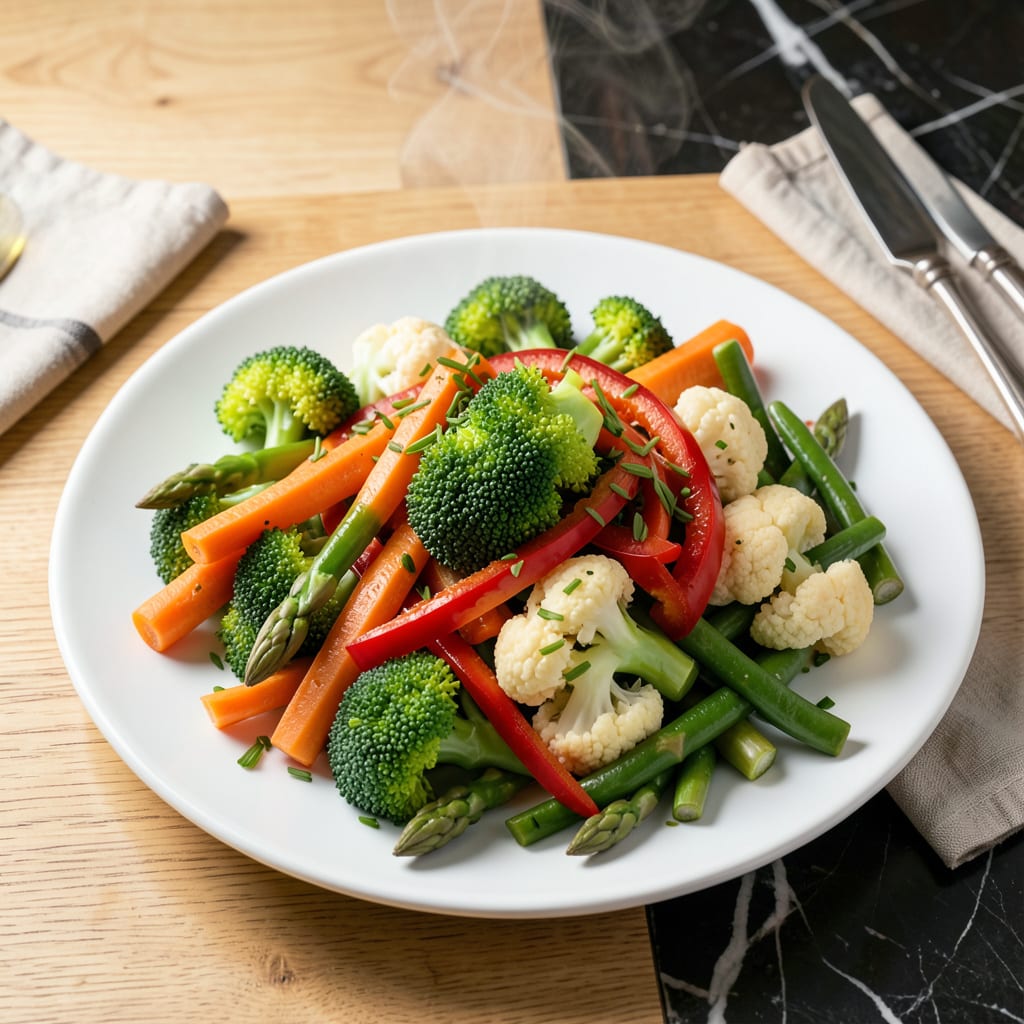
Steaming locks in color, nutrients, and natural sweetness like no other cooking method can. This approach yields tender-crisp vegetables with minimal effort and maximum flavor.
With just water, a steamer basket, and fresh produce, you’ll achieve perfectly cooked results every time. The gentle heat preserves texture and vibrant hues.
Ingredients for Steam Cooked Vegetables
Fresh produce and a steamer basket are all you need for vibrant, crisp-tender results every time.
| Ingredient | Amount | Notes |
|---|---|---|
| Broccoli Florets 🥦 | 4 cups | Cut into even-sized pieces |
| Carrot Sticks 🥕 | 2 cups | Peeled, sliced into batons |
| Asparagus Spears 🌱 | 1 lb | Woody ends trimmed off |
| Green Beans 🌿 | ½ lb | Ends snapped, halved if long |
| Cauliflower Florets 🥬 | 3 cups | Cut into uniform sizes |
| Red Bell Pepper 🌶️ | 1 whole | Sliced into thin strips |
| Zucchini 🥒 | 1 whole | Sliced into half-moons |
| Water 💧 | 2 cups | For steaming in pot |
| Extra-Virgin Olive Oil 🫒 | 2 tbsp | For finishing, optional |
| Lemon Juice 🍋 | 1 tbsp | Freshly squeezed for brightness |
| Coarse Sea Salt 🧂 | ½ tsp | To taste after cooking |
| Freshly Ground Black Pepper 🌶️ | ¼ tsp | To taste for seasoning |
| Fresh Dill 🌿 | 2 tbsp | Chopped, for garnish |
[recipeingredientscaler]
The vegetables must be fresh and firm—farmers market finds or Whole Foods produce section will yield the best texture and color. Look for bright, unblemished specimens; limp or soft vegetables will not respond well to steaming. Asparagus should have closed tips, and broccoli should be deep green with tight florets. Organic is ideal but not mandatory (pesticide residues are minimized through washing either way).
No steamer basket? A colander set over a pot works just as well. Out of fresh dill? Fresh parsley or chives at equal amounts add a nice finish. Bell peppers can be any color—yellow or orange offer sweeter notes. Zucchini can be swapped for summer squash. The olive oil is optional but recommended for a silky finish.
Steamed vegetables keep 3-4 days in the fridge in an airtight container. They’re best reheated quickly—microwave with a splash of water or sauté briefly. For meal prep, steam just before serving (they lose crispness over time). Freezing isn’t recommended—texture suffers.
Why You’ll Love This Recipe
- One Pot Wonder: I just toss the broccoli, carrots, asparagus, and cauliflower into a steamer basket—no fancy prep work.
- Crisp and Bright: Honestly, the veggies keep their snap and natural sweetness, no mushy mess here.
- Meal Prep Hero: I make a big batch on Sunday and it stays fresh for lunches all week.
Step-by-Step Instructions for Steam Cooked Vegetables
This method preserves color, texture, and nutrients while delivering perfectly tender results.
Step 1: Prepare All Vegetables Uniformly
Begin by prepping each vegetable to ensure even cooking. Cut the broccoli into 4 cups of uniform florets, peel and slice the carrots into 2 cups of even batons, and trim the woody ends from the 1 lb asparagus spears. Snap the ends off the 0.5 lb green beans and halve any long pieces.
Slice the 1 whole red bell pepper into thin strips and the 1 whole zucchini into half-moons. Cut the 3 cups cauliflower florets into consistent sizes so everything cooks at the same rate. Uniform pieces guarantee that all vegetables finish simultaneously with the ideal crisp-tender bite.
Step 2: Set Up the Steaming Apparatus
Fill a large pot with the 2 cups water and bring it to a rolling boil over high heat. Place a steamer basket or insert inside the pot, ensuring it sits above the water level. The water should not touch the bottom of the basket—this prevents boiling rather than steaming.
Cover the pot with a tight-fitting lid to trap the steam effectively. I prefer a glass lid so I can monitor the process without lifting it, which releases valuable steam. The water should maintain a vigorous boil throughout the cooking process to generate consistent, high-heat steam.
Step 3: Steam Vegetables in Batches by Density
Arrange the denser vegetables in the steamer basket first: add the carrot sticks, cauliflower florets, and green beans. Cover and steam for 3 minutes. These take longer to cook through, so starting them early ensures they finish at the same time as the more delicate vegetables.
Add the broccoli florets, asparagus spears, red bell pepper strips, and zucchini to the basket. Cover and continue steaming for an additional 4-5 minutes until all vegetables are bright in color and tender-crisp when pierced with a knife. Avoid overcrowding the basket to maintain proper steam circulation.
Step 4: Season and Finish with Fresh Elements
Transfer the steamed vegetables to a serving platter or bowl. Drizzle with the 2 tbsp extra-virgin olive oil and the 1 tbsp lemon juice while still hot—this allows the flavors to absorb better. Season lightly with the 0.5 tsp coarse sea salt and 0.25 tsp freshly ground black pepper.
Sprinkle the chopped 2 tbsp fresh dill over the top and toss gently to distribute all the seasonings evenly. The fresh dill adds a bright, herbal note that complements the natural sweetness of the vegetables. Serve immediately while still warm to enjoy the full vibrancy of colors and textures.
Pro Tips For Making Steam Cooked Vegetables
- Cut Evenly: Slice carrots and asparagus into similar-sized sticks—about ¼-inch thick—so everything cooks at the same rate. I learned this the hard way after pulling out mushy broccoli while the carrots were still crunchy.
- Use a Steamer Basket: Skip the colander-over-pot hack and invest in a proper steamer basket. It keeps vegetables out of the boiling water, preventing soggy cauliflower or waterlogged green beans.
- Don’t Overcrowd: Steam in batches if needed—packing the basket too full traps heat unevenly. Sounds tedious, but it’s the difference between bright, crisp asparagus and a sad, limp pile.
- Shock in Ice Water: Plunge steamed veggies into ice water for 30 seconds to stop the cooking. My grandmother swore by this, and she was right: it locks in the color and crunch, especially for broccoli and green beans.
Make-Ahead Tips for steam cooked vegetables
Prep in Advance
You can prep all your vegetables 1 day ahead and store them in airtight containers with damp paper towels. This keeps them crisp and fresh. I like using glass containers so I can see the vibrant colors through the fridge door.
Blanch for Later
For meal prep, blanch vegetables in boiling water for 1-2 minutes, then shock in ice water. Store in the fridge for up to 3 days. This method preserves color and texture better than raw storage. 💡
Steam Just Before
Steam your prepped vegetables just before serving—they only take 7-8 minutes total. This ensures the best texture and flavor. I recommend setting a timer to avoid overcooking.
Portion for Easy Reheating
Divide steamed vegetables into single-serving portions for quick reheating. Use microwave-safe containers for convenience. Add a splash of water and cover with a damp paper towel when reheating.
Revive with Freshness
After reheating, brighten up your vegetables with a squeeze of fresh lemon juice or a drizzle of olive oil. This brings back that just-cooked vibrancy. Fresh herbs like dill or parsley also help refresh the dish. ✨
Avoid Freezing
Steamed vegetables don’t freeze well—they tend to become mushy when thawed. If you must freeze, blanch first and use within 1 month for best results, though texture will still suffer.
Nutrition Facts
Frequently Asked Questions
What if I don’t have a steamer basket?
Use a metal colander set over a pot of boiling water. Ensure it fits snugly and doesn’t touch the water. A heatproof sieve works too.
Can I mix all vegetables together?
Add denser veggies like carrots first, then delicate ones like zucchini 3-4 minutes later. This prevents uneven cooking and mushy results.
How do I know when they’re done?
Test with a fork—veggies should be tender-crisp and bright in color. Overcooking dulls the hue and softens the texture.
Can I steam frozen vegetables?
Yes, but thaw and pat dry first. Frozen veggies release water, which can dilute flavor and create sogginess.

- 6 Egg Cake Recipe with Oil: Light as Air With Buttery Moisture - October 4, 2026
- 4 Bean Casserole Recipe: One-Pan Heartiness With Smoky Paprika Depth - October 4, 2026
- 3-Ingredient Keto Mug Cake Recipe: Microwave Magic in 2 Minutes - October 4, 2026