
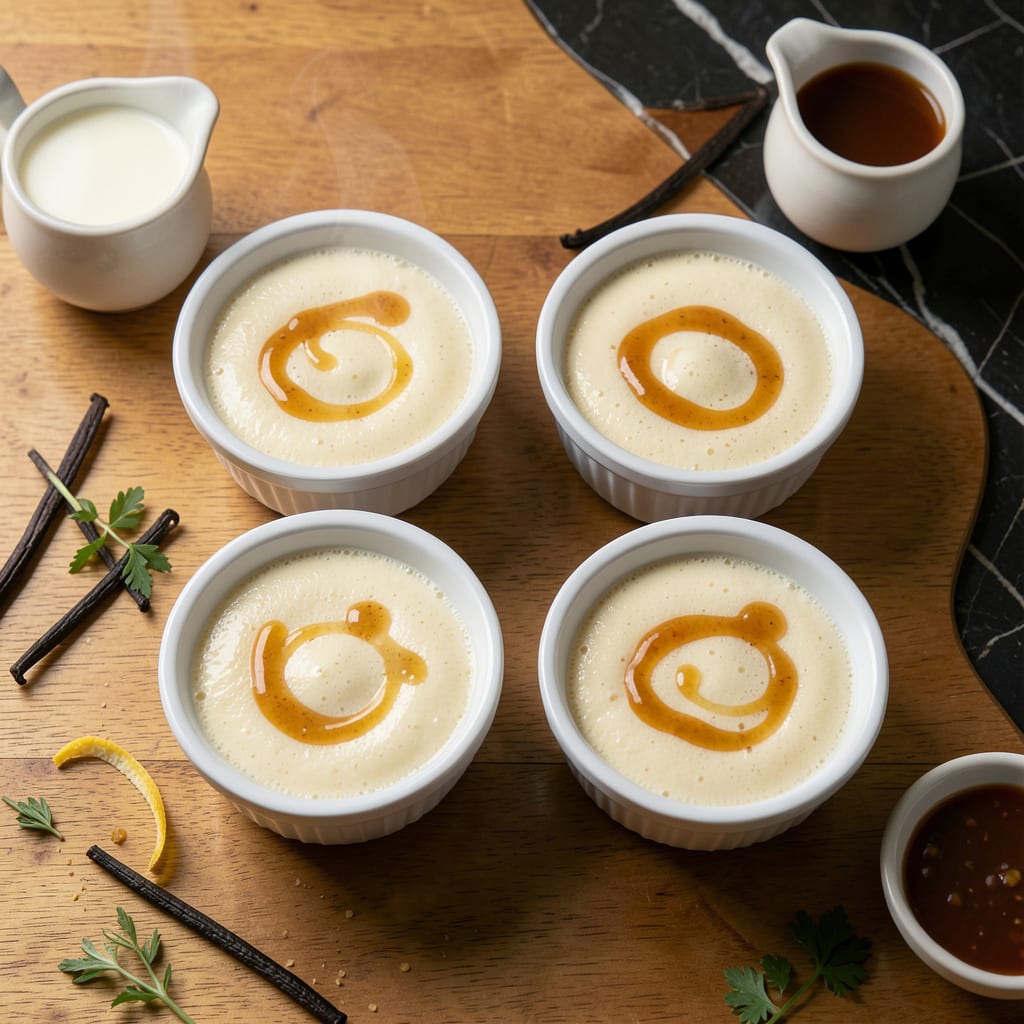
There’s a simple elegance to this steamed egg dessert that transforms basic ingredients into something extraordinary. The result is a silky, jiggly texture with a delicate sweetness that’s both comforting and refined.
This recipe relies on precise steaming to achieve its signature smoothness. With just eggs, sugar, and water, you’ll create a treat that’s as satisfying to make as it is to eat.
Ingredients for Steam Egg Dessert
Simple ingredients create extraordinary silky sweetness in every bite of this dish.
| Ingredient | Amount | Notes |
|---|---|---|
| Large Eggs 🥚 | 6 whole | Room temperature preferred |
| Granulated Sugar 🍚 | ¾ cup | Fine white sugar ideal |
| Water 💧 | 2 cups | Filtered for best texture |
| Vanilla Extract 🌿 | 1 tsp | Pure extract recommended |
| Whole Milk 🥛 | ½ cup | Full-fat for creaminess |
| Sweetened Condensed Milk 🥛 | ¼ cup | For rich, caramelized flavor |
| Salt 🧂 | 0.125 tsp | Fine sea salt preferred |
| Cornstarch 🌾 | 1 tbsp | For stability in mixture |
| Butter 🧈 | 1 tbsp | Melted, for greasing |
| Honey 🍯 | 1 tbsp | Optional for drizzling |
The eggs are critical here—fresh, high-quality large eggs yield the smoothest texture. Room temperature ensures even incorporation with the sugar. For the milk, Whole Foods or local dairy farms offer superior full-fat options. Sweetened condensed milk adds depth, and Eagle Brand remains the gold standard. Filtered water prevents any mineral interference with the delicate custard.
No whole milk? Half-and-half at equal volume works, or unsweetened almond milk with a tablespoon of melted butter for richness. Vanilla can be swapped for almond extract at half the amount. For a lighter version, reduce sugar by 25%, but texture may soften. Skip the honey for strict vegetarians, or use maple syrup as a vegan alternative.
Steamed desserts keep 3-4 days refrigerated in airtight containers. Re-steam briefly to revive texture. The mixture can be prepped 24 hours ahead—just whisk before cooking. Freezing isn’t recommended as it alters the signature jiggly consistency.
Why You’ll Love This Recipe
- 5-Minute Mix: I crack the eggs, whisk in milk and sugar—honestly, the hardest part is waiting for the steamer to heat up.
- Silky Vanilla Cloud: That first spoonful of warm, jiggly egg custard with the vanilla perfume? Ridiculously good.
- Kid-Approved Snack: My picky nephew devours it cold from the fridge, and I’ll be real: so do I between us.
- Pantry Staples Only: Eggs, sugar, milk—things I always have, so this dessert costs pennies and saves last-minute grocery runs.
Step-by-Step Instructions for Steam Egg Dessert
Master the technique for achieving that signature silky texture with these precise steps.
Step 1: Prepare the Steaming Equipment and Ingredients
Begin by greasing four ramekins with the 1 tbsp Butter, ensuring an even coat on all surfaces. This prevents sticking and aids in clean release after steaming. Place the ramekins in a steamer basket or on a heatproof plate that fits inside your pot.
Fill a large pot with the 2 cups Water and bring it to a gentle boil. While waiting, gather all remaining ingredients and measure them precisely. The steamer setup should allow at least 2 inches of clearance between the water and the top of the ramekins to prevent condensation from dripping onto the custard.
Step 2: Create the Custard Base with Precision
In a large mixing bowl, whisk together the 6 whole Large Eggs and 0.75 cup Granulated Sugar until the mixture is pale yellow and slightly thickened, about 2-3 minutes. The sugar should fully dissolve with no visible grains remaining.
Add the 0.5 cup Whole Milk, 0.25 cup Sweetened Condensed Milk, 1 tsp Vanilla Extract, 0.125 tsp Salt, and 1 tbsp Cornstarch. Whisk vigorously for another 1 minute until completely smooth. Strain the mixture through a fine-mesh sieve into a pitcher for easy pouring—this eliminates any lumps for a flawless texture.
Step 3: Steam to Silky Perfection
Pour the custard mixture evenly into the prepared ramekins, filling each about 80% full to allow for expansion. Cover each ramekin with aluminum foil, pricking a few small holes in the top to allow steam to escape while preventing water droplets from falling in.
Carefully place the ramekins in the steamer, cover with a tight-fitting lid, and steam over medium-low heat for 15-18 minutes. Check for doneness by gently shaking a ramekin—the center should have a slight jiggle but not be liquid. Overcooking will result in a rubbery texture, so monitor closely during the final 2 minutes.
Step 4: Cool and Finish with Elegance
Remove the ramekins from the steamer and let them cool at room temperature for 10 minutes. The custard will continue to set as it cools. Resist the urge to unmold immediately—this resting period ensures the texture stabilizes.
Once cooled, you may serve the desserts in their ramekins or carefully unmold them onto serving plates. For a final touch, drizzle each portion with the 1 tbsp Honey in a decorative pattern. The honey’s floral notes complement the vanilla and condensed milk beautifully while adding a glossy finish.
Pro Tips For Making Steam Egg Dessert
- Strain the Eggs: I learned this the hard way—straining the eggs through a fine-mesh sieve removes any ropy bits, giving your steamed egg dessert that ultra-smooth, silky texture.
- Steam on Low: Crank the heat too high and you’ll end up with a lumpy, uneven mess. Keep the water at a gentle simmer—just enough to see wisps of steam—for even cooking.
- Warm the Milk: Skip cold milk straight from the fridge. Warm it slightly (about 10 seconds in the microwave) to prevent curdling when mixed with the eggs.
- Cover with Cloth: Sounds weird, but it works: Lay a clean kitchen towel over the pot lid to catch condensation drips, so water doesn’t ruin your dessert’s surface.
Pro Cooking Tips for Great steam egg dessert
Water Temperature Control
Keep your steaming water at a gentle simmer, not a rolling boil. I use a heavy-bottomed pot to prevent hot spots. The water should be at 180-190°F—any hotter risks curdling the delicate custard.
Straining is Essential
Always strain your custard mixture through a fine-mesh sieve before steaming. This removes any undissolved sugar or egg bits that could create texture issues. I use a OXO Good Grips sieve for this.
Steamer Setup Matters
Use a bamboo steamer or a metal rack that fits snugly in your pot. Ensure there’s at least 2 inches between the water and the ramekins to prevent condensation from dripping onto your desserts. 🌡️
Covering Technique
Cover each ramekin with aluminum foil, but poke 3-4 small holes in the top. This lets steam escape while protecting the custard from water droplets. I use Reynolds Wrap for consistent results.
Doneness Check
The custard is done when it has a slight jiggle in the center but isn’t liquid. This usually takes 15-18 minutes. Remove from heat immediately—it’ll continue cooking as it cools. 💡
Cooling Process
Let the desserts cool at room temperature for 10 minutes before serving. This resting period allows the texture to stabilize fully. Rushing this step can lead to a runny custard.
Nutrition Facts
Frequently Asked Questions
Why strain the custard mixture?
Straining removes any undissolved sugar or egg bits for a perfectly smooth texture. A fine-mesh sieve catches even the smallest lumps that could ruin the silky finish.
Can I use a microwave instead of steaming?
Not recommended. Microwaving can create hot spots that curdle the eggs. Steaming provides gentle, even heat essential for the custard’s delicate texture.
How do I know when it’s done?
The center should have a slight jiggle but not be liquid. Overcooking makes it rubbery, so check at 15 minutes and remove immediately when set.
What if my custard turns out lumpy?
This usually means the mixture wasn’t strained well or the water boiled too vigorously. Next time, use 180-190°F water and strain twice for best results.

- 6 Egg Cake Recipe with Oil: Light as Air With Buttery Moisture - October 4, 2026
- 4 Bean Casserole Recipe: One-Pan Heartiness With Smoky Paprika Depth - October 4, 2026
- 3-Ingredient Keto Mug Cake Recipe: Microwave Magic in 2 Minutes - October 4, 2026