
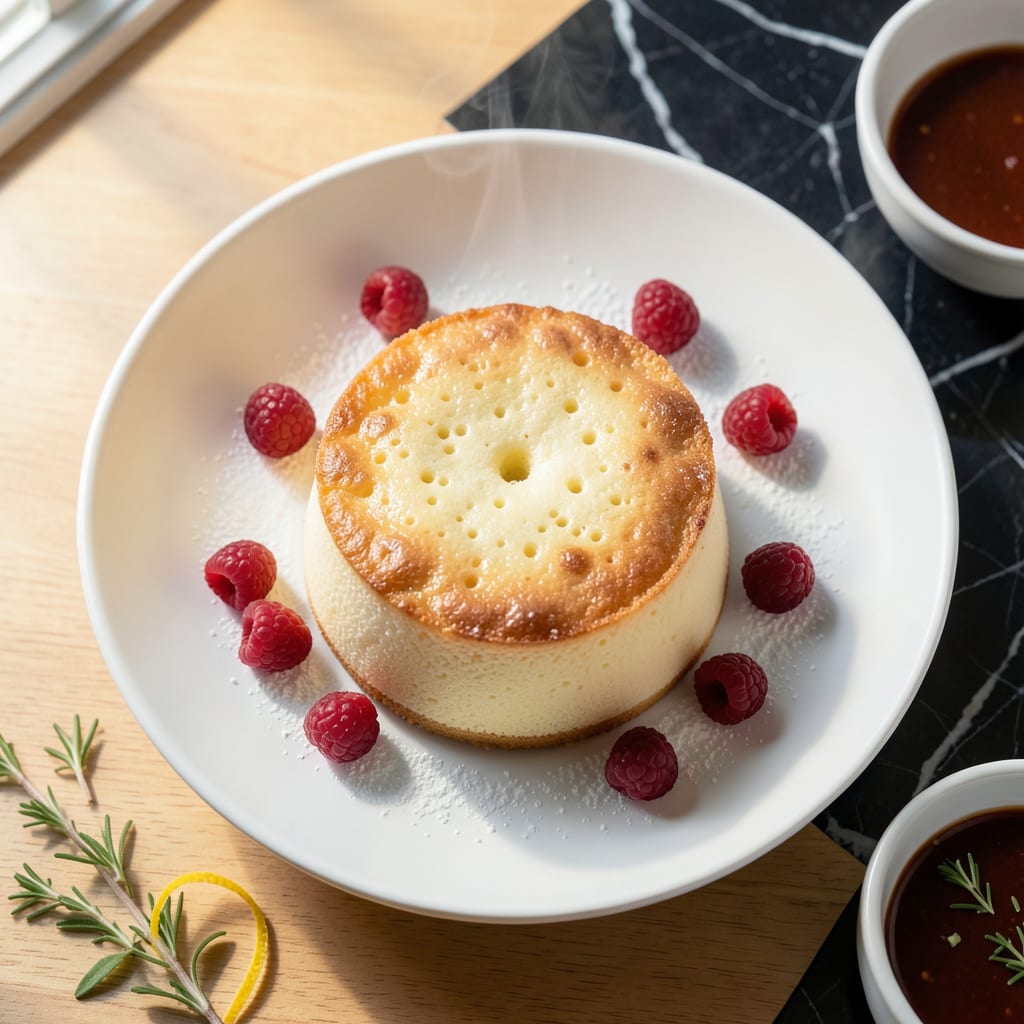
This steamed sponge cake delivers an ethereal texture that melts in your mouth. The secret lies in precise whipping of eggs and sugar to create a stable foam that traps air for that signature lightness.
With just a handful of pantry staples and a 30-minute steam, you’ll achieve a delicate, jiggly cake that rises beautifully and stays moist for days. The result is a cloud-like dessert that’s subtle in sweetness but rich in satisfaction.
Ingredients for Steam Egg Sponge Cake
A handful of pantry staples transforms into a cloud-like dessert with perfect texture.
| Ingredient | Amount | Notes |
|---|---|---|
| Large Eggs 🥚 | 6 whole | Room temperature, separated |
| Granulated Sugar 🍚 | ¾ cup | Divided between yolks and meringue |
| All-Purpose Flour 🌾 | 1 cup | Sifted for lightness |
| Vanilla Extract 💧 | 1 tsp | Pure extract preferred |
| Cream of Tartar 🧂 | ½ tsp | Stabilizes egg whites |
| Salt 🧂 | ¼ tsp | Fine grain for even distribution |
| Baking Powder 🧂 | ½ tsp | Ensures proper rise |
| Vegetable Oil 🫒 | 2 tbsp | Neutral flavor for greasing |
| Water 💧 | 1 cup | For steaming in pan |
| Lemon Juice 🍋 | ½ tsp | Optional, enhances flavor |
The eggs are everything here—room temperature is non-negotiable (cold ones won’t whip up right). I grab mine from Whole Foods or the local farmers market when I can, but any large eggs work. The sugar should be regular granulated; superfine dissolves faster but isn’t necessary. For the flour, King Arthur or Gold Medal are my go-tos. Sift it even if the bag says ‘pre-sifted’ (worth the extra minute).
No cream of tartar? White vinegar or lemon juice at half the amount works in a pinch. Cake flour can sub for all-purpose at a 1:1 ratio for even more tenderness. The vanilla is optional but adds depth—Nielsen-Massey is my splurge brand. If you’re out of baking powder, make your own (1/4 tsp baking soda + 1/2 tsp cream of tartar). The oil for greasing can be any neutral kind.
Baked same day is best, but leftovers keep 3-4 days at room temperature in an airtight container. Freeze slices for up to 3 months—just thaw at room temp before serving. The cake stays moist thanks to the steam method, so no need to refrigerate.
Why You’ll Love This Recipe
- One Bowl Wonder: I just crack, whisk, and steam—no mixer, no fuss. Honestly, the hardest part is waiting for it to cool.
- Melt-in-Your-Mouth Fluff: That vanilla-kissed sweetness with eggs as the star? Light as air, rich as can be.
- Feeds a Crowd: Birthdays, potlucks, or just because—this cake disappears fast. My kids beg for the leftovers in their lunchboxes.
- Pantry Staples Only: Flour, sugar, eggs—things I always have. Between us, it’s cheaper than boxed mix and twice as good.
Step-by-Step Instructions for Steam Egg Sponge Cake
Here’s my proven method for achieving that signature light, airy texture you’re after.
Step 1: Separate Eggs and Prepare the Pan
Start by separating the 6 whole Large Eggs into yolks and whites. I like to do this one at a time, transferring each white to a clean bowl and keeping the yolks in a separate large mixing bowl. Even a trace of yolk in the whites can prevent them from whipping properly.
Next, prepare your steaming setup. I use a round cake pan that fits inside a larger pot with a lid. Grease the pan with 2 tbsp Vegetable Oil, making sure to coat the bottom and sides completely. Line the bottom with parchment paper for easy removal after steaming.
Step 2: Whip the Egg Whites to Stiff Peaks
To the bowl with egg whites, add 0.5 tsp Cream of Tartar and 0.25 tsp Salt. Using clean beaters, whip on medium speed until foamy. Gradually add 0.5 cup Granulated Sugar (reserving some for the yolks) and continue whipping until you reach stiff peaks that hold their shape when the beaters are lifted.
Here’s the thing—this step is crucial. The egg whites should be glossy and firm, not grainy or watery. If they start to look dry or separate, you’ve over-whipped. I keep a close eye on them during the final minute to catch the perfect moment.
Step 3: Whisk Yolk Mixture and Fold Everything Together
In the bowl with egg yolks, add the remaining 0.25 cup Granulated Sugar, 1 tsp Vanilla Extract, and 0.5 tsp Lemon Juice. Whisk vigorously until the mixture is pale, thick, and ribbony—this usually takes about 3-4 minutes by hand.
Sift the 1 cup All-Purpose Flour and 0.5 tsp Baking Powder together directly over the yolk mixture. Gently fold them in using a spatula, being careful not to deflate the mixture. Then, in three additions, fold in the whipped egg whites, cutting through the center of the bowl and rotating as you go to maintain as much air as possible.
Step 4: Steam to Perfection
Pour the batter into your prepared pan and smooth the top with a spatula. Place the pan in a large pot and add 1 cup Water to the pot—make sure it doesn’t touch the bottom of the cake pan. Cover the pot with a tight-fitting lid and bring the water to a boil over medium heat.
Once boiling, reduce heat to low and steam for 45-50 minutes. Don’t peek during the first 30 minutes—the sudden temperature change can cause the cake to collapse. You’ll know it’s done when the top springs back when lightly pressed and a toothpick inserted in the center comes out clean.
Step 5: Cool and Serve
Remove the cake from the steamer and let it cool in the pan for 5 minutes. Then, run a thin knife around the edge and invert onto a wire rack to cool completely. This prevents the cake from becoming soggy on the bottom.
Once cooled, slice with a serrated knife. The texture should be incredibly light and airy, almost like a cloud. I promise the effort is worth it—the delicate crumb and subtle sweetness make this cake truly special. Serve at room temperature for the best texture.
Pro Tips For Making Steam Egg Sponge Cake
- Warm Your Eggs: Take your eggs out of the fridge 30 minutes before starting—room temperature eggs whip up fluffier and hold more air, which is non-negotiable for that light sponge texture.
- Fold Gently: After mixing flour in, use a spatula to fold just until the streaks disappear—overmixing deflates the batter and turns your cake dense. I learned this the hard way after a few flat, sad sponges.
- Skip Cold Water: Use warm water in your steamer before adding the cake pan—cold water slows down the cooking and can make the bottom of your cake rubbery.
- Add Cream of Tartar: A ½ teaspoon of cream of tartar in your egg whites stabilizes them and helps achieve stiff peaks faster—sounds weird, but it works and saves you from deflated meringue.
Make-Ahead Tips for This Recipe
Overnight Prep
You can separate the eggs and measure all dry ingredients the night before. Store egg whites and yolks in separate airtight containers in the fridge. Bring them to room temperature for 30 minutes before whipping the next day.
Batter Storage
Once mixed, the batter is best used immediately for maximum rise. However, if needed, you can refrigerate it for up to 2 hours before steaming. Let it sit at room temperature for 15 minutes before pouring into the pan.
Steam Ahead
Prepare your steaming setup completely before mixing the batter. I keep my cake pan greased and lined, and the water measured in the pot. This way, you can start steaming the moment the batter is ready. 💡
Room Temperature Storage
After cooling completely, store the cake in an airtight container at room temperature. It stays moist and fresh for 3-4 days. Avoid refrigeration as it can dry out the delicate texture.
Freezing for Later
Slice the cake and wrap individual pieces tightly in plastic wrap, then place in a freezer bag. Freeze for up to 3 months. Thaw at room temperature for 1-2 hours before serving.
Reheating Tips
To refresh slightly dried cake, steam slices for 5-10 minutes until warm. Microwaving works in 15-second bursts but can make the texture slightly denser. Serve at room temperature for best results. 💛
Nutrition Facts
Frequently Asked Questions
Why is room temperature important for the eggs?
Cold eggs won’t whip up to the right volume. Room temperature whites expand better, trapping more air for that signature light texture. Let them sit out for 30 minutes before starting.
Can I use a different pan size?
A 9-inch round works best. Larger pans make thinner cakes that may overcook; smaller ones can cause overflow. Adjust steaming time by 5-10 minutes if needed.
What if my cake collapses after steaming?
This usually means the batter wasn’t stable or the lid was lifted too soon. Ensure stiff peaks in egg whites and avoid opening the pot for 30 minutes.
How do I know when it’s fully cooked?
Insert a toothpick in the center—it should come out clean. The top will also spring back when pressed lightly. Total steaming time is 45-50 minutes on low heat.

- 6 Egg Cake Recipe with Oil: Light as Air With Buttery Moisture - October 4, 2026
- 4 Bean Casserole Recipe: One-Pan Heartiness With Smoky Paprika Depth - October 4, 2026
- 3-Ingredient Keto Mug Cake Recipe: Microwave Magic in 2 Minutes - October 4, 2026