
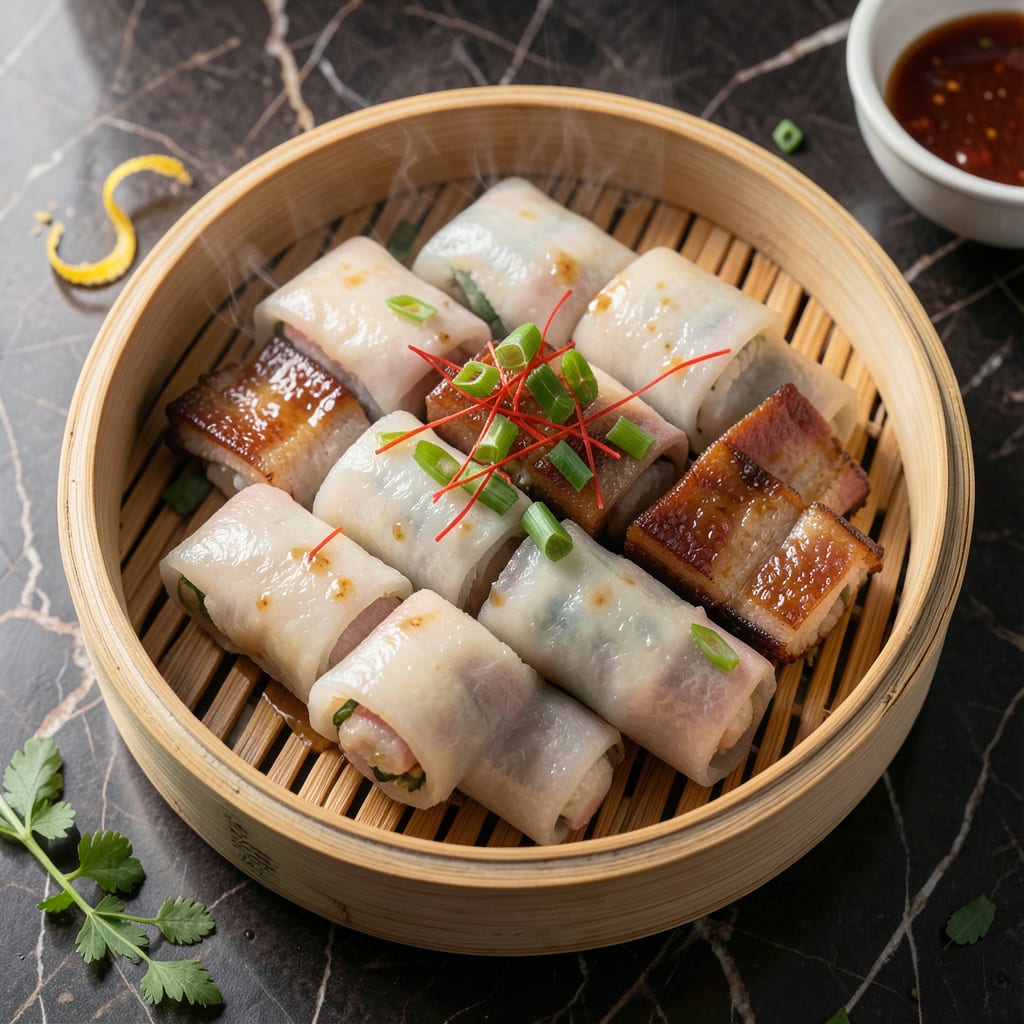
Achieving perfect Cantonese dim sum at home starts with mastering this traditional technique. The delicate rice rolls require precision in steaming and proper rice flour hydration to create that signature silky texture.
This authentic method delivers restaurant-quality results with a smooth, slightly chewy consistency. The key lies in the batter preparation and precise steaming time to ensure each roll holds its shape while remaining tender.
Ingredients for Steam Rice Roll
Traditional rice flour and tapioca starch create the foundation for these delicate dim sum rolls.
| Ingredient | Amount | Notes |
|---|---|---|
| Rice Flour 🌾 | 1 ½ cups | Fine, uncooked variety essential |
| Tapioca Starch 🌾 | ¼ cup | For elasticity and chew |
| Water 💧 | 2 ½ cups | Room temperature for even hydration |
| Salt 🧂 | ½ tsp | Fine sea salt preferred |
| Neutral Oil 🫒 | 1 tsp | For greasing steamer surface |
| Shaoxing Wine 🍶 | 1 tbsp | Vegan variety if available |
| Soy Sauce 🫕 | 1 tbsp | Light or all-purpose variety |
| Sesame Oil 🫒 | ½ tsp | Toasted for aromatic finish |
| Scallions 🧅 | 3 whole | Thinly sliced for garnish |
| Cilantro 🌿 | ¼ cup | Fresh, roughly chopped |
| Mushrooms 🍄 | ½ lb | Shiitake, sliced thin for filling |
| Carrot 🥕 | 1 whole | Julienned for color contrast |
The rice flour must be fine and uncooked—Bob’s Red Mill or Asian markets typically stock the right variety. Tapioca starch is non-negotiable here; it provides the essential elasticity that defines authentic Cantonese rice rolls. Whole Foods carries both in their baking aisle. For the filling, shiitake mushrooms offer the best texture and flavor (avoid pre-sliced; they dry out too quickly).
No Shaoxing wine? Dry sherry at half the amount works as a substitute, though the flavor profile differs slightly. For a completely alcohol-free version, 1 tbsp rice vinegar plus 1 tsp sugar mimics the acidity. The neutral oil can be any vegetable oil, but avoid strongly scented varieties like coconut. If cilantro isn’t to your taste, Thai basil provides a nice aromatic alternative.
The batter comes together best at room temperature—plan 30 minutes ahead. Prepared rice rolls keep in the fridge for 2 days in an airtight container, though they’re truly best fresh. Freezing isn’t recommended as the texture suffers upon thawing. Always steam just before serving for that signature silky consistency.
Why You’ll Love This Recipe
- 5-Minute Mix: I just stir rice flour, tapioca starch, water, and a pinch of salt—no resting, no fuss.
- Silky Chewy Bite: That stretchy, slightly glossy texture from the tapioca starch makes every bite ridiculously satisfying.
- Breakfast or Snack: Honestly, I roll these up with leftovers for lunch or serve them fresh with soy sauce for a quick bite.
- Pocket-Friendly Feast: A bag of rice flour and tapioca starch feeds my family for days, and it’s way cheaper than takeout.
Step-by-Step Instructions for Steam Rice Rolls
Master the technique for silky, translucent rolls that rival dim sum house perfection.
Step 1: Create the Rice Batter
In a large mixing bowl, whisk together the 1.5 cups Rice Flour and 0.25 cup Tapioca Starch until fully combined. The tapioca starch is essential—it provides the characteristic chew that defines authentic steam rice rolls.
Gradually add the 2.5 cups Water while whisking continuously to prevent lumps from forming. The batter should resemble thin pancake batter. Stir in the 0.5 tsp Salt, then let the mixture rest for 10 minutes to allow the flours to fully hydrate. You’ll notice the batter thickens slightly during this rest period.
Step 2: Prepare the Steamer and Fillings
Lightly brush the surface of your steamer with the 1 tsp Neutral Oil to prevent sticking. I recommend using a bamboo steamer lined with parchment paper that has holes poked in it—this setup allows steam to circulate while providing a non-stick surface for easy removal.
While the batter rests, prepare your fillings. Thinly slice the 0.5 lb Mushrooms and julienne the 1 whole Carrot. Sauté them together with a splash of the 1 tbsp Soy Sauce for 3-4 minutes until softened. Thinly slice the 3 whole Scallions and roughly chop the 0.25 cup Cilantro for garnishing later.
Step 3: Steam the Rolls to Translucent Perfection
Give the batter one final whisk, then add the 1 tbsp Shaoxing Wine and stir to incorporate. This adds depth of flavor to the otherwise neutral batter. Pour a thin, even layer of batter onto the prepared steamer surface—about ¼-inch thick works best.
Place the steamer over boiling water, ensuring the bottom doesn’t touch the water. Cover and steam for 2-3 minutes until the surface is set but still slightly tacky. You’ll know it’s ready when the edges start to pull away from the sides and the center looks translucent. Remove from heat immediately to prevent overcooking.
Step 4: Add Fillings and Final Touches
Quickly add your prepared mushroom and carrot filling in a line down the center of the steamed roll. Gently roll it up using a spatula, similar to making sushi. The residual heat will finish cooking the interior as you work.
Transfer the finished rolls to a serving plate. Drizzle with the 0.5 tsp Sesame Oil and sprinkle with the sliced scallions and chopped cilantro. The sesame oil adds a nutty aroma that complements the delicate flavor of the rolls perfectly.
Pro Tips For Making Steam Rice Roll
- Steam Evenly: Use a wide, shallow steamer so the batter cooks at the same rate—after burning a few rolls in my tiny bamboo steamer, I switched to a 12-inch pan and never looked back.
- Rest the Batter: Let the rice flour and tapioca starch mixture sit for 10 minutes before steaming. Sounds weird, but it works: the starches hydrate fully and the rolls come out smoother.
- Skip Cold Water: Use lukewarm water for mixing the batter—cold water makes it clump and the rolls turn out dense. I learned this the hard way after three failed attempts.
- Oil the Cloth: Brush neutral oil on the cheesecloth or steaming surface to prevent sticking. About 1 teaspoon spread thin—enough to coat but not soak.
Health Benefits of This Dish
Gluten-Free Goodness
These rolls are naturally gluten-free, thanks to the rice flour and tapioca starch base. Unlike wheat-based options, this combo provides a silky texture without triggering sensitivities. Perfect for anyone avoiding gluten in their diet. 💪
Low in Fat
With just 1 tsp neutral oil used for greasing, this dish is remarkably low in fat. The steaming process locks in moisture without adding extra calories, making it a heart-healthy choice for dim sum lovers.
Rich in Complex Carbs
The 1.5 cups rice flour delivers sustained energy through complex carbohydrates. These digest slowly, keeping you fuller for longer and providing steady fuel for your body throughout the day.
Vitamin Boost
Your fillings add nutritional value—shiitake mushrooms offer B vitamins and selenium, while carrots provide vitamin A. Together, they turn this dish into a balanced, vitamin-rich meal.
Digestive Benefits
Tapioca starch acts as a prebiotic, supporting gut health by promoting beneficial bacteria growth. The fiber in rice flour also aids digestion, making this dish as good for your gut as it is for your taste buds. ✨
Plant-Based Protein
While not protein-dense, the combination of rice flour and vegetable fillings offers a light plant-based protein source. Pair with a side of edamame or tofu to create a complete amino acid profile.
Nutrition Facts
Frequently Asked Questions
What kind of rice flour works best?
Use fine, uncooked rice flour for the smoothest texture. Bob’s Red Mill or Asian market brands work perfectly. Avoid coarse or pre-cooked varieties as they won’t create the right consistency.
Can I make these without a bamboo steamer?
Yes! A metal steamer insert works too. Line it with parchment paper with holes for steam circulation. Ensure the water doesn’t touch the rolls during cooking.
Why did my rolls tear when rolling?
This usually happens if the batter is too thick or overcooked. Steam until just set (2-3 minutes) and work quickly while still warm. The residual heat helps maintain flexibility.

- 6 Egg Cake Recipe with Oil: Light as Air With Buttery Moisture - October 4, 2026
- 4 Bean Casserole Recipe: One-Pan Heartiness With Smoky Paprika Depth - October 4, 2026
- 3-Ingredient Keto Mug Cake Recipe: Microwave Magic in 2 Minutes - October 4, 2026