
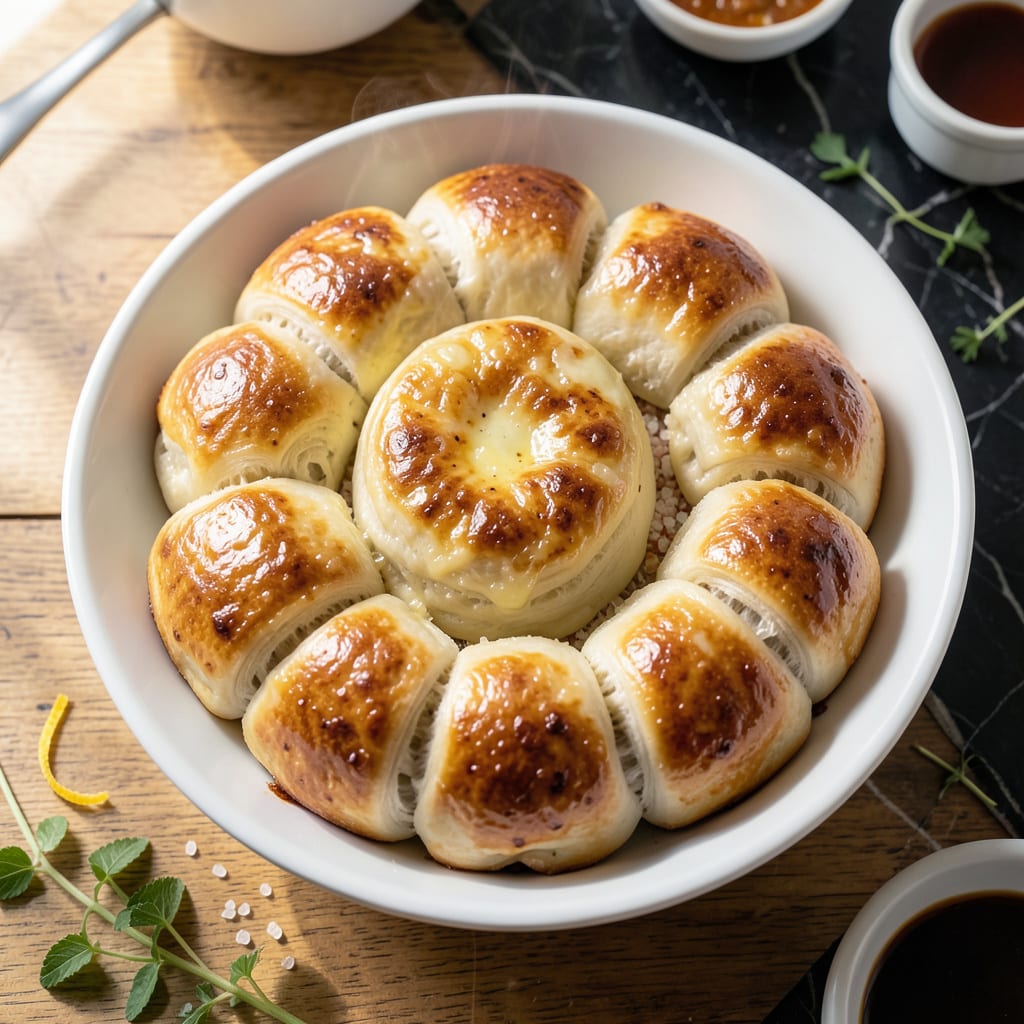
This steam roll recipe delivers light, fluffy bread with minimal effort. The secret lies in the steaming process, which creates a soft, airy texture without requiring an oven.
With just a few basic ingredients and 15 minutes of active prep, you can have warm, pillowy rolls ready to serve. The results are consistently tender, making them perfect for any meal.
Ingredients for Steam Roll
Nine basic ingredients create these pillowy, oven-free steamed breads with ease.
| Ingredient | Amount | Notes |
|---|---|---|
| All-Purpose Flour 🌾 | 4 cups | Sifted for light texture |
| Granulated Sugar 🍚 | 2 tbsp | Balances yeast activation |
| Active Dry Yeast 🍃 | 1 package | 2.25 tsp per packet |
| Warm Water 💧 | 1 ¼ cups | 110-115°F for yeast |
| Unsalted Butter 🧈 | 2 tbsp | Melted and cooled |
| Large Egg 🥚 | 1 whole | Room temperature preferred |
| Salt 🧂 | 1 tsp | Fine sea salt preferred |
| Baking Powder 🧂 | 1 tsp | Ensures extra lift |
| Vegetable Oil 🫒 | 1 tsp | For greasing steamer |
| Sesame Seeds 🌰 | 1 tbsp | Optional topping for crunch |
The flour is the foundation here. King Arthur or Gold Medal all-purpose deliver consistent results. Yeast freshness is critical—check the expiration date and store unopened packets in the freezer for longevity. Warm water temperature is non-negotiable: too hot kills the yeast, too cool won’t activate it. A kitchen thermometer (110-115°F) removes the guesswork.
No yeast? Instant yeast works at the same ratio. Out of all-purpose flour? Bread flour adds chew but may yield denser rolls. The egg can be omitted (replace with 2 tbsp water), though texture will be slightly less rich. Butter substitutes like coconut oil work, but unsalted is ideal to control sodium. For extra softness, swap water for warm milk.
Dough can rest overnight in the fridge (cover tightly). Steamed rolls are best fresh but reheat well—30 seconds in the microwave with a damp paper towel. Freeze cooled rolls in a sealed bag for up to 1 month; thaw and steam to refresh.
Why You’ll Love This Recipe
- One Bowl Wonder: I mix the flour, sugar, yeast, and warm water in a single bowl—no fancy equipment, just my hands and 10 minutes of kneading.
- Buttery Clouds: The melted unsalted butter folded into the dough gives them that rich, pull-apart softness I can’t resist.
- Breakfast to Dinner: Honestly, these rolls work as sliders for lunch, a side for stew, or even as a quick breakfast with jam.
- Pennywise Comfort: A bag of flour and a stick of butter make a dozen rolls—my wallet and my hungry family both thank me.
Step-by-Step Instructions for Steam Rolls
Follow this precise method for achieving the lightest, most ethereal rolls with perfect texture.
Step 1: Activate the Yeast and Prepare Wet Mixture
Begin by dissolving the 1 package Active Dry Yeast and 2 tbsp Granulated Sugar in 1.25 cups Warm Water heated to 110-115°F. The mixture should foam visibly within 5-10 minutes—this confirms the yeast is active and ready to work its leavening magic.
While the yeast activates, melt the 2 tbsp Unsalted Butter and let it cool to room temperature. In a large mixing bowl, combine the yeast mixture with the melted butter and 1 whole Large Egg. Whisk until the egg is fully incorporated and the mixture appears smooth and homogenous.
Step 2: Form and Knead the Dough
In a separate bowl, whisk together the 4 cups All-Purpose Flour, 1 tsp Salt, and 1 tsp Baking Powder. Gradually add this dry mixture to the wet ingredients, stirring with a wooden spoon until a shaggy dough forms. You’ll notice the dough starts pulling away from the sides of the bowl.
Turn the dough out onto a lightly floured surface and knead for 8-10 minutes until it becomes smooth and elastic. The dough should spring back slowly when pressed with a finger. This gluten development is crucial for the rolls’ structure and chewiness.
Step 3: First Rise Until Doubled
Place the kneaded dough in a lightly greased bowl, turning once to coat all sides. Cover with a damp kitchen towel and let rise in a warm, draft-free place for 1-1.5 hours or until doubled in volume. I recommend checking at the 1-hour mark—the dough should have visibly expanded and feel light when gently pressed.
This first rise allows the yeast to ferment the sugars, creating the carbon dioxide that gives the rolls their airy texture. Don’t rush this step; proper rising time ensures maximum fluffiness in the final product.
Step 4: Shape and Second Rise
Gently punch down the risen dough to release the air. Divide it into 12 equal portions and shape each into a smooth ball by rolling it between your palms. Place the balls on parchment paper, leaving 1-2 inches of space between each for expansion.
Cover with the damp towel again and let rise for 30-45 minutes until puffy. The rolls should have noticeably increased in size but not necessarily doubled. While they rise, prepare your steamer by adding water and bringing it to a simmer.
Step 5: Steam to Perfection
Brush the top of each roll with a bit of vegetable oil to prevent sticking, then sprinkle with 1 tbsp Sesame Seeds if using. Carefully transfer the rolls to the steamer basket, ensuring they don’t touch each other. Steam over boiling water for 15-20 minutes until the rolls have set and feel light when tapped.
Remove from the steamer and let cool slightly before serving. The rolls should have a glossy, slightly sticky top and a soft, pillowy interior. Serve warm for the best texture, as they’ll continue to set slightly as they cool.
Pro Tips For Making Steam Roll
- Test Your Yeast: Always bloom your active dry yeast in warm water with a pinch of sugar first—if it doesn’t foam within 5 minutes, your rolls won’t rise. I learned this the hard way after wasting a whole batch.
- Use Room-Temp Butter: Take the unsalted butter out 30 minutes before mixing. Cold butter won’t incorporate smoothly, and melted butter can kill the yeast.
- Skip Overproofing: Let the dough rise until just doubled—any longer and the rolls will collapse in the steamer. Sounds weird, but it works: set a timer for 45-60 minutes max.
- Steam with Parchment: Line your steamer with parchment paper and poke holes in it. Prevents sticking and makes cleanup a breeze—your future self will thank you.
Storing and Reheating This Recipe
Room Temperature Storage
These rolls are best enjoyed fresh, but they’ll keep well at room temperature for 1-2 hours if covered with a clean kitchen towel. I often make a batch in the morning and leave them out for brunch—they stay soft and warm for quite a while. 💪
Refrigerator Storage
For longer storage, place cooled rolls in an airtight container with parchment paper between layers. They’ll stay fresh in the fridge for up to 3 days. The texture will firm up slightly, but a quick reheat restores their fluffiness.
Freezer Storage
To freeze, let rolls cool completely, then wrap each individually in plastic wrap and place in a freezer bag. They’ll keep for up to 1 month. Freezing is great for meal prep—I always have a stash ready for busy days.
Steam Reheating
The best way to revive stored rolls is by steaming. Place frozen or refrigerated rolls in the steamer for 5-7 minutes until warm and soft. This method restores their freshly made texture better than any other.
Microwave Reheating
For a quick fix, wrap a roll in a damp paper towel and microwave for 20-30 seconds. The moisture from the towel prevents drying out. I use this trick when I’m in a hurry and want that just-steamed feel.
Oven Reheating
Preheat your oven to 350°F, wrap rolls in foil, and warm for 8-10 minutes. This works well for larger batches. Just add a splash of water to the foil packet to keep them from drying out. 🔥
Nutrition Facts
Frequently Asked Questions
Why did my rolls turn out dense?
Underproofed dough or inactive yeast are common culprits. Ensure your water is 110-115°F and yeast foams within 5-10 minutes. Also, allow full rising time—rushing this step creates tight, dense texture.
Can I make these without a steamer?
Yes! Use a large pot with a heatproof colander or rack set above 1-2 inches of boiling water. Cover tightly with a lid. The key is maintaining steady steam without water touching the rolls.
How do I know when they’re done?
The rolls should feel light when tapped and have a glossy top. Steaming for the full 15-20 minutes ensures the center is cooked through. They’ll continue setting slightly as they cool.

- 6 Egg Cake Recipe with Oil: Light as Air With Buttery Moisture - October 4, 2026
- 4 Bean Casserole Recipe: One-Pan Heartiness With Smoky Paprika Depth - October 4, 2026
- 3-Ingredient Keto Mug Cake Recipe: Microwave Magic in 2 Minutes - October 4, 2026