
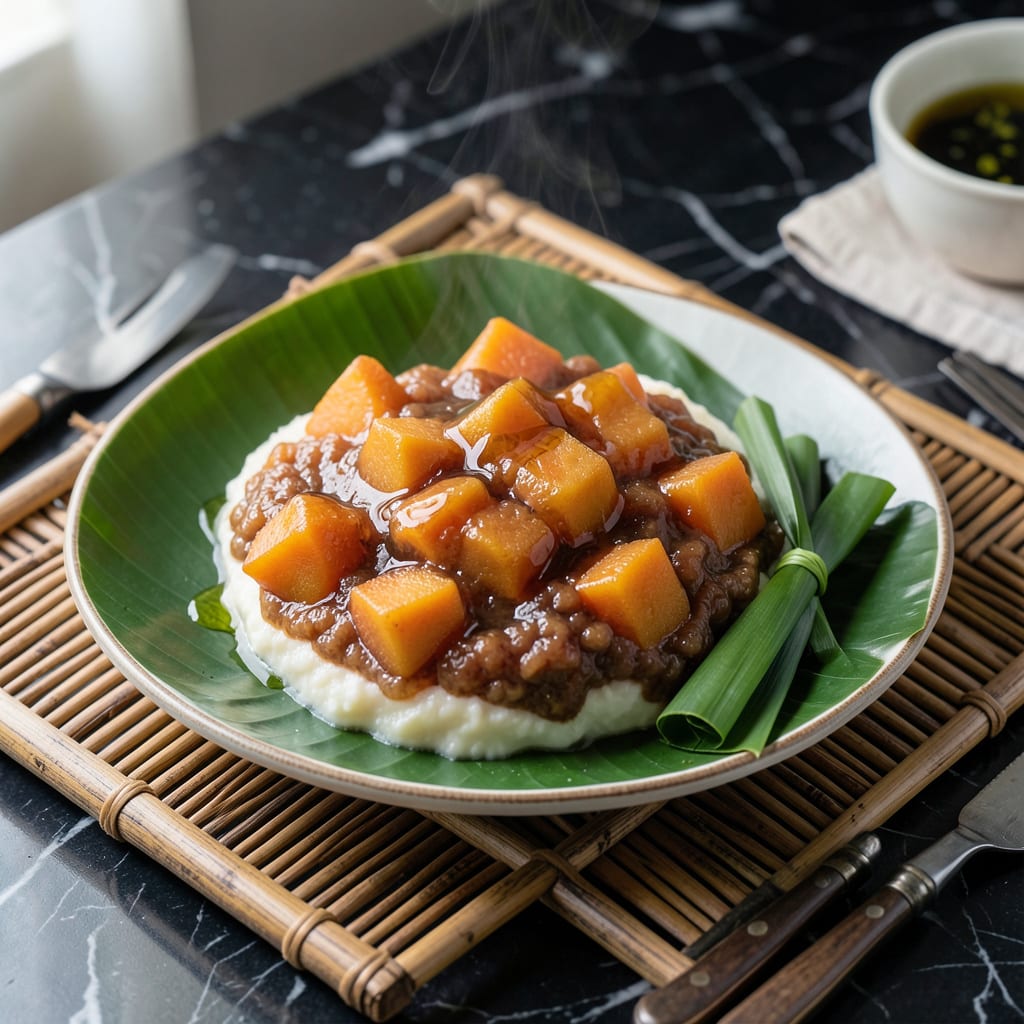
This traditional kuih brings together the natural sweetness of sweet potatoes with the aromatic essence of pandan, creating a soft, moist texture that melts in your mouth. The steaming process enhances the flavors while maintaining a delicate, slightly chewy consistency.
With just a few simple ingredients and 30 minutes of steaming, you can achieve these fragrant, bite-sized treats that are as delightful to make as they are to eat. Perfect for any occasion, these vegan-friendly bites offer a taste of authentic Southeast Asian dessert.
Ingredients for Steam Sweet Potato Kuih
Pantry staples plus a few specialty items. Nothing too exotic, just authentic flavor.
| Ingredient | Amount | Notes |
|---|---|---|
| Sweet Potatoes 🍠 | 1 ½ lb | Peeled, cubed, orange variety |
| Pandan Leaves 🌿 | 5 pieces | Fresh or frozen, rinsed |
| Glutinous Rice Flour 🌾 | 1 ½ cups | Also called sweet rice flour |
| Tapioca Starch 🌾 | ½ cup | For chewy texture |
| Coconut Milk 🥥 | ¾ cup | Full-fat canned preferred |
| Coconut Sugar 🧈 | ½ cup | Or brown sugar substitute |
| Salt 🧂 | ¼ tsp | Fine sea salt preferred |
| Pandan Extract 💧 | 1 tsp | Pure extract, not artificial |
| Cornstarch 🌾 | 2 tbsp | For dusting molds |
| Water 💧 | ½ cup | For adjusting batter consistency |
| Vegetable Oil 🫒 | 1 tbsp | For greasing molds |
The pandan is everything here. Asian grocery stores carry fresh leaves in the freezer section—look for bright green, not brown. If you can’t find fresh, frozen works (thaw first). The glutinous rice flour is non-negotiable—Bob’s Red Mill carries it, or check the international aisle. Sweet potatoes should be orange-fleshed (yams) for that natural sweetness. Avoid white or purple varieties—they lack the right flavor profile.
No pandan leaves? Pandan extract at 1 tsp per 5 leaves works in a pinch (find it at Trader Joe’s or online). Swap coconut sugar for brown sugar if needed—same amount. Glutinous rice flour can’t be substituted with regular rice flour (wrong texture). Out of tapioca starch? Arrowroot powder at the same ratio gets you close. For extra fragrance, add a drop of vanilla extract to the batter.
Batter keeps in the fridge for 1 day before steaming. Leftovers stay fresh at room temp for 2 days (they dry out in the fridge). Freeze steamed kuih for up to 1 month—reheat by steaming again. Always use a clean cloth in your steamer to catch drips (worth the extra minute).
Why You’ll Love This Recipe
- One Bowl Wonder: I just mix the sweet potatoes, glutinous rice flour, and coconut milk right in the same bowl—no fancy tools needed.
- Pandan Aroma: The pandan leaves infuse every bite with that fragrant, earthy sweetness that makes it irresistible.
- Feeds a Crowd: I steam a big batch and suddenly have snacks for the week or a dessert to share at potlucks.
- Budget Friendly: Sweet potatoes and rice flour stretch far, so I get a lot of kuih for very little cost.
Step-by-Step Instructions for Steamed Sweet Potato Kuih
Here’s the method I use to create these fragrant, chewy treats with a velvety texture.
Step 1: Steam and Mash the Sweet Potatoes
Peel and cube the 1.5 lb Sweet Potatoes into even 1-inch pieces for consistent cooking. Place them in a steamer basket over boiling water, cover, and steam for 12-15 minutes until the cubes are fork-tender and slightly translucent at the edges.
Transfer the steamed sweet potatoes to a large bowl and mash them while still hot—this prevents lumps in your final batter. You should have about 3 cups of smooth, vibrant orange puree. Let it cool slightly before adding other ingredients to avoid cooking the coconut milk prematurely.
Step 2: Infuse the Coconut Milk with Pandan
Rinse the 5 pieces Pandan Leaves and tie them into a knot for easy removal. In a small saucepan, gently heat the 0.75 cup Coconut Milk with the pandan leaves over low heat for 5 minutes. You want the milk to reach just below a simmer—look for tiny bubbles at the edges and a fragrant, grassy aroma.
Remove from heat and let the pandan leaves steep for another 10 minutes. This infusion process is crucial for that authentic Southeast Asian flavor. Strain out the leaves, pressing them gently against the strainer to extract maximum flavor, then set the infused coconut milk aside to cool.
Step 3: Create the Batter Base
In a large mixing bowl, whisk together the 1.5 cups Glutinous Rice Flour, 0.5 cup Tapioca Starch, 0.5 cup Coconut Sugar, and 0.25 tsp Salt until fully combined. The mixture should look like fine, pale sand with no visible clumps.
Make a well in the center and add the cooled sweet potato puree, 1 tsp Pandan Extract, and the infused coconut milk. Gradually whisk the dry ingredients into the wet, starting from the center and working outward. The batter will be thick—this is normal.
Step 4: Adjust Consistency and Prepare Molds
Add the 0.5 cup Water a little at a time, whisking after each addition, until the batter reaches a smooth, pourable consistency similar to pancake batter. You might not need all the water—stop when the batter ribbons off the whisk and holds its shape for a few seconds before melting back in.
Lightly grease your steaming molds with the 1 tbsp Vegetable Oil, then dust them with the 2 tbsp Cornstarch, tapping out any excess. This double layer prevents sticking and gives the kuih a clean release. Fill each mold about ¾ full—the batter will rise slightly during steaming.
Step 5: Steam to Perfection
Place the filled molds in a steamer with at least 2 inches of space between them for even heat circulation. Cover and steam over vigorously boiling water for 20-25 minutes. Check at 20 minutes—the kuih are done when the tops are firm to the touch and a toothpick inserted in the center comes out clean.
Turn off the heat and let them sit in the steamer for 5 minutes with the lid on. This final rest prevents the delicate custard from collapsing as it cools. Gently run a thin knife around the edges of each mold before unmolding. Serve warm or at room temperature, where the textures are most enjoyable.
Pro Tips For Making Steam Sweet Potato Kuih
- Steam Evenly: Use a lined steamer with a tight lid and keep the heat at medium-high—I learned this the hard way after ending up with dense, undercooked centers when I crowded the tray.
- Strain the Batter: After mixing the sweet potato, glutinous rice flour, and coconut milk, run it through a fine sieve to remove lumps; my grandmother swore by this, and she was right.
- Skip Raw Sweet Potato: Roast or steam the sweet potatoes first until fully soft, or you’ll end up with a starchy, uneven texture no matter how long you steam the kuih.
- Warm the Coconut Milk: Take the coconut milk out of the fridge 30 minutes early, or microwave it for 20 seconds—cold milk causes the batter to seize up and makes mixing a real struggle.
Wine and Beer Pairings for This steam sweet potato kuih
Tea Pairings
Jasmine tea is my top choice—the floral notes complement the pandan beautifully. Brew it at 195°F for 3 minutes to avoid bitterness. The delicate aroma enhances the kuih’s fragrance without overpowering its natural sweetness. 🌸
Coffee Companions
Try a light roast Vietnamese coffee with condensed milk for contrast. The bold coffee cuts through the sweetness while the condensed milk adds another layer. I prefer Trung Nguyen brand for authentic flavor.
Non-Alcoholic Options
Chilled coconut water makes a refreshing pairing, especially on warm days. The natural sweetness mirrors the kuih’s coconut base. Add a squeeze of lime for a bright, citrusy finish that cleanses your palate.
Dessert Wines
For special occasions, a Moscato d’Asti works wonderfully. Its honeyed notes and gentle fizz complement the chewy texture. Serve well-chilled at 45-50°F for the best experience.
Herbal Infusions
Lemongrass tea offers an interesting twist. Steep 2 stalks in 2 cups hot water for 7 minutes. The citrusy aroma echoes the pandan’s aromatic qualities, creating a harmonious pairing.
Nutrition Facts
Frequently Asked Questions
Can I use regular sweet potatoes?
Yes, but orange-fleshed varieties work best for natural sweetness. Avoid white or purple types as they lack the right flavor profile.
What if I don’t have pandan leaves?
Use 1 tsp pandan extract per 5 leaves as a substitute. It’s available at Asian markets or online.
Why did my kuih turn out dense?
Overmixing the batter or using the wrong flour can cause this. Stick to glutinous rice flour and mix just until combined.
How long can I store leftovers?
They stay fresh at room temperature for 2 days. For longer storage, freeze for up to 1 month and reheat by steaming.

- 6 Egg Cake Recipe with Oil: Light as Air With Buttery Moisture - October 4, 2026
- 4 Bean Casserole Recipe: One-Pan Heartiness With Smoky Paprika Depth - October 4, 2026
- 3-Ingredient Keto Mug Cake Recipe: Microwave Magic in 2 Minutes - October 4, 2026