
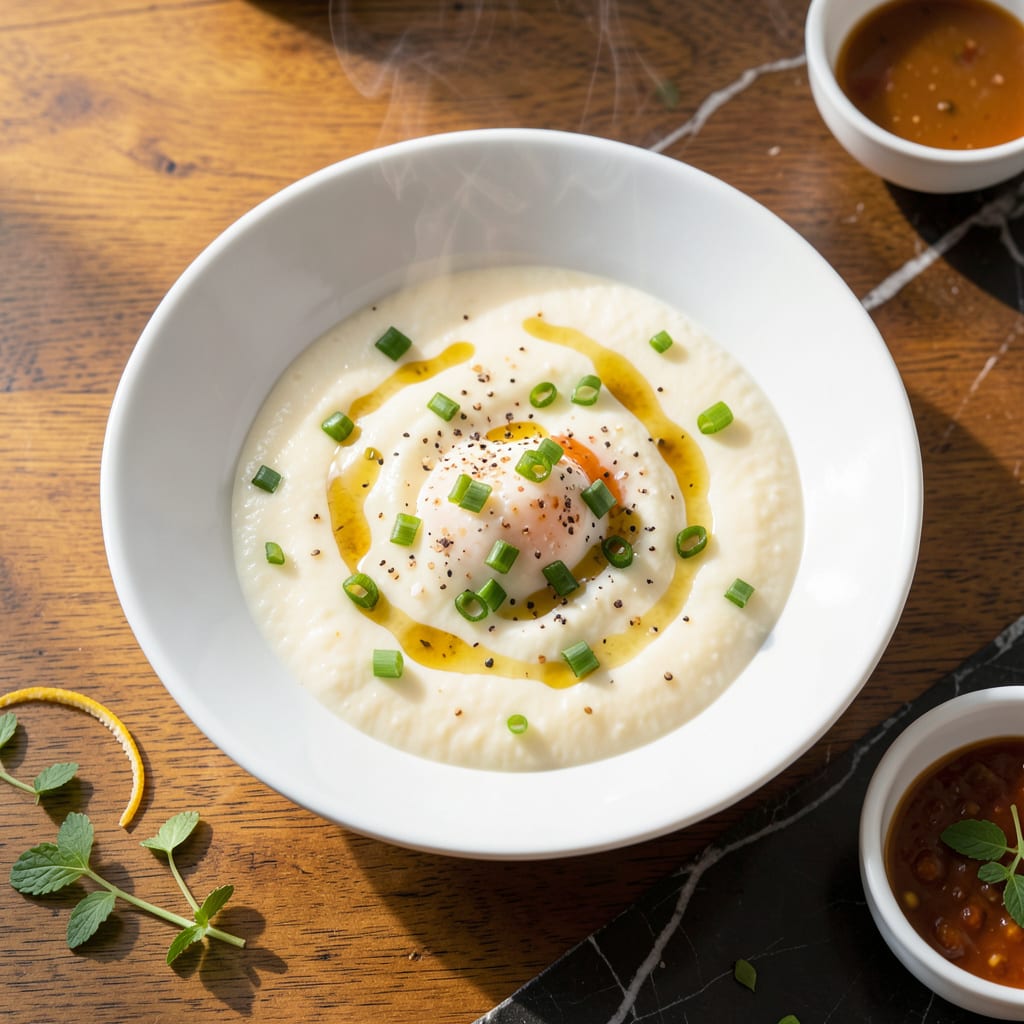
This Cantonese classic delivers a silky, custard-like texture that’s impossible to resist. The steaming method ensures gentle, even cooking for the smoothest results.
With just eggs, water, and a bit of patience, you’ll create a dish that’s as elegant as it is simple. The secret lies in the precise steaming time and temperature.
Ingredients for Steamed 3 Egg
Simple ingredients create an elegant Cantonese dish with silky, custard-like texture.
| Ingredient | Amount | Notes |
|---|---|---|
| Large Eggs 🥚 | 6 whole | Room temperature for smooth texture |
| Water 💧 | 2 ½ cups | Filtered for best results |
| Salt 🧂 | ½ tsp | Fine sea salt preferred |
| White Pepper 🌶️ | ¼ tsp | Freshly ground if possible |
| Sesame Oil 🫒 | 1 tsp | Toasted for aroma |
| Green Onions 🧅 | 2 whole | Thinly sliced for garnish |
| Soy Sauce 🫕 | 1 tbsp | Light or all-purpose variety |
| Oyster Sauce 🫕 | ½ tsp | Vegetarian oyster sauce for strict preference |
| Sugar 🍚 | ¼ tsp | Granulated white sugar |
| Neutral Oil 🫒 | ½ tsp | For greasing the dish |
The eggs are the foundation here. Fresh, high-quality eggs yield the smoothest texture—avoid older eggs as they lose cohesion. Room temperature is non-negotiable for even steaming. Most grocery stores carry organic or free-range options that work well. The water should be filtered to prevent any off-flavors from affecting the delicate custard.
No oyster sauce? Vegetarian mushroom stir-fry sauce works as a perfect substitute. White pepper is traditional, but black pepper at half the amount can be used in a pinch. If you’re avoiding soy, coconut aminos provide a similar umami depth. The sesame oil can be swapped for neutral oil, though you’ll lose some aroma.
This keeps 2 days in the fridge—best enjoyed fresh. Reheat gently over a pot of simmering water to maintain the silky texture. Avoid microwaving, as it can make the eggs rubbery. Garnish with green onions just before serving.
Why You’ll Love This Recipe
- No-Fuss Steaming: I just whisk eggs with a splash of water, season, and steam—no flipping, no fuss.
- Silky & Savory: That sesame oil swirl makes the texture ridiculously smooth with a hint of nutty depth.
- Breakfast or Dinner: Honestly, it works for lazy Sunday mornings or a quick weeknight side.
Step-by-Step Instructions for Cantonese Steamed Eggs
This method delivers perfectly smooth, custard-like texture with minimal effort.
Step 1: Prepare the Steaming Liquid and Dish
Pour the 2.5 cups Water into a large pot with a lid and bring to a boil over high heat. While waiting, use the 0.5 tsp Neutral Oil to lightly grease a heatproof dish that fits inside your pot—this prevents the egg from sticking during steaming.
I recommend a shallow ceramic or glass dish about 8 inches in diameter. The water should be deep enough that the dish floats slightly when placed inside, but not so deep that it touches the lid. This setup ensures even, gentle heat distribution.
Step 2: Whisk Eggs with Seasonings Until Smooth
Crack all 6 whole Large Eggs into a large bowl. Add the 0.5 tsp Salt, 0.25 tsp White Pepper, 1 tsp Sesame Oil, 1 tbsp Soy Sauce, 0.5 tsp Oyster Sauce, and 0.25 tsp Sugar. Whisk vigorously in a circular motion for 2-3 minutes until the mixture is completely smooth with no streaks of egg white or yolk.
The key here is patience—under-whisked eggs will create a lumpy texture. You want the mixture to be uniform and slightly frothy on top, which indicates the proteins are properly combined for that signature silky finish.
Step 3: Strain and Steam the Egg Mixture
Pour the egg mixture through a fine-mesh strainer into your prepared dish. This extra step removes any stubborn bits of chalazae or unincorporated seasonings, guaranteeing the smoothest possible texture. I tap the strainer gently against the bowl to help everything pass through.
Once strained, cover the dish with a lid or foil. Place it carefully into the pot of boiling water, then reduce the heat to medium-low. Steam for 15-18 minutes—you’ll know it’s done when the center no longer jiggles and the surface looks set but still slightly glossy.
Step 4: Rest and Garnish for Serving
Carefully remove the dish from the steamer and let it rest for 2 minutes. This brief rest allows the custard to firm up slightly before slicing. While resting, thinly slice the 2 whole Green Onions—you want paper-thin rings for the most elegant presentation.
Sprinkle the sliced green onions evenly over the top just before serving. The residual heat will soften them slightly and release their aroma. Serve immediately while warm with an extra drizzle of sesame oil if desired, though the dish is perfectly seasoned as is.
Pro Tips For Making Steamed 3 Egg
- Preheat the Steamer: I learned this the hard way—always bring the water to a full rolling boil before adding the egg mixture, or you’ll end up with a dense, uneven texture.
- Strain the Eggs: Sounds tedious, but pushing the beaten eggs through a fine-mesh strainer removes those stringy bits and gives you a silky, smooth custard.
- Skip Overmixing: After adding the water, stir just until combined—overmixing introduces too many air bubbles, which can make the steamed eggs puffy then collapse.
- Use Room-Temp Eggs: Cold eggs straight from the fridge can seize up when mixed with hot water; sitting them out for 10 minutes first makes a real difference in consistency.
Storing and Reheating This Recipe
Refrigerator Storage
Let your custard cool completely at room temperature for no more than 2 hours before transferring to an airtight container. Store in the fridge at 40°F or below for up to 2 days. The texture remains silky but firms up slightly when chilled. ❄️
Freezer Storage
While not ideal, you can freeze portions in single-serving containers for up to 1 month. I recommend using silicone muffin molds for easy portioning. Leave ½ inch headspace to prevent cracking as the custard expands.
Steam Reheating
This is the best method to preserve the silky texture. Place your portion in a heatproof dish, cover, and steam over simmering water for 8-10 minutes. Add 1 tsp water to the dish to create steam. The custard will soften beautifully and taste almost fresh. 🔥
Microwave Reheating
Use 50% power in 30-second intervals, stirring between each. This prevents rubbery texture. Cover with a damp paper towel to trap moisture. Expect slightly less smooth results than steaming, but it’s the quickest option.
Serving After Storage
Always garnish with fresh green onions after reheating to restore brightness. A tiny drizzle of sesame oil brings back the aromatic finish. Serve immediately while warm for the best experience.
Nutrition Facts
Frequently Asked Questions
Why strain the egg mixture before steaming?
Straining removes any remaining egg whites or chalazae for an ultra-smooth texture. It also ensures seasonings are fully incorporated. This small step makes a big difference in the final custard-like consistency.
Can I use a metal bowl for steaming?
It’s better to use ceramic, glass, or heatproof plastic. Metal conducts heat too quickly, which can make the edges cook faster than the center. A shallow 8-inch dish works best.
How do I prevent water from dripping onto the eggs?
Use a pot with a tight-fitting lid and place a clean kitchen towel over the dish before covering. This absorbs condensation and prevents water droplets from ruining the surface.
Can I add other ingredients like shrimp or mushrooms?
Lightly cook any additions first to release their flavors. arrange them in the dish before pouring in the egg mixture for even distribution.

- 6 Egg Cake Recipe with Oil: Light as Air With Buttery Moisture - October 4, 2026
- 4 Bean Casserole Recipe: One-Pan Heartiness With Smoky Paprika Depth - October 4, 2026
- 3-Ingredient Keto Mug Cake Recipe: Microwave Magic in 2 Minutes - October 4, 2026