
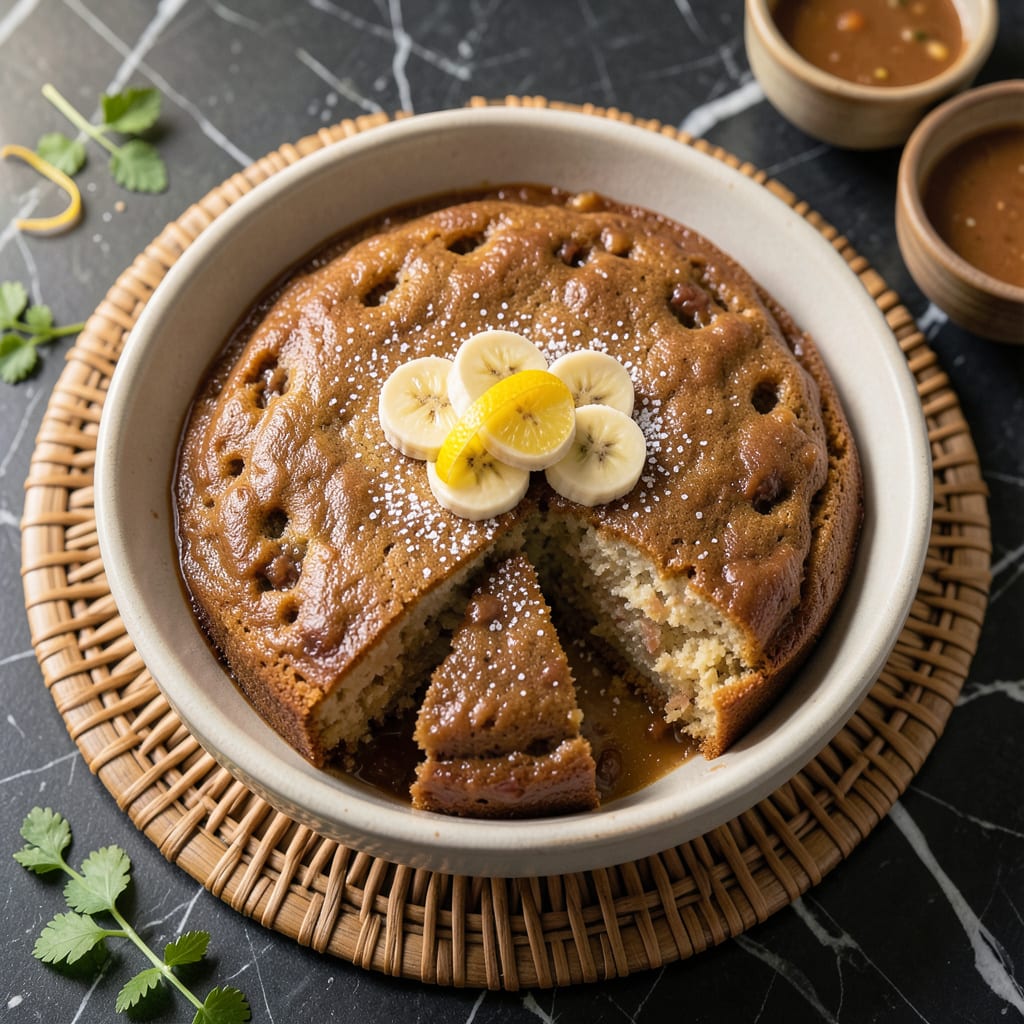
This traditional Filipino steamed cake transforms overripe bananas into a pillowy soft dessert with natural sweetness. The gentle steaming process preserves moisture while enhancing the fruit’s caramelized flavor.
Using basic pantry staples and ripe bananas, this one-bowl recipe delivers a tender crumb and rich banana taste. The result is a humble yet irresistible treat perfect for any occasion.
Ingredients for Steamed Banana Cake Filipino
Pantry staples plus overripe bananas create this tender, one-bowl Filipino dessert.
| Ingredient | Amount | Notes |
|---|---|---|
| Overripe Bananas 🍌 | 4 whole | Very ripe, black-spotted peels ideal |
| All-Purpose Flour 🌾 | 2 cups | Sifted for lighter texture |
| Granulated Sugar 🍚 | ¾ cup | Adjust to banana sweetness |
| Large Eggs 🥚 | 3 whole | Room temperature preferred |
| Vegetable Oil 🫒 | ½ cup | Neutral flavor like canola |
| Baking Powder 🧂 | 2 tsp | For proper rise in steaming |
| Baking Soda 🧂 | ½ tsp | Activates with banana acidity |
| Vanilla Extract 🌿 | 1 tsp | Pure extract for best flavor |
| Ground Cinnamon 🌶️ | ½ tsp | Optional for warm spice |
| Salt 🧂 | ¼ tsp | Fine sea salt preferred |
| Unsweetened Coconut Milk 🥥 | ¼ cup | Full-fat for moisture |
The bananas are non-negotiable here. Saba or latundan varieties are traditional in the Philippines, but any overripe banana with significant brown spotting works. Whole Foods or Asian markets often carry the Filipino varieties. The flour should be fresh—old flour loses its lifting power. For the oil, any neutral variety works, but avocado oil adds a subtle richness worth the splurge.
No coconut milk? Whole milk or evaporated milk keeps the moisture without altering flavor. Out of vanilla extract? Almond extract at half the amount offers a different but pleasant note. For a denser texture, replace half the flour with bread flour. The sugar can be reduced by 25% if your bananas are particularly sweet, but don’t skip it entirely—the cake needs structure.
This keeps remarkably well. Store covered at room temperature for 2 days or refrigerated for 4 days. For longer storage, wrap individual slices and freeze for up to 3 months. Reheat gently in the steamer or microwave with a damp paper towel to restore that just-steamed texture.
Why You’ll Love This Recipe
- One Bowl Wonder: I just dump everything in a single bowl—no mixer, no fuss, just ripe bananas, flour, and a quick stir.
- Warm Banana Bliss: That soft, moist crumb with the sweetness of overripe bananas? Honestly, it’s like a cozy hug in cake form.
- Feeds a Crowd: I make this for fiestas, and it’s always the first to disappear—great for potlucks or a weekend treat.
- Budget Friendly: Uses up those brown bananas sitting on my counter and costs pennies compared to bakery cakes.
Step-by-Step Instructions for Steamed Banana Cake
This method ensures the signature pillowy texture and deep caramelized banana flavor characteristic of Filipino steamed cakes.
Step 1: Prepare the Banana Base
In a large mixing bowl, mash the 4 whole Overripe Bananas with a fork until smooth with minimal lumps. The bananas should release their natural oils, creating a thick puree with visible dark flecks—this indicates maximum sweetness and moisture.
Whisk in the 0.75 cup Granulated Sugar, 0.5 cup Vegetable Oil, and 3 whole Large Eggs one at a time, ensuring each is fully incorporated before adding the next. The mixture should lighten in color and become silky. I always use room temperature eggs here for better emulsion.
Step 2: Combine Dry and Wet Ingredients
Sift the 2 cups All-Purpose Flour, 2 tsp Baking Powder, 0.5 tsp Baking Soda, 0.25 tsp Salt, and 0.5 tsp Ground Cinnamon together into a separate bowl. This aerates the flour and distributes the leavening agents evenly for consistent rise during steaming.
Gradually fold the dry ingredients into the wet mixture using a spatula, alternating with the 0.25 cup Unsweetened Coconut Milk. Begin and end with the flour mixture. Stop mixing as soon as the last streak of flour disappears—overworking develops gluten, which would make the cake dense rather than tender.
Step 3: Add Aromatics and Finalize Batter
Stir in the 1 tsp Vanilla Extract until just combined. The batter should be thick yet pourable, with visible air bubbles throughout. If it appears too stiff, the coconut milk hasn’t been fully incorporated—gently fold once or twice more.
Let the batter rest for 5 minutes at room temperature. This brief pause allows the baking powder and baking soda to begin activating, while the flour fully hydrates. You’ll notice the batter rises slightly and becomes glossier during this time.
Step 4: Steam to Perfection
Pour the batter into a greased 8-inch round cake pan or heatproof dish that fits inside your steamer. Tap the pan gently on the counter twice to remove large air pockets, which prevents uneven texture in the finished cake.
Place the pan in a steamer with 2 inches of vigorously boiling water. Cover tightly with a lid and steam over medium-high heat for 45-50 minutes. Check for doneness by inserting a toothpick into the center—it should come out clean with a few moist crumbs.
Step 5: Cool and Serve
Remove the pan from the steamer and let it cool on a wire rack for 10 minutes. The cake will pull away slightly from the edges of the pan as it cools, which is normal. Run a thin knife around the edge to loosen, then invert onto the rack.
Allow the cake to cool completely before slicing—this prevents crumbling and lets the structure set. The finished cake should have a fine, even crumb with a tender, moist interior. Serve at room temperature for the best texture and flavor development.
Pro Tips For Making Steamed Banana Cake Filipino
- Steam Evenly: Use a deep pot with a tight lid and keep water at a rolling boil—this prevents the cake from getting dense or soggy on top.
- Mash Bananas Well: I learned this the hard way—lumpy banana bits ruin the texture, so take the extra minute to blend them smooth.
- Don’t Overmix Batter: Stir just until the flour disappears; overworking the batter makes the cake tough instead of light and fluffy.
- Use Room-Temperature Eggs: Sounds fussy, but it actually changes the outcome—cold eggs can make the oil clump, leaving streaks in your finished cake.
Storing and Reheating steamed banana cake filipino
Room Temperature Storage
After cooling completely, wrap the cake in plastic wrap or store it in an airtight container. It stays fresh at room temperature for up to 2 days. The cake’s texture remains soft, and the banana flavor deepens slightly over time. 💛
Refrigerator Storage
For longer freshness, refrigerate the cake in an airtight container for up to 4 days. I recommend slicing it first so you can grab portions as needed. The cold will firm up the crumb, but it softens again once it warms to room temperature.
Freezing for Later
To freeze, wrap individual slices tightly in plastic wrap and then in aluminum foil. Label with the date—it keeps well for up to 3 months. Freezing preserves the moisture and flavor beautifully for future cravings. ❄️
Steamer Reheating
For the best texture, steam slices for 5-7 minutes until warmed through. This method restores the soft, pillowy quality of fresh cake. Use a steamer basket or a colander over a pot of boiling water, covered tightly.
Microwave Reheating
Place a slice on a microwave-safe plate, cover with a damp paper towel, and heat on medium power for 20-30 seconds. The steam from the towel prevents drying. Check and repeat in 10-second bursts if needed.
Oven Reheating
Preheat the oven to 300°F and wrap the cake in aluminum foil. Warm for 10-15 minutes until heated through. This works best for whole cakes or large portions, keeping the edges from drying out.
Nutrition Facts
Frequently Asked Questions
Can I use regular bananas instead of Filipino varieties?
Yes! Any very ripe bananas with black-spotted peels work. Saba or latundan are traditional, but common Cavendish bananas deliver excellent flavor and texture too.
Why does my cake turn out dense?
Overmixing the batter is the most common cause. Fold just until combined to avoid developing gluten. Also, ensure your baking powder and soda are fresh for proper rise.
How do I know when it’s done steaming?
Insert a toothpick into the center—it should come out clean with a few moist crumbs. Steaming for 45-50 minutes over medium-high heat is typical.
Can I bake this instead of steaming?
Steaming creates the signature moist texture, but baking at 350°F for 30-35 minutes works in a pinch. Add 2 tablespoons extra coconut milk to compensate for dryness.

- 6 Egg Cake Recipe with Oil: Light as Air With Buttery Moisture - October 4, 2026
- 4 Bean Casserole Recipe: One-Pan Heartiness With Smoky Paprika Depth - October 4, 2026
- 3-Ingredient Keto Mug Cake Recipe: Microwave Magic in 2 Minutes - October 4, 2026