
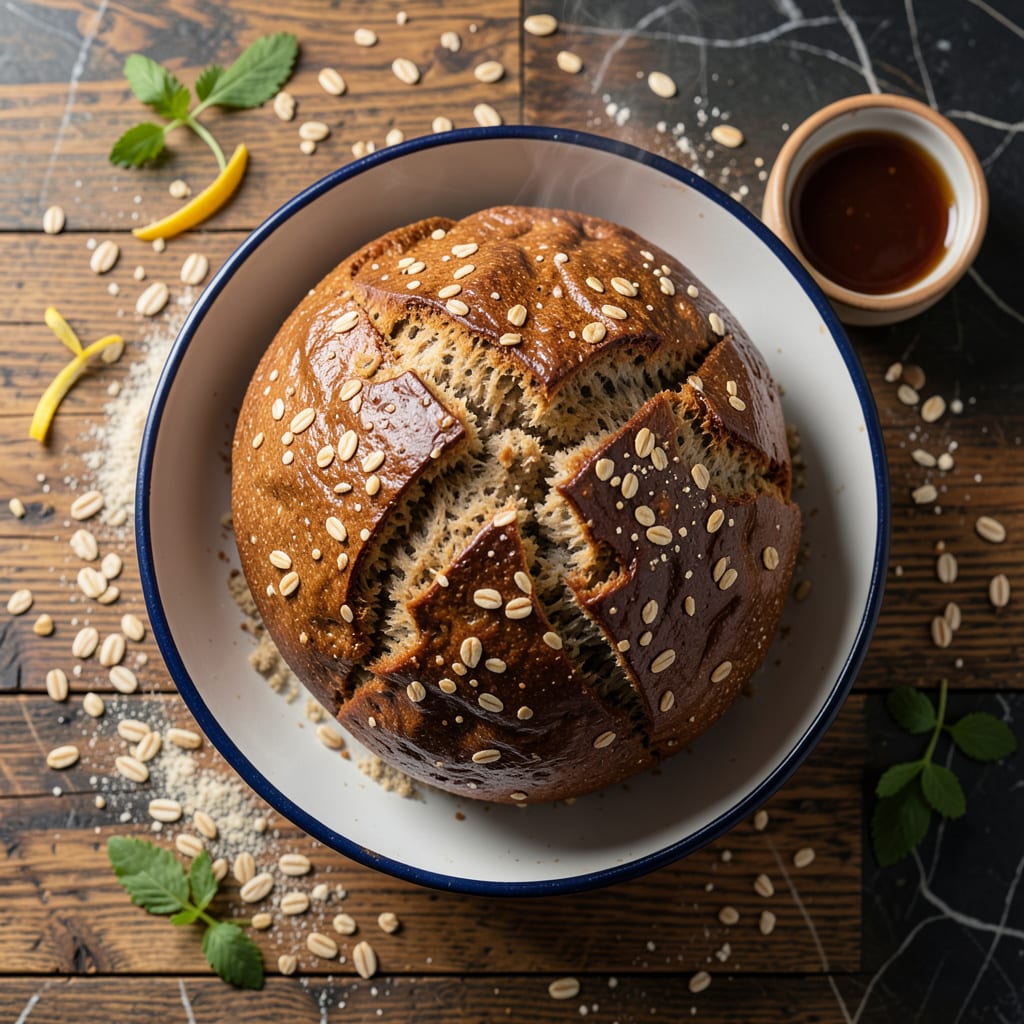
This recipe brings a taste of New England tradition to your table with its dense, moist texture and rich molasses flavor. Steaming in a can preserves the old-fashioned method that made this bread a staple.
With simple ingredients and a foolproof technique, you’ll achieve a perfectly tender loaf every time. It’s a hearty side that pairs beautifully with baked beans or chowder.
Ingredients for Steamed Brown Bread
Pantry staples meet New England tradition for this hearty, moist bread.
| Ingredient | Amount | Notes |
|---|---|---|
| Whole Wheat Flour 🌾 | 1 ½ cups | Stone-ground preferred for texture |
| All-Purpose Flour 🌾 | ½ cup | For lighter crumb structure |
| Old-Fashioned Rolled Oats 🥣 | 1 cup | Not instant or steel-cut |
| Cornmeal 🌽 | ½ cup | Medium or coarse grind |
| Molasses 🍯 | ¾ cup | Unsulphured for best flavor |
| Baking Soda 🧂 | 1 tsp | Ensures proper rise |
| Salt 🧂 | 1 tsp | Fine sea salt preferred |
| Buttermilk 🥛 | 1 ¼ cups | Full-fat for richness |
| Large Egg 🥚 | 1 whole | Room temperature for even mixing |
| Raisins 🍇 | ½ cup | Optional for sweetness |
| Vegetable Shortening 🧈 | 2 tbsp | For can preparation |
| Hot Water 💧 | ½ cup | For steaming liquid |
The molasses is key here—unsulphured has the deepest, most complex flavor. King Arthur or Bob’s Red Mill offer excellent stone-ground whole wheat flour. For buttermilk, full-fat yields the tenderest crumb, but low-fat works in a pinch. The oats and cornmeal add that signature dense texture New England is known for.
No buttermilk? Whole milk plus lemon juice or vinegar (1 tbsp per cup) works perfectly. Molasses can be swapped for half dark corn syrup and half honey, though the flavor will be milder. For a denser loaf, increase cornmeal by 2 tbsp. Raisins are traditional but can be omitted for a savory version.
Store the cooled loaf wrapped in foil at room temperature for up to 3 days. For longer storage, slice and freeze individual portions—reheat in a toaster or steamed for 5 minutes. The bread actually improves in flavor overnight.
Why You’ll Love This Recipe
- One Bowl Wonder: I mix the whole wheat flour, oats, and cornmeal right in the same bowl—no fancy tools, just a spoon and 5 minutes of stirring.
- Rich & Earthy: The molasses gives it this deep, caramel-like sweetness that pairs perfectly with the nuttiness of the whole grains.
- Breakfast or Dessert: I serve slices toasted with butter for breakfast, or warm with a scoop of ice cream for an easy dessert.
- Keeps for Days: Honestly, it tastes even better the next day—stays moist and holds up beautifully for up to a week in the fridge.
Step-by-Step Instructions for Steamed Brown Bread
This traditional method ensures a moist, dense loaf with the perfect New England character.
Step 1: Prepare the Steaming Can
Generously grease a 1-pound coffee can or similar heatproof container with the 2 tablespoons vegetable shortening, making sure to coat the bottom and sides completely. This creates a nonstick surface that allows the bread to release cleanly after steaming.
Place the prepared can on a trivet or rack inside a large pot with a tight-fitting lid. Pour in the 0.5 cup hot water—this will create the steam needed to cook the bread evenly. The water should come about halfway up the side of the can. Cover the pot and bring the water to a gentle simmer while you prepare the batter.
Step 2: Mix Dry Ingredients
In a large mixing bowl, whisk together the 1.5 cups Whole Wheat Flour, 0.5 cup All-Purpose Flour, 1 cup Old-Fashioned Rolled Oats, 0.5 cup Cornmeal, 1 teaspoon Baking Soda, and 1 teaspoon Salt until evenly combined. The combination of whole wheat and all-purpose flour creates the ideal texture balance for this dense, hearty bread.
Make a well in the center of the dry ingredients. This traditional technique ensures that when you add the wet ingredients, they incorporate evenly without overmixing, which could make the bread tough. The oats and cornmeal add a rustic texture that defines authentic New England brown bread.
Step 3: Combine Wet Ingredients and Form Batter
In a separate bowl, whisk together the 0.75 cup Molasses, 1.25 cups Buttermilk, and 1 whole Large Egg until smooth and fully combined. The molasses provides the signature deep, caramel-like sweetness that balances the earthy whole grains.
Pour the wet mixture into the well of the dry ingredients. Using a wooden spoon, stir just until the batter comes together—it should be thick but pourable. Fold in the 0.5 cup Raisins if using. Avoid overmixing; a few lumps are fine and will disappear during steaming.
Step 4: Steam the Bread to Perfection
Carefully pour the batter into the prepared can, filling it no more than two-thirds full to allow for rising. Cover the top of the can loosely with aluminum foil to prevent water from dripping into the batter during steaming.
Place the lid on the pot and steam the bread over medium heat for 1 hour to 1 hour 15 minutes. Check the water level occasionally, adding more hot water as needed to maintain the steam. The bread is done when a toothpick inserted into the center comes out clean and the top springs back when lightly pressed.
Step 5: Cool and Serve
Using hot pads, carefully remove the can from the steamer and let it cool on a wire rack for 10 minutes. This brief rest allows the bread to set and makes it easier to remove from the can. Run a thin knife around the edges if needed to loosen.
Turn the bread out onto the rack and let it cool completely before slicing. The texture should be dense, moist, and slightly sticky with a deep brown color throughout. Serve at room temperature with butter or alongside baked beans for a traditional New England meal.
Pro Tips For Making Steamed Brown Bread
- Preheat the Steamer: Fill your steamer with 2 inches of water and bring to a rolling boil before adding the bread—this prevents dense texture from slow heating.
- Soften the Molasses: Warm the molasses for 10-15 seconds in the microwave to make mixing easier, especially when combining with the dry ingredients.
- Skip Overmixing: Stir just until the dry and wet ingredients come together—I learned this the hard way when my bread turned out tough and chewy.
- Use Parchment Slings: Line your mold with parchment paper that extends over the sides to easily lift out the bread after steaming, and it won’t stick or break apart.
Storing and Reheating This Recipe
Room Temperature Storage
Once completely cooled, wrap your loaf tightly in aluminum foil or place in an airtight container. It keeps beautifully at room temperature for up to 3 days. The dense texture actually improves as the flavors meld together. 💪
Refrigerator Storage
For longer freshness, store wrapped slices in the fridge for up to 1 week. I recommend slicing before refrigerating so you can grab just what you need. Let slices come to room temperature for the best texture before serving.
Freezing for Later
This bread freezes exceptionally well for up to 3 months. Wrap the whole loaf or individual slices in plastic wrap, then foil. For best results, use a freezer bag to prevent freezer burn. Label with the date so you remember.
Steam Reheating Method
To revive that fresh-steamed texture, place slices in a steamer basket over 1 inch of boiling water for 5-7 minutes. This method works wonders for both refrigerated and frozen slices. Cover with a lid to trap the steam. ❄️
Toaster or Oven
For quick reheating, toast slices in a toaster on medium setting for 1-2 minutes. Alternatively, warm in a 350°F oven wrapped in foil for 10 minutes. Both methods restore warmth without drying out the bread.
Serving Tip
I love serving this slightly warmed with a pat of butter or alongside baked beans. The molasses flavor deepens beautifully when gently reheated, making it taste almost freshly made.
Nutrition Facts
Frequently Asked Questions
Why steam instead of bake?
Steaming creates a uniquely moist, dense texture that baking can’t achieve. The gentle heat keeps the bread tender while allowing the molasses flavor to deepen beautifully.
Can I use a different container?
A heatproof 1-pound coffee can is traditional, but any 28-30 oz metal can works. Avoid glass as it may crack from the heat.
How do I know when it’s done?
Insert a toothpick into the center—it should come out clean. The top should spring back when pressed and the bread will be deep brown throughout.
Can I make this without molasses?
For a substitute, use equal parts dark corn syrup and honey, but expect a milder flavor. The molasses is key to authentic New England taste.

- 6 Egg Cake Recipe with Oil: Light as Air With Buttery Moisture - October 4, 2026
- 4 Bean Casserole Recipe: One-Pan Heartiness With Smoky Paprika Depth - October 4, 2026
- 3-Ingredient Keto Mug Cake Recipe: Microwave Magic in 2 Minutes - October 4, 2026