
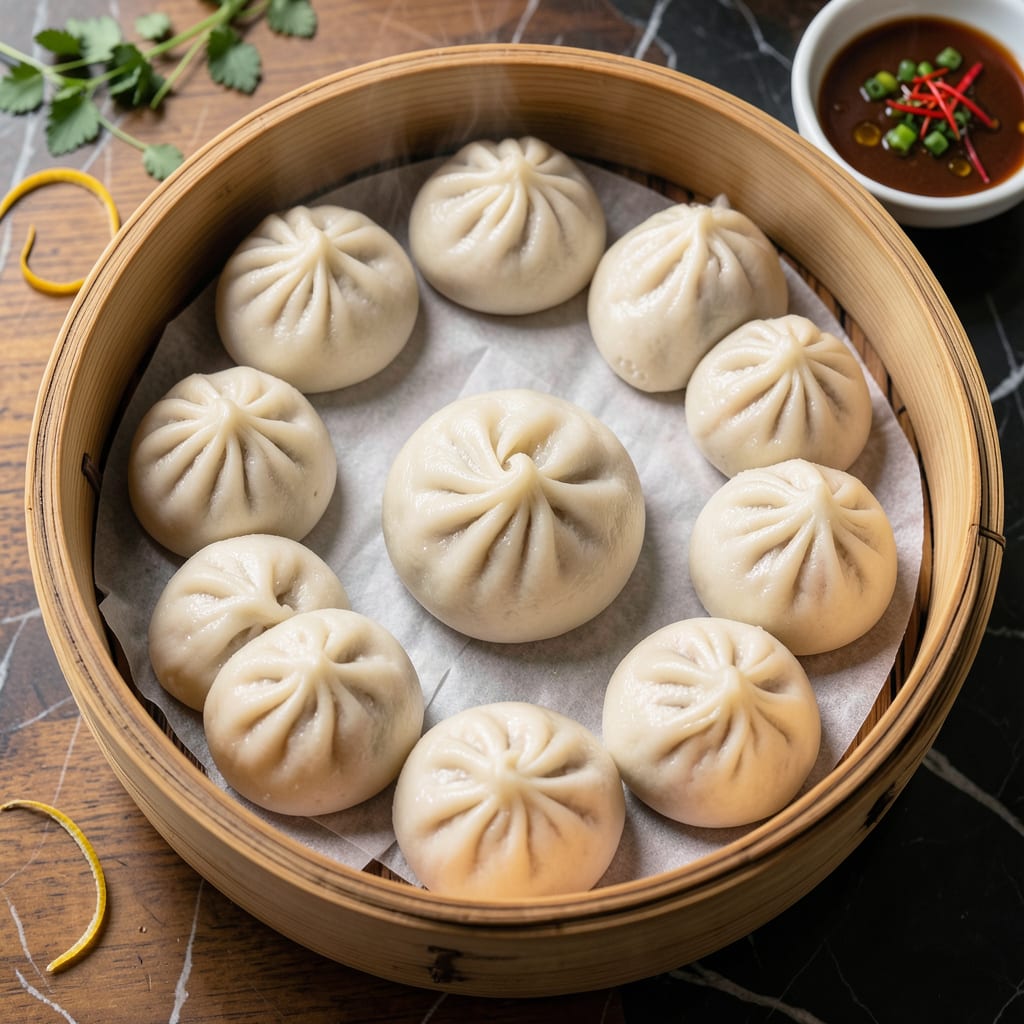
These fluffy steamed buns deliver restaurant-quality results with a simple, proven method.
With just a few basic ingredients and 30 minutes of active prep, you’ll achieve pillowy soft texture every time. The dough comes together effortlessly, and the steaming process ensures perfect results without special equipment.
Ingredients for Steamed Buns Recipe Easy
Basic pantry staples combine with a few fresh additions for these pillowy buns.
| Ingredient | Amount | Notes |
|---|---|---|
| All-Purpose Flour 🌾 | 3 cups | Plus extra for dusting |
| Active Dry Yeast 🍞 | 2 ¼ tsp | One packet, proofed in warm water |
| Granulated Sugar 🍚 | 2 tbsp | For activating yeast and dough |
| Warm Water 💧 | 1 ¼ cups | 110-115°F for yeast activation |
| Neutral Oil 🫒 | 2 tbsp | Vegetable or canola |
| Salt 🧂 | 1 tsp | Fine grain for even distribution |
| Baking Powder 🧂 | 1 tsp | For extra lift |
| Sesame Oil 🫒 | 1 tsp | For aroma in dough |
| Pork Belly 🥩 | ½ lb | Sliced thin for filling |
| Hoisin Sauce 🍯 | ¼ cup | For filling glaze |
| Green Onions 🧅 | 4 whole | Thinly sliced for garnish |
| Fresh Ginger 🌿 | 1 tbsp | Grated for filling |
| Light Soy Sauce 🍯 | 2 tbsp | For filling marinade |
| Brown Sugar 🍚 | 1 tbsp | For caramelized filling |
The flour quality impacts texture significantly. King Arthur or Gold Medal all-purpose deliver consistent results. Active dry yeast must be fresh—check the expiration date, as stale yeast won’t rise properly. Warm water temperature is critical: use a thermometer for accuracy. For the pork belly, asian grocery stores often carry higher-quality cuts than standard supermarkets.
Substitute pork belly with chicken thighs or tofu for alternative fillings. Hoisin can be replaced with oyster sauce (though not vegetarian) or a mix of soy sauce and honey. Fresh ginger is preferred, but ground ginger at half the quantity works in a pinch. For sweet buns, swap savory fillings for red bean paste or custard.
Prepared dough can rest in the fridge for up to 24 hours before shaping. Steamed buns keep in an airtight container for 2-3 days—reheat by steaming again. For longer storage, freeze uncooked buns and steam from frozen, adding 5 minutes to cooking time.
Why You’ll Love This Recipe
- One-Bowl Wonder: I mix everything in a single bowl—flour, yeast, sugar, water, oil—and let the dough do its thing. Honestly, cleanup is almost nonexistent.
- Pillowy Perfection: The steam turns the simple dough into soft, cloud-like buns with just a hint of sweetness from the sugar.
- Blank Canvas: I stuff them with BBQ pork one day, red bean paste the next, or just eat them plain with soup. Between us, they’re my meal prep MVP.
- Pennywise Comfort: Five basic pantry staples and about an hour of time yield a batch that’s way cheaper than takeout. My wallet thanks me every time.
Step-by-Step Instructions for Steamed Buns
This method ensures pillowy soft results with minimal effort and maximum flavor.
Step 1: Activate the Yeast and Prepare the Dough
In a small bowl, combine the 2.25 tsp Active Dry Yeast, 2 tbsp Granulated Sugar, and 1.25 cups Warm Water at 110-115°F. Let it sit for 5-7 minutes until the mixture becomes frothy and doubles in volume—this confirms the yeast is active.
In a large mixing bowl, whisk together the 3 cups All-Purpose Flour, 1 tsp Salt, and 1 tsp Baking Powder. Pour in the activated yeast mixture, 2 tbsp Neutral Oil, and 1 tsp Sesame Oil. Stir with a wooden spoon until a shaggy dough forms. The dough should be slightly sticky but pull away from the bowl.
Step 2: Knead and First Rise
Turn the dough onto a lightly floured surface (using extra all-purpose flour for dusting) and knead for 8-10 minutes until smooth and elastic. The dough should spring back slowly when pressed with a finger—this indicates proper gluten development.
Place the dough in a lightly oiled bowl, cover with a damp towel, and let it rise in a warm, draft-free area for 1-1.5 hours or until doubled in size. I like to place it in an oven with the light on for consistent warmth. The dough is ready when it holds an indent when gently pressed.
Step 3: Prepare the Pork Belly Filling
While the dough rises, combine the thinly sliced 0.5 lb Pork Belly, 2 tbsp Light Soy Sauce, 1 tbsp Fresh Ginger, and 1 tbsp Brown Sugar in a bowl. Mix well and let it marinate for at least 20 minutes to absorb the flavors.
Heat a skillet over medium heat and cook the marinated pork belly for 6-8 minutes, stirring occasionally, until the edges are caramelized and the meat is cooked through. Stir in the 0.25 cup Hoisin Sauce and cook for an additional 2 minutes until the mixture thickens slightly and becomes glossy.
Step 4: Shape the Buns and Second Rise
Punch down the risen dough to release the air and divide it into 12 equal portions (about 2.5 oz each). Roll each portion into a ball, then flatten into a 3-inch circle with a rolling pin, keeping the edges thinner than the center.
Place 1 tbsp of the pork belly filling in the center of each dough circle. Pleat the edges upward, pinching to seal tightly at the top. Twist the sealed top gently to ensure a secure closure. Place each bun on a square of parchment paper to prevent sticking.
Arrange the buns in a steamer basket, leaving 1 inch between each for expansion. Cover and let rise for 30-45 minutes until puffy.
Step 5: Steam to Perfection
Bring 2 inches of water to a boil in a wok or large pot that fits your steamer basket. Place the basket over the boiling water, ensuring the water does not touch the buns. Cover tightly with a lid and steam over medium-high heat for 12-15 minutes.
Remove the lid carefully to avoid condensation dripping onto the buns. The buns are done when they have expanded significantly and the dough is translucent with a slightly glossy sheen. Garnish with thinly sliced 4 whole Green Onions before serving warm.
Pro Tips For Making Steamed Buns Recipe Easy
- Test Your Yeast: I learned this the hard way—always bloom your active dry yeast in the warm water with sugar first. If it doesn’t get foamy within 5-10 minutes, your buns won’t rise, and you’ll waste flour.
- Knead Until Smooth: The dough should feel elastic and slightly tacky, not sticky. After burning three batches to tough, dense buns, I finally figured out that 8-10 minutes of kneading by hand makes all the difference.
- Skip Cold Water: Warm water—around 110°F—is non-negotiable for activating the yeast. Cold water slows it down, and hot water kills it, leaving you with flat, sad buns.
- Rest the Dough: Give it a solid 1-2 hours in a warm spot to double in size. Sounds weird, but covering it with a damp towel actually changes the outcome—your buns will be light and fluffy, not dense.
Dietary Considerations for This Dish
Gluten-Free Option
Swap the all-purpose flour for a 1:1 gluten-free blend like King Arthur Measure for Measure. Add 1 tsp xanthan gum to improve elasticity. The texture will be slightly denser but still delicious. Let the dough rest for 10 extra minutes before shaping. 💪
Vegan Adaptation
Replace pork belly with marinated tofu or shiitake mushrooms for the filling. Use vegetarian hoisin sauce (check labels for fish ingredients). The dough is naturally vegan—just ensure your sugar isn’t processed with bone char.
Lower-Carb Version
For a lighter option, use almond flour mixed with tapioca starch (ratio 2:1). The buns won’t rise as much but will have a tender crumb. Steam for 10-12 minutes to prevent drying out.
Allergen Notes
This recipe contains wheat and soy (from hoisin and soy sauce). For nut-free versions, skip sesame oil or use toasted sesame seed oil if only seed allergies are a concern. Always check labels for cross-contamination.
Sugar-Reduced Dough
Cut the granulated sugar by half in the dough—it’ll still activate the yeast. Boost sweetness in the filling with 1 extra tbsp brown sugar or a drizzle of honey. The buns will be less golden but just as soft.
Dairy-Free Confirmation
This recipe is naturally dairy-free as written. Just verify your hoisin sauce doesn’t contain hidden dairy derivatives. I’ve never had issues with Koon Chun or Lee Kum Kee brands. ✨
Nutrition Facts
Frequently Asked Questions
What’s the ideal water temperature for activating yeast?
Use 110-115°F water to activate yeast without killing it. Any hotter can destroy the yeast, while cooler water may not activate it properly. A kitchen thermometer ensures accuracy.
Can I skip the second rise?
No, the second rise ensures light, airy texture. Skipping it results in dense, chewy buns. Let them rise 30-45 minutes until visibly puffy before steaming.
How do I prevent buns from sticking to the steamer?
Line each bun with a small square of parchment paper before steaming. This prevents sticking and makes removal easy. Leave 1 inch between buns for expansion.
Can I use a different filling?
Yes! Try sweet fillings like red bean paste or custard, or savory options like chicken or tofu. Adjust cooking times to ensure fillings are fully cooked before assembly.

- 6 Egg Cake Recipe with Oil: Light as Air With Buttery Moisture - October 4, 2026
- 4 Bean Casserole Recipe: One-Pan Heartiness With Smoky Paprika Depth - October 4, 2026
- 3-Ingredient Keto Mug Cake Recipe: Microwave Magic in 2 Minutes - October 4, 2026