
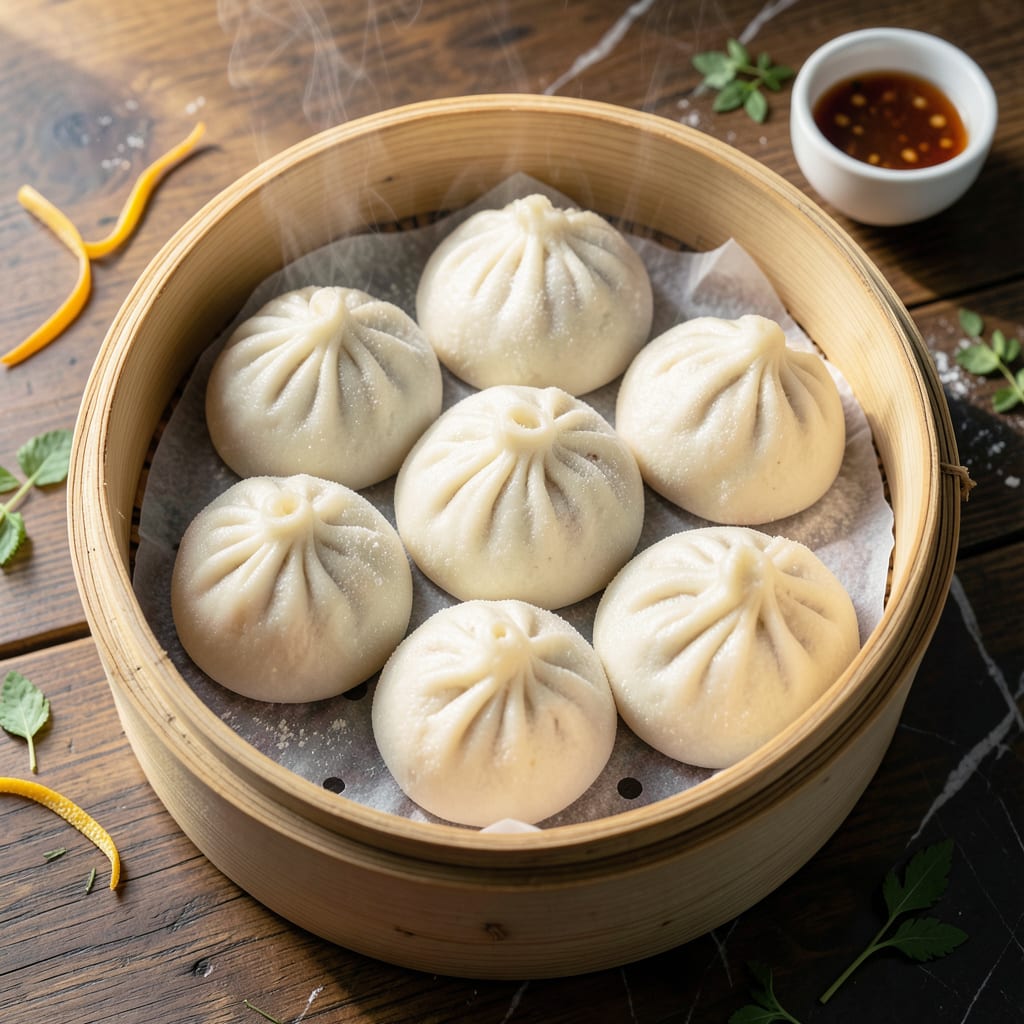
I’ve been chasing the perfect steamed bun for years—soft, pillowy, and just the right amount of chewy. This recipe delivers that melt-in-your-mouth texture every time.
With a simple dough and your choice of savory fillings, these buns are easier to make than you’d think. The steam works magic, turning them into fluffy clouds that disappear fast.
Ingredients for Steamed Buns
Soft dough, savory fillings, and steam create these perfect pillowy buns you’ll crave.
| Ingredient | Amount | Notes |
|---|---|---|
| All-Purpose Flour 🌾 | 4 cups | Plus extra for dusting surfaces |
| Instant Yeast 🍞 | 2 tsp | Or active dry yeast, same amount |
| Granulated Sugar 🍚 | ¼ cup | Activates the yeast quickly |
| Warm Water 💧 | 1 ¼ cups | About 110°F, not too hot |
| Vegetable Oil 🫒 | 2 tbsp | Neutral flavor, like canola |
| Baking Powder 🧂 | 1 tsp | Helps with extra fluffiness |
| Salt 🧂 | 1 tsp | Fine sea salt preferred |
| Ground Pork 🥩 | ¾ lb | Or chicken for variation |
| Napa Cabbage 🥬 | 2 cups | Finely chopped for filling |
| Green Onions 🧅 | 4 whole | Thinly sliced, whites and greens |
| Garlic Cloves 🧄 | 3 cloves | Minced for filling flavor |
| Soy Sauce 🥫 | 2 tbsp | Low-sodium if preferred |
| Sesame Oil 🫒 | 1 tsp | For finishing aroma |
| Cornstarch 🌾 | 1 tbsp | Mixed with water for slurry |
The flour is the foundation here—King Arthur or Gold Medal all-purpose are my go-tos (nothing fancy, just consistent). Instant yeast is a game-changer for quick rising, but active dry works too if that’s what’s in your pantry. The warm water needs to be just right—not hot enough to kill the yeast, but warm enough to wake it up (test it on your wrist like a baby bottle).
No pork? Ground chicken or turkey work great, or go veggie with mushrooms for a meatless twist. Napa cabbage can be swapped for regular green cabbage (just chop it finer). Soy sauce is essential, but tamari or coconut aminos keep it gluten-free. The sesame oil adds that signature aroma—Kadoya brand is my favorite, but any Asian market will have options.
Dough can be made a day ahead—just let it rise in the fridge overnight for deeper flavor. Cooked buns keep 2-3 days in the fridge, but they’re best fresh. Freeze uncooked buns on parchment paper, then steam straight from frozen when ready to eat (add 2-3 minutes to cooking time).
Why You’ll Love This Recipe
- No-Knead Magic: I just mix the flour, yeast, sugar, and warm water—no fancy techniques, and the dough practically makes itself.
- Pillowy Perfection: That soft, slightly sweet bite from the steamed dough? It’s the kind of texture I crave with every meal.
- Endless Fillings: I stuff them with pork one day, red bean paste the next—same simple dough, totally different vibes.
- Budget Stretch: A bag of flour and a packet of yeast make a dozen buns. Honestly, it’s my cheapest way to feed a crowd.
Step-by-Step Instructions for Steamed Buns
Here’s how I make these pillowy buns with a savory filling that’s irresistibly tender.
Step 1: Prepare the Dough
In a large bowl, whisk together the 4 cups All-Purpose Flour, 2 tsp Instant Yeast, 0.25 cup Granulated Sugar, 1 tsp Baking Powder, and 1 tsp Salt. I like to sift the dry ingredients first to avoid any lumps.
Create a well in the center and pour in the 1.25 cups Warm Water and 2 tbsp Vegetable Oil. Use a wooden spoon to stir until a shaggy dough forms. The water should feel warm to the touch but not hot—about 110°F is perfect.
The dough will be slightly sticky, but don’t add extra flour yet. Let it rest for 10 minutes to allow the flour to hydrate fully. This makes kneading much easier.
Step 2: Knead and Rise the Dough
After resting, turn the dough onto a lightly floured surface. Knead for 8-10 minutes until smooth and elastic. I press the dough with the heel of my hand, fold it over, and rotate it a quarter turn each time.
You’ll know it’s ready when the dough springs back slowly when pressed with a finger. Lightly oil a clean bowl, place the dough inside, and cover with a damp towel. Let it rise in a warm place for 1-2 hours or until doubled in size.
Pro tip: If your kitchen is cold, place the bowl near a warm oven (turned off but still holding heat) to speed up the process.
Step 3: Prepare the Filling
In a large skillet over medium heat, cook the 0.75 lb Ground Pork until no longer pink, breaking it into small pieces with a spoon. Drain any excess fat, then add the 2 cups Napa Cabbage, 4 whole Green Onions (thinly sliced), and 3 cloves Garlic Cloves (minced).
Cook for 5 minutes until the cabbage softens. Stir in the 2 tbsp Soy Sauce and 1 tsp Sesame Oil. In a small bowl, mix the 1 tbsp Cornstarch with 2 tbsp water to make a slurry, then add it to the skillet. Cook for another 2 minutes until the filling thickens. Remove from heat and let cool.
Step 4: Shape and Steam the Buns
Punch down the risen dough and divide it into 12 equal pieces. Roll each piece into a 3-inch circle, keeping the edges thinner than the center. Place 1-2 tablespoons of the cooled filling in the center of each circle.
To fold, pleat the edges upward, pinching as you go to seal the buns tightly. Place each bun on a small square of parchment paper to prevent sticking. Arrange them in a steamer basket, leaving space between each for expansion.
Steam over boiling water for 15-20 minutes until the buns are puffed and the dough looks slightly translucent. Turn off the heat and let them sit, covered, for 5 minutes before serving. The buns should be soft, pillowy, and slightly sticky to the touch.
Pro Tips For Making Steamed Buns
- Proof Properly: Let the dough rise until it’s doubled—about 1 hour at 80°F. I learned this the hard way when my buns came out dense and flat.
- Use Warm Water: Test the water temperature with your wrist—it should feel warm but not hot, around 105-110°F. Too hot kills the yeast, too cold slows it down.
- Skip Cold Ingredients: Make sure your flour and water aren’t straight from the fridge. Cold ingredients can shock the yeast and stall the rise.
- Oil the Dough: Add about 1 tablespoon of vegetable oil to the dough—it keeps the buns tender and prevents them from drying out during steaming.
Pro Cooking Tips for This Dish
Yeast Activation
Always proof your yeast in 110°F water with 1 tsp sugar first. If it doesn’t bubble within 5-10 minutes, your yeast is dead—start over. I learned this the hard way when my first batch came out dense.
Dough Hydration
The dough should feel slightly sticky but not wet. If it’s too dry, add water 1 tbsp at a time. Too sticky? Add flour 1 tbsp at a time. Let it rest 10 minutes before kneading—this relaxes the gluten.
Steamer Setup
Use a bamboo steamer lined with cabbage leaves or parchment paper to prevent sticking. I keep 2 inches of water boiling below. Don’t let the water touch the buns. A tight lid is crucial for proper steam circulation.
Sealing Technique
When pleating, pinch the dough firmly between your thumb and index finger. Rotate the bun as you go, making 8-10 pleats total. If it doesn’t seal, the filling will leak during steaming. Practice makes perfect here!
Steaming Time
Steam for exactly 15-20 minutes over medium-high heat. Don’t peek during the first 10 minutes—releasing steam can cause the buns to collapse. They’re done when they’ve doubled in size and look slightly translucent. 💡
Post-Steam Rest
Let them rest 5 minutes after steaming. This prevents them from deflating when you remove the lid. Serve immediately—they’re best hot. I like to brush the tops with a little sesame oil for extra shine. 🔥
Nutrition Facts
Frequently Asked Questions
Can I use all-purpose flour instead of bread flour?
Yes! All-purpose works perfectly for soft, fluffy results. Bread flour creates a slightly chewier texture, but the difference is minimal for most home cooks.
How do I keep them from sticking to the steamer?
Line your steamer with parchment paper or cabbage leaves. Leave 1 inch between buns for expansion. Never skip the parchment!
Why did my buns turn out dense?
This usually means the yeast didn’t activate or the dough didn’t rise long enough. Check your water temperature (110°F) and give it the full 1-2 hours to double.
Can I make these ahead of time?
Shape and freeze uncooked buns on parchment. Steam straight from frozen, adding 2-3 minutes to the cooking time. Fresh is best, but this works in a pinch.

- 6 Egg Cake Recipe with Oil: Light as Air With Buttery Moisture - October 4, 2026
- 4 Bean Casserole Recipe: One-Pan Heartiness With Smoky Paprika Depth - October 4, 2026
- 3-Ingredient Keto Mug Cake Recipe: Microwave Magic in 2 Minutes - October 4, 2026