
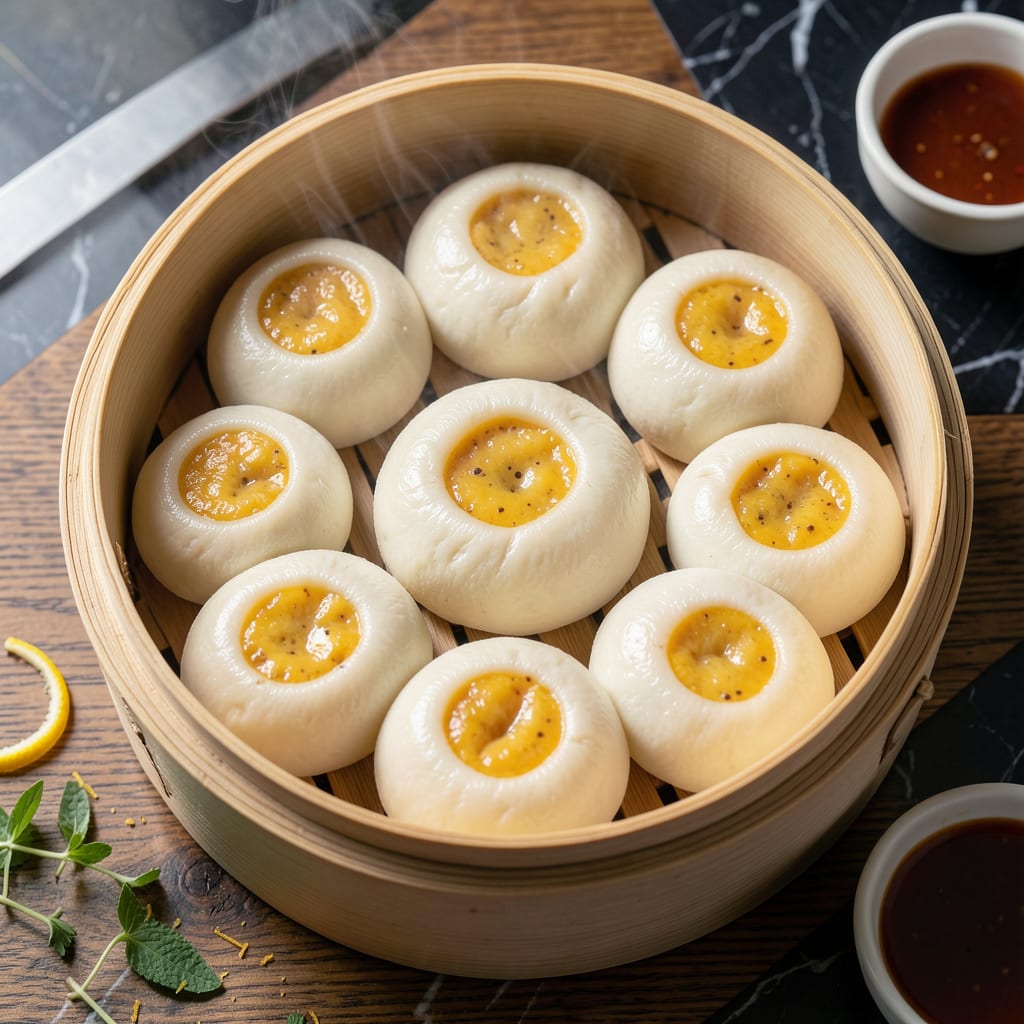
These steamed buns deliver a perfect balance of soft, pillowy dough and rich, creamy custard in every bite. The technique ensures fluffy texture without density.
I developed this method to create consistent results at home, with precise steaming times for ideal doneness. The custard filling stays luscious and centered in each bun.
Ingredients for Steamed Egg Custard Bun
These simple ingredients create pillowy steamed buns with luscious custard centers at home.
| Ingredient | Amount | Notes |
|---|---|---|
| All-Purpose Flour 🌾 | 2 cups | Plus extra for dusting surfaces |
| Granulated Sugar 🍚 | ¼ cup | Divided for dough and custard |
| Active Dry Yeast 🍃 | 2 ¼ tsp | One packet, proofed in warm water |
| Warm Water 💧 | ¾ cup | 110°F for yeast activation |
| Whole Milk 🥛 | ¼ cup | Warmed slightly for dough |
| Unsalted Butter 🧈 | 2 tbsp | Melted and cooled for dough |
| Large Egg 🥚 | 1 whole | Room temperature, for dough |
| Salt 🧂 | ½ tsp | Fine sea salt preferred |
| Custard Powder 🍮 | ¼ cup | Instant vanilla flavor preferred |
| Heavy Cream 🥛 | ¼ cup | Cold, for custard filling |
| Egg Yolks 🥚 | 2 whole | For custard filling only |
| Vanilla Extract 🌿 | 1 tsp | Pure extract for best flavor |
| Baking Powder 🧂 | ½ tsp | For custard lightness |
The flour is foundation—King Arthur or Bob’s Red Mill give consistent results. Yeast freshness is critical (check expiration dates). Whole Foods and Trader Joe’s have reliable bulk bins for custard powder. For the custard filling, organic heavy cream yields the richest texture. Butter should be unsalted so you control the salt content precisely in both dough and filling.
No custard powder? Instant vanilla pudding mix works identically—just check it’s the cook-and-serve type. Out of heavy cream? Half-and-half plus a splash of melted butter gets you close. The egg yolks are non-negotiable for custard richness (save the whites for meringues). For a lighter dough, bread flour at half the amount adds chew without density.
Dough rises best in a warm spot (75-80°F). Unbaked buns freeze beautifully on parchment-lined trays—3 months max. Baked buns keep 2-3 days in an airtight container. Re-steam for 2-3 minutes to revive texture (don’t microwave).
Why You’ll Love This Recipe
- No-Fuss Dough: The yeast does most of the work—just mix flour, sugar, warm water, and milk, then let it rise while I prep the filling.
- Sweet Custard Surprise: That first bite of silky egg custard wrapped in soft, slightly sweet steamed bread? Pure comfort.
- Breakfast or Snack: Honestly, I make these for lazy Sunday brunches and after-school treats—my kids devour them either way.
- Budget-Friendly Batch: A handful of pantry staples makes a dozen buns, and they freeze beautifully for last-minute cravings.
Step-by-Step Instructions for Steamed Egg Custard Bun
These clear, tested steps will guide you through creating perfect custard-filled buns with a soft, pillowy texture.
Step 1: Prepare and Proof the Dough
In a large bowl, whisk together the 2.25 tsp Active Dry Yeast with the 0.75 cup Warm Water at 110°F. Let it sit for 5-7 minutes until foamy. This confirms the yeast is active and ready to leaven your dough.
Add the 2 cups All-Purpose Flour, 0.25 cup Granulated Sugar, 0.25 cup Whole Milk, 2 tbsp Unsalted Butter (melted and cooled), 1 whole Large Egg, and 0.5 tsp Salt. Mix until a shaggy dough forms, then knead on a lightly floured surface for 8-10 minutes until smooth and elastic.
Place the dough in a greased bowl, cover with a damp towel, and let it rise in a warm place for 1-1.5 hours or until doubled in size. The dough should spring back slowly when pressed with a finger.
Step 2: Make the Custard Filling
In a separate bowl, combine the 0.25 cup Custard Powder, 0.25 cup Heavy Cream, 2 whole Egg Yolks, and 1 tsp Vanilla Extract. Whisk until smooth and free of lumps. The mixture should be thick but pourable.
Add the remaining 0.25 cup Granulated Sugar and 0.5 tsp Baking Powder, mixing until fully incorporated. Chill the custard filling in the refrigerator for 20-30 minutes to thicken slightly. This makes it easier to shape and prevents it from leaking during steaming.
Step 3: Shape the Buns
Once the dough has doubled, punch it down and divide it into 4 equal portions. Roll each portion into a smooth ball, then flatten into a 3-inch circle with a rolling pin, leaving the center slightly thicker than the edges.
Spoon about 2 tablespoons of the chilled custard filling into the center of each dough circle. Gather the edges of the dough up and around the filling, pinching to seal completely. Roll the sealed bun gently between your palms to smooth the surface.
Step 4: Steam to Perfection
Line a steamer basket with parchment paper, poking small holes to allow steam to circulate. Place the buns in the basket, leaving 1-2 inches of space between each for expansion. Cover and let rise for 15-20 minutes until slightly puffed.
Bring 1-2 inches of water to a boil in a pot that fits your steamer basket. Place the basket over the boiling water, cover with a lid, and steam for 15-18 minutes. Check the water level halfway through and add more if needed. The buns are done when they’ve expanded significantly and feel firm to the touch.
Remove the buns from the steamer and let them cool for 5 minutes before serving. They should be soft, fluffy, and filled with a creamy, sweet custard center.
Pro Tips For Making Steamed Egg Custard Bun
- Proof the Yeast: Always activate your dry yeast in warm water with a pinch of sugar first—if it doesn’t foam within 5 minutes, your buns won’t rise. I learned this the hard way after wasting a batch of dough.
- Use Scalded Milk: Heat your whole milk to 110°F (just warm to the touch) before mixing it with the flour. Sounds fussy, but it makes the dough softer and more pliable.
- Skip Overfilling: Resist the urge to stuff too much custard into the buns—they’ll burst open while steaming. A tablespoon of filling per bun is the sweet spot.
- Steam on High: Bring your water to a rolling boil before adding the buns, then keep the heat high. Low heat gives you dense, gummy buns instead of light, fluffy ones.
Creative Variations of This steamed egg custard bun
Matcha Green Tea Twist
Add 1 tbsp matcha powder to the custard filling mixture for a vibrant green hue and earthy flavor. I balance it with an extra 1 tbsp sugar since matcha can be bitter. The color is stunning, and the flavor pairs beautifully with the sweetness. 🌟
Chocolate Lover’s Version
Replace 2 tbsp custard powder with 2 tbsp cocoa powder and add ¼ cup mini chocolate chips to the filling. The chocolate custard becomes rich and decadent, almost like a molten lava center when warm.
Salted Egg Yolk Surprise
For a savory twist, replace the vanilla custard with 1 cooked salted egg yolk (available at Asian markets) mixed into the filling. The salty-sweet contrast is addictive. I like to add a pinch of white pepper to enhance the egg flavor.
Pandan Infusion
Steep 2 pandan leaves in the ¼ cup warm milk for the dough, then remove before mixing. This gives the buns a fragrant, floral aroma that complements the custard. Pandan extract (½ tsp) works if fresh leaves aren’t available.
Ube Purple Custard
Mix 2 tbsp ube halaya jam into the custard filling for a vibrant purple color and nutty vanilla flavor. The natural sweetness of ube reduces the need for extra sugar. I find this variation especially popular with kids. 💛
Coconut Cream Dream
Swap the heavy cream for coconut cream and add 2 tbsp toasted coconut flakes to the filling. The tropical flavor works surprisingly well with the soft bun texture. Use full-fat coconut cream for best results.
Nutrition Facts
Frequently Asked Questions
Why did my buns deflate after steaming?
This usually happens if they weren’t fully cooked through. Steam for the full 15-18 minutes and avoid opening the lid early. The sudden temperature change causes collapse. Let them rest 5 minutes after steaming too.
Can I make these ahead of time?
Yes! Shape and fill the buns, then freeze on a tray before the final rise. Steam from frozen, adding 3-5 minutes to the time. Or refrigerate shaped buns overnight for morning steaming.
How do I prevent custard from leaking?
Chill the filling for 20-30 minutes before using and seal the dough edges tightly. Use just 2 tablespoons per bun—overfilling is the most common cause of leaks.
What if I don’t have a steamer basket?
Use a colander or heatproof plate over a pot with 1-2 inches of boiling water. Cover tightly with foil or a lid. A bamboo steamer also works perfectly if you have one.

- 6 Egg Cake Recipe with Oil: Light as Air With Buttery Moisture - October 4, 2026
- 4 Bean Casserole Recipe: One-Pan Heartiness With Smoky Paprika Depth - October 4, 2026
- 3-Ingredient Keto Mug Cake Recipe: Microwave Magic in 2 Minutes - October 4, 2026