
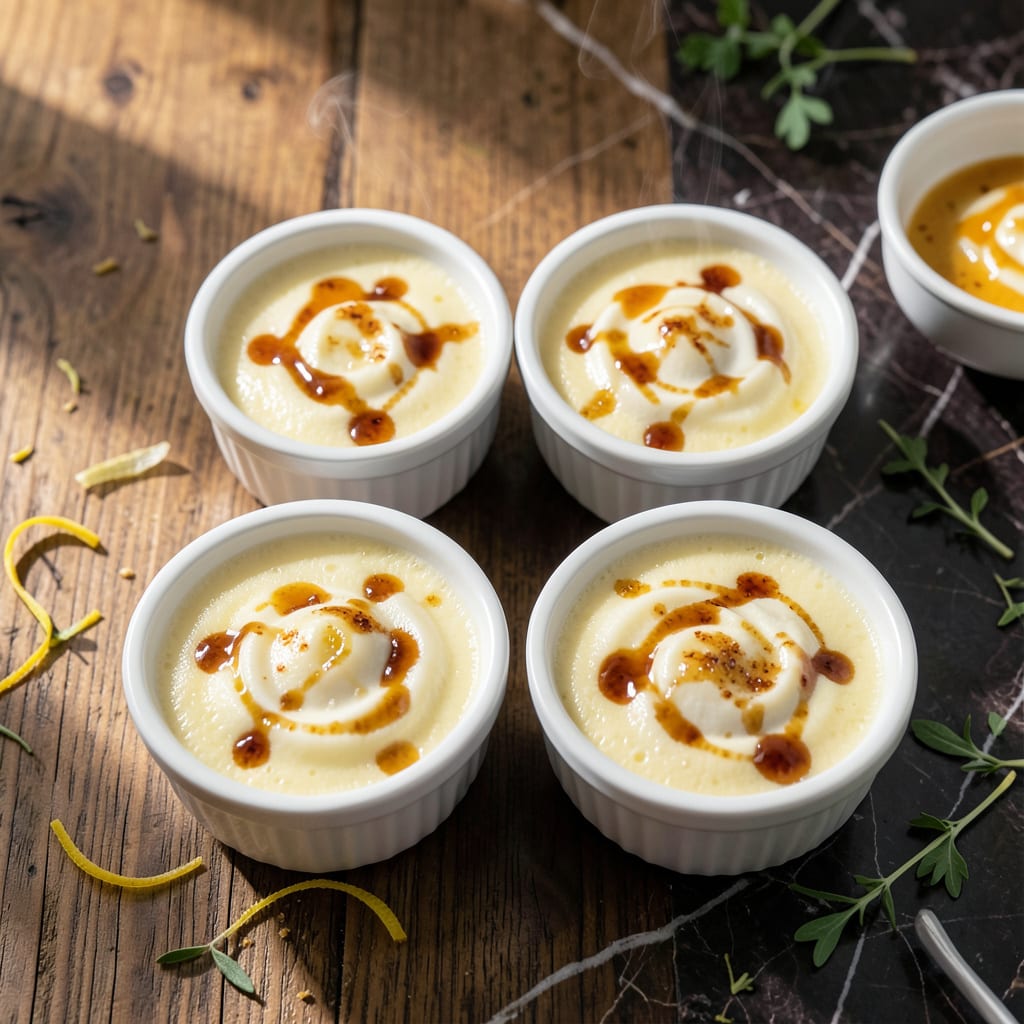
This Cantonese-style steamed egg custard delivers a silky-smooth texture that melts in your mouth. The secret lies in the precise ratio of eggs to liquid and gentle steaming.
With just a handful of ingredients and 20 minutes of steaming, you’ll achieve a delicate, cloud-like custard that’s subtly sweet and endlessly comforting. Perfect for a light dessert or afternoon treat.
Ingredients for Steamed Egg Custard Dessert
A handful of everyday ingredients transforms into this silky, melt-in-your-mouth treat.
| Ingredient | Amount | Notes |
|---|---|---|
| Large Eggs 🥚 | 4 whole | Room temperature for best texture |
| Whole Milk 🥛 | 2 cups | Full-fat for creaminess |
| Granulated Sugar 🍚 | ⅓ cup | Adjust to taste preference |
| Vanilla Extract 🌿 | 1 tsp | Pure extract recommended |
| Light Soy Sauce 🫒 | 1 tsp | For subtle umami depth |
| Sesame Oil 🫒 | ½ tsp | Toasted variety preferred |
| Hot Water 💧 | 2 cups | For steaming preparation |
| Shallots 🧅 | 2 whole | Finely minced for garnish |
| Fresh Cilantro 🌿 | 2 tbsp | Chopped for garnish |
| Green Onions 🧅 | 2 whole | Thinly sliced for garnish |
| Neutral Cooking Oil 🫒 | 1 tsp | For greasing ramekins |
The eggs are everything here—fresh, high-quality large eggs give you that perfect custard structure. I grab mine from Whole Foods or the farmers market when I can. The milk needs to be full-fat for that ultra-creamy texture (trust me, skim just won’t cut it). Room temperature ingredients blend more smoothly, so pull them out about 30 minutes before you start.
No vanilla extract? A pinch of vanilla bean paste works even better. For a more traditional Cantonese flavor, swap the vanilla for pandan extract. If you’re avoiding soy, coconut aminos can replace the soy sauce. The sugar can be reduced by half if you prefer a less sweet custard, but don’t skip it entirely—it balances the savory notes.
This keeps beautifully in the fridge for 3-4 days in an airtight container. Reheat gently in a steamer or microwave with a damp paper towel cover. For the best texture, serve it fresh and warm. Garnishes are best added just before eating.
Why You’ll Love This Recipe
- 5-Minute Prep: I just whisk eggs, milk, sugar, and vanilla—no fancy steps, then steam. Honestly, it’s the easiest dessert I make.
- Silky Sweetness: That vanilla-kissed custard with a hint of soy sauce? Ridiculously good and unlike any other dessert I’ve tried.
- Dinner Party Hero: I serve this warm or chilled, and it always impresses—even my picky niece asks for seconds.
Step-by-Step Instructions for Cantonese-Style Steamed Egg Custard
Here’s the method I use to achieve that signature silky texture with minimal effort.
Step 1: Prepare and Strain the Custard Base
In a large bowl, whisk together the 4 whole Large Eggs and 0.33 cup Granulated Sugar until the mixture is pale and the sugar is fully dissolved. I like to use a fine-mesh whisk for this—it creates a smoother emulsion.
Slowly pour in the 2 cups Whole Milk while continuing to whisk. This gradual incorporation prevents curdling and ensures a uniform texture. Add the 1 tsp Vanilla Extract, 1 tsp Light Soy Sauce, and 0.5 tsp Sesame Oil, then whisk for another 30 seconds until fully combined.
Strain the mixture through a fine-mesh sieve into a large measuring cup or pitcher. This step removes any lumps and aerates the custard, which is crucial for that cloud-like consistency. You should have about 3½ cups of liquid.
Step 2: Prep Ramekins and Steamer Setup
Lightly grease four ramekins or small heatproof bowls with the 1 tsp Neutral Cooking Oil. Use a paper towel to spread it thinly and evenly, covering the bottoms and sides. This prevents sticking and helps with clean removal later.
Divide the strained custard mixture evenly among the prepared ramekins. Tap each one gently on the counter to release any air bubbles—this ensures a smooth surface. Cover each ramekin tightly with aluminum foil, poking a few small holes in the top to allow steam to escape.
Place the ramekins in a steamer basket or on a heatproof rack that fits inside a large pot. Pour the 2 cups Hot Water into the pot—it should come about 1 inch up the sides of the ramekins. Bring the water to a gentle simmer over medium heat before adding the ramekins.
Step 3: Steam to Silky Perfection
Carefully lower the steamer basket or rack into the pot, ensuring the ramekins are level. Cover the pot with a tight-fitting lid and steam for 15-18 minutes. Keep the heat at a gentle simmer—too high, and the custard will develop bubbles or curdle.
Check for doneness by gently shaking a ramekin. The custard should wobble like gelatin but not slosh like liquid. If it’s still too runny, steam for another 2-3 minutes and check again. Over-steaming will cause the custard to become dense, so err on the side of underdone.
Real talk: the texture changes quickly at the end, so stay close. Once done, remove the ramekins from the steamer and let them cool at room temperature for 5 minutes before chilling.
Step 4: Chill and Garnish for Serving
Transfer the ramekins to the refrigerator and chill for at least 2 hours, or until completely cold. This step is non-negotiable—the custard firms up and develops its signature silky texture as it cools. I often make this the night before serving for convenience.
Just before serving, finely mince the 2 whole Shallots, chop the 2 tbsp Fresh Cilantro, and thinly slice the 2 whole Green Onions. Sprinkle a pinch of each garnish over the top of each custard. The shallots add a subtle sharpness, while the cilantro and green onions bring freshness.
Serve chilled in the ramekins or carefully unmold onto small plates. The custard should be smooth, jiggly, and cool, with a delicate sweetness balanced by the savory depth from the soy sauce and sesame oil.
Pro Tips For Making Steamed Egg Custard Dessert
- Preheat the Steamer: I learned this the hard way—always bring the water to a rolling boil before adding the custard cups, or you’ll get uneven texture and sad, weepy edges.
- Strain the Eggs: After burning three batches, I finally figured out that pushing the egg mixture through a fine-mesh sieve removes those pesky white streaks and makes the custard silky smooth.
- Skip the High Heat: Sounds weird, but it works: keep the water at a gentle simmer, not a boil, or the custard will curdle faster than you can say “overcooked dessert.”
- Warm the Milk: My grandmother swore by this, and she was right: heating the milk to just lukewarm before mixing prevents the eggs from seizing up and saves you from a lumpy mess.
Perfect Pairings for steamed egg custard dessert
Tea Pairings
This delicate custard pairs beautifully with jasmine tea—the floral notes complement the subtle sweetness perfectly. I brew mine at 180°F for 3 minutes to avoid bitterness. A classic Earl Grey works too, with its bergamot brightening each bite. 🍵
Fruit Complements
Fresh mango slices add tropical sweetness that enhances the custard’s creaminess. I also love lychee for its floral aroma and juicy texture. Serve a small bowl alongside each ramekin for a refreshing contrast.
Savory Balance
For contrast, offer salted peanuts or crispy fried shallots on the side. The salty crunch cuts through the richness beautifully. I sprinkle 1 tbsp of crushed peanuts over each serving for added texture.
Dessert Wine
A chilled glass of Moscato d’Asti with its light fizz and peach notes makes an elegant pairing. For a non-alcoholic option, lychee juice over ice offers similar floral sweetness. Both enhance the custard’s delicate flavors. ✨
Spiced Syrups
Drizzle 1 tsp ginger syrup or pandan syrup over each custard before serving. The warm spice notes create a wonderful contrast with the cool, silky texture. I make my ginger syrup by simmering ½ cup sugar with 2 tbsp grated ginger.
Nutrition Facts
Frequently Asked Questions
Why does my custard develop bubbles on top?
Bubbles usually appear when the heat is too high during steaming. Keep the water at a gentle simmer, not a rolling boil, and cover your pot tightly. Straining the mixture also helps prevent this issue.
Can I use a different type of milk?
Yes, but full-fat dairy works best for that signature silky texture. For a lighter version, try 2% milk, though the result may be slightly less creamy. Avoid skim milk entirely.
How long can I store leftover custard?
It keeps well in the fridge for 3-4 days in an airtight container. Reheat gently in a steamer or microwave with a damp paper towel cover to maintain its smooth texture.

- 6 Egg Cake Recipe with Oil: Light as Air With Buttery Moisture - October 4, 2026
- 4 Bean Casserole Recipe: One-Pan Heartiness With Smoky Paprika Depth - October 4, 2026
- 3-Ingredient Keto Mug Cake Recipe: Microwave Magic in 2 Minutes - October 4, 2026