
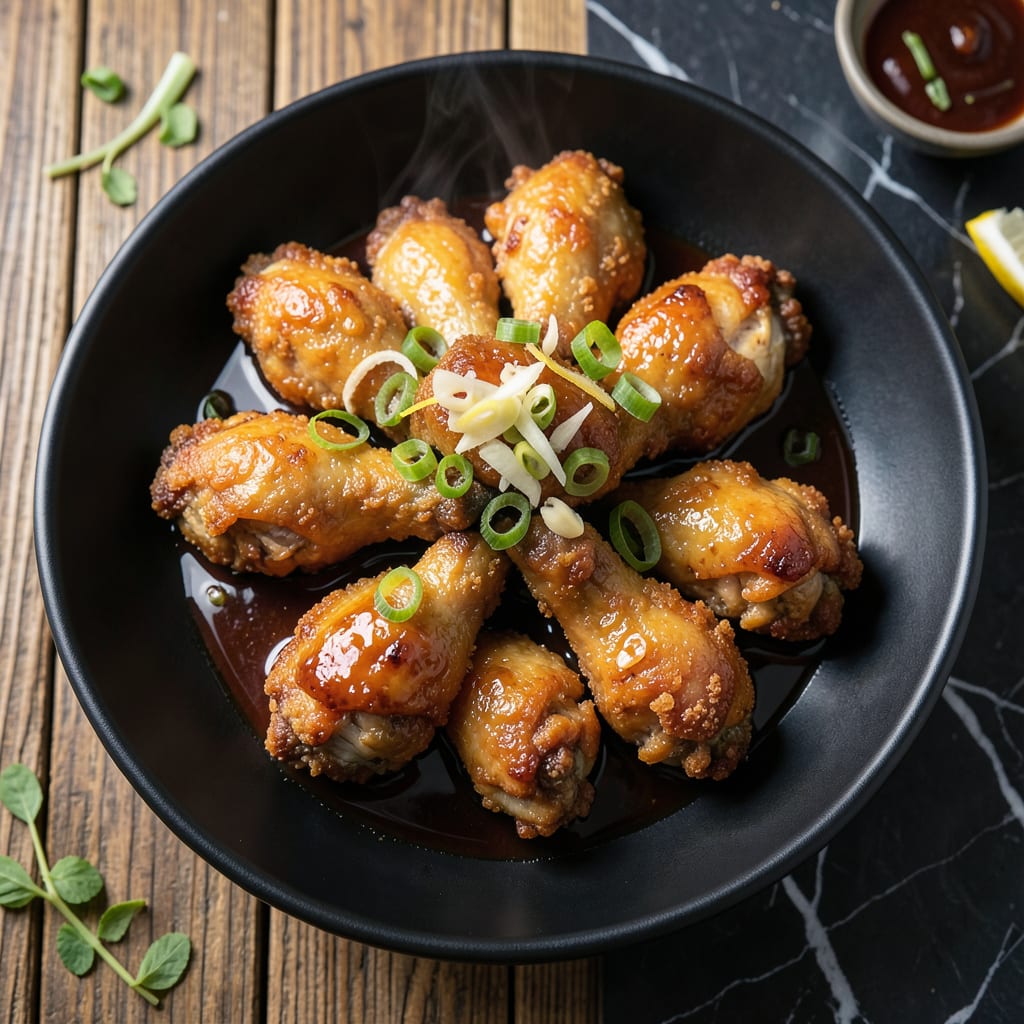
This Cantonese technique delivers crispy chicken with an extra layer of texture that standard frying can’t match. The steaming step keeps the meat impossibly tender before the final fry creates that signature golden crust.
What makes this method special is the double-cooking process, which results in juicy meat inside and shatteringly crispy skin outside. It’s a proven technique that guarantees perfect results every time.
Ingredients for Steamed Fried Chicken
These authentic Cantonese ingredients create that signature crispy texture through a proven double-cooking process.
| Ingredient | Amount | Notes |
|---|---|---|
| Chicken Thighs 🍗 | 2 lb | Boneless, skin-on, cut into pieces |
| Soy Sauce 🫒 | ¼ cup | Light or all-purpose variety |
| Shaoxing Wine 🍶 | 2 tbsp | Chinese rice wine, dry sherry substitute |
| Ginger Root 🌿 | 1 whole | Peeled, sliced into rounds |
| Garlic Cloves 🧄 | 4 cloves | Smashed, peeled |
| Green Onions 🧅 | 4 whole | Cut into 2-inch pieces |
| Cornstarch 🌾 | ½ cup | For coating, plus extra for dredging |
| Baking Powder 🧂 | 1 tsp | For extra crispiness in coating |
| Salt 🧂 | 1 tsp | Kosher or sea salt preferred |
| White Pepper 🌶️ | ½ tsp | Ground, for authentic Cantonese flavor |
| Sugar 🍚 | 1 tsp | Granulated, balances savory notes |
| Neutral Oil 🫒 | 4 cups | For deep frying, peanut or vegetable oil |
The chicken thighs are essential for optimal results. Bone-in, skin-on provides the best texture, though boneless works in a pinch. Source from Asian markets for better quality, or Whole Foods for organic options. Look for pieces with even thickness to ensure consistent cooking. The Shaoxing wine is non-negotiable—find it in the international aisle or at H Mart. Avoid substitutions that alter the flavor profile significantly.
No Shaoxing wine? Dry sherry works as a backup, but expect a slightly different taste. For a non-alcoholic option, use chicken broth with a splash of rice vinegar. Green onions can be swapped for chives if needed. The cornstarch coating is critical—do not substitute all-purpose flour, as it won’t achieve the same crispiness. Baking powder can be omitted, but it adds that extra crunch.
Marinate the chicken for at least 2 hours for maximum flavor penetration. The dish is best served immediately after frying but holds well for 1-2 hours if kept warm. Leftovers? They reheat surprisingly well in the air fryer for 3-4 minutes at 375°F, restoring much of the original crispiness.
Why You’ll Love This Recipe
- One Pan Magic: I love that I can sear the chicken thighs first, then steam them right in the same pan with the soy, wine, and aromatics—no extra dishes.
- Umami Bomb: The Shaoxing wine and soy sauce create this deep, savory richness that soaks into every bite of the tender chicken.
- Weeknight Hero: Honestly, this is my go-to for busy evenings when I need something hearty and flavorful without the fuss.
- Budget Friendly: Chicken thighs stay juicy and affordable, and a little ginger and garlic go a long way to make it taste luxurious.
Step-by-Step Instructions for Steamed Fried Chicken
Here’s the method to achieve that signature double-crispy texture with authentic Cantonese flavor.
Step 1: Marinate the Chicken Thighs
In a large bowl, combine the 2 lb Chicken Thighs with 0.25 cup Soy Sauce, 2 tbsp Shaoxing Wine, 1 tsp Salt, 0.5 tsp White Pepper, and 1 tsp Sugar. I use my hands to massage the marinade into the meat for 2-3 minutes to ensure even distribution.
Add the 1 whole Ginger Root (peeled and sliced into rounds), 4 cloves Garlic Cloves (smashed and peeled), and 4 whole Green Onions (cut into 2-inch pieces). Mix well to combine. Cover and refrigerate the chicken for at least 4 hours, or preferably overnight for maximum flavor penetration.
Step 2: Prepare the Coating and Steam the Chicken
In a medium bowl, whisk together the 0.5 cup Cornstarch and 1 tsp Baking Powder. The baking powder creates those characteristic air pockets for extra crispiness. Remove the chicken from the marinade (reserve the marinade) and dredge each piece in the cornstarch mixture, pressing gently to adhere.
Arrange the coated chicken pieces on a heatproof plate, leaving space between each piece to allow steam to circulate. Place the plate in a steamer basket over boiling water. Cover and steam for 15-20 minutes until the chicken is cooked through and the coating appears slightly puffed and translucent.
Step 3: Fry to Double-Crispy Perfection
Heat the 4 cups Neutral Oil in a deep, heavy pot to 350°F. Use a deep-fry thermometer for accuracy. Carefully add the steamed chicken pieces in batches, being careful not to overcrowd the pot. Fry for 4-5 minutes until the exterior turns golden brown and crispy.
Drain the chicken on a wire rack set over a baking sheet to maintain crispiness. The double-cooking method—steaming then frying—creates an extra crispy exterior while keeping the meat incredibly juicy and tender, which is the hallmark of authentic Cantonese steamed fried chicken.
Step 4: Rest and Serve Immediately
Let the chicken rest for 2-3 minutes after frying. This brief rest allows the coating to set fully while maintaining its crisp texture. The chicken should have a beautiful golden crust that shatters at the touch, revealing moist, flavorful meat inside.
Serve immediately while hot and crispy. The contrast between the crunchy exterior and succulent interior is what makes this dish so special. For best results, avoid covering the chicken after frying, as trapped steam will soften the crispy coating.
Pro Tips For Making Steamed Fried Chicken
- Velvet the Chicken: Toss the chicken thighs with a cornstarch slurry (1 tbsp cornstarch + 1 tbsp water + 1 tsp soy sauce) before steaming—this keeps them absurdly tender, like the takeout version you’re craving.
- Bloom the Aromatics: Cook the minced ginger and garlic in a splash of oil until fragrant before adding the chicken; raw ginger and garlic can taste harsh, and this step mellows them into the dish.
- Steam Then Fry: Steam the chicken first until just cooked through (about 12-15 minutes), then pan-fry to crisp the skin—skipping the steam and going straight to frying leaves the meat dry and the flavor uneven.
- Reduce the Sauce: After steaming, simmer the leftover soy-shaoxing-ginger-garlic liquid until it thickens into a glossy glaze, then drizzle it over the fried chicken—this adds a sticky, umami-packed finish that soaks into every bite.
Storing and Reheating steamed fried chicken
Refrigerator Storage
Let the chicken cool completely before storing in airtight containers—I use glass containers with snap-tight lids. It’ll keep in the fridge at 40°F or below for up to 3 days. Honestly, it’s best eaten fresh, but leftovers still taste great. ❄️
Freezer Storage
For longer storage, freeze the chicken in a single layer on a baking sheet first, then transfer to a freezer-safe bag. This prevents pieces from sticking together. It’ll stay good for up to 1 month without losing too much crispiness.
Air Fryer Reheating
This is my go-to method for reviving leftovers. Preheat the air fryer to 375°F and reheat for 3-4 minutes, shaking the basket halfway. The result is almost as crispy as fresh. 🔥
Oven Reheating
Preheat your oven to 400°F and place the chicken on a wire rack over a baking sheet. Reheat for 8-10 minutes until the coating is crispy again. Avoid covering it—steam is the enemy of crispiness.
Microwave Reheating
Use this only in a pinch. Place the chicken on a paper towel-lined plate and microwave on 50% power for 1-2 minutes. It won’t be as crispy, but it’ll still taste good.
Pro Tip
If you’re meal prepping, fry the chicken just before serving for maximum crispiness. The steamed chicken holds well in the fridge for 24 hours before frying—just let it come to room temperature first.
Nutrition Facts
Frequently Asked Questions
Why steam the chicken before frying?
Steaming first cook the chicken through while keeping it juicy. The final fry then creates that signature golden crispy exterior without overcooking the meat.
Can I use chicken breast instead of thighs?
Not recommended. Breast meat dries out easily during the double-cooking process. Thighs stay moist and provide the authentic texture this dish is known for.
What if my coating falls off during frying?
This usually means the cornstarch wasn’t pressed firmly enough onto the chicken before steaming.
How do I know when the oil is hot enough? Use a thermometer for accuracy—350°F is ideal. Without one, test with a wooden chopstick: bubbles should form vigorously around the tip.

- 6 Egg Cake Recipe with Oil: Light as Air With Buttery Moisture - October 4, 2026
- 4 Bean Casserole Recipe: One-Pan Heartiness With Smoky Paprika Depth - October 4, 2026
- 3-Ingredient Keto Mug Cake Recipe: Microwave Magic in 2 Minutes - October 4, 2026