
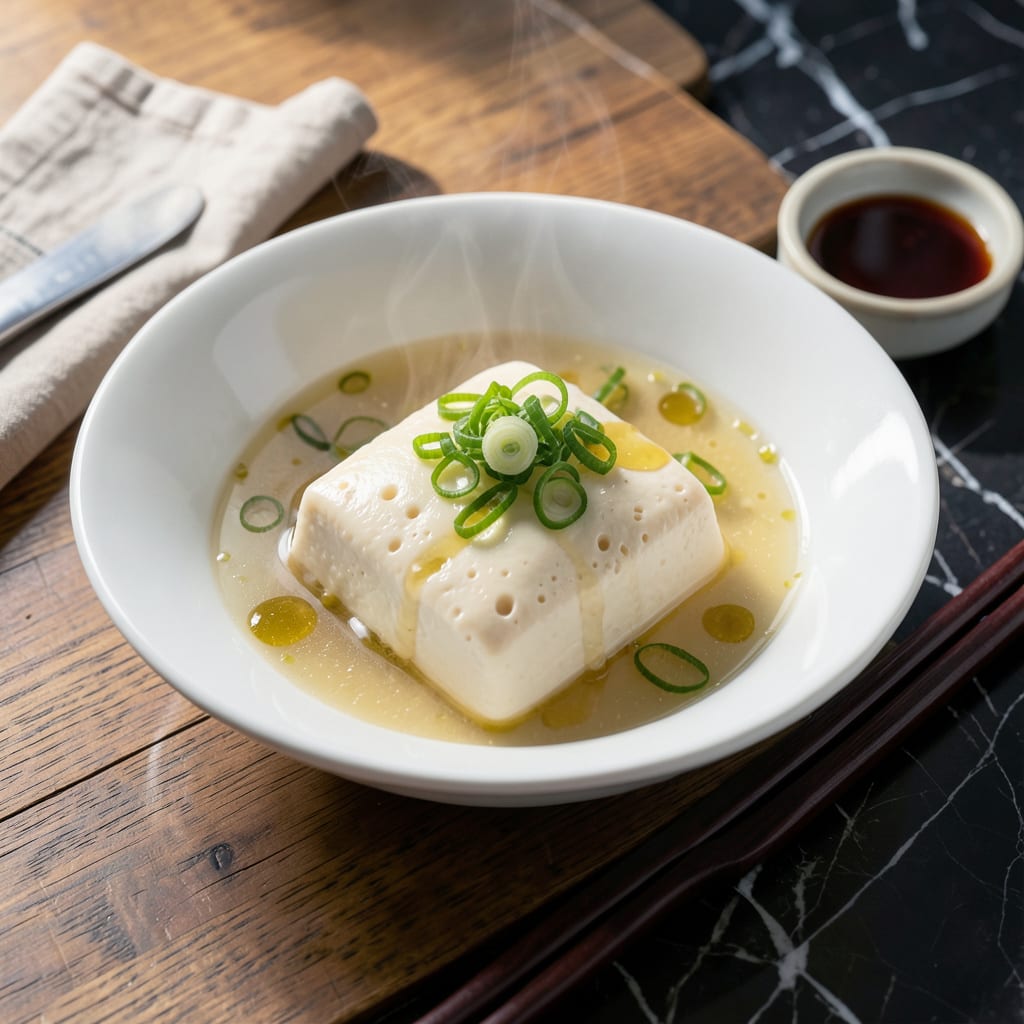
This Japanese egg tofu delivers silky texture with deep umami from dashi. A traditional technique transforms simple eggs into an elegant, wobbly custard.
Steaming creates the signature cloud-like consistency while enhancing the delicate flavors. The result is a dish that’s both comforting and impressively refined.
Ingredients for Steamed Japanese Egg Tofu
Silky custard meets umami depth with just a dozen thoughtful ingredients ready to steam.
| Ingredient | Amount | Notes |
|---|---|---|
| Large Eggs 🥚 | 6 whole | Room temperature for best texture |
| Dashi Stock 🍜 | 2 cups | Homemade or high-quality instant |
| Silken Tofu 🧈 | 12 oz | Soft or extra-soft variety |
| Soy Sauce 🫒 | 2 tbsp | Low-sodium preferred for balance |
| Mirin 🍶 | 1 tbsp | Sweet rice wine for depth |
| Granulated Sugar 🍬 | 1 tsp | Balances umami flavors |
| Cornstarch 🌾 | 1 tsp | For smooth custard texture |
| Neutral Oil 🫒 | ½ tsp | For greasing molds or ramekins |
| Bonito Flakes 🐟 | ¼ cup | Optional garnish for umami |
| Green Onions 🧅 | 2 whole | Thinly sliced for garnish |
| Sesame Seeds 🌰 | 1 tsp | Toasted, for garnish |
| Grated Ginger 🌿 | ½ tsp | Freshly grated for brightness |
[recipeingredientscaler]
The dashi is non-negotiable here. Mitsuba or Kallo brands offer reliable instant options, but homemade from kombu and bonito delivers superior complexity. Use silken tofu with minimal additives—Mori-Nu is widely available and consistent. Eggs at room temperature blend more smoothly into the custard, preventing air bubbles that disrupt the cloud-like texture. Whole Foods or Asian markets will have all these components in stock.
No dashi? Vegetable broth with a splash of soy sauce provides a passable substitute. Mirin can be replaced with 1 tsp sugar plus 1 tsp rice vinegar. For a gluten-free version, use tamari instead of soy sauce. The bonito flakes are optional but add authentic depth—omit for strict vegetarians or swap in dried shiitake powder for earthiness.
This steams best immediately after mixing. Leftovers keep 2-3 days refrigerated but lose some wobble. Freezing isn’t recommended—the texture becomes grainy. Serve warm with garnishes for the full experience.
Why You’ll Love This Recipe
- One Bowl Wonder: I just whisk eggs, dashi, and silken tofu together—no chopping, no fuss.
- Umami Bomb: The dashi and mirin give it that deep, savory-sweet flavor I crave.
- Breakfast to Dinner: Honestly, it works as a light breakfast or paired with rice for dinner.
Step-by-Step Instructions for Steamed Japanese Egg Tofu
This refined technique yields a delicate custard with layered umami and silky texture every time.
Step 1: Prepare the Steaming Base and Custard Mixture
Begin by blending the 12 oz Silken Tofu with the 2 cups Dashi Stock until completely smooth. The tofu should break down entirely, leaving no lumps—this is your foundation for the signature velvety texture.
In a separate bowl, whisk the 6 whole Large Eggs with the 1 tsp Cornstarch, 1 tbsp Mirin, 2 tbsp Soy Sauce, and 1 tsp Granulated Sugar until no streaks remain. Strain this mixture through a fine-mesh sieve into the tofu-dashi blend, pressing gently to extract every bit of liquid. This ensures a perfectly smooth custard.
Step 2: Strain and Portion the Mixture
Strain the combined mixture again through the same sieve into a large measuring cup or pitcher. This double-straining guarantees the silkiest possible texture, free of any undissolved bits of egg or tofu.
Lightly grease four ramekins or small heatproof dishes with the 0.5 tsp Neutral Oil to prevent sticking. Pour the custard mixture evenly among them, filling each about ¾ full. Tap the ramekins gently on the counter to remove any air bubbles, which could disrupt the final smooth surface.
Step 3: Steam to Silky Perfection
Bring 1-2 inches of water to a simmer in a large pot with a steamer insert or rack. The water should be hot but not at a rolling boil—aggressive steam can cause the custards to puff unevenly or develop cracks.
Carefully place the ramekins in the steamer, cover with a tight-fitting lid, and steam over medium-low heat for 15-18 minutes. Resist the urge to peek; the steady, gentle heat is key. The custards are done when the centers are just set but still slightly wobbly, like jiggly gelatin. Over-steaming will make them dense and rubbery.
Step 4: Garnish and Serve Warm
Remove the ramekins from the steamer and let them rest for 2 minutes to set fully. Meanwhile, thinly slice the 2 whole Green Onions and toast the 1 tsp Sesame Seeds in a dry pan over low heat until fragrant, about 1-2 minutes.
Top each custard with a sprinkle of the 0.25 cup Bonito Flakes, sliced green onions, toasted sesame seeds, and a pinch of the 0.5 tsp Grated Ginger. The heat from the custard will make the bonito flakes dance slightly, adding a dynamic visual element. Serve immediately while warm—the texture is best fresh from the steamer.
Pro Tips For Making Steamed Japanese Egg Tofu
- Strain Your Eggs: I learned this the hard way—strained eggs through a fine mesh sieve give the smoothest, most delicate texture to your steamed tofu. Skipping this leaves lumps that ruin the silky finish.
- Warm Your Dashi: Cold dashi shock-cools the eggs and creates a grainy custard. Heat it to just below simmering before mixing—about 160°F—so your egg tofu steams evenly.
- Skip Boiling Water: After burning three batches, I finally figured out steaming over simmering water, not boiling, prevents cracks and overcooking. Keep the heat gentle and steady.
- Use Fresh Silken Tofu: Sounds weird, but it works: fresh, vacuum-packed silken tofu blends smoother than older blocks. If it smells sour or looks separated, toss it—off flavors will carry through.
Creative Variations of steamed japanese egg tofu
Miso-Infused Twist
Add 1 tbsp white miso paste to the custard mixture for deeper umami. This variation enhances the savory notes while keeping the silky texture. I love how it adds complexity without overpowering the delicate egg flavor. 💛
Vegetable medley
Fold in ¼ cup finely diced carrots and ¼ cup shredded shiitake mushrooms before steaming. This adds color and earthy depth. Steam for an extra 2-3 minutes to soften the vegetables fully.
Spicy Kick
Mix ½ tsp sriracha or 1 tsp gochujang into the custard for heat lovers. The spice contrasts beautifully with the creamy texture. Garnish with extra chili oil for those who want more fire.
Citrus Zest
Add 1 tsp yuzu zest or lemon zest to the mixture before steaming. This brightens the dish with a subtle citrus aroma. It pairs especially well with the dashi base.
Cheesy Delight
Top with 2 tbsp grated Parmesan after steaming for a fusion twist. The salty cheese melts slightly into the warm custard. This works surprisingly well with the umami-rich base. 🔥
Herb Garnish
Use 1 tbsp chopped cilantro or mitsuba leaves instead of green onions. This adds a fresh, herbal note that complements the savory custard beautifully.
Nutrition Facts
Frequently Asked Questions
Can I use regular tofu instead of silken?
No, silken tofu is essential for the smooth, custard-like texture. Regular tofu has a firmer consistency and more water content, which will disrupt the delicate wobble. Stick with soft or extra-soft silken for best results.
Why do I need to strain the mixture twice?
Double-straining removes any undissolved egg or tofu bits, ensuring a perfectly smooth custard. This step is non-negotiable for achieving that signature cloud-like texture. Skip it, and you risk a grainy finish.
How do I know when it’s done steaming?
The centers should be just set but still slightly wobbly, like jiggly gelatin. Over-steaming makes them dense and rubbery, so check at 15 minutes and avoid peeking early.
Can I make this ahead of time?
It’s best served fresh, but leftovers keep 2-3 days refrigerated. Reheat gently in a steamer to restore some of the silky texture. Freezing isn’t recommended—it ruins the consistency.

- 6 Egg Cake Recipe with Oil: Light as Air With Buttery Moisture - October 4, 2026
- 4 Bean Casserole Recipe: One-Pan Heartiness With Smoky Paprika Depth - October 4, 2026
- 3-Ingredient Keto Mug Cake Recipe: Microwave Magic in 2 Minutes - October 4, 2026