
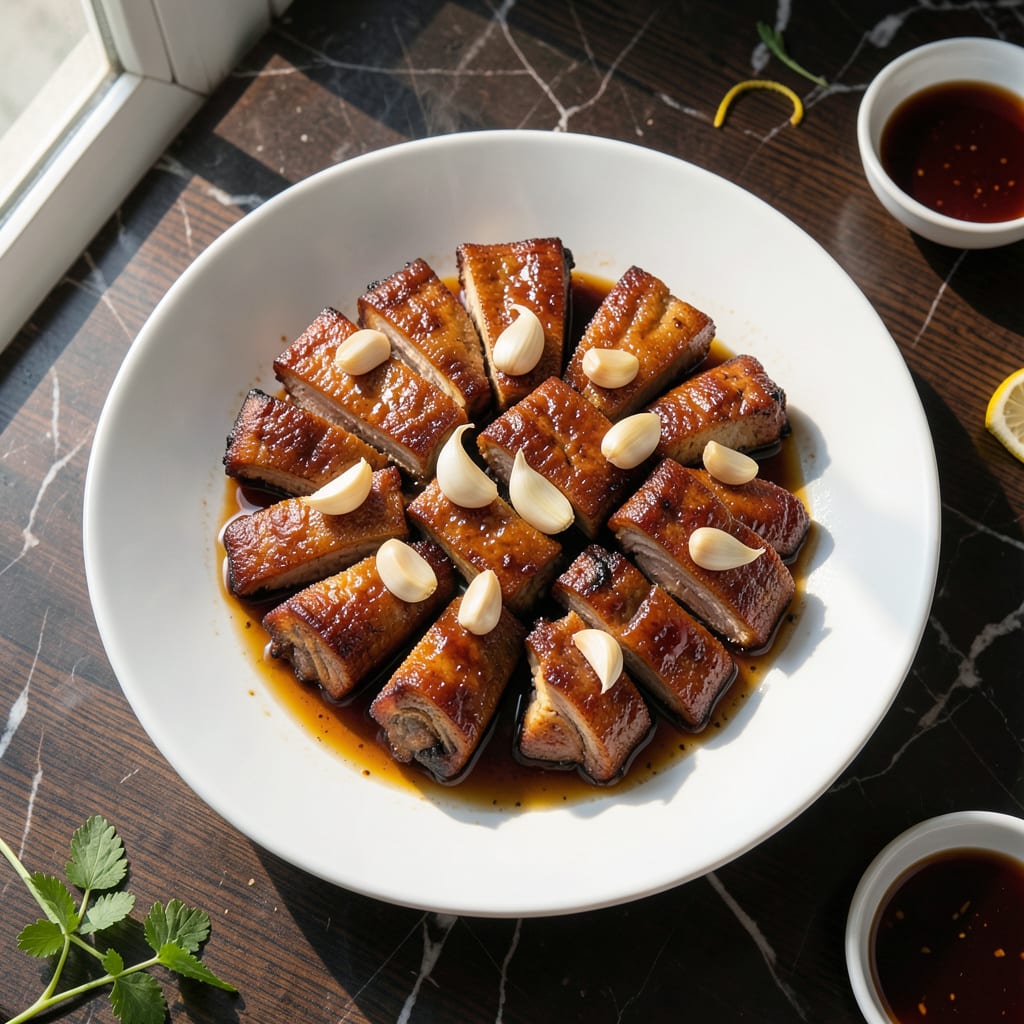
This Cantonese steaming method transforms pork ribs into tender, succulent bites that fall off the bone. The garlic and soy marinade infuses every piece with rich, savory depth.
No special equipment needed—just a steamer basket and 20 minutes. The result is a dish that captures authentic Chinese restaurant quality at home.
Ingredients for Steamed Pork Ribs with Garlic Chinese
Transform pork spareribs with garlic, soy, and Cantonese steaming for restaurant-quality results at home.
| Ingredient | Amount | Notes |
|---|---|---|
| Pork Spareribs 🥩 | 2 lb | Cut into individual ribs |
| Garlic Cloves 🧄 | 10 cloves | Minced finely for marinade |
| Light Soy Sauce 🫒 | 3 tbsp | Low-sodium preferred for balance |
| Dark Soy Sauce 🫒 | 1 tbsp | For color and depth |
| Oyster Sauce 🍲 | 2 tbsp | Vegetarian oyster sauce if needed |
| Shaoxing Wine 🍷 | 2 tbsp | Dry sherry as substitute |
| Granulated Sugar 🍚 | 1 tbsp | Balances savory flavors |
| Cornstarch 🌾 | 1 tbsp | Mixed with water for slurry |
| Ginger 🌿 | 1 tbsp | Freshly grated root |
| Green Onions 🧅 | 3 whole | Thinly sliced for garnish |
| Sesame Oil 🫒 | 1 tsp | Toasted for finishing aroma |
| White Pepper 🌶️ | ½ tsp | Ground for subtle heat |
| Water 💧 | 2 tbsp | For cornstarch slurry |
The pork spareribs are critical—opt for well-marbled cuts from a trusted butcher or Asian grocery stores like 99 Ranch or H Mart. The meat should have a good fat-to-bone ratio for that melt-in-your-mouth texture. Shaoxing wine and oyster sauce are non-negotiable for authenticity; look for these in the international aisle or specialty markets. Fresh ginger and garlic should be firm, with no soft spots.
No Shaoxing wine? Dry sherry works in a pinch (avoid cooking wine—it’s salted). Vegetarian? Swap oyster sauce for mushroom stir-fry sauce. Short on time? Pre-minced garlic from a jar saves prep, though fresh is ideal. For extra depth, a splash of fish sauce can be added to the marinade (optional but traditional).
Marinate the ribs for at least 30 minutes for full flavor penetration. Leftovers keep in the fridge for up to 3 days—reheat by steaming again with a splash of water. Freezing isn’t recommended, as the texture can become mushy upon thawing.
Why You’ll Love This Recipe
- Set and Forget: I just toss the ribs with garlic, soy sauces, and oyster sauce in a steamer, then walk away for 40 minutes.
- Garlic Bomb Flavor: The cloves soften into a sweet, pungent paste that coats every bite of tender pork.
- Feeds My Crowd: One batch satisfies my picky uncle, my spice-loving cousin, and the kids—no side dishes needed.
- Leftovers? Even Better: Honestly, the ribs taste richer the next day, soaked in that garlicky sauce overnight.
Step-by-Step Instructions for Steamed Pork Ribs With Garlic
Master the Cantonese technique for fall-off-the-bone tenderness with these precise steps.
Step 1: Prepare and Marinate the Spareribs
Begin by cutting the 2 lb pork spareribs into individual ribs if not pre-cut. Rinse and pat dry thoroughly with paper towels—this ensures the marinade adheres properly and prevents steaming liquid from diluting the flavors.
In a large bowl, combine the ribs with 3 tbsp light soy sauce, 1 tbsp dark soy sauce, 2 tbsp oyster sauce, 2 tbsp Shaoxing wine, 1 tbsp granulated sugar, 1 tbsp minced garlic cloves, and 1 tbsp grated ginger. Mix well to coat evenly. Add 0.5 tsp white pepper and massage into the meat for 2 minutes to tenderize and distribute the marinade deeply.
Step 2: Create and Apply the Cornstarch Slurry
In a small bowl, whisk together 1 tbsp cornstarch and 2 tbsp water until smooth. This slurry will create a velvety texture that locks in moisture during steaming. Pour the slurry over the marinated ribs and toss gently until each piece is evenly coated.
The mixture should look slightly glossy and sticky—this is the key to achieving that signature Cantonese-style tender yet slightly chewy texture. Let the ribs marinate for 15-20 minutes at room temperature while you prepare the steamer. This resting period allows the cornstarch to absorb excess liquid and the flavors to penetrate.
Step 3: Arrange for Steaming
Line a heatproof plate or shallow dish with a few ribs from the 3 whole green onions (thinly sliced) to prevent sticking. Arrange the marinated ribs in a single layer on the plate, ensuring they don’t touch each other—this allows the steam to circulate evenly around each piece.
Place the plate in a bamboo steamer or on a rack set over a pot of boiling water. The water should be at a rolling boil before you begin steaming. Cover the steamer tightly with a lid to trap the steam, which is essential for even cooking and maximum tenderness.
Step 4: Steam to Perfection
Steam the ribs over high heat for 25-30 minutes. Check the water level halfway through and add more boiling water if needed to prevent the pot from drying out. The ribs are done when the meat pulls away slightly from the bone and a toothpick inserts with minimal resistance.
You’ll notice the color deepen to a rich caramel hue from the soy sauces, and the aroma will become intensely savory. This visual transformation signals that the collagen in the ribs has broken down, resulting in that desired melt-in-your-mouth texture.
Step 5: Finish and Serve
Carefully remove the plate from the steamer. Drizzle 1 tsp sesame oil evenly over the ribs and garnish with the remaining sliced green onions. The sesame oil adds a nutty aroma that complements the garlic and soy notes perfectly.
Let the ribs rest for 2-3 minutes to allow the juices to redistribute. Serve immediately while hot—they should be tender enough to cut with a spoon but still hold their shape. The sauce will have thickened slightly from the cornstarch, creating a glossy glaze that clings to each rib.
Pro Tips For Making Steamed Pork Ribs With Garlic Chinese
- Blanch the Ribs: Boil the spareribs for 3-4 minutes first to remove impurities—this keeps your steamed ribs clean and the sauce flavor pure. I learned this the hard way after wondering why my first batches had that murky look.
- Smash the Garlic: Lightly crush the garlic cloves with the side of your knife before steaming—they’ll release more aroma without turning bitter. Sounds weird, but it works.
- Skip the Overcrowding: Leave space between ribs in the steamer so the heat circulates evenly. After burning three batches, I finally figured out that packed ribs just steam unevenly.
- Use Both Soy Sauces: Mix light soy sauce for saltiness and dark soy sauce for color—about 1:1 ratio gives the best balance. My grandmother swore by this, and she was right.
Regional Styles of These Flavors
Cantonese Classic
In Cantonese cuisine, this dish is called 蒜蓉蒸排骨 (suàn róng zhēng pái gǔ), where the focus is on the garlic’s bold flavor. The ribs are typically marinated for 1-2 hours to deepen the taste. I love how the garlic mellows during steaming, creating a sweet, fragrant sauce. 🥢
Sichuan Spicy Twist
Sichuan versions add 1 tsp chili oil or ½ tsp Sichuan peppercorns to the marinade for a numbing spiciness. The heat balances the sweetness of the soy and sugar. Serve with pickled vegetables to cut through the richness.
Shanghai Sweet Style
Shanghai cooks often include 1 tbsp hoisin sauce and 1 tsp five-spice powder for a sweeter, more aromatic profile. The ribs take on a darker, stickier glaze. I find this version pairs well with steamed buns.
Fujian Light Version
Fujian cuisine favors a lighter touch, using 2 tbsp light soy sauce and omitting dark soy for color. The ribs are steamed for 20 minutes and finished with a sprinkle of fried shallots. This style highlights the pork’s natural flavor.
Taiwanese Adaptation
In Taiwan, this dish often includes 1 tbsp rice wine and 1 tsp fermented black beans for extra umami. The ribs are sometimes pan-fried after steaming for a crispy exterior. I enjoy the textural contrast this method provides.
Home Kitchen Tips
For authentic results, use a bamboo steamer—it absorbs excess moisture and infuses a subtle wood aroma. If using a metal steamer, line it with parchment paper to prevent sticking. Always bring water to a rolling boil before adding the ribs. 🔥
Nutrition Facts
Frequently Asked Questions
Can I use baby back ribs instead of spareribs?
Yes, but reduce steaming time to 20-22 minutes as they cook faster. Spareribs are preferred for their higher fat content, which keeps the meat juicy during longer steaming.
Why do I need both light and dark soy sauce?
Light soy sauce adds saltiness and seasoning, while dark soy provides color and depth. Using both creates the authentic balanced flavor and rich caramel hue typical of Cantonese dishes.
What if I don’t have a bamboo steamer?
Use a metal colander or heatproof plate over a pot of boiling water. Line with parchment paper to prevent sticking. Ensure the lid fits tightly to trap steam for even cooking.
Can I make this ahead of time?
Marinate the ribs overnight for deeper flavor. Steam just before serving as they’re best hot. Reheating works but may slightly dry the meat.

- 6 Egg Cake Recipe with Oil: Light as Air With Buttery Moisture - October 4, 2026
- 4 Bean Casserole Recipe: One-Pan Heartiness With Smoky Paprika Depth - October 4, 2026
- 3-Ingredient Keto Mug Cake Recipe: Microwave Magic in 2 Minutes - October 4, 2026