
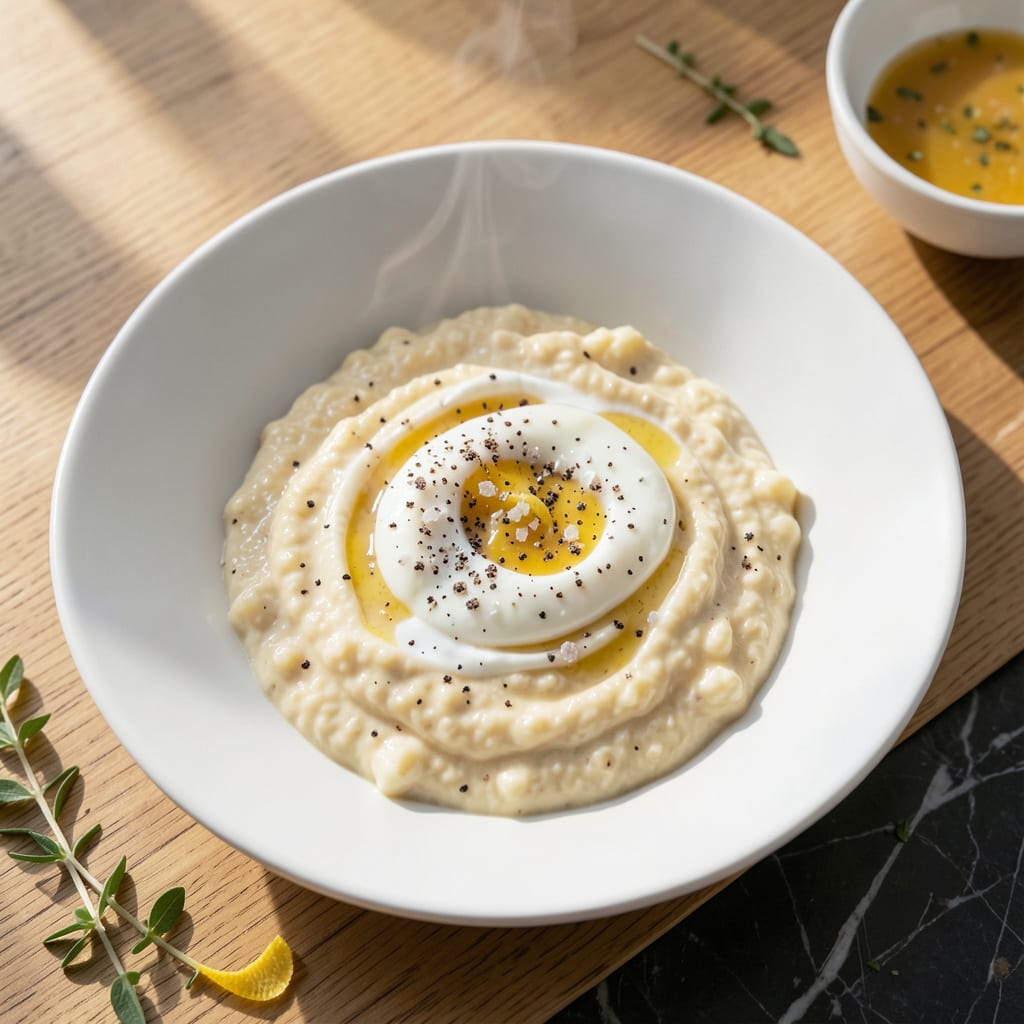
This steamed scrambled eggs method transforms your breakfast with a texture that’s impossibly silky smooth. By using gentle heat, you avoid the rubbery results that often come with traditional stovetop cooking.
The process takes just 10 minutes and requires minimal attention. You’ll end up with tender, custard-like eggs that melt in your mouth—perfect for starting your day with something truly special.
Ingredients for Steamed Scrambled Eggs
Just a few fresh ingredients create that impossibly silky breakfast you crave every morning.
| Ingredient | Amount | Notes |
|---|---|---|
| Large Eggs 🥚 | 4 whole | Room temperature preferred |
| Unsalted Butter 🧈 | 2 tbsp | Divided for cooking and finishing |
| Whole Milk 🥛 | 2 tbsp | Adds richness to texture |
| Kosher Salt 🧂 | ¼ tsp | Diamond Crystal preferred |
| Freshly Ground Black Pepper 🌶️ | 0.125 tsp | Adjust to taste preference |
| Water 💧 | ½ cup | For steaming process |
| Chives 🌿 | 1 tbsp | Finely chopped for garnish |
| Heavy Cream 🥛 | 1 tbsp | Optional for extra creaminess |
The eggs are the star here. Farm-fresh or organic have richer yolks that give you that gorgeous color and better texture. I always grab mine from Whole Foods when I can—they just taste better. Room temperature eggs blend more smoothly, so pull them out 30 minutes before cooking (or cheat with a quick warm water bath). The butter should be European-style if you can find it—higher fat content means more flavor.
No whole milk? Half-and-half or heavy cream work too (cut back slightly on the amount). Skip the dairy entirely? Unsweetened almond milk gets you close. Fresh herbs are ideal, but dried chives at one-third the amount work in a pinch. The salt is worth splurging on—Diamond Crystal kosher dissolves beautifully and has a cleaner taste than table salt.
Leftovers keep in the fridge for 2-3 days, but honestly these are best fresh. Reheat gently in a double boiler to preserve that silky texture. Don’t freeze—they’ll lose that custard-like magic (worth the extra minute to make fresh).
Why You’ll Love This Recipe
- One Bowl Magic: I crack, whisk, steam—done. No fancy tools, just a bowl and a steamer basket.
- Velvety Bites: The milk and butter make them so creamy, I swear I’ve never had scrambled eggs this smooth before.
- Breakfast to Dinner: Honestly, I serve these fluffy eggs for brunch, lunch, or even a quick dinner with toast.
- Pennywise Protein: A dozen eggs and a little milk stretch further than my old takeout habit ever did.
Step-by-Step Instructions for Steamed Scrambled Eggs
This gentle method yields custardy eggs with zero risk of overcooking or rubbery texture.
Step 1: Prepare the Steaming Setup
In a medium saucepan with a tight-fitting lid, add the 0.5 cup Water and bring to a gentle simmer over medium heat. You want to see small bubbles breaking the surface, not a rolling boil—this prevents the eggs from cooking too quickly.
Place a heatproof bowl or the top of a double boiler over the saucepan. It should fit snugly without touching the water. I like to use a stainless steel mixing bowl for this. The steam will do all the work, so no direct heat reaches the eggs.
Step 2: Whisk the Eggs and Dairy
In the heatproof bowl, combine the 4 whole Large Eggs, 2 tbsp Whole Milk, 0.25 tsp Kosher Salt, and 0.125 tsp Freshly Ground Black Pepper. Whisk vigorously with a fork or small whisk for 30-45 seconds until the mixture is completely homogeneous and slightly frothy on top.
The milk adds richness and helps create that silky texture, while the salt and pepper season the eggs evenly. If you’re using the 1 tbsp Heavy Cream for extra decadence, whisk it in now. Room temperature eggs incorporate air more easily, so don’t skip this step.
Step 3: Steam the Eggs to Custardy Perfection
Add 1 tbsp Unsalted Butter to the egg mixture and stir to combine. Place the bowl over the simmering water, cover the saucepan with its lid, and let the eggs cook undisturbed for 3-4 minutes.
Peek after 3 minutes—you should see the edges just beginning to set while the center remains slightly runny. Gently stir the eggs with a silicone spatula, scraping the sides and bottom of the bowl to fold the cooked portions into the center. The texture should look like soft, glossy curds suspended in liquid.
Step 4: Finish and Fold the Eggs
Continue steaming for another 2-3 minutes, stirring occasionally, until the eggs are mostly set but still appear slightly underdone. They’ll finish cooking from the residual heat. The curds should be tender, almost pudding-like, with no dryness or toughness.
Remove the bowl from the saucepan and stir in the remaining 1 tbsp Unsalted Butter for extra richness. The eggs will continue to set as they sit, so pull them off just before they reach your ideal doneness. This timing ensures they stay luscious and velvety.
Step 5: Garnish and Serve Immediately
Sprinkle the 1 tbsp Chives over the top and give the eggs one final gentle fold to distribute the herb evenly. The chives add a fresh, oniony brightness that cuts through the richness of the eggs and butter.
Serve right away while still warm. The eggs should glisten, with soft, pillowy curds that melt in your mouth. If you prefer them slightly firmer, let them sit for 1 minute off the heat before serving. This method guarantees a luxurious texture you can’t achieve with traditional stovetop scrambling.
Pro Tips For Making Steamed Scrambled Eggs
- Beat Vigorously: Whisk the eggs and milk for a full 30 seconds until no streaks remain—I learned this the hard way after ending up with rubbery patches in my scrambled eggs.
- Low and Slow: Keep the heat at medium-low and stir constantly. After burning three batches, I finally figured out that patience prevents that sad, dry texture.
- Use Room Temp Eggs: Take the eggs out of the fridge 10 minutes before cooking. My grandmother swore by this, and she was right: they blend better with the milk.
- Add Butter Last: Stir in the unsalted butter at the very end, just before removing from heat—it adds richness without breaking the custardy texture.
Best Sauces and Condiments for These Flavors
Classic Butter Sauce
Melt an additional 2 tbsp Unsalted Butter in a small pan until it turns golden and nutty. Pour this brown butter over your eggs just before serving for a rich, toasty depth that complements their gentle sweetness. 💛
Herb-Infused Drizzle
Blend ¼ cup olive oil with 1 tbsp fresh chives and a pinch of flaky sea salt. Let it sit for 10 minutes to infuse, then drizzle lightly over the eggs. The herbaceous notes brighten the dish beautifully.
Spicy Sriracha Mayo
Mix 2 tbsp mayonnaise with 1 tsp Sriracha and a squeeze of lime. This creamy, tangy sauce adds a subtle kick that contrasts the eggs’ mild flavor. I love the color it adds too.
Truffle Oil Luxe
Finish with ½ tsp white truffle oil and a sprinkle of grated Parmesan. The earthy aroma elevates this simple dish to restaurant-quality. Use sparingly—truffle oil is potent!
Citrus Hollandaise
Blend 2 egg yolks, 1 tbsp lemon juice, and ¼ cup melted butter until thick and creamy. Drizzle over the eggs for a brunch-worthy finish. The acidity cuts through the richness perfectly. ✨
Nutrition Facts
Frequently Asked Questions
Why use steam instead of a pan?
Steam cooks eggs gently at a lower, consistent 212°F, preventing rubbery texture. Direct pan heat can overcook them quickly. The result is custardy, melt-in-your-mouth eggs every time.
Can I make this without a double boiler?
Use any heatproof bowl that fits over a saucepan. Just ensure it doesn’t touch the water. A stainless steel mixing bowl works perfectly.
How do I know when they’re done?
The eggs should look slightly underdone when removed—they’ll finish cooking from residual heat. Expect soft, glossy curds after about 5-7 minutes total.

- 6 Egg Cake Recipe with Oil: Light as Air With Buttery Moisture - October 4, 2026
- 4 Bean Casserole Recipe: One-Pan Heartiness With Smoky Paprika Depth - October 4, 2026
- 3-Ingredient Keto Mug Cake Recipe: Microwave Magic in 2 Minutes - October 4, 2026