
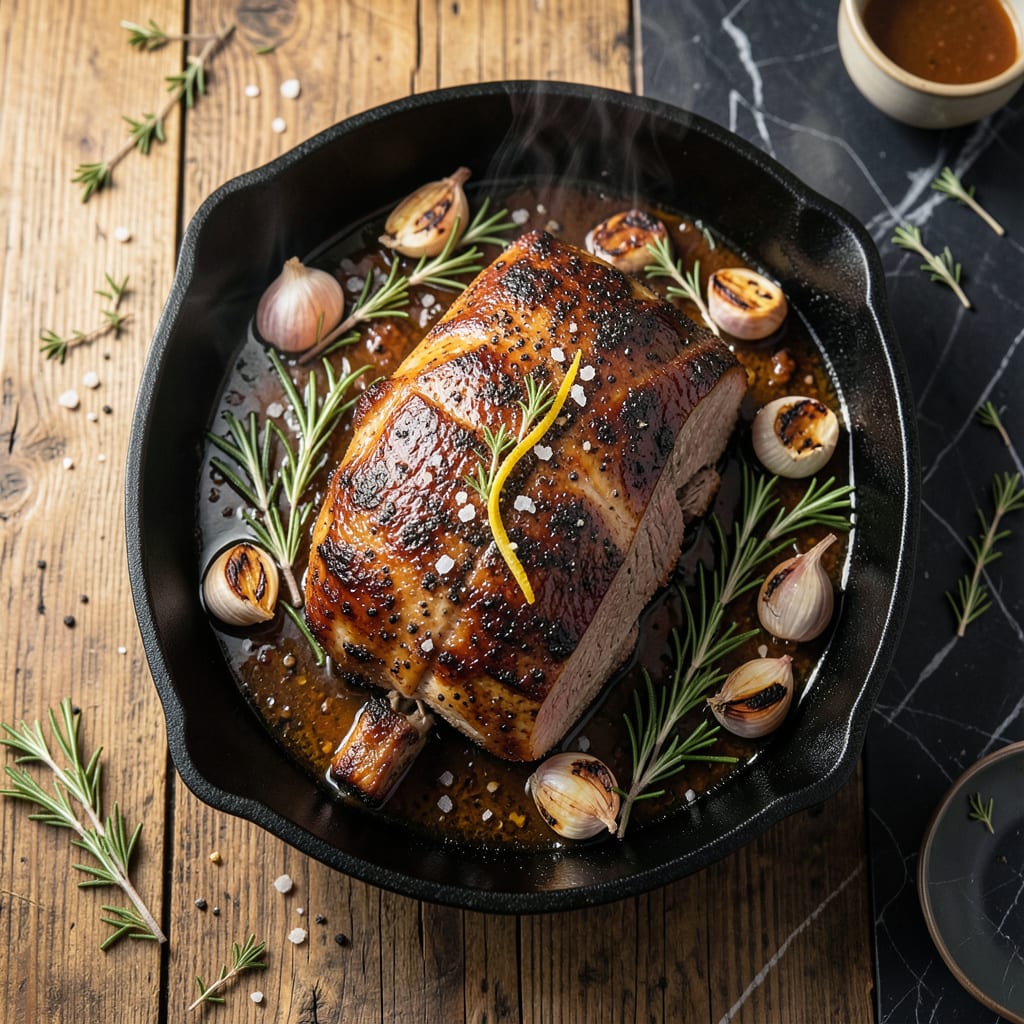
This method transforms a whole beef rib roast into a showstopping centerpiece with minimal effort. The key lies in proper seasoning and a precise roasting technique that ensures even cooking throughout.
You’ll achieve a perfectly pink interior with a flavorful crust, ready to carve into impressive slices. The result is tender, juicy beef that’s ideal for special occasions or Sunday dinners.
Ingredients for Steamship Roast Beef
A whole beef rib roast and aromatic herbs create a centerpiece worthy of any celebration.
| Ingredient | Amount | Notes |
|---|---|---|
| Beef Rib Roast 🥩 | 5 lb | Bone-in, well-marbled prime rib |
| Kosher Salt 🧂 | 2 tbsp | Diamond Crystal preferred for even distribution |
| Freshly Ground Black Pepper 🌶️ | 1 tbsp | Coarse grind for crust texture |
| Garlic Cloves 🧄 | 6 cloves | Peeled and smashed for aromatic intensity |
| Fresh Rosemary Sprigs 🌿 | 4 whole | Woody stems removed, finely chopped |
| Fresh Thyme Sprigs 🍃 | 6 whole | Leaves stripped from stems |
| Extra-Virgin Olive Oil 🫒 | 2 tbsp | High-quality for richness |
| Dijon Mustard 🟡 | 2 tbsp | Smooth, not whole grain |
| Red Wine 🍷 | 1 cup | Dry variety for depth |
| Beef Stock 🥣 | 1 cup | Low-sodium preferred for control |
| Unsalted Butter 🧈 | 4 tbsp | Softened for herb mixture |
| All-Purpose Flour 🌾 | 2 tbsp | For thickening pan juices |
| Yellow Onion 🧅 | 1 whole | Roughly chopped for roasting bed |
| Carrots 🥕 | 4 whole | Peeled and cut into chunks |
| Celery Stalks 🌿 | 3 whole | Cut into large pieces |
The beef rib roast is non-negotiable for this dish. USDA Prime or Choice grade ensures the marbling you need for juiciness. Most butchers can provide a bone-in cut with 3-4 ribs, which serves 6 generously. Look for roasts with a thick fat cap—this renders down during cooking, basting the meat naturally. Whole Foods or local butcher shops typically carry the best selection.
No fresh herbs? Dried at one-third the amount works, but fresh delivers superior aroma. If red wine isn’t available, substitute beef broth with 1 tbsp balsamic vinegar for acidity. The Dijon mustard can be swapped for whole-grain mustard, though the texture will differ slightly. Unsalted butter is essential—salted can make the crust too salty.
The roast can rest at room temperature for 1 hour before cooking. Leftovers keep in the fridge for 4-5 days or freeze for 3 months. Always slice against the grain for maximum tenderness (worth the extra minute).
Why You’ll Love This Recipe
- Set and Forget: I rub the roast with salt, pepper, garlic, and rosemary, pop it in the oven, and let it do its thing—no babysitting required.
- That Garlic-Rosemary Crust: Honestly, the way the garlic and rosemary melt into the beef while it roasts creates a crust so flavorful it’s ridiculous.
- Holiday or Tuesday: Between us, this works just as well for a fancy Sunday dinner as it does for a lazy weeknight when I want something impressive.
- Leftovers for Days: One roast means sandwiches, tacos, or stew for the rest of the week—my secret weapon for stress-free meals.
Step-by-Step Instructions for Steamship Roast Beef
Master the technique for perfectly roasted prime rib with this professional method.
Step 1: Prepare the Herb Crust
In a small bowl, combine the 2 tbsp Extra-Virgin Olive Oil, 2 tbsp Dijon Mustard, 6 cloves Garlic Cloves (peeled and smashed), 4 whole Fresh Rosemary Sprigs (finely chopped), and 6 whole Fresh Thyme Sprigs (leaves stripped). Mix thoroughly to create a uniform paste.
This aromatic blend will form a flavorful crust that locks in moisture during roasting. The mustard acts as a binder while the herbs infuse the meat with complex, earthy notes.
Step 2: Season and Sear the Roast
Pat the 5 lb Beef Rib Roast completely dry with paper towels. Rub it evenly with the herb mixture, then season generously with all 2 tbsp Kosher Salt and 1 tbsp Freshly Ground Black Pepper. Press the seasoning into the meat to ensure adhesion.
Place the roast bone-side down in a roasting pan set over medium-high heat on the stovetop. Sear for 4-5 minutes until the surface develops a deep, rich brown crust. This initial sear creates a flavorful fond that will enhance your pan sauce later.
Step 3: Roast with Aromatic Vegetables
Preheat your oven to 325°F. Scatter the 1 whole Yellow Onion (roughly chopped), 4 whole Carrots (peeled and cut into chunks), and 3 whole Celery Stalks (cut into large pieces) in the bottom of the roasting pan. Place the seared roast on top of the vegetables, bone-side down.
Roast in the preheated oven for approximately 2 to 2.5 hours, or until an instant-read thermometer inserted into the thickest part of the meat registers 125°F for medium-rare. The vegetables will caramelize, adding depth to your pan sauce while the roast cooks evenly.
Step 4: Rest and Prepare Pan Sauce
Transfer the roast to a cutting board and tent loosely with foil. Let it rest for 20-30 minutes to allow the juices to redistribute. Meanwhile, place the roasting pan on the stovetop over medium heat.
Add the 1 cup Red Wine and 1 cup Beef Stock to the pan, scraping up all browned bits. Bring to a simmer and cook for 5 minutes until slightly reduced. In a small bowl, mix the 4 tbsp Unsalted Butter with the 2 tbsp All-Purpose Flour to form a beurre manié. Whisk this into the pan juices and simmer for 3-4 minutes until thickened.
Step 5: Carve and Serve
After resting, carve the roast by slicing between the bones to separate into individual ribs. Arrange the slices on a platter and spoon the strained pan sauce over the top.
Serve immediately with the roasted vegetables. The meat should be tender with a rosy center, while the crust remains flavorful and slightly crisp. This method ensures a perfect result every time, with juicy, evenly cooked beef and a rich, savory sauce.
Pro Tips For Making Steamship Roast Beef
- Start High, Finish Low: Sear the beef rib roast at 450°F for 15 minutes to lock in juices, then drop the temp to 325°F for even cooking—I learned this the hard way after my first roast came out dry and uneven.
- Salt Generously Overnight: Coat the roast with kosher salt the night before cooking; it penetrates deep and seasons the meat all the way through, not just the surface.
- Don’t Skip the Rest: Let the roast rest for at least 20 minutes under foil before carving, or all those beautiful juices will end up on the cutting board instead of in the meat.
- Smash the Garlic: Crush the garlic cloves with the flat of your knife before using—they’ll release more flavor into the roast and rosemary without burning.
Dietary Considerations for This Recipe
Keto-Friendly Option
This dish fits perfectly into a keto diet with its high-fat, low-carb profile. The beef rib roast provides ample protein and healthy fats, while the vegetables add fiber without excess carbs. Skip the flour in the pan sauce or use xanthan gum as a thickener instead. 💪
Gluten-Free Adaptation
For gluten-free diets, simply replace the 2 tbsp All-Purpose Flour with cornstarch or a gluten-free flour blend. Ensure your Dijon mustard is certified gluten-free, as some brands may contain trace amounts.
Dairy-Free Modification
To make this dairy-free, substitute the 4 tbsp Unsalted Butter with olive oil or a dairy-free margarine. The pan sauce will still be rich and flavorful, though slightly less creamy.
Low-Sodium Considerations
Reduce the 2 tbsp Kosher Salt to 1 tbsp and use low-sodium beef stock for the pan sauce. The natural flavors of the beef and herbs will still shine through while keeping sodium in check.
Paleo Variations
This recipe is naturally paleo-friendly if you omit the flour. Thicken the pan sauce with arrowroot powder instead. All other ingredients, including the beef, herbs, and vegetables, align perfectly with paleo guidelines.
Allergen Notes
Be mindful of mustard and celery allergies, as both are present in this dish. The recipe contains no nuts, dairy (if modified), or gluten (if modified), making it suitable for many common dietary restrictions.
Nutrition Facts
Frequently Asked Questions
What’s the best way to ensure even cooking?
Start with the roast at room temperature and use a meat thermometer. Place it in the thickest part, avoiding bones, and cook to 125°F for medium-rare.
Can I use a boneless cut instead?
Yes, but bone-in adds flavor and helps maintain moisture. If using boneless, reduce the cooking time by 15-20 minutes and check temperature frequently.
How long should it rest before carving?
Let it rest for 20-30 minutes tented with foil. This allows juices to redistribute, ensuring tender, flavorful slices.
What if my pan sauce is too thin?
Simmer it longer to reduce, or mix 1 tsp cornstarch with 1 tbsp water and whisk in. Cook for 1-2 minutes until thickened.

- 6 Egg Cake Recipe with Oil: Light as Air With Buttery Moisture - October 4, 2026
- 4 Bean Casserole Recipe: One-Pan Heartiness With Smoky Paprika Depth - October 4, 2026
- 3-Ingredient Keto Mug Cake Recipe: Microwave Magic in 2 Minutes - October 4, 2026