
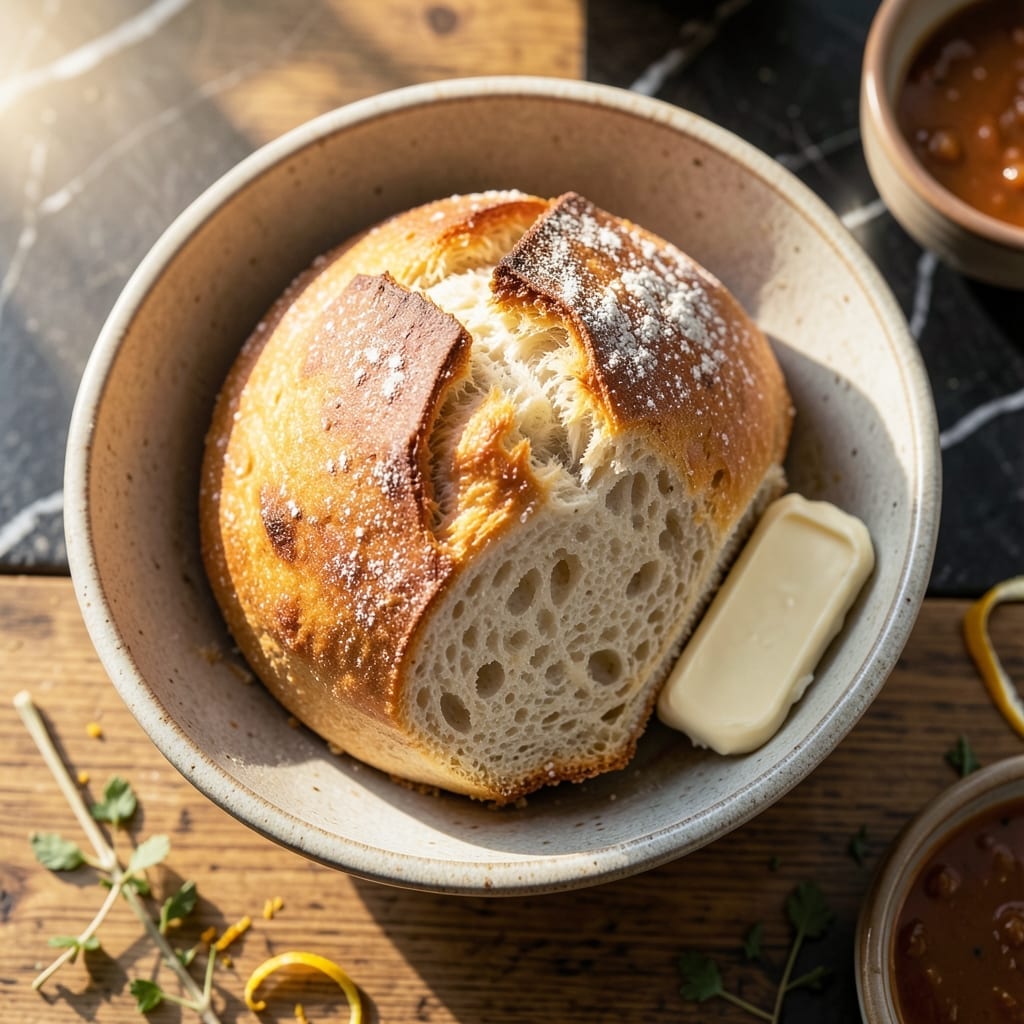
This sugar-free white bread delivers the soft, sliceable texture you love without any added sweeteners. I developed this recipe after realizing how difficult it was to find quality bread options without sugar.
The secret lies in using the right combination of flour, yeast, and moisture to achieve that perfect sandwich bread consistency. A touch of honey substitute or stevia helps activate the yeast without adding detectable sweetness.
You’ll end up with a golden loaf that’s light, airy, and holds up beautifully for sandwiches or toast. The crust stays tender while the interior remains wonderfully soft for days.
Bake at 375°F until hollow-sounding when tapped. This method ensures consistent results every time, with no sugar crash afterward.
Ingredients for Sugar Free White Bread
Just ten ingredients for a golden, tender loaf with no sugar added.
| Ingredient | Amount | Notes |
|---|---|---|
| Bread Flour 🌾 | 4 cups | All-purpose can substitute in pinch |
| Active Dry Yeast 🍞 | 2 ¼ tsp | One packet, proofed in warm water |
| Water 💧 | 1 ¼ cups | Warm, about 110°F |
| Unsalted Butter 🧈 | 2 tbsp | Melted and cooled slightly |
| Salt 🧂 | 1 ½ tsp | Fine sea salt preferred |
| Erythritol 🍚 | 1 tsp | Yeast activator, no sweetness |
| Whole Milk 🥛 | ¼ cup | Warmed to 110°F |
| Vital Wheat Gluten 🌾 | 2 tbsp | Optional for extra chew |
| Apple Cider Vinegar 🍏 | 1 tbsp | Helps tenderize crumb |
| Olive Oil 🫒 | 1 tbsp | For greasing bowl and loaf |
The flour makes all the difference here. King Arthur Bread Flour is my go-to for its high protein content—gives that perfect sandwich bread structure. Yeast needs to be fresh (check the expiration date on the packet). The water and milk combo creates the right hydration for a soft crumb. I grab my yeast and flour from Whole Foods or King Soopers, but any grocery store works fine.
No erythritol? Stevia powder at 1/4 the amount works too—just don’t use liquid stevia as it’ll throw off your hydration. Whole milk can be swapped for 2% or even water (though the richness suffers slightly). For a vegan version, use unsweetened almond milk. The vinegar might seem odd but it’s key for that soft texture—white vinegar works too.
Dough can be made a day ahead and refrigerated overnight for a slower rise. Baked loaf stays fresh for 3-4 days in a bread box or airtight container. Freeze slices for up to 3 months—toast straight from frozen (worth the extra minute).
Why You’ll Love This Recipe
- No Fuss Dough: The yeast activates fast, and mixing takes just minutes—no fancy techniques or stand mixer required.
- Buttery Perfection: Unsalted butter gives it that rich, tender crumb without overpowering the simple, clean taste.
- Meal Prep Hero: I bake two loaves on Sunday and use them for sandwiches, toast, and even croutons all week.
- Budget Friendly: Bread flour and yeast cost pennies compared to store-bought loaves, and it freezes beautifully.
Step-by-Step Instructions for Sugar Free White Bread
This method delivers a soft, sliceable loaf with perfect texture—no sugar required.
Step 1: Activate the Yeast and Mix Wet Ingredients
In a large mixing bowl, combine the 1.25 cups Water (warm, about 110°F), 2.25 tsp Active Dry Yeast, and 1 tsp Erythritol. Let it sit for 5-7 minutes until foamy—this confirms the yeast is active and ready to work.
Stir in the 0.25 cup Whole Milk, 2 tbsp Unsalted Butter (melted and cooled), and 1 tbsp Apple Cider Vinegar. The butter should be warm but not hot to avoid killing the yeast. The vinegar helps tenderize the crumb, so don’t skip it.
Step 2: Incorporate Dry Ingredients
In a separate bowl, whisk together the 4 cups Bread Flour, 1.5 tsp Salt, and 2 tbsp Vital Wheat Gluten (if using). Adding the salt separately ensures even distribution, which is key for flavor balance.
Gradually add the dry mixture to the wet ingredients, mixing on low speed until a shaggy dough forms. You’ll notice the dough start to pull away from the sides of the bowl—this means the gluten is developing properly.
Step 3: Knead Until Smooth and Elastic
Switch to a dough hook attachment and knead for 8-10 minutes on medium speed. The dough should become smooth, elastic, and slightly tacky but not sticky. If it sticks to your fingers, resist the urge to add more flour—just keep kneading.
Here’s the thing—this dough will be softer than traditional bread dough because of the lack of sugar. That’s normal. Look for the windowpane test: stretch a small piece thinly; if it holds without tearing, it’s ready.
Step 4: First Rise Until Doubled
Lightly grease a large bowl with the 1 tbsp Olive Oil and place the dough inside, turning to coat. Cover with a damp towel and let it rise in a warm, draft-free spot for 1-1.5 hours, or until doubled in size.
I like to place mine near a slightly preheated oven (turned off) for consistent warmth. The dough should spring back slowly when poked with a finger—if it springs back quickly, let it rise longer.
Step 5: Shape, Second Rise, and Bake
Punch down the dough to release excess air, then shape it into a loaf and place it in a greased 9×5-inch loaf pan. Cover and let it rise again for 45-60 minutes until it domes about 1 inch above the pan.
Preheat the oven to 375°F and bake for 25-30 minutes until the top is golden brown and the internal temperature reaches 190-200°F. If the top browns too quickly, tent with foil. Cool in the pan for 10 minutes, then transfer to a wire rack. Slice only when completely cool to maintain that perfect texture.
Pro Tips For Making Sugar Free White Bread
- Proof the Yeast: Always dissolve active dry yeast in warm (110°F) water with a pinch of flour first—I learned this the hard way after killing three batches with water that was too hot.
- Use Room-Temp Butter: Softened unsalted butter blends into the dough more evenly, so pull it out 30 minutes before mixing (yes, even if you’re impatient like me).
- Skip Overworking Dough: Knead just until smooth and elastic—overdoing it makes the bread dense, and nobody wants a brick disguised as sandwich bread.
- Let It Rise Twice: Give the dough a full first rise (1-2 hours) and a second shorter rise (30-45 minutes) after shaping; it’s the only way to get that light, airy texture without sugar to help it along.
Health Benefits of This Dish
Blood Sugar Control
This loaf is ideal for anyone monitoring their glucose levels. With zero added sugar and only 2g net carbs per slice, it won’t spike your blood sugar like traditional white bread. The erythritol activates yeast without affecting glucose levels. 💪
Digestive Health Benefits
The apple cider vinegar in this recipe does more than tenderize—it supports gut health by promoting beneficial bacteria growth. Plus, the vital wheat gluten adds protein while improving texture, making it easier to digest than many store-bought options.
Heart-Friendly Choice
By eliminating sugar, you’re reducing empty calories and potential inflammation triggers. The unsalted butter and olive oil provide healthy fats that support cardiovascular health when consumed in moderation as part of a balanced diet.
Allergen Considerations
This recipe contains gluten from bread flour and vital wheat gluten, so it’s not suitable for those with celiac disease. However, it’s free from common allergens like nuts, eggs, and dairy (if using plant-based milk substitutes).
Weight Management
At approximately 120 calories per slice, this bread fits well into calorie-controlled diets. The protein from whole milk and gluten helps maintain satiety, reducing the urge to overeat later in the day. 🍞
Nutrient Retention
Without sugar to mask flavors, the natural goodness of bread flour shines through. You’ll taste the wheat’s inherent nuttiness while benefiting from its B vitamins and minerals like iron and magnesium.
Nutrition Facts
Frequently Asked Questions
Can I use all-purpose flour instead of bread flour?
Yes, but expect a slightly denser texture. Bread flour’s higher protein content creates better structure. For best results, add an extra 1 tbsp Vital Wheat Gluten to compensate.
Why does the recipe include erythritol if it’s sugar-free?
Erythritol feeds the yeast without adding sweetness or carbs. It’s a zero-calorie sugar alcohol that activates fermentation just like sugar would. Stevia powder works too at 1/4 the amount.
How do I store the bread to keep it fresh?
Keep in an airtight container or bread box at room temperature for 3-4 days. For longer storage, freeze slices and toast straight from frozen. Avoid refrigerating as it dries out bread faster.
Can I make this in a bread machine?
Use the dough setting, then shape and bake as directed. The process remains the same, just with less hands-on time. Check your machine’s capacity—this makes a 1.5 lb loaf.

- 6 Egg Cake Recipe with Oil: Light as Air With Buttery Moisture - October 4, 2026
- 4 Bean Casserole Recipe: One-Pan Heartiness With Smoky Paprika Depth - October 4, 2026
- 3-Ingredient Keto Mug Cake Recipe: Microwave Magic in 2 Minutes - October 4, 2026