
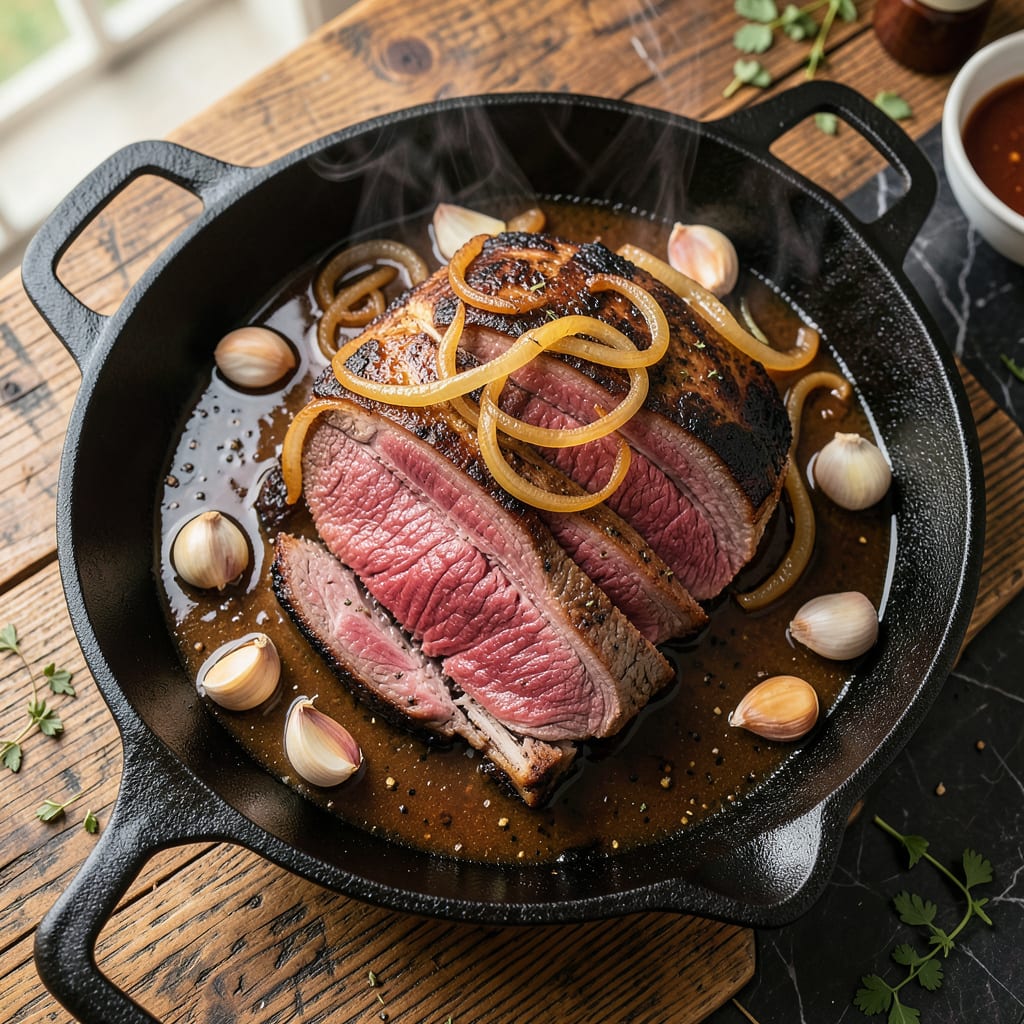
Recreating Texas Roadhouse’s signature prime rib at home delivers that same melt-in-your-mouth tenderness and rich, beefy flavor you crave. This recipe focuses on precise temperature control and a simple dry-brine technique to ensure juicy, evenly cooked meat with a perfectly seasoned crust. The au jus isn’t an afterthought—it’s built from pan drippings and reduced beef stock for maximum depth.
The method combines professional techniques with home-kitchen practicality. You’ll master the reverse sear approach (low oven followed by high-heat finish) that guarantees edge-to-edge pink perfection. Paired with the velvety au jus—infused with garlic, thyme, and a splash of red wine—this dish brings steakhouse quality to your dinner table without the premium price tag.
Ingredients for Texas Roadhouse Prime Rib Au Jus
Prime ribeye roast and carefully selected aromatics create this steakhouse-quality dish with velvety au jus.
| Ingredient | Amount | Notes |
|---|---|---|
| Bone-In Ribeye Roast 🥩 | 4 lb | Prime grade preferred, fat cap intact |
| Kosher Salt 🧂 | 2 tbsp | Diamond Crystal brand recommended |
| Coarsely Ground Black Pepper 🌶️ | 1 ½ tbsp | Freshly ground Tellicherry preferred |
| Garlic Powder 🧄 | 1 tbsp | Granulated for even distribution |
| Dried Thyme 🌿 | 1 tsp | Rubbed between palms to release oils |
| Beef Stock 🥩 | 4 cups | Low-sodium, high-quality brand |
| Dry Red Wine 🍷 | 1 cup | Cabernet Sauvignon or Merlot |
| Unsalted Butter 🧈 | 4 tbsp | European-style for richer flavor |
| Fresh Garlic Cloves 🧄 | 6 cloves | Minced for au jus infusion |
| Fresh Thyme Sprigs 🌿 | 4 sprigs | Plus extra for garnish |
| All-Purpose Flour 🌾 | 1 tbsp | For thickening au jus |
| Worcestershire Sauce 💧 | 1 tbsp | Lea & Perrins preferred |
| Extra-Virgin Olive Oil 🫒 | 2 tbsp | For high-heat searing |
| Yellow Onion 🧅 | ½ whole | Medium dice for au jus base |
The beef quality determines 80% of your final result. Prime grade ribeye roast with generous marbling is non-negotiable for that buttery texture. Source from Costco or a reputable butcher—avoid pre-trimmed cuts. The Diamond Crystal kosher salt is specified for its clean flavor and precise grain size, which affects brine penetration. For the wine, a bold Cabernet Sauvignon provides the necessary tannic structure to balance the rich au jus without overpowering the beef’s natural flavor.
Substitutions require careful consideration to maintain the dish’s integrity. Ribeye steaks (bone-in) can replace the roast for individual servings, though cooking times will vary. In the au jus, shallots substitute equally for onion with slightly more delicacy. For alcohol-free preparation, replace wine with additional beef stock plus 1 tsp red wine vinegar. The butter must remain unsalted to control sodium levels precisely—European-style preferred for its higher fat content and lower water percentage.
Temperature control extends to ingredient storage. Keep the roast unwrapped on a rack in the refrigerator for 24-48 hours before cooking to develop the dry-brine effect. Beef stock and wine can be stored up to 1 week refrigerated after opening. Prepared au jus maintains optimal quality for 3 days refrigerated or 3 months frozen—reheat gently to preserve texture. Fresh thyme retains potency 5-7 days wrapped in damp paper towels.
Why You’ll Love This Recipe
- Five-Ingredient Magic: Honestly, the hardest part is remembering to take the roast out of the fridge. Salt, pepper, garlic powder, thyme—no measuring cups, no fancy tools. Just rub it down, let it sit, and the oven does the rest while you pour yourself a drink.
- That Crust, Though: Here’s what sold me—the way the coarse black pepper and garlic powder form this crackly, fragrant shell around the meat. Every bite has that perfect contrast: salty-crisp outside, buttery-soft inside. The au jus? Just a bonus pool of rich, meaty goodness to drag each piece through.
- Leftovers That Overdeliver: Between us, the second-day sandwiches might be better than the first meal. Thin slices on toasted sourdough, a quick reheat of the au jus for dipping—suddenly, lunch feels like a steakhouse splurge. And that bone? Simmer it with veggie scraps for broth that’ll make your next soup taste like it simmered all day. Zero waste, all flavor.
Step-by-Step Instructions for Texas Roadhouse-Style Prime Rib with Au Jus
This professional method ensures perfectly seasoned prime rib with a rich, velvety au jus for dipping.
Step 1: Prepare and Season the Ribeye Roast
Begin by patting the 4 lb bone-in ribeye roast completely dry with paper towels. This crucial step ensures proper browning and crust formation. Combine the 2 tbsp kosher salt, 1.5 tbsp coarsely ground black pepper, 1 tbsp garlic powder, and 1 tsp dried thyme in a small bowl, rubbing the dried thyme between your palms to release its essential oils.
Apply the seasoning blend generously to all surfaces of the roast, pressing firmly to create an even crust. The fat cap should be particularly well-coated, as this will render during cooking to create flavorful drippings for your au jus. Allow the seasoned roast to sit at room temperature for 30 minutes before cooking—this promotes even cooking throughout.
Step 2: Sear the Roast for Maximum Flavor Development
Heat the 2 tbsp extra-virgin olive oil in a large Dutch oven over medium-high heat until shimmering. Carefully place the roast fat-side down in the pot. Sear undisturbed for 4-5 minutes until a deep golden crust forms. This initial sear creates the Maillard reaction that develops complex flavors in both the meat and the subsequent au jus.
Using tongs, rotate the roast to sear all sides, including the bone-in edge, for approximately 2 minutes per side. The roast should develop an even, mahogany-colored crust. Remove the roast to a plate and reduce heat to medium—this prepares the pot for building your au jus base while keeping the fond (browned bits) intact.
Step 3: Build the Au Jus Foundation
In the same Dutch oven, add the 0.5 whole yellow onion (medium diced) and cook for 3-4 minutes until softened and beginning to caramelize. Add the 6 cloves fresh garlic cloves (minced) and 4 sprigs fresh thyme sprigs, cooking for an additional 1 minute until fragrant. Pour in the 1 cup dry red wine, using a wooden spoon to deglaze the pan and dissolve all browned bits.
Simmer the wine for 3-4 minutes until reduced by half, then add the 4 cups beef stock and 1 tbsp Worcestershire sauce. Return the seared roast to the pot along with any accumulated juices. The liquid should come about halfway up the roast. Bring to a gentle simmer, then reduce heat to low to maintain a steady but gentle cooking environment.
Step 4: Cook to Perfect Doneness and Prepare the Au Jus
Cover the pot and cook for 2-2.5 hours, turning the roast every 30 minutes, until an instant-read thermometer inserted into the thickest part registers 125°F for medium-rare. Transfer the roast to a cutting board and tent loosely with foil. The internal temperature will rise to 130-135°F during the 15-minute resting period, ensuring perfect doneness.
Strain the cooking liquid through a fine-mesh sieve into a saucepan, pressing on the solids to extract maximum flavor. Discard the solids. In a small bowl, whisk the 1 tbsp all-purpose flour with 2 tbsp of the strained liquid to create a slurry. Bring the remaining liquid to a simmer and whisk in the slurry. Cook for 3-5 minutes until the au jus reaches your desired consistency—it should coat the back of a spoon but remain pourable.
Step 5: Finish the Au Jus and Serve
Remove the au jus from heat and whisk in the 4 tbsp unsalted butter, one tablespoon at a time, until fully incorporated. This mounting technique creates a velvety texture and rich mouthfeel. Taste and adjust seasoning if needed, though the initial seasoning of the roast should provide sufficient salt balance.
Slice the rested roast against the grain into ½-inch thick slices, arranging on a warmed platter. Pour the au jus into a serving boat or small pitcher. The sauce should have a deep amber color and glossy sheen. Serve immediately, allowing diners to drizzle the au jus over their prime rib or use it for dipping each flavorful bite.
Pro Cooking Tips for Great texas roadhouse prime rib au jus
Temperature Precision Matters
For restaurant-quality results, invest in a dual-probe thermometer like the ThermoWorks Smoke. One probe monitors the roast’s internal temperature while the other tracks your cooking environment. The 125°F pull temperature is critical—this ensures medium-rare perfection after the 15-minute rest when carryover cooking brings it to 130-135°F. 🌡️
Dry Brine Secret
The 24-48 hour uncovered fridge rest with just salt and pepper creates that signature Texas Roadhouse crust. I place the roast on a wire rack over a tray to allow airflow on all sides. This step draws out moisture for better browning while the salt penetrates deeply for even seasoning throughout the meat.
Perfect Sear Technique
Don’t rush the initial sear—4-5 minutes fat-side down in extra-virgin olive oil heated to just below smoking point creates that mahogany crust. I use a cast iron Dutch oven for even heat distribution. The fond (browned bits) left behind becomes the flavor foundation for your au jus, so scrape aggressively when deglazing with wine.
Au Jus Reduction Control
After straining, simmer your au jus until it coats the back of a spoon but still pours easily. I test consistency by dipping a spoon—if it leaves a clean trail through the sauce, it’s ready. The butter mounting at the end (whisking in 4 tbsp unsalted butter) gives it that velvety restaurant-quality finish. 💡
Resting is Non-Negotiable
Tent the roast loosely with foil and let it rest for the full 15 minutes. This allows juices to redistribute—cutting too soon means dry meat. I place it on a warm platter (not room temperature) to maintain serving temperature. The internal temp will rise about 5°F during this time, so account for this in your cooking.
Slicing for Maximum Tenderness
Always slice against the grain into ½-inch thick pieces. For the ribeye roast, the grain runs parallel to the bones, so cut perpendicular to them. Use a long, thin-bladed slicing knife (I recommend Wüsthof Ikon) and make single, confident strokes—sawing creates ragged edges that lose juices.
Nutrition Facts

- 6 Egg Cake Recipe with Oil: Light as Air With Buttery Moisture - October 4, 2026
- 4 Bean Casserole Recipe: One-Pan Heartiness With Smoky Paprika Depth - October 4, 2026
- 3-Ingredient Keto Mug Cake Recipe: Microwave Magic in 2 Minutes - October 4, 2026