
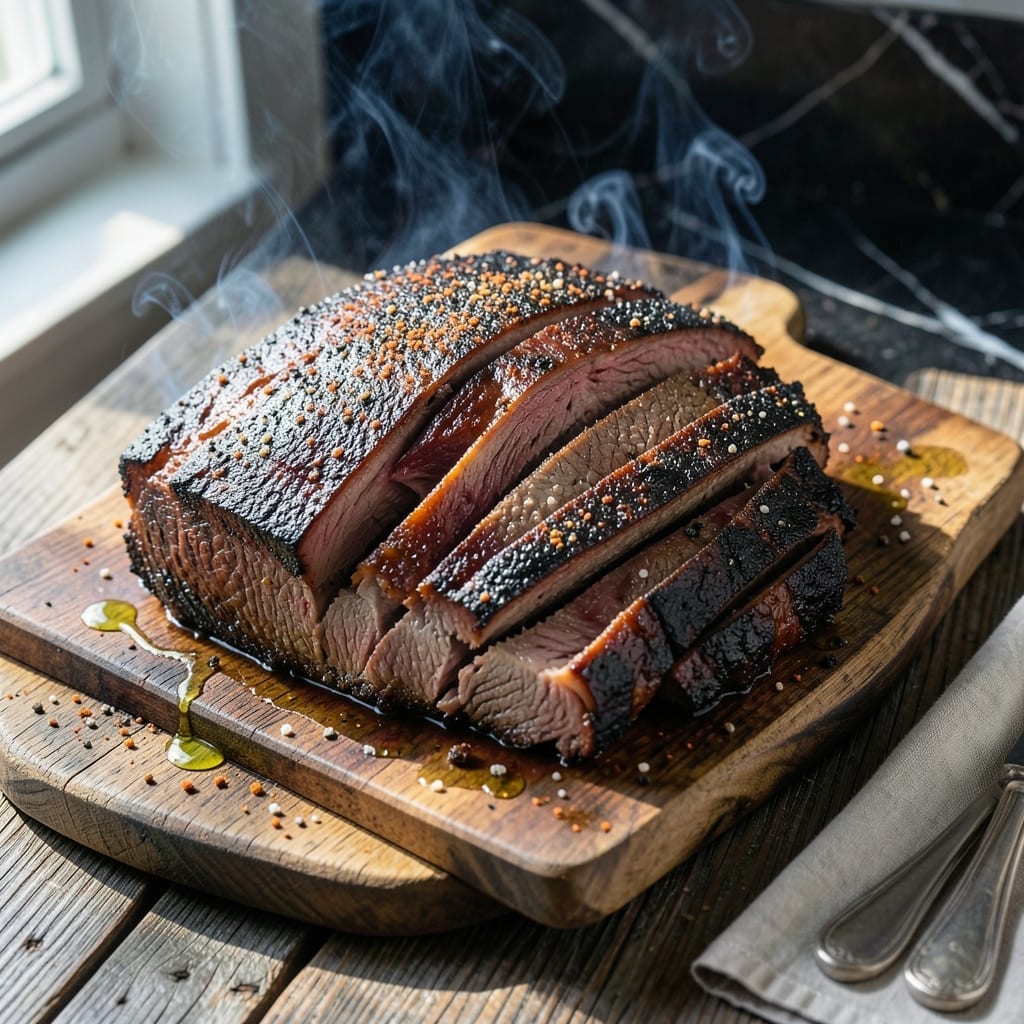
Mastering Texas-style brisket is about patience and precision, not shortcuts. This method delivers perfectly tender meat with a deep smoky crust every time.
The key is the low and slow approach—maintaining a steady 225°F for 12 to 16 hours. The rub is simple: coarse salt, black pepper, and a touch of paprika for color.
You’ll know it’s done when the internal temperature hits 195°F and the brisket feels like butter when probed. Resting for at least an hour ensures the juices redistribute.
Serve with pickles, onions, and white bread to honor tradition. This is barbecue the way Texas intended.
Ingredients for Texas Style Bbq Brisket
A whole packer brisket and a simple rub deliver that perfect Texas bark and tender interior.
| Ingredient | Amount | Notes |
|---|---|---|
| Beef Brisket 🥩 | 12 lb | Whole packer cut, untrimmed |
| Coarse Kosher Salt 🧂 | ½ cup | Diamond Crystal preferred for texture |
| Coarse Black Pepper 🌶️ | ½ cup | Freshly ground for best results |
| Paprika 🌶️ | ¼ cup | Sweet or smoked variety |
| Garlic Powder 🧄 | 2 tbsp | Granulated for even distribution |
| Onion Powder 🧅 | 2 tbsp | Fine grind for rub consistency |
| Brown Sugar 🍚 | ¼ cup | Light or dark for bark formation |
| Mustard Powder 🟡 | 1 tbsp | Optional for rub complexity |
| Hickory Wood Chunks 🪵 | 4 pieces | Or post oak for authentic Texas flavor |
| Apple Cider Vinegar 🍏 | ½ cup | For spritzing during cook |
| Beef Tallow 💧 | ½ cup | For moisture and flavor injection |
| Yellow Mustard 🟡 | ½ cup | Binder for rub application |
| Dill Pickles 🥒 | 2 cups | Sliced, for serving |
| White Onions 🧅 | 2 whole | Thinly sliced, for serving |
| White Bread 🍞 | 12 slices | Texas toast style preferred |
The brisket is everything here. USDA Prime is ideal, but Choice works if Prime isn’t available. Look for a packer cut with a thick, even fat cap—12-14 lbs is the sweet spot for most smokers. Costco or a local butcher will have what you need. Avoid pre-trimmed briskets; the fat renders down during the cook, keeping the meat moist. For the rub, Diamond Crystal kosher salt is the standard in Texas pits.
No hickory? Post oak or pecan wood are traditional alternatives. Out of mustard powder? Skip it entirely—the salt, pepper, and paprika carry the flavor. For the spritz, apple juice or water work if you’re out of vinegar. The beef tallow can be omitted, but it adds unmatched richness to the finished product. Never substitute liquid smoke for real wood.
The brisket can rest wrapped in a towel in a cooler for 4-6 hours if needed. Slice only when ready to serve. Leftover brisket keeps 4-5 days in the fridge or freezes for 3 months. Reheat gently with a splash of beef broth to maintain moisture.
Why You’ll Love This Recipe
- Minimal Rub: The coarse salt and pepper with a touch of paprika and garlic powder is all you need—no fancy spice blends or hard-to-find ingredients.
- Smoky Depth: That thick crust with black pepper and garlic powder gives every bite a bold, authentic Texas BBQ flavor.
- Feeds the Masses: I smoke one brisket and it turns into sandwiches, tacos, and chili for the whole week.
- Leftovers Win: Honestly, the brisket tastes even better the next day—if it lasts that long.
Step-by-Step Instructions for Texas Style BBQ Brisket
Master the art of competition-level brisket with this time-tested technique.
Step 1: Trim and Apply the Rub
Begin by trimming the 12 lb Beef Brisket, removing excess fat to leave a consistent ¼-inch layer. This ensures even smoke penetration while protecting the meat. I focus on the hard fat deposits, particularly between the flat and point muscles.
Combine the 0.5 cup Coarse Kosher Salt, 0.5 cup Coarse Black Pepper, 0.25 cup Paprika, 2 tbsp Garlic Powder, 2 tbsp Onion Powder, 0.25 cup Brown Sugar, and 1 tbsp Mustard Powder. Apply the rub aggressively to all surfaces, pressing it into the meat. Spread the 0.5 cup Yellow Mustard thinly over the brisket first as a binder—it creates the perfect base for the rub to adhere without altering flavor.
Step 2: Prepare the Smoker and Begin Cooking
Set up your smoker with the 4 pieces Hickory Wood Chunks, targeting a consistent 225-250°F. I prefer post oak for a more traditional Texas profile, but hickory delivers excellent results. Maintain clean, thin blue smoke throughout the cook.
Place the brisket fat-side up on the grates. The fat cap will render slowly, basting the meat as it cooks. Position a water pan in the smoker to stabilize temperature and add moisture to the cooking environment. Close the lid and resist opening it for at least 4 hours—every peek adds time to your cook.
Step 3: Monitor and Wrap Through the Stall
After about 6-8 hours, the internal temperature will reach 165-170°F and stall. This is normal as moisture evaporates from the surface. Prepare a mixture of the 0.5 cup Apple Cider Vinegar and 0.5 cup Beef Tallow in a spray bottle and spritz the brisket every 45-60 minutes to maintain moisture.
When the stall occurs, wrap the brisket tightly in pink butcher paper. This Texas crutch method powers through the plateau while preserving the bark. Return it to the smoker and continue cooking until probe-tender, typically at 200-205°F internal temperature.
Step 4: Rest and Slice for Optimal Tenderness
Remove the brisket when it reaches probe-tender perfection. Transfer it to a cooler or insulated container, wrap in towels, and rest for at least 2 hours. This extended rest allows the juices to redistribute completely throughout the meat.
Slice against the grain into ¼-inch thick portions, adjusting your angle between the flat and point as their grain directions differ. Serve immediately with the 2 cups Dill Pickles, 2 whole White Onions thinly sliced, and 12 slices White Bread for an authentic Texas experience.
Pro Tips For Making Texas Style Bbq Brisket
- Trim the Fat: Leave about 1/4 inch of fat on the brisket—any more and it won’t render properly, any less and it’ll dry out. I learned this the hard way after my first few came out tough as boot leather.
- Season Overnight: Rub that coarse salt, pepper, paprika, and garlic powder in the night before. Sounds weird, but it works—the flavors sink deep and the crust forms better.
- Low and Slow: Keep your smoker or oven at 225°F, no higher. After burning three batches trying to rush it, I finally figured out patience is the thing that matters most.
- Rest Under Foil: Once it hits 195-200°F internally, pull it, wrap it in foil, and let it rest at least 1 hour—2 if you can stand it. This isn’t the prettiest method, but it’s the tastiest.
Troubleshooting This Recipe
Temperature Fluctuations
If your smoker dips below 200°F, don’t panic. Add fresh hickory wood chunks or adjust your air intake. Avoid opening the lid too often—this causes 50°F drops that add hours to your cook. I keep a ThermoWorks Smoke thermometer handy for real-time monitoring. 🌡️
Stall That Won’t End
When the brisket stalls below 165°F for hours, it might need more heat. Try increasing smoker temp to 275°F temporarily. Also, ensure your water pan has enough liquid—evaporation cools the cooking environment. Wrapping in butcher paper helps power through.
Dry Brisket
If your brisket turns out dry, it likely cooked too fast. Next time, maintain strict 225-250°F and spritz with apple cider vinegar every 45 minutes. Over-trimming the fat cap can also cause dryness—leave at least ¼-inch of fat for moisture.
Weak Bark Formation
For a better bark, ensure your rub contains enough brown sugar for caramelization. Don’t wrap too early—wait until internal temp hits 165°F. Also, avoid spritzing too heavily, which can soften the bark before it sets. 🔥
Uneven Cooking
If one end cooks faster, rotate the brisket 180 degrees halfway through. The point (thicker end) often finishes 2-3 hours before the flat. When done, separate and wrap them individually if needed.
Probe Test Issues
If your probe meets resistance, the brisket isn’t ready. True doneness feels like probing into warm butter. If it’s probe-tender but below 195°F, keep cooking—temperature and tenderness must align.
Nutrition Facts
Frequently Asked Questions
What’s the ideal smoker temperature?
Maintain a steady 225-250°F for the entire cook. This low and slow method ensures the collagen breaks down properly.
How long does it take to smoke?
Plan for 12-16 hours at 225°F. The exact time depends on your smoker and the brisket size. Always cook to temperature, not time.
Should I use foil or butcher paper?
Traditional Texas brisket uses pink butcher paper. It allows the meat to breathe while keeping moisture in, creating a better bark than foil.
Why does my brisket stall?
The stall occurs around 165°F as moisture evaporates from the surface. Wrapping in paper helps power through this phase.

- 6 Egg Cake Recipe with Oil: Light as Air With Buttery Moisture - October 4, 2026
- 4 Bean Casserole Recipe: One-Pan Heartiness With Smoky Paprika Depth - October 4, 2026
- 3-Ingredient Keto Mug Cake Recipe: Microwave Magic in 2 Minutes - October 4, 2026