
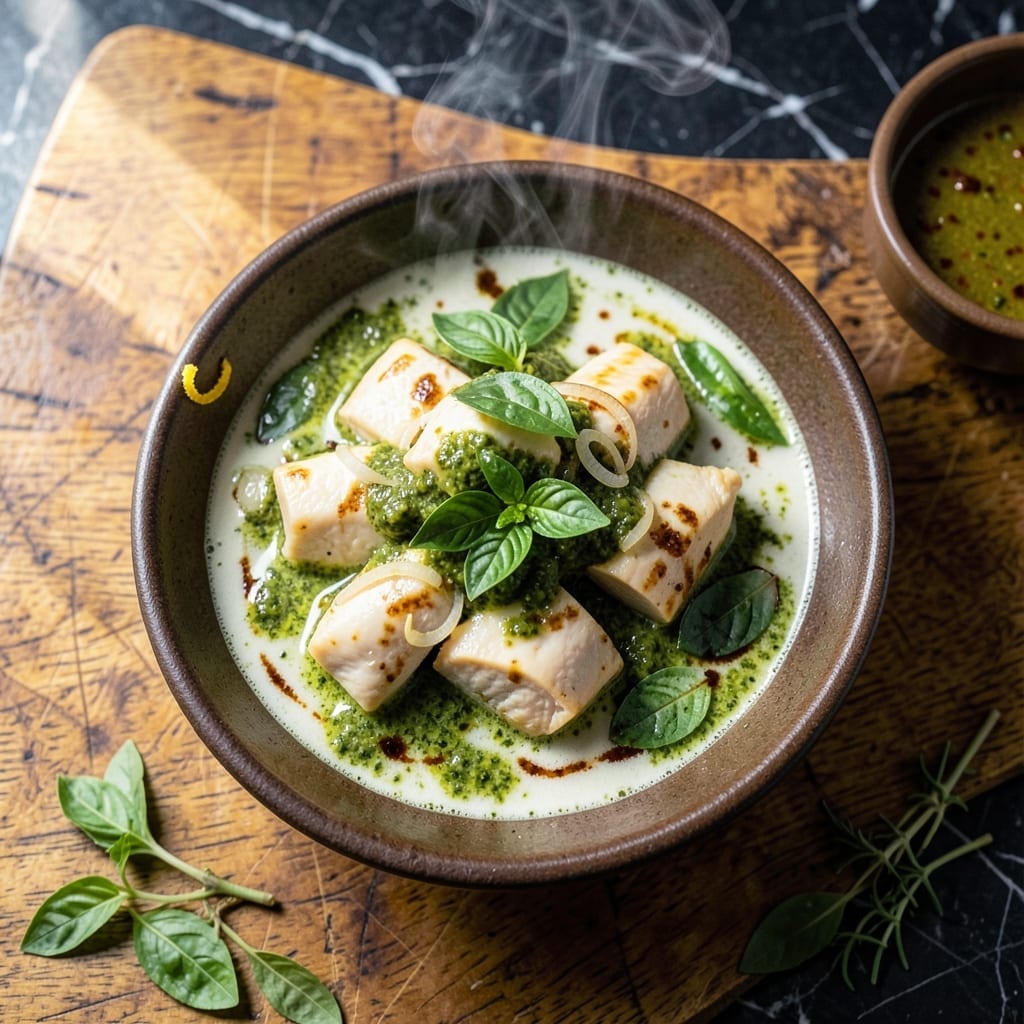
This recipe brings the vibrant flavors of Thailand to your kitchen with a balance of aromatic herbs and creamy coconut. I’ve refined this method to ensure the curry is rich, fragrant, and perfectly layered.
The key is blooming the curry paste in hot oil before adding the coconut milk, which deepens the flavors. Fresh basil and lime leaves are added at the end for a bright, authentic finish.
You’ll end up with a fragrant, creamy dish where the chicken soaks up the bold green curry sauce. The coconut milk mellows the heat while keeping the spices lively.
Serve over jasmine rice for a complete meal. Here’s how to make it.
Ingredients for Thai Green Curry
Fresh herbs and creamy coconut create this vibrant, aromatic dish with bold Thai flavors.
| Ingredient | Amount | Notes |
|---|---|---|
| Green Curry Paste 🌶️ | 3 tbsp | Thai brand preferred for authenticity |
| Coconut Milk 🥥 | 2 cups | Full-fat for creaminess |
| Boneless Chicken Thighs 🍗 | 1 ½ lb | Cut into bite-sized pieces |
| Fish Sauce 🐟 | 2 tbsp | Thai or Vietnamese variety |
| Palm Sugar 🍚 | 1 tbsp | Or substitute brown sugar |
| Thai Basil Leaves 🌿 | ½ cup | Fresh, loosely packed |
| Kaffir Lime Leaves 🍈 | 6 whole | Fresh or frozen, torn |
| Red Bell Pepper 🌶️ | 1 whole | Sliced into strips |
| Shallot 🧅 | 1 whole | Thinly sliced |
| Garlic Cloves 🧄 | 3 cloves | Minced finely |
| Vegetable Oil 🫒 | 2 tbsp | Neutral flavor for frying |
| Jasmine Rice 🍚 | 2 cups | Uncooked, for serving |
| Lime 🍋 | 1 whole | Juiced, for garnish |
| Fresh Cilantro 🌿 | ¼ cup | Chopped, for garnish |
The curry paste is critical—Maesri or Thai Kitchen brands are widely available at Whole Foods or Asian markets (avoid the ones with preservatives). Coconut milk quality matters too: Chaokoh or Aroy-D deliver the right richness. For the chicken, thighs stay juicier than breasts during cooking. Kaffir lime leaves can be tricky to find—freeze extras for next time.
No Thai basil? Regular basil plus mint gets you close but lacks that anise note. Fish sauce can be swapped for soy sauce or coconut aminos (vegan option). Palm sugar is traditional, but brown sugar works fine. Red bell pepper adds sweetness—zucchini or eggplant are great alternatives. For extra heat, add a sliced Thai chili or two.
Store curry paste in the fridge for up to 1 month or freeze for 6 months. Coconut milk separates in the can—stir well before using. Leftover curry keeps 3-4 days in the fridge and reheats gently to avoid separating the sauce.
Why You’ll Love This Recipe
- One Pot Wonder: I just dump everything in a pan—coconut milk, curry paste, chicken—and let it simmer while I set the table.
- Flavor Bomb: The fish sauce and palm sugar balance that creamy coconut heat in a way that’s honestly ridiculous.
- Weeknight Hero: Between us, I’ve served this for company and weeknight dinners with zero complaints.
- Leftovers Gold: Tastes even better the next day, and my lunchbox is always the envy of the office.
Step-by-Step Instructions for Thai Green Curry
Here’s the method. Straightforward, tested, works every time.
Step 1: Sauté Aromatics to Release Fragrance
Heat the 2 tbsp Vegetable Oil in a large pot or Dutch oven over medium-high heat. Add the Shallot and cook for 2-3 minutes until it becomes translucent and just begins to soften at the edges.
Add the 3 cloves Garlic Cloves and stir constantly for 30 seconds until fragrant. Be careful not to let it brown—you want the aroma without bitterness. Immediately add the 3 tbsp Green Curry Paste and the sliced Red Bell Pepper, stirring to coat everything in the oil and paste.
Cook this mixture for 1-2 minutes until the paste darkens slightly and the peppers begin to soften. This step builds the flavor foundation for your curry.
Step 2: Bloom the Curry Paste with Coconut Milk
Pour in about ½ cup of the 2 cups Coconut Milk and stir well to incorporate. This helps mellow the sharpness of the curry paste and allows the flavors to meld. Let it simmer for 2-3 minutes until small oil droplets appear on the surface.
Add the remaining 1½ cups Coconut Milk and stir to combine. Bring the mixture to a gentle simmer, then reduce heat to medium-low. The sauce should be just barely bubbling at the edges.
Step 3: Cook the Chicken and Season
Add the 1.5 lb Boneless Chicken Thighs to the pot, ensuring all pieces are submerged in the sauce. Simmer uncovered for 15 minutes, stirring occasionally to prevent sticking.
Stir in the 2 tbsp Fish Sauce, 1 tbsp Palm Sugar, and the 6 whole Kaffir Lime Leaves (torn to release their aroma). Simmer for another 5-7 minutes until the chicken is cooked through and the sauce has slightly thickened.
You’ll know the chicken is done when it reaches an internal temperature of 165°F and the pieces cut easily with a spoon.
Step 4: Finish with Fresh Herbs
Turn off the heat and stir in the 0.5 cup Thai Basil Leaves. The residual heat will wilt them slightly while preserving their bright flavor. Taste and adjust seasoning if needed—you might want a bit more fish sauce for saltiness or palm sugar for sweetness.
Remove the kaffir lime leaves before serving. Ladle the curry over steamed 2 cups Jasmine Rice and garnish with the juiced Lime and 0.25 cup Fresh Cilantro. Serve immediately while hot.
Pro Tips For Making Thai Green Curry
- Bloom the Paste: I learned this the hard way—fry the green curry paste in a little coconut milk for 2-3 minutes before adding the rest. It deepens the flavor and removes any raw, bitter edge.
- Use Full-Fat Coconut Milk: Skip the light versions; the fat is what carries the flavors and gives that rich, creamy texture. The difference is noticeable, especially in the finish.
- Don’t Overcook the Chicken: Boneless thighs cook fast—add them after the curry simmers for 5 minutes, then pull them out once they hit 165°F. They’ll stay tender and juicy instead of turning rubbery.
- Balance the Flavors: Taste as you go and adjust with fish sauce for salt, palm sugar for sweetness, or a squeeze of lime for acid. Thai green curry should hit all three notes in every bite.
Serving Suggestions for This thai green curry
Rice Base Choices
Jasmine rice is my go-to because its floral aroma complements the curry’s coconut and herb notes. Cook 2 cups with 3 cups water for perfect fluffiness. For variety, try basmati or sticky rice if you prefer a firmer or chewier texture.
Fresh Garnish Ideas
Beyond the recipe’s cilantro and lime, top with thin-sliced Thai chilies for heat or crushed peanuts for crunch. I love adding bean sprouts for freshness—they soak up the sauce beautifully.
Side Dish Pairings
A simple cucumber salad with rice vinegar and a pinch of sugar cuts through the richness. Or serve with steamed bok choy or Thai eggplant for an authentic meal. These sides balance the curry’s intensity. 🥗
Beverage Matches
An ice-cold Thai iced tea or Singha beer are classic pairings. For wine lovers, an off-dry Riesling handles the heat and coconut perfectly. The slight sweetness complements the dish beautifully.
Serving Style
Family-style is traditional—serve the curry in a large bowl with rice in a separate dish. Provide small bowls of extra garnishes so everyone can customize. This makes the meal interactive and fun for guests. ✨
Plating Tips
Ladle the curry over a bed of rice, then garnish with fresh herbs. For presentation, add a lime wedge on the side. I always serve it in shallow bowls so the vibrant green sauce stands out. 💛
Nutrition Facts
Frequently Asked Questions
Can I make this with shrimp instead of chicken?
Yes! Add 1 lb peeled shrimp and cook for only 3-4 minutes until they turn pink. Shrimp cooks much faster than chicken, so add them at the end.
Why did my curry sauce separate?
This happens if boiled too vigorously. Keep it at a gentle simmer and stir occasionally. If it separates, whisk in 1-2 tbsp cold water to bring it back together.
Can I use light coconut milk?
You can, but full-fat gives the best texture and flavor. Light coconut milk may make the sauce thinner and less rich. Consider adding 1 tbsp cornstarch to thicken if needed.
How do I adjust the spice level?
Start with 1 tbsp curry paste, then add more to taste. For less heat, use mild paste or add 1 tbsp coconut cream to mellow it.

- 6 Egg Cake Recipe with Oil: Light as Air With Buttery Moisture - October 4, 2026
- 4 Bean Casserole Recipe: One-Pan Heartiness With Smoky Paprika Depth - October 4, 2026
- 3-Ingredient Keto Mug Cake Recipe: Microwave Magic in 2 Minutes - October 4, 2026