
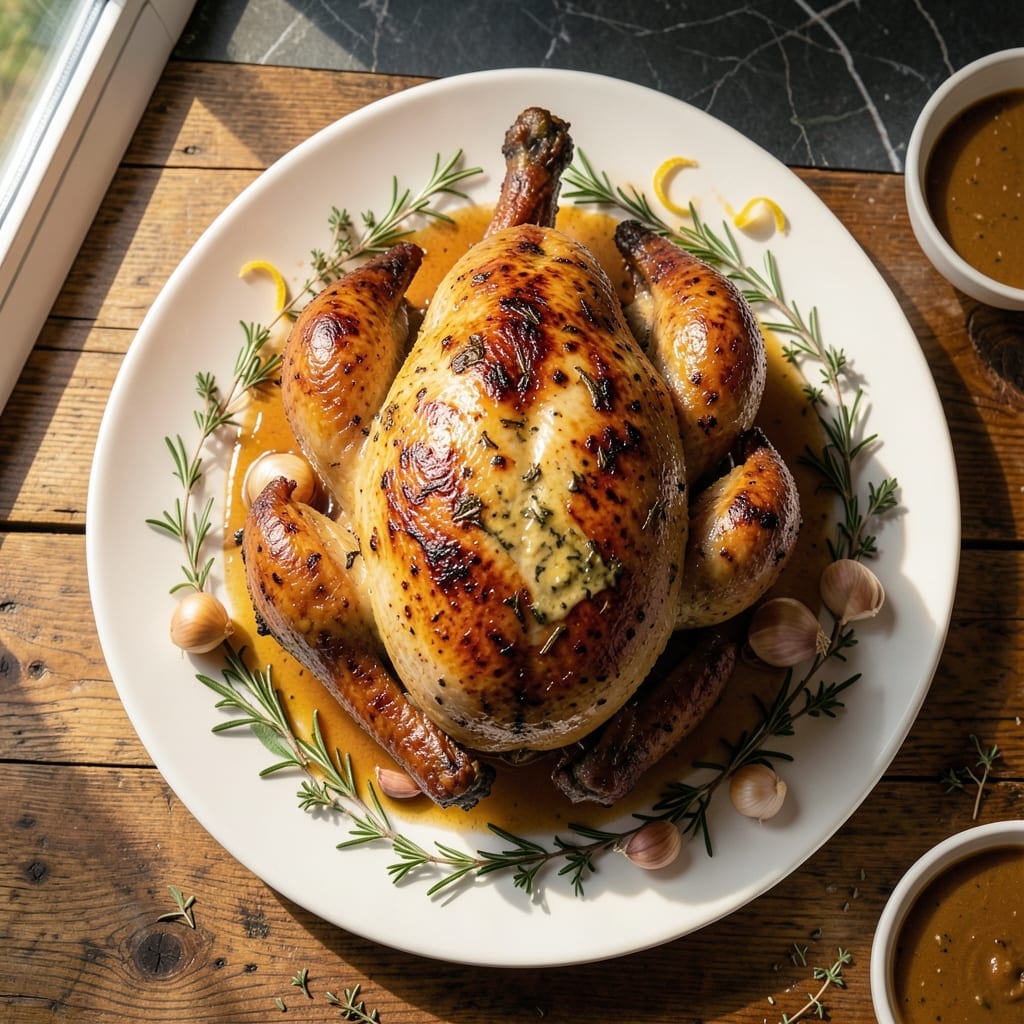
This Thanksgiving turkey delivers restaurant-quality results with Gordon Ramsay’s signature techniques for herb-infused juiciness and golden skin. The method combines simple ingredients with precise timing to create a centerpiece worthy of any holiday table.
By buttering under the skin and roasting at high heat, the turkey develops a crisp, golden exterior while staying tender and moist inside. Fresh herbs and aromatics infuse every bite with layers of flavor, elevating this classic dish beyond the ordinary.
The process ensures even cooking and maximum flavor, with a final rest that locks in succulence. This approach guarantees a turkey that’s as impressive to serve as it is unforgettable to eat.
Serve with confidence, knowing every detail has been perfected for a flawless holiday meal.
Ingredients for Thanksgiving Turkey Recipe Gordon Ramsay
A fresh turkey and aromatic herbs create a showstopping centerpiece for your holiday table.
| Ingredient | Amount | Notes |
|---|---|---|
| Whole Turkey 🦃 | 14 lb | Fresh, not frozen, fully thawed |
| Unsalted Butter 🧈 | 1 cup | Softened to room temperature |
| Fresh Rosemary 🌿 | ¼ cup | Leaves stripped, finely chopped |
| Fresh Thyme 🌿 | ¼ cup | Leaves stripped, finely chopped |
| Fresh Sage 🌿 | ¼ cup | Leaves finely chopped |
| Garlic Cloves 🧄 | 8 cloves | Peeled and minced |
| Yellow Onion 🧅 | 2 whole | Quartered, skin on |
| Lemon 🍋 | 2 whole | Halved for cavity |
| Carrots 🥕 | 4 whole | Peeled, cut into chunks |
| Celery Stalks 🥬 | 4 whole | Cut into chunks |
| Chicken Stock 🍲 | 2 cups | Low-sodium preferred |
| Kosher Salt 🧂 | 1 tbsp | Diamond Crystal preferred |
| Black Pepper 🌶️ | 1 tsp | Freshly ground |
| Olive Oil 🫒 | 2 tbsp | For basting |
The turkey must be fresh and fully thawed—never frozen for this method. Whole Foods or a trusted butcher will have high-quality birds. Look for 14-15 lb for 12 servings. The herbs should be vibrant and fragrant; organic from the farmers market if possible. Butter is key here, and Plugrá or Kerrygold are excellent choices for richness and flavor development.
No fresh herbs? Dried at one-third the amount (but fresh is strongly preferred). Short on rosemary or thyme? Substitute with marjoram or oregano—just keep the total herb volume consistent. For a deeper flavor profile, add a bay leaf or two to the cavity. If using salted butter, reduce the kosher salt by half to avoid over-seasoning.
Store the turkey in the fridge uncovered for 24-48 hours before cooking to dry the skin (this ensures crispiness). Leftovers keep for 4-5 days refrigerated or freeze for 3 months. Always carve just before serving to maintain moisture.
Why You’ll Love This Recipe
- Set and Forget: I rub the turkey with butter and herbs the night before, then roast it hands-off while I prep sides.
- Herb-Butter Bliss: The rosemary, thyme, and sage melted into that butter? It makes the skin so crisp and fragrant I sneak bites before serving.
- Holiday Showstopper: This is my go-to for Thanksgiving, Christmas, even big Sunday dinners—always impresses without stress.
- Leftovers for Days: One 12-pound bird feeds us for the meal, then sandwiches, pot pies, and soup for the whole week.
Step-by-Step Instructions for Herb-Infused Thanksgiving Turkey
Master the technique for juicy, herbaceous turkey with perfectly crisp golden skin.
Step 1: Prepare the Aromatic Herb Butter
In a mixing bowl, combine the 1 cup unsalted butter (softened to room temperature) with the 0.25 cup fresh rosemary, 0.25 cup fresh thyme, and 0.25 cup fresh sage, all finely chopped. Add the 8 cloves garlic cloves, minced, along with the 1 tbsp kosher salt and 1 tsp black pepper.
Mix thoroughly until the herbs and garlic are evenly distributed throughout the butter. This compound butter will infuse the turkey with deep, aromatic flavors while promoting even browning. The butter should be pliable but not melted—this consistency ensures it adheres to the skin without sliding off during roasting.
Step 2: Season and Stuff the Turkey
Pat the 14 lb whole turkey completely dry inside and out with paper towels. This step is critical for achieving crisp skin. Rub about half of the herb butter mixture under the skin, gently separating it from the breast meat with your fingers. Spread the remaining butter evenly over the exterior of the turkey.
Stuff the cavity with the 2 whole yellow onion (quartered, skin on), 2 whole lemon (halved), 4 whole carrots (peeled and chunked), and 4 whole celery stalks (chunked). These aromatics will perfume the meat from within while adding moisture. Tie the legs together with kitchen twine to maintain shape during roasting.
Step 3: Roast with Precision
Preheat your oven to 425°F. Place the turkey breast-side up on a roasting rack set in a large pan. Pour 2 cups chicken stock into the bottom of the pan to create a moist environment and prevent the drippings from burning.
Roast the turkey for 30 minutes at 425°F to jumpstart browning, then reduce the heat to 325°F and continue roasting. Baste the turkey with the 2 tbsp olive oil every 45 minutes to enhance the golden color and moisture. The turkey is done when the thickest part of the thigh reaches 165°F on an instant-read thermometer, typically 3 to 3.5 hours total for a bird of this size.
Step 4: Rest and Carve for Maximum Juiciness
Transfer the turkey to a cutting board and tent loosely with foil. Let it rest for at least 45 minutes before carving—this allows the juices to redistribute throughout the meat, ensuring every slice is moist and flavorful. The internal temperature will continue to rise 5-10°F during this time.
Carve the turkey by first removing the legs and thighs, then slicing the breast against the grain into even ½-inch thick slices. Serve immediately with the pan drippings strained and skimmed of fat for a simple, rich gravy. The skin should be deep golden and crisp, while the meat remains tender and infused with the herbal notes from the butter.
Pro Tips For Making Thanksgiving Turkey Recipe Gordon Ramsay
- Dry the Turkey: Pat the turkey completely dry with paper towels before seasoning—moisture is the enemy of crispy skin, and Ramsay’s method relies on that golden finish.
- Soften the Butter: Take the unsalted butter out 30 minutes early so it’s soft enough to mix with the herbs but not melted; cold butter won’t spread under the skin properly.
- Don’t Overstuff: I learned this the hard way—packing the cavity too tight with aromatics steams the turkey instead of roasting it, so keep it loose with just a few sprigs of rosemary and thyme.
- Rest Before Carving: Give the turkey a solid 30 minutes under foil after roasting—it keeps the juices from running all over the cutting board when you slice.
Storing and Reheating Leftovers
Refrigerator Storage
After your feast, let the turkey cool for no more than 2 hours before storing. I use airtight containers or heavy-duty zip-top bags to keep leftovers fresh. Store in the fridge at 40°F or below for up to 4 days. 🍗
Freezer Storage
For longer storage, wrap slices or whole portions tightly in plastic wrap and then aluminum foil. Freeze for up to 3 months without quality loss. I recommend labeling with the date to track freshness.
Oven Reheating
My preferred method for maintaining moisture is the oven. Preheat to 350°F, place turkey in a baking dish with ¼ cup chicken stock, cover with foil, and heat for 20-25 minutes. This keeps the meat juicy and tender.
Microwave Reheating
For quick meals, microwave individual portions covered with a damp paper towel. Use 50% power for 2-3 minutes, then check and continue in 30-second intervals until reaching 165°F. Stir in a splash of stock if it looks dry.
Gravy Revival
Reheat gravy separately in a saucepan over medium-low heat for 5-7 minutes, stirring often. If it thickens too much, whisk in a little warm water or stock to restore the perfect consistency. 💡
Nutrition Facts
Frequently Asked Questions
What temperature should the turkey reach?
The turkey is done when the thickest part of the thigh hits 165°F on a meat thermometer. Remember, the temperature will rise an additional 5-10°F during resting.
How long should I rest the turkey before carving?
Let it rest for at least 45 minutes after removing from the oven. This allows juices to redistribute throughout the meat for maximum moisture.
Can I use dried herbs instead of fresh?
Yes, use dried herbs at one-third the amount of fresh. However, fresh herbs provide the best flavor and aroma for this recipe.
What’s the best way to reheat leftovers?
Preheat oven to 350°F, place turkey in a dish with ¼ cup chicken stock, cover with foil, and heat for 20-25 minutes.

- 6 Egg Cake Recipe with Oil: Light as Air With Buttery Moisture - October 4, 2026
- 4 Bean Casserole Recipe: One-Pan Heartiness With Smoky Paprika Depth - October 4, 2026
- 3-Ingredient Keto Mug Cake Recipe: Microwave Magic in 2 Minutes - October 4, 2026