
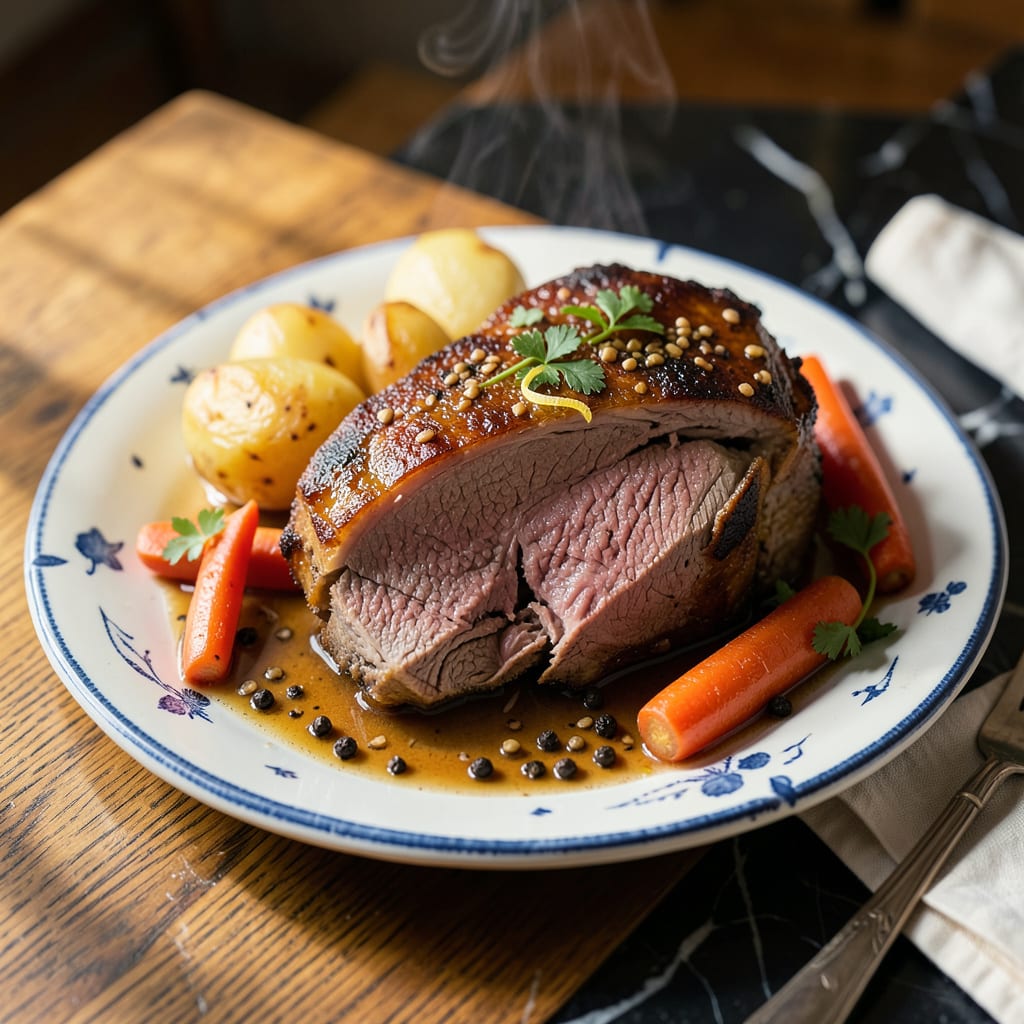
After years of testing brining times and spice ratios, I’ve perfected this corned beef recipe that delivers fall-apart tender results with balanced flavor in every bite. The method combines traditional curing techniques with precise cooking control, ensuring meat that’s juicy and flavorful without being overly salty.
What sets this apart is the careful attention to spice balance and cooking temperature. Whether you cure your own brisket or use store-bought, the slow cooking process transforms tough meat into something extraordinary. The result is perfectly tender corned beef that’s ideal for sandwiches, platters, or classic St. Patrick’s Day celebrations.
Ingredients for The Best Corned Beef
This is where tender magic starts—brisket, spices, and patience transform into something extraordinary.
| Ingredient | Amount | Notes |
|---|---|---|
| Beef Brisket 🥩 | 4 lb | Flat cut preferred for even cooking |
| Kosher Salt 🧂 | ½ cup | Diamond Crystal brand recommended |
| Brown Sugar 🍚 | ¼ cup | Light or dark works equally well |
| Pink Curing Salt #1 🧂 | 1 tsp | Essential for proper curing (sodium nitrite) |
| Black Peppercorns 🌶️ | 2 tbsp | Whole, freshly cracked preferred |
| Mustard Seeds 🌿 | 1 tbsp | Yellow or brown variety |
| Coriander Seeds 🌿 | 1 tbsp | Lightly toasted for depth |
| Bay Leaves 🍃 | 4 whole | Dried, whole leaves |
| Cloves 🌿 | 6 whole | Freshly ground if possible |
| Allspice Berries 🌶️ | 1 tsp | Whole berries, lightly crushed |
| Garlic Cloves 🧄 | 8 cloves | Peeled, smashed for infusion |
| Water 💧 | 8 cups | Filtered preferred for clean flavor |
| Guinness Stout 🍺 | 12 oz | Or substitute beef broth |
| Yellow Onion 🧅 | 1 whole | Quartered for aromatic base |
| Carrots 🥕 | 4 whole | Peeled, cut into 3-inch chunks |
The brisket is everything here. Flat cut gives you that uniform thickness for even cooking (point cut works but gets chewier). Look for good marbling—Costco or butcher shops usually have the best selection. Pink curing salt is non-negotiable (find it at Amazon or specialty stores like Sur La Table). Don’t skip it—this is what gives corned beef its signature color and flavor. Whole spices matter too—Penzeys has fantastic quality, but the bulk section at Whole Foods works in a pinch. Freshness counts, so give them a quick sniff before buying (dusty smell = toss ’em).
No Guinness? Any dark beer works, or just use extra beef broth. Out of allspice berries? Ground allspice at half the amount (but whole is better). Mustard seeds can be swapped for 1 tbsp ground mustard if needed. The brown sugar balances the salt—don’t skip it, but maple syrup in a 1:1 ratio works if you’re out. For the curing process, glass or food-grade plastic containers only (no metal—it reacts with the salt). And yes, you can use pre-brined corned beef from the store, but the flavor won’t be as nuanced (worth the extra effort, promise).
The cured brisket keeps in the fridge for 5-7 days before cooking, or freeze it for up to 3 months. Once cooked, store leftovers wrapped tight—they’ll stay good for 4-5 days (if they last that long). The cooking liquid? Strain and save it for soups or braising—it’s liquid gold. Pro tip: Slice against the grain when serving. Makes all the difference in tenderness.
Why You’ll Love This Recipe
- I’ll be real: the hardest part is waiting. Mix the salt, sugar, and curing salt, rub it on the brisket, and let time do the work. No babysitting, no last-minute panic—just a quiet fridge working magic for 5-7 days.
- Mostly Hands-Off: I’ll be real: the hardest part is waiting. Mix the salt, sugar, and curing salt, rub it on the brisket, and let time do the work. No babysitting, no last-minute panic—just a quiet fridge working magic for 5-7 days.
- That Sweet-Salty Crust: The brown sugar caramelizes while the kosher salt and peppercorns form this ridged, crave-worthy crust. It’s the kind of bite where you pause mid-chew because damn—that’s the balance of sweet, salty, and peppery heat you’ve been chasing.
- St. Paddy’s and Tuesday: Honestly, I make this year-round. Slice it thick for a holiday centerpiece with mustard and cabbage, or shred leftovers into hash for a lazy breakfast. It’s the rare dish that feels celebratory and unfussy enough for a weeknight.
Step-by-Step Instructions for Corned Beef
This method delivers perfectly tender corned beef with that signature spice balance every time.
Step 1: Prepare the Curing Brine
In a large stockpot, combine the 8 cups water, 0.5 cup kosher salt, 0.25 cup brown sugar, and 1 teaspoon pink curing salt #1. Stir over medium heat until the salt and sugar completely dissolve. This is your curing base that will transform the brisket.
While the brine heats, toast the 1 tablespoon coriander seeds and 1 tablespoon mustard seeds in a dry skillet over medium-low heat for 2-3 minutes until fragrant. Lightly crush the 1 teaspoon allspice berries and add them to the skillet along with the 2 tablespoons black peppercorns, 4 bay leaves, and 6 cloves. Toast for another 1 minute to release their essential oils.
Step 2: Infuse the Brine with Aromatics
Add the toasted spices to the brine along with the 12 ounces Guinness stout, 8 cloves garlic (smashed), quartered yellow onion, and 3-inch carrot chunks. Bring the mixture to a gentle simmer, then remove from heat and let it cool to room temperature. This cooling process allows the flavors to meld and prevents cooking the meat during curing.
The stout adds depth and malty sweetness that balances the saltiness, while the vegetables contribute natural sugars and aromatics. I’ve found this combination creates the most complex flavor profile. The brine should be deeply fragrant and slightly syrupy when properly infused.
Step 3: Cure the Brisket for Maximum Flavor
Place the 4-pound beef brisket in a large resealable plastic bag or non-reactive container. Pour the cooled brine over the meat, ensuring it’s completely submerged. Seal and refrigerate for 5-7 days, turning the brisket daily. The ideal curing time is 7 days – this allows the flavors to penetrate evenly while the curing salt works its magic.
During curing, the meat will firm up slightly and develop that characteristic pink color. The brine will also darken as it absorbs proteins from the beef. This transformation is exactly what you want to see – it means the curing process is working correctly.
Step 4: Cook to Fall-Apart Tenderness
After curing, remove the brisket from the brine and rinse it thoroughly under cold water. Place it in a large Dutch oven and cover completely with fresh water. Bring to a gentle simmer over medium-low heat, then reduce to low heat and maintain at 180-190°F for 3-4 hours.
The cooking time depends on the brisket’s thickness, but you’ll know it’s done when a fork slides in and out with absolutely no resistance. The meat should be tender enough to pull apart with gentle pressure. Maintain this low temperature – boiling will make the meat tough. Skim any foam that rises to the surface during the first hour of cooking.
Step 5: Rest and Slice for Perfect Texture
Transfer the cooked brisket to a cutting board and let it rest for 20-30 minutes before slicing. This resting period allows the juices to redistribute throughout the meat. Slice against the grain into ¼-inch thick pieces for the most tender results.
Serve immediately while still warm. The ideal texture should be moist and tender with a slight resistance that gives way to a melt-in-your-mouth experience. The exterior should have a subtle spice crust from the curing process, while the interior remains juicy and perfectly seasoned throughout.
Common Mistakes When Making This Recipe
Skipping the Brine Rinse
After curing, I know it’s tempting to skip rinsing the brisket, but don’t do it! That 5-7 day brine leaves a concentrated salt layer on the surface. Rinse under cold water for 30-60 seconds to remove excess salt without losing flavor. Trust me—this prevents your finished corned beef from tasting like a salt lick. 🧂
Boiling the Meat
A gentle simmer is key—never let the water reach a rolling boil. The ideal cooking temperature is 180-190°F. Boiling causes the muscle fibers to contract violently, resulting in tough, dry meat. I use a thermometer to monitor the water temperature religiously during the 3-4 hour cook.
Using the Wrong Cut
Not all brisket cuts are created equal. The flat cut is your best bet for even cooking and consistent tenderness. I’ve made the mistake of using point cut before—it’s tasty but gets chewier at the edges. Look for a 4-pound flat cut with good marbling at your butcher or Costco.
Neglecting Daily Brine Turns
During the 7-day curing process, turning the brisket daily ensures even flavor penetration. I set a phone reminder because it’s easy to forget. Skipping turns means one side gets over-cured while the other stays bland. The brine should completely surround the meat at all times for that perfect pink color throughout.
Overcooking the Vegetables
If you’re adding cabbage, potatoes, or carrots to the pot, don’t put them in too early. These veggies only need 30-45 minutes to cook through. I add them during the last hour of cooking—this keeps them firm and flavorful rather than mushy. The same goes for the quartered onion and carrot chunks from the brine.
Slicing Too Soon
Patience is everything with corned beef. After cooking, let it rest for 20-30 minutes before slicing. Cutting too early causes all those precious juices to spill out, leaving you with dry meat. I wrap mine in foil and place it on a warm spot on the stove while I prepare the sides. 💡
Nutrition Facts

- 6 Egg Cake Recipe with Oil: Light as Air With Buttery Moisture - October 4, 2026
- 4 Bean Casserole Recipe: One-Pan Heartiness With Smoky Paprika Depth - October 4, 2026
- 3-Ingredient Keto Mug Cake Recipe: Microwave Magic in 2 Minutes - October 4, 2026