
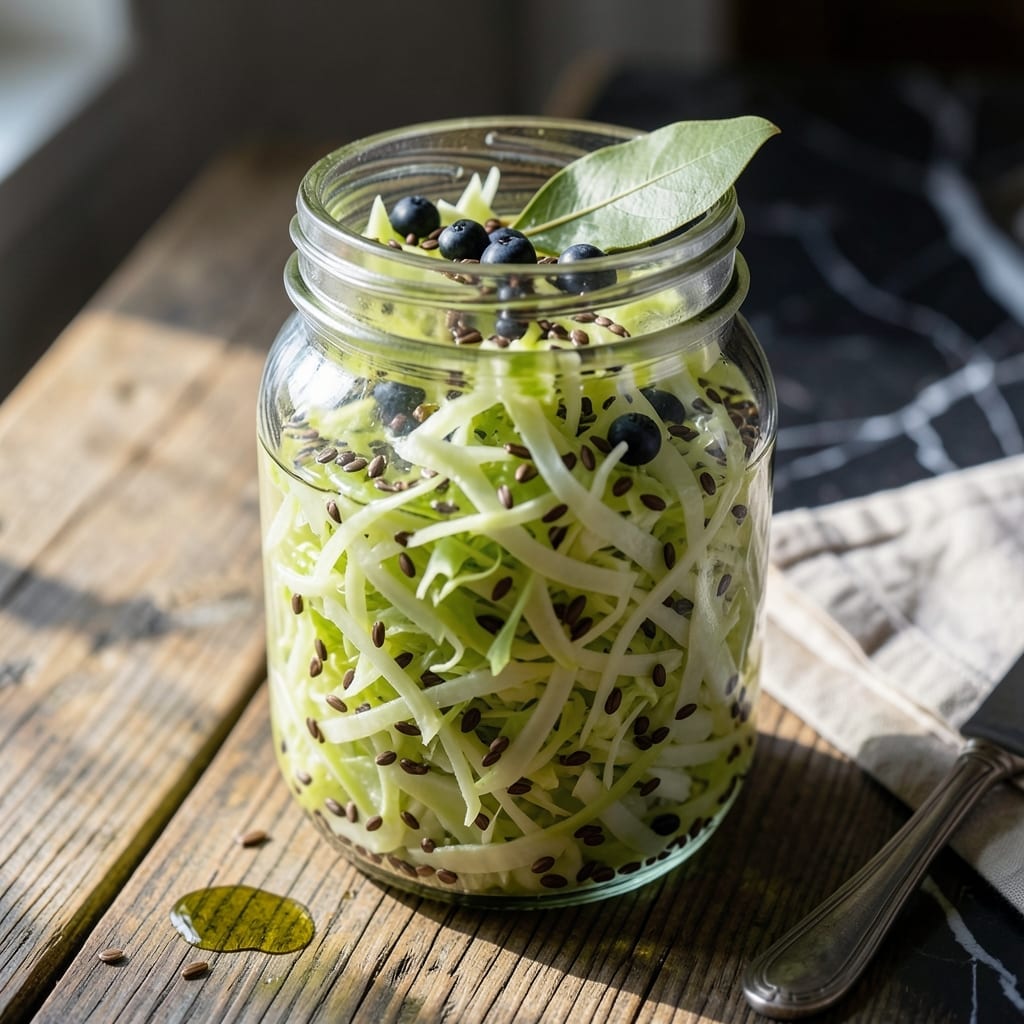
Fermenting sauerkraut at home delivers a crisp, tangy result that store-bought versions can’t match. This method transforms fresh cabbage into a probiotic powerhouse with minimal effort and maximum flavor.
The process relies on natural lactic acid fermentation, requiring only cabbage, salt, and time. Proper submerging of the cabbage prevents mold while allowing beneficial bacteria to thrive.
After 3-10 days at room temperature, you’ll have crunchy, tangy sauerkraut packed with gut-friendly microbes. The longer it ferments, the more complex the flavor becomes.
This recipe produces a restaurant-quality ferment with simple ingredients and a foolproof technique. The result is versatile, delicious, and beneficial for digestive health.
Ingredients for Tim Ferriss Sauerkraut
Fresh cabbage and salt create this probiotic-rich ferment with minimal effort required.
| Ingredient | Amount | Notes |
|---|---|---|
| Green Cabbage 🥬 | 2 ½ lb | Fresh, firm heads preferred |
| Kosher Salt 🧂 | 1 ½ tbsp | Non-iodized, fine grain |
| Filtered Water 💧 | 1 cup | Chlorine-free for fermentation |
| Caraway Seeds 🌿 | 1 tsp | Optional for traditional flavor |
| Juniper Berries 🫒 | ½ tsp | Lightly crushed, optional |
| Bay Leaves 🍃 | 2 whole | For aromatic depth |
| Black Peppercorns 🌶️ | ½ tsp | Whole, for subtle spice |
The cabbage quality is paramount. Organic green cabbage from Whole Foods or your local farmers market yields the crispest results. Look for dense, heavy heads with vibrant green leaves—avoid any with bruising or wilting. The salt must be non-iodized; Diamond Crystal kosher salt is ideal for consistent fermentation. Weighing your cabbage (aim for about 2 lbs after coring) ensures the right salt ratio for safety and flavor.
No caraway seeds? Fennel seeds at the same amount offer a similar anise note. Juniper berries can be skipped entirely, or swap in a pinch of dill seeds for a different aromatic profile. The bay leaves add subtle complexity but aren’t essential—a single celery seed can mimic the earthiness. For a spicier kick, include mustard seeds or coriander.
Store unopened cabbage in the fridge for up to 2 weeks. Once fermented, sauerkraut keeps in the fridge for 6 months (or longer). Use a clean spoon every time to prevent contamination. The flavor deepens over time, so wait at least 3 days before tasting for best results.
Why You’ll Love This Recipe
- Minimal Effort: Honestly, it’s just cabbage, salt, and water—no fancy skills needed.
- Tangy & Earthy: The caraway and juniper give it this deep, complex zing that’s way better than store-bought.
- Meal Prep Star: I toss it on sandwiches, salads, or straight from the jar for a quick gut-friendly snack.
- Penny-Wise Ferment: One head of cabbage makes gallons, and it keeps for months. My wallet loves it.
Step-by-Step Instructions for Sauerkraut
Master the art of fermentation with this precise method for tangy, crunchy results every time.
Step 1: Shred and Salt the Cabbage
Remove any wilted outer leaves from the 2.5 lb green cabbage and quarter it through the core. Using a sharp knife or mandoline, finely shred the cabbage into long, thin strips about ⅛-inch thick. Consistency in shred size ensures even fermentation and texture.
Transfer the shredded cabbage to a large mixing bowl. Sprinkle the 1.5 tbsp kosher salt evenly over the cabbage. Using clean hands, massage the salt into the cabbage firmly for 5-7 minutes until it releases its liquid and becomes slightly wilted. You should have enough liquid to pool at the bottom of the bowl—this brine is essential for fermentation.
Step 2: Prepare the Aromatics and Brine
In a small saucepan, combine the 1 cup filtered water with the 1 tsp caraway seeds, 0.5 tsp juniper berries, 2 whole bay leaves, and 0.5 tsp black peppercorns. Bring to a gentle simmer over medium heat for 3 minutes to infuse the flavors, then remove from heat and let it cool to room temperature.
Lightly crush the juniper berries and black peppercorns before adding them to the water to release their essential oils. This step enhances the aromatic depth of your finished sauerkraut. Ensure the brine is completely cooled before combining it with the cabbage to avoid killing the beneficial bacteria needed for fermentation.
Step 3: Combine and Pack the Mixture
Pour the cooled brine over the salted cabbage in the mixing bowl. Using a wooden spoon or your hands, mix everything thoroughly to distribute the liquid and aromatics evenly. The cabbage should be fully submerged in liquid—if not, add a small amount of additional filtered water to cover it completely.
Transfer the mixture to a clean, sterile fermentation vessel or large glass jar. Pack the cabbage down tightly with your fist or a tamper to remove any air pockets. The liquid should rise above the cabbage by at least 1 inch to create an anaerobic environment, which is crucial for proper fermentation.
Step 4: Ferment and Store
Cover the vessel with a fermentation lid or a clean cloth secured with a rubber band to allow gases to escape while keeping out debris and insects. Place the vessel in a cool, dark location with a consistent temperature between 65-72°F. Ferment for at least 7 days, but I recommend 14-21 days for optimal flavor development.
Check the sauerkraut every few days to ensure the cabbage remains submerged. If needed, add a small weight, like a fermentation stone or a sealed bag of water, to keep it under the brine. Taste it periodically—the sauerkraut is ready when it reaches your desired level of tanginess and the texture is crisp yet tender.
Step 5: Finish and Store
Once fermentation is complete, remove any weights and skim off any scum that may have formed on the surface. Transfer the sauerkraut to clean, airtight jars for storage. It will keep in the refrigerator for up to 6 months, though the flavor continues to develop over time.
Serve chilled or at room temperature. The finished sauerkraut should have a bright, tangy flavor with a satisfying crunch. The caraway seeds and juniper berries will have infused the cabbage with a subtle, aromatic complexity that complements its natural acidity.
Pro Tips For Making Tim Ferriss Sauerkraut
- Massage the Cabbage: Spend a full 5-10 minutes kneading the cabbage with salt until it releases its own liquid—this is the natural brine that makes or breaks your sauerkraut.
- Use Filtered Water: If you need to add water to cover the cabbage, filtered is non-negotiable. Chlorinated tap water can inhibit fermentation and leave your kraut tasting flat.
- Skip the Metal: I learned this the hard way—use a glass or ceramic weight to submerge the cabbage, not metal. Metal can react with the acid and give your sauerkraut an off flavor.
- Leave Room to Breathe: Fill your fermentation jar only 3/4 full. The cabbage expands as it ferments, and without space, you’ll end up with a salty, overflowing mess.
Dietary Considerations for tim ferriss sauerkraut
Vegan and Plant-Based
This creation is naturally 100% plant-based and vegan, making it perfect for anyone following a plant-forward diet. The fermentation process relies solely on cabbage and salt, with no animal products involved. It’s a great source of fiber and probiotics for plant-based eaters. 🌱
Gluten-Free and Allergen-Free
Sauerkraut is inherently gluten-free, dairy-free, and nut-free, making it safe for most dietary restrictions. Just ensure your spices (like caraway seeds) are certified gluten-free if you have celiac disease or severe sensitivities.
Low-Calorie Option
A ½-cup serving contains roughly 25-30 calories, making this a low-calorie, nutrient-dense addition to meals. The fiber content helps with satiety, so you feel full without excess calories. It’s an excellent choice for weight management.
Sodium Considerations
The fermentation process requires salt, but you can reduce it slightly if needed. For low-sodium diets, I recommend sticking to the recipe’s 1.5 tbsp salt for safety, but you can rinse the finished sauerkraut briefly to remove some surface sodium before eating. 💡
Probiotic Benefits
This ferment is packed with lactobacillus bacteria, which support gut health and digestion. The live cultures thrive during fermentation, making it a natural probiotic. Regular consumption can improve gut microbiome diversity.
Raw and Paleo-Friendly
Since this dish is fermented, not cooked, it retains its raw food status. It aligns perfectly with paleo and raw food diets, as it contains no processed ingredients. The natural fermentation also enhances nutrient bioavailability.
Nutrition Facts
Frequently Asked Questions
Why does the cabbage need to be fully submerged?
Keeping cabbage under brine prevents mold growth and bad bacteria. An anaerobic environment allows only beneficial lactic acid bacteria to thrive for safe fermentation.
Can I use red cabbage instead of green?
Yes! Red cabbage works perfectly and creates a vibrant purple ferment. The flavor is slightly sweeter, but the process and salt ratio remain the same.
What if my sauerkraut smells bad during fermentation?
A strong, pungent odor is normal, but if it smells rotten or putrid, discard it. Proper fermentation should smell tangy and slightly yeasty, not foul.

- 6 Egg Cake Recipe with Oil: Light as Air With Buttery Moisture - October 4, 2026
- 4 Bean Casserole Recipe: One-Pan Heartiness With Smoky Paprika Depth - October 4, 2026
- 3-Ingredient Keto Mug Cake Recipe: Microwave Magic in 2 Minutes - October 4, 2026