
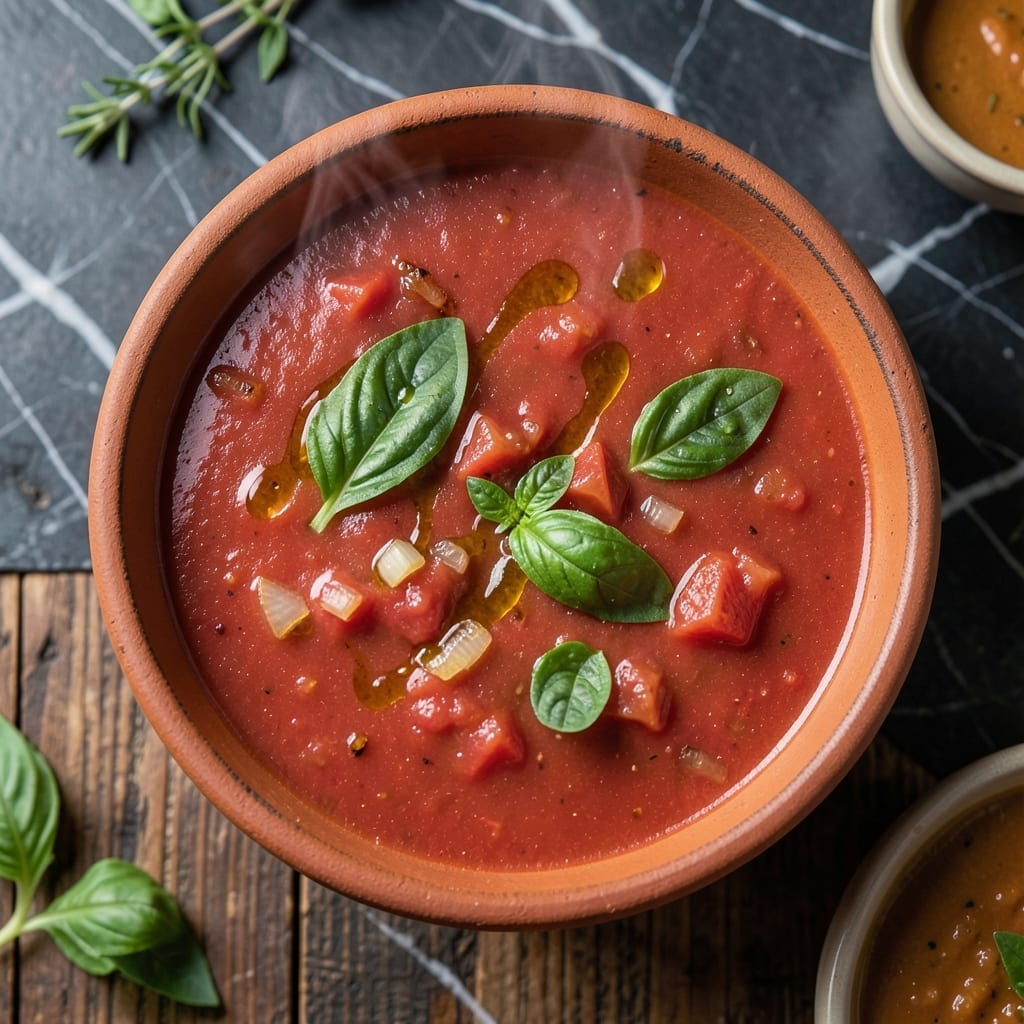
Preserving summer’s bounty has never been more rewarding than with this time-tested method for canning tomato soup at home. The secret lies in balancing fresh basil with ripe tomatoes to create a vibrant, flavorful base that stays bright even after processing.
This process ensures both safety and quality, using a pressure canner to seal in garden-fresh taste for months. The addition of basil at the right moment prevents discoloration while maintaining its aromatic punch.
You’ll end up with jars of smooth, herb-infused soup ready to warm cold winter days. Each batch captures peak-season flavor without artificial preservatives or added fillers.
Follow these steps carefully for a pantry staple that tastes like summer in every spoonful.
Ingredients for Tomato Basil Soup Recipe for Canning
Fresh tomatoes, aromatic basil, and simple pantry staples create this vibrant, garden-fresh dish.
| Ingredient | Amount | Notes |
|---|---|---|
| Ripe Tomatoes 🍅 | 12 lb | Cored and quartered, Roma or San Marzano preferred |
| Fresh Basil Leaves 🌿 | 2 cups | Loosely packed, stems removed |
| Yellow Onions 🧅 | 3 whole | Medium size, diced |
| Garlic Cloves 🧄 | 8 cloves | Peeled and minced |
| Extra-Virgin Olive Oil 🫒 | ½ cup | Divided for sautéing and finishing |
| Vegetable Stock 🥫 | 4 cups | Low-sodium preferred for canning |
| Tomato Paste 🍅 | ½ cup | Double-concentrated for depth |
| Granulated Sugar 🧂 | ¼ cup | Balances acidity of tomatoes |
| Kosher Salt 🧂 | 2 tbsp | Diamond Crystal brand recommended |
| Black Pepper 🌶️ | 1 tsp | Freshly ground preferred |
| Dried Oregano 🍃 | 2 tsp | Mediterranean variety for authenticity |
| Red Pepper Flakes 🌶️ | ½ tsp | Adjust to taste for subtle heat |
| Bottled Lemon Juice 🍋 | ½ cup | Required for safe acidity in canning |
| Heavy Cream 🥛 | 1 cup | Added post-canning for richness |
The tomatoes are the foundation—seek out peak-season Roma or San Marzano for optimal meatiness and low water content. Farmers markets often have the best selection mid-summer, but Whole Foods carries quality organic options year-round. Basil should be vibrant green with no wilting (the pre-packaged clamshells at Trader Joe’s work well). For the vegetable stock, Imagine or Pacific Foods brands offer consistent quality without additives that could affect preservation.
No fresh basil? Dried basil at one-third the amount can substitute, though the flavor profile will be more concentrated. Out of Roma tomatoes? Regular tomatoes work but may require longer cooking time to reduce excess liquid. For a vegan version, coconut milk replaces the heavy cream added post-canning. The lemon juice is non-negotiable for safe canning—never use fresh as the pH can vary dangerously.
The soup base (without cream) can be safely canned for 12-18 months in a cool, dark pantry. Once opened, transfer to the fridge and use within 5 days. The heavy cream should always be added fresh when reheating—it doesn’t can well. Always use proper canning jars and lids for safety.
Why You’ll Love This Recipe
- One-Pot Wonder: I just dump everything in and let it simmer—no fancy steps, just ripe tomatoes, fresh basil, and garlic doing their thing.
- Sunshine in a Jar: That combo of sweet tomatoes, pungent garlic, and bright basil tastes like summer no matter the season.
- Meal Prep Magic: I can it in batches, so I’ve got a quick lunch or dinner starter ready anytime.
- Pantry Superhero: Honestly, it’s cheaper than store-bought and way better—plus, I control the salt and sugar.
Step-by-Step Instructions for Tomato Basil Soup for Canning
This method ensures safe preservation while maintaining the vibrant flavor of summer tomatoes.
Step 1: Prepare and Sauté the Aromatics
Heat 0.5 cup extra-virgin olive oil in a large stockpot over medium heat. Add the 3 whole yellow onions (diced) and cook for 8-10 minutes until they become translucent and sweet-smelling, stirring occasionally to prevent browning.
Add the 8 cloves garlic cloves (minced) and cook for an additional 1-2 minutes until fragrant. Stir in the 0.5 cup tomato paste, 2 tsp dried oregano, and 0.5 tsp red pepper flakes, toasting for 1 minute to deepen the flavors.
Step 2: Incorporate Tomatoes and Simmer
Add the 12 lb ripe tomatoes (cored and quartered) to the pot, breaking them up slightly with a wooden spoon. Pour in the 4 cups vegetable stock, 0.25 cup granulated sugar, 2 tbsp kosher salt, and 1 tsp black pepper.
Bring the mixture to a boil, then reduce heat to low and simmer for 45-60 minutes, stirring occasionally, until the tomatoes have completely broken down and the soup thickens slightly.
Step 3: Blend and Season
Using an immersion blender, purée the soup until smooth and uniform. For a finer texture, process it in batches in a standard blender, being careful to vent the lid to avoid pressure buildup.
Stir in the 2 cups fresh basil leaves and 0.5 cup bottled lemon juice. Simmer for an additional 5 minutes to allow the basil to infuse the soup with its aromatic essence.
Step 4: Can the Soup for Preservation
Ladle the hot soup into clean, sterilized jars, leaving 1-inch headspace at the top. Wipe the rims, apply lids and rings, and process in a water bath canner for 40 minutes for pints or 50 minutes for quarts, adjusting for altitude as necessary.
Let the jars cool undisturbed for 12-24 hours. Check for proper seals before storing in a cool, dark place. The heavy cream is added only when reheating the soup for serving, as dairy does not preserve safely in canning.
Pro Tips For Making Tomato Basil Soup Recipe For Canning
- Blanch Tomatoes First: Plunge tomatoes in boiling water for 30 seconds, then ice bath—makes peeling them a breeze and prevents bitter skins in your soup.
- Sweat Onions Slowly: Cook onions in olive oil on low for 10 minutes until soft and sweet, not browned. I learned this the hard way: rushing gives you sharp onion flavor that lingers in the jars.
- Add Basil Late: Stir fresh basil in after cooking but before canning—heat turns it bitter if added too early. Sounds weird, but it works.
- Acidify for Safety: Add 1 tablespoon lemon juice per quart before canning to guarantee safe acidity levels. My grandmother swore by this, and she canned hundreds of jars without issue.
Pro Cooking Tips for This Recipe
Acidity Balance
Always use bottled lemon juice for canning—fresh lemon juice pH varies too much for safety. The ½ cup required ensures proper acidity to prevent botulism. I test my jars with pH strips to confirm they stay below 4.6. 🌡️
Basil Timing
Add 2 cups fresh basil during the final 5 minutes of simmering, not earlier. This preserves its bright green color and aromatic oils. Overcooking turns basil bitter and dulls its flavor impact.
Tomato Selection
Roma or San Marzano tomatoes are ideal—their low water content and meaty texture create a thicker base. I’ve found 12 lbs yields about 7 quarts of finished soup. Avoid watery heirloom varieties for canning.
Headspace Matters
Leave exactly 1-inch headspace in jars before processing. Too little causes siphoning; too much prevents proper vacuum sealing. I use a plastic ruler to measure precisely every time.
Altitude Adjustments
Increase processing time by 5 minutes per 1,000 feet above sea level. At my 3,500-foot elevation, pints need 55 minutes in the water bath. Check your local extension office for exact guidelines.
Post-Canning Cream
Never add heavy cream before canning—dairy doesn’t preserve safely. Stir in 1 cup when reheating each quart. This keeps the soup shelf-stable while allowing rich customization later. 💪
Nutrition Facts
Frequently Asked Questions
Why do I need bottled lemon juice instead of fresh?
Bottled lemon juice has a consistent acidity level, crucial for safe canning. Fresh juice pH varies and may not prevent botulism. Always use ½ cup per batch for proper acidity.
Can I use dried basil instead of fresh?
Yes, substitute ⅔ cup dried basil for 2 cups fresh. Add it earlier in cooking since dried herbs need more time to release flavor.
How long will the canned soup last?
Properly canned soup stays safe for 12-18 months in a cool, dark pantry. Once opened, use within 5 days when refrigerated.
What if my jars didn’t seal properly?
Refrigerate unsealed jars and use within 3 days. Never attempt to re-can. Check seals after 24 hours by pressing the lid center.

- 6 Egg Cake Recipe with Oil: Light as Air With Buttery Moisture - October 4, 2026
- 4 Bean Casserole Recipe: One-Pan Heartiness With Smoky Paprika Depth - October 4, 2026
- 3-Ingredient Keto Mug Cake Recipe: Microwave Magic in 2 Minutes - October 4, 2026