
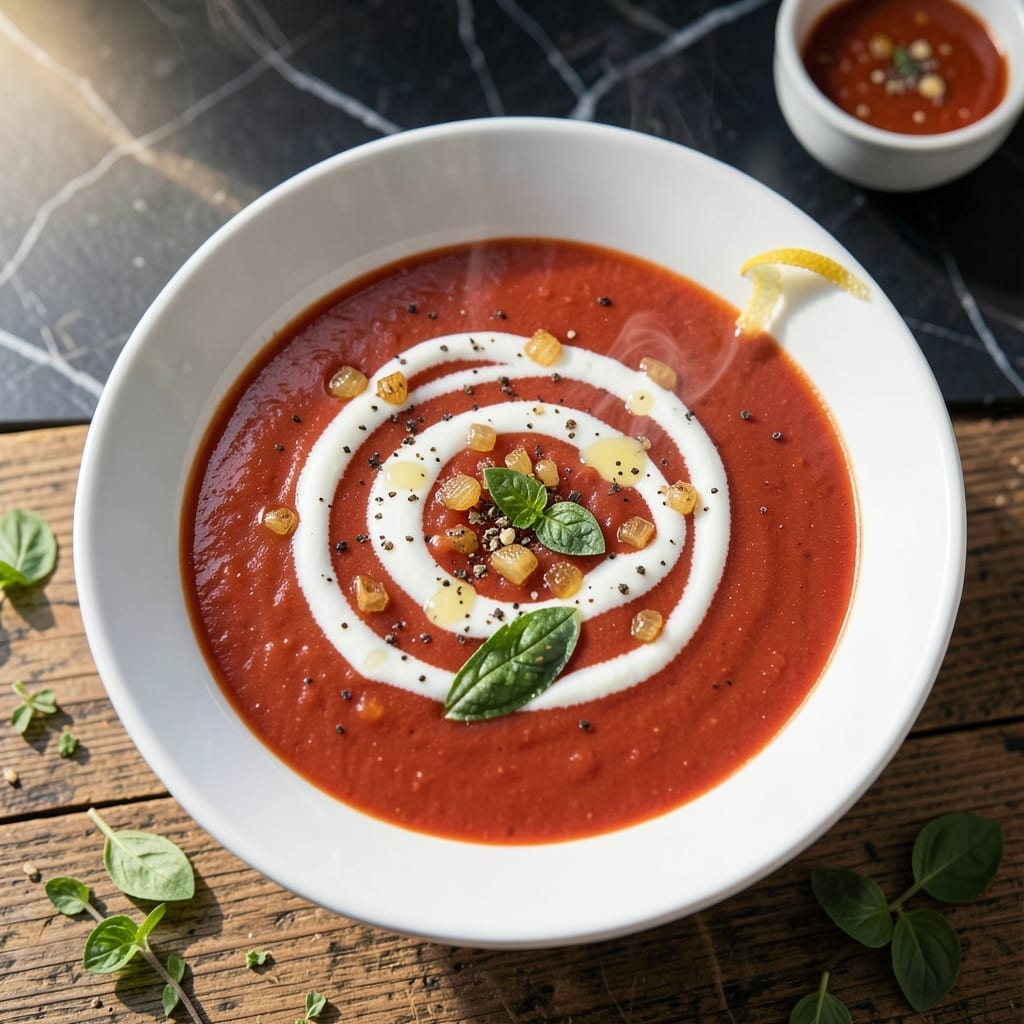
There’s something deeply comforting about a warm bowl of tomato soup, especially when it’s made with simple pantry staples. This version transforms ordinary tomato sauce into a velvety, rich soup that feels anything but ordinary.
What makes this recipe special is its simplicity and speed. In under 30 minutes, you can create a soup that tastes like it simmered all day. The key is balancing the acidity of tomato sauce with a touch of sweetness and creaminess.
You’ll end up with a smooth, flavorful soup that pairs perfectly with grilled cheese or crusty bread. It’s the kind of dish that turns an ordinary meal into a cozy, satisfying experience.
Versatile and easy to customize with herbs or a splash of cream, this soup delivers comfort in every spoonful.
Ingredients for Tomato Soup Recipe Using Tomato Sauce
Pantry staples turn into velvety comfort in under thirty minutes.
| Ingredient | Amount | Notes |
|---|---|---|
| Tomato Sauce 🍅 | 4 cups | Plain, unsweetened variety |
| Vegetable Broth 🥕 | 2 cups | Low-sodium preferred for control |
| Heavy Cream 🥛 | ½ cup | Full-fat for creaminess |
| Unsalted Butter 🧈 | 2 tbsp | For richness and depth |
| Yellow Onion 🧅 | 1 whole | Medium-sized, finely diced |
| Garlic Cloves 🧄 | 3 cloves | Minced for aromatic base |
| Dried Basil 🌿 | 1 tsp | Or fresh basil leaves if available |
| Dried Oregano 🍃 | 1 tsp | Mediterranean variety preferred |
| Sugar 🍚 | 1 tbsp | Balances acidity, adjust to taste |
| Salt 🧂 | 1 tsp | Diamond Crystal kosher preferred |
| Black Pepper 🌶️ | ½ tsp | Freshly ground for best flavor |
| Baking Soda 🧂 | ¼ tsp | Optional, neutralizes acidity |
The tomato sauce is the star here. San Marzano canned sauce (look for Italian brands at Whole Foods or specialty stores) has the best balance of sweetness and acidity. If using store-brand, taste first—some can be overly tart. The vegetable broth adds depth, and Better Than Bouillon paste is my go-to for rich flavor without the sodium overload.
No heavy cream? Half-and-half or whole milk work in a pinch (slightly less rich). Swap dried herbs for fresh at one-third the amount—just add them at the end. For extra body, blend in a cooked potato (sounds weird, tastes great). The sugar can be honey or maple syrup if you prefer, but keep the quantity the same.
Soup keeps beautifully—actually improves overnight. Store in an airtight container for up to 5 days in the fridge, or freeze for 3 months. Reheat gently to avoid curdling the cream (worth the extra minute).
Why You’ll Love This Recipe
- No Chopping Needed: I just dump the tomato sauce straight in—no peeling or dicing required.
- Velvety Richness: The heavy cream and butter make it so smooth I could drink it with a straw.
- Freezer Friendly: I double the batch and freeze half for those nights I’m too tired to cook.
- Pantry Stretch: Between us, it turns a $1 can of tomato sauce into something restaurant-worthy.
Step-by-Step Instructions for Tomato Soup Using Tomato Sauce
This method turns simple pantry items into a rich, velvety soup that tastes like it simmered all day.
Step 1: Sauté Aromatics for Depth of Flavor
Melt 2 tbsp Unsalted Butter in a large pot over medium heat. Add the finely diced 1 whole Yellow Onion and cook for 5-6 minutes until translucent and just beginning to caramelize at the edges.
Real talk: this is where the magic starts. Add the 3 cloves Garlic Cloves and cook for 30 seconds until fragrant—don’t let it brown. Stir in 1 tsp Dried Basil, 1 tsp Dried Oregano, 1 tbsp Sugar, 1 tsp Salt, and 0.5 tsp Black Pepper. The sugar balances the acidity, and the herbs bloom in the butter.
Step 2: Simmer the Base for Richness
Pour in the 4 cups Tomato Sauce and 2 cups Vegetable Broth. Stir well and bring to a gentle simmer. Here’s the thing—if you’re using 0.25 tsp Baking Soda, add it now. It neutralizes acidity without dulling flavor, but use it sparingly.
Reduce heat to low and let it simmer for 15 minutes. You’ll notice the soup deepens in color and aroma. Taste and adjust seasoning if needed. The goal is a balanced, vibrant base before adding the cream.
Step 3: Blend for Silky Smooth Texture
Remove the pot from heat and let it cool slightly for 5 minutes. I know it seems weird, but blending hot liquids can be dangerous. Use an immersion blender to purée until completely smooth. If using a countertop blender, work in batches and vent the lid to avoid pressure buildup.
This step transforms the soup from chunky to luxuriously velvety. The onion and garlic should be fully incorporated, leaving no texture behind—just pure, creamy comfort in every spoonful.
Step 4: Finish with Cream for Luxurious Body
Return the pot to low heat and stir in the 0.5 cup Heavy Cream. Warm the soup gently for 3-4 minutes—just until heated through. Don’t let it boil, or the cream may curdle. The soup should coat the back of a spoon with a glossy, rich finish.
Taste one last time. The cream mellows the acidity and adds a luscious mouthfeel, while the herbs and aromatics shine through. If it needs a touch more sweetness or salt, adjust now.
Ladle into bowls and serve immediately. The contrast of the warm, creamy soup with the bright, herby notes is pure comfort in a bowl.
Pro Tips For Making Tomato Soup Recipe Using Tomato Sauce
- Sauté the Onion Slow: Cook your yellow onion in butter over medium-low heat for at least 8-10 minutes until translucent—I learned this the hard way after rushing it and ending up with a harsh, raw onion taste in my soup.
- Bloom the Tomato Sauce: After adding the tomato sauce, let it cook with the onions for 3-4 minutes before adding broth. This builds depth and removes any canned tinny flavor.
- Temper the Cream: Before stirring in the heavy cream, mix a ladle of hot soup into the cold cream first, then add it back. Sounds fussy, but it prevents that ugly curdled texture.
- Use Full-Fat Broth: Skip the low-sodium or watery vegetable broth here—this soup needs the richness to balance the acidity of the tomato sauce, especially when using unsalted butter.
Troubleshooting This Dish
Too Thin or Watery
If your soup lacks body, simmer uncovered for an extra 10-15 minutes to reduce and concentrate flavors. A pinch of cornstarch slurry (1 tbsp mixed with 1 tbsp cold water) stirred in at the end works wonders. 💡
Overly Acidic Taste
Tomato sauce can be tart. Balance it with an extra 1 tbsp Sugar or a pinch of baking soda (⅛ tsp at a time). The baking soda neutralizes acidity without adding sweetness, but use sparingly.
Cream Separating
If the cream curdles, remove from heat immediately and whisk vigorously. To prevent this, ensure cream is at room temperature before adding. Reheat gently on low heat and avoid boiling.
Lumpy Texture
Blend longer for ultra-smooth results. If using a countertop blender, strain through a fine-mesh sieve to catch any stubborn bits. For immersion blenders, move in circular motions for 30-60 seconds.
Bland Flavor
Boost depth with a splash of balsamic vinegar (1 tsp) or a pinch of red pepper flakes. Fresh herbs like basil or oregano added at the end brighten the soup beautifully. 🌟
Burnt Bottom
Use a heavy-bottomed pot and stir frequently, especially when sautéing onions. If it sticks, deglaze with ¼ cup broth and scrape up browned bits for extra flavor. Always cook on medium-low heat.
Nutrition Facts
Frequently Asked Questions
Can I use canned tomatoes instead of sauce?
Yes! Blend 1 (28 oz) can of whole tomatoes first, then use in place of sauce. Strain if you prefer a smoother texture.
How do I make it dairy-free?
Swap the cream for coconut milk or cashew cream. Both add richness without dairy. Simmer gently to avoid separation.
Why add sugar to tomato soup?
It balances the natural acidity of tomatoes. Start with 1 tbsp, then adjust. A pinch of baking soda works too but use sparingly.
Can I make this ahead?
Store in an airtight container for up to 5 days in the fridge. Flavors deepen overnight. Freeze for up to 3 months.

- 6 Egg Cake Recipe with Oil: Light as Air With Buttery Moisture - October 4, 2026
- 4 Bean Casserole Recipe: One-Pan Heartiness With Smoky Paprika Depth - October 4, 2026
- 3-Ingredient Keto Mug Cake Recipe: Microwave Magic in 2 Minutes - October 4, 2026