
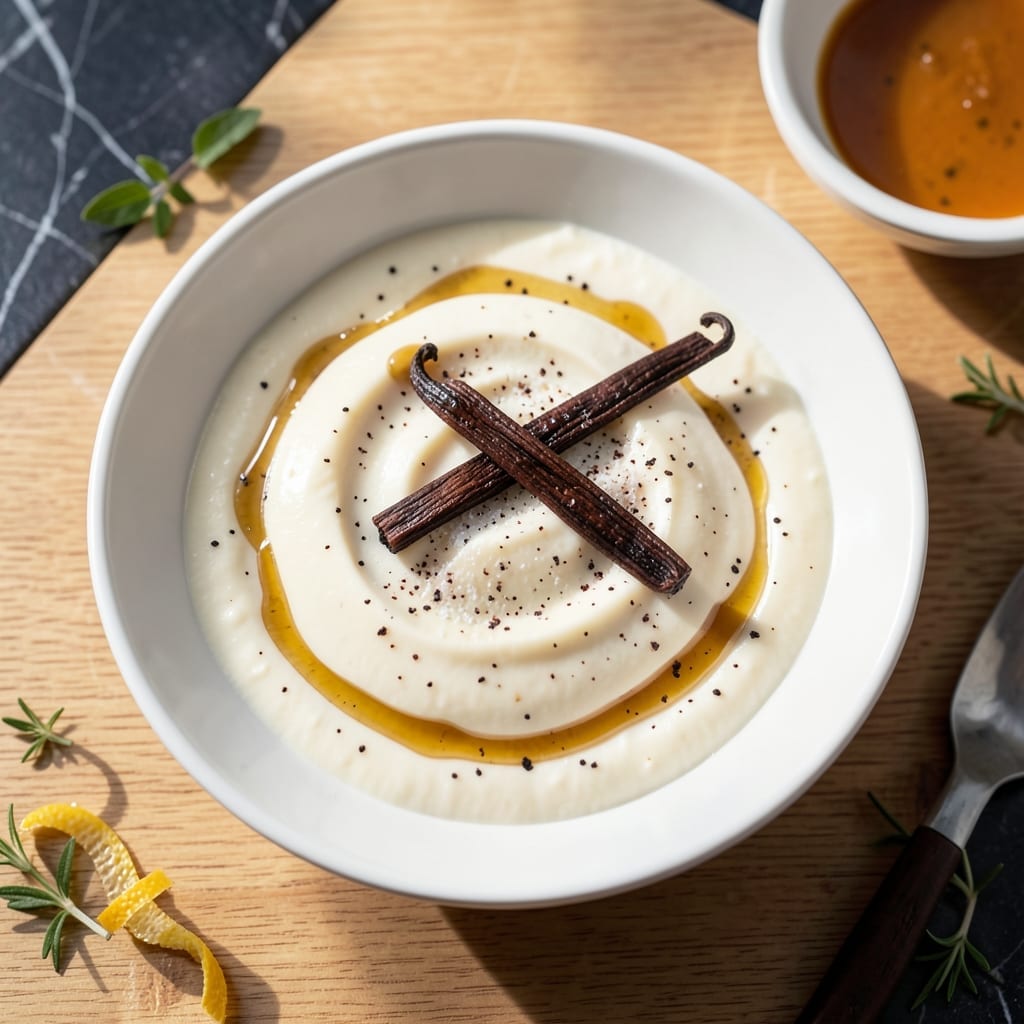
This egg-based custard delivers creamy perfection without relying on cornstarch as a thickener. The secret lies in the slow, gentle cooking process that allows the eggs to create their own rich, velvety texture.
I’ve refined this method over time to ensure a smooth, lump-free custard every time. The key is patience—low heat and constant stirring prevent the eggs from curdling while building that signature thickness.
What you’ll get is a silky, spoonable custard with pure vanilla flavor that shines in desserts or as a standalone treat. It’s a classic technique that never fails to impress.
Perfect for filling pastries, topping fruit, or enjoying on its own. Here’s how to make it.
Ingredients for Vanilla Custard Recipe Without Cornstarch
Whole milk, cream, and eggs create this luscious custard without cornstarch.
| Ingredient | Amount | Notes |
|---|---|---|
| Whole Milk 🥛 | 2 cups | Full-fat for creaminess |
| Heavy Cream 🥛 | ½ cup | Cold, at least 36% fat |
| Granulated Sugar 🍚 | ½ cup | Fine white sugar preferred |
| Large Egg Yolks 🥚 | 6 pieces | Room temperature for even mixing |
| Pure Vanilla Extract 🌿 | 1 tbsp | Real vanilla, not imitation |
| Vanilla Bean 🌿 | 1 whole | Split and scraped |
| Salt 🧂 | ¼ tsp | Fine sea salt |
| Unsalted Butter 🧈 | 1 tbsp | For rich finish |
The dairy is the foundation here. Whole milk from a trusted brand like Organic Valley or Horizon gives the best texture. Heavy cream should be at least 36% fat—check the label. Egg yolks are non-negotiable for richness; save the whites for meringues. I always use room temperature eggs to prevent shocking the custard during cooking.
No vanilla bean? Double the extract (2 tbsp total) works well. Want a deeper flavor? Vanilla bean paste adds flecks and intensity. Sugar can be swapped for baker’s sugar if you want ultra-fine texture. The butter at the end is optional but adds a silky mouthfeel—European-style unsalted is my go-to for its higher fat content.
Custard keeps 3-4 days in the fridge, covered with plastic directly on the surface to prevent a skin. Best served slightly warm or at room temperature. Freezing isn’t recommended—it separates upon thawing.
Why You’ll Love This Recipe
- No-Fuss Mixing: I just whisk the egg yolks with sugar, heat the milk and cream, then combine—no finicky thickeners to worry about.
- Rich, Velvety Taste: The heavy cream and egg yolks create this luxurious texture that’s pure comfort in every spoonful.
- Dessert or Filling: Honestly, I use it for trifles, tarts, or just eat it straight from the bowl—it’s that versatile.
- Keeps Well: Between us, it tastes even better the next day, so I always make extra to stash in the fridge.
Step-by-Step Instructions for Vanilla Custard Without Cornstarch
Achieve a silky-smooth texture through careful temperature control and gentle, consistent stirring.
Step 1: Infuse the Dairy with Vanilla Flavor
In a medium saucepan, combine the 2 cups Whole Milk and 0.5 cup Heavy Cream. Split the 1 whole Vanilla Bean lengthwise and scrape the seeds into the pan, then add the pod as well. This double infusion ensures maximum vanilla flavor.
Heat the mixture over medium heat until it just begins to simmer—you’ll see tiny bubbles forming around the edges. Remove from heat immediately and let steep for 10 minutes to allow the vanilla to fully infuse the dairy. This gentle process extracts the aromatic compounds without scorching.
Step 2: Whisk Egg Yolks with Sugar and Seasonings
In a separate bowl, whisk together the 6 pieces Large Egg Yolks and 0.5 cup Granulated Sugar until the mixture turns pale yellow and slightly thickens. This step incorporates air, which lightens the custard and helps prevent curdling during cooking.
Add the 0.25 tsp Salt and 1 tbsp Pure Vanilla Extract to the egg mixture and whisk to combine. The salt balances the sweetness, while the vanilla extract adds an extra layer of depth to complement the infused vanilla bean. Ensure all ingredients are fully integrated before proceeding.
Step 3: Temper the Egg Mixture with Hot Dairy
Slowly pour the warm dairy mixture into the egg yolk mixture while whisking constantly. This tempering process gradually raises the temperature of the eggs, preventing them from scrambling when exposed to direct heat. Pour in a thin, steady stream to maintain control.
Once fully combined, return the mixture to the saucepan. The custard base should be smooth and slightly frothy. If you notice any lumps, strain the mixture through a fine-mesh sieve to remove the vanilla pod and ensure a perfectly smooth texture.
Step 4: Cook the Custard to the Perfect Consistency
Place the saucepan over medium-low heat and cook the custard, stirring constantly with a wooden spoon or silicone spatula. The goal is to heat it gently and evenly—this should take 8-12 minutes. Avoid increasing the heat, as high temperatures can cause the custard to curdle or scorch.
Continue stirring until the custard thickens enough to coat the back of the spoon, leaving a clear path when you run your finger through it. At this stage, the custard should reach 170-175°F on an instant-read thermometer. This temperature ensures the eggs are fully set without overcooking.
Step 5: Finish with Butter for a Rich, Silky Texture
Remove the custard from heat and immediately stir in the 1 tbsp Unsalted Butter until fully melted and incorporated. The butter adds a luxurious richness and glossy finish to the custard, enhancing its creamy mouthfeel.
Transfer the custard to a clean bowl and press plastic wrap directly onto the surface to prevent a skin from forming. Let it cool to room temperature, then refrigerate for at least 4 hours (or overnight) to allow it to fully set. The chilled custard will have a smooth, velvety consistency perfect for serving.
Pro Tips For Making Vanilla Custard Recipe Without Cornstarch
- Temper the Yolks: Slowly whisk about 1/2 cup of the hot milk mixture into the egg yolks before combining—this prevents scrambled eggs. I learned this the hard way after ruining two batches with curdled custard.
- Use Full-Fat Dairy: Skip the low-fat milk; the heavy cream and whole milk combo gives the custard its luxurious texture. Sounds indulgent, but it actually changes the outcome.
- Low and Slow Heat: Keep the heat at medium-low and stir constantly—high heat will make the custard separate or scorch. After burning one pot, I finally figured out patience is non-negotiable here.
- Strain Before Chilling: Pour the custard through a fine-mesh sieve to remove any cooked bits for a silky-smooth finish. It’s an extra step, but I skip it when I’m lazy, and the dish is noticeably better when I don’t.
Flavor Customization for This Recipe
Citrus Zest Variation
Add 1 tbsp lemon or orange zest to the warm dairy mixture during the 10-minute steeping. The citrus oils brighten the vanilla and add a refreshing twist. I love the balance this creates with the rich custard base. 🌟
Spiced Custard
For a warm, aromatic version, add ½ tsp ground cinnamon and ¼ tsp ground nutmeg to the egg yolk mixture. A pinch of ground cardamom also works beautifully for depth. These spices complement the vanilla without overpowering it.
Chocolate Infusion
Add 2 oz finely chopped dark chocolate to the hot custard just after removing from heat. Stir until melted and fully incorporated. This creates a luxurious chocolate custard perfect for desserts. Use 70% cacao for the best results.
Coffee Flavor Twist
Dissolve 1 tbsp instant espresso powder in 1 tbsp hot water and add it to the egg mixture. The coffee enhances the vanilla and adds a subtle bitterness that balances the sweetness. It’s a sophisticated flavor that’s surprisingly easy to achieve.
Boozy Enhancement
Stir in 1 tbsp bourbon or dark rum at the end, just before adding the butter. The alcohol adds complexity and depth to the custard.
Herbal Notes
Infuse the dairy with 2-3 fresh lavender sprigs or 1 sprig rosemary during the steeping phase. Remove the herbs before tempering the eggs. These floral and piney notes add an elegant, unexpected dimension to the custard.
Nutrition Facts
Frequently Asked Questions
Why use egg yolks instead of whole eggs?
Egg yolks contain more fat and emulsifiers, creating a richer, creamier texture. Whole eggs can work but may result in a slightly less velvety finish. For best results, stick to 6 yolks as specified.
Can I use a different thickener if I don’t have eggs?
This recipe relies on eggs as the sole thickener. For egg-free versions, arrowroot or tapioca starch can work, but they’ll change the texture. Stick to eggs for the classic custard consistency.
How do I prevent lumps in my custard?
Strain the mixture after tempering the eggs and before cooking. Use a fine-mesh sieve to catch any undissolved bits. Stirring constantly on medium-low heat also helps.
Can I make this custard ahead of time?
Yes! It keeps well in the fridge for 3-4 days. Press plastic wrap directly on the surface to prevent a skin. Best served slightly warm or at room temperature.

- 6 Egg Cake Recipe with Oil: Light as Air With Buttery Moisture - October 4, 2026
- 4 Bean Casserole Recipe: One-Pan Heartiness With Smoky Paprika Depth - October 4, 2026
- 3-Ingredient Keto Mug Cake Recipe: Microwave Magic in 2 Minutes - October 4, 2026