
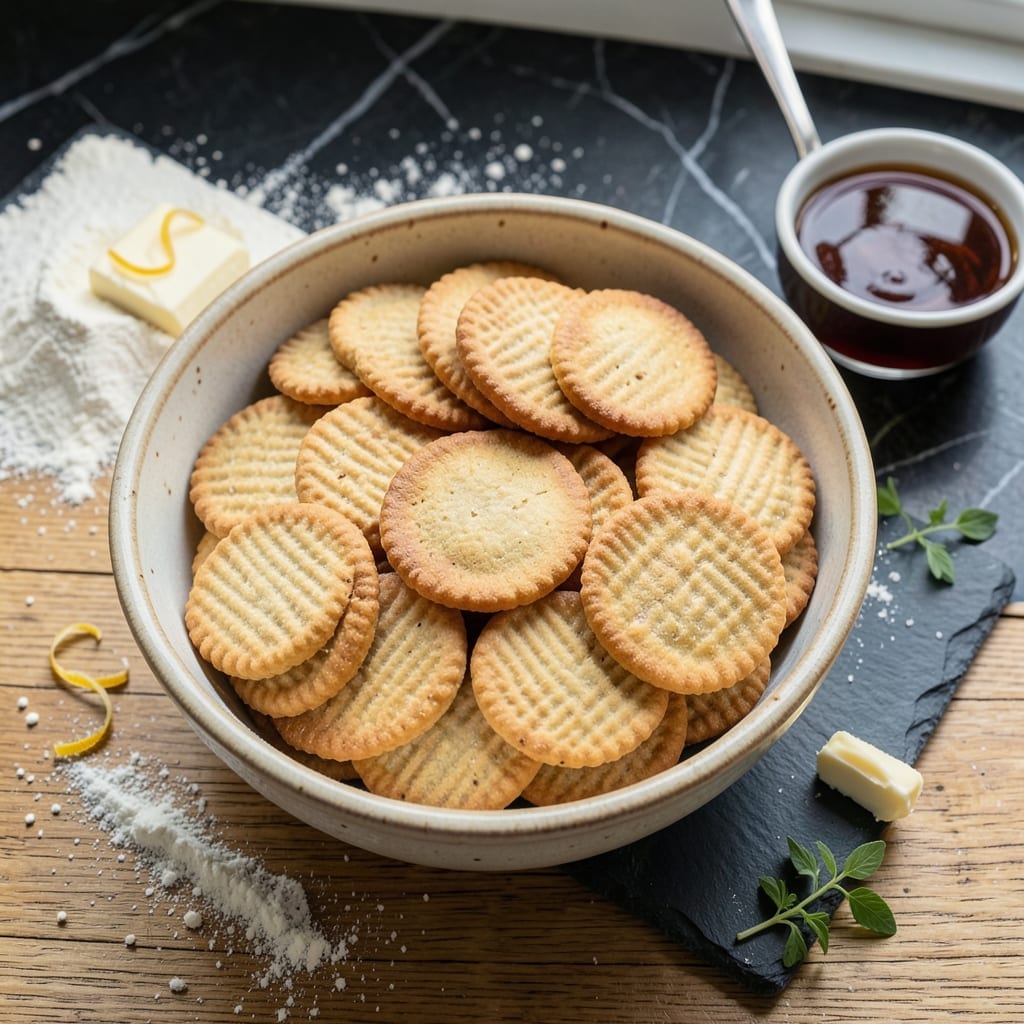
These delicate vanilla wafers are a testament to how simple ingredients can create extraordinary results. The secret lies in using real vanilla and high-quality butter for that rich, authentic flavor.
I developed this recipe to be versatile—whether you want classic vanilla or creative variations like chocolate-dipped or spiced. The dough comes together quickly and bakes into perfectly golden rounds with a tender crumb.
Each bite delivers a buttery sweetness that pairs beautifully with coffee, tea, or as a base for desserts. The recipe scales easily, so you can make a small batch or enough to share.
Bake a test cookie first to check the time—ovens vary. This method ensures consistent results every time.
Ingredients for Vanilla Wafer Recipe Ideas
Quality ingredients create these delicate buttery wafers with authentic vanilla richness in every bite.
| Ingredient | Amount | Notes |
|---|---|---|
| All-Purpose Flour 🌾 | 2 cups | Sifted for even texture |
| Granulated Sugar 🍚 | ¾ cup | Fine grain for smooth mixing |
| Unsalted Butter 🧈 | 1 cup | Softened to room temperature |
| Large Egg 🥚 | 1 whole | Room temperature for binding |
| Pure Vanilla Extract 🌿 | 2 tsp | Real vanilla for authentic flavor |
| Baking Powder 🧂 | 1 tsp | Fresh for optimal rise |
| Salt 🧂 | ¼ tsp | Fine sea salt preferred |
| Whole Milk 🥛 | 2 tbsp | Adjusts dough consistency |
| Vanilla Bean Seeds 🌿 | 1 whole | Scraped from pod, optional |
| Powdered Sugar 🍚 | ¼ cup | For dusting finished wafers |
The butter and vanilla are non-negotiable here. Use high-fat European-style butter for richer flavor—Plugrá or Kerrygold are excellent choices. Real vanilla extract (not imitation) makes a noticeable difference. For an extra layer of flavor, split and scrape a vanilla bean. Most supermarkets carry these in the baking aisle, but specialty stores like Williams Sonoma have premium options.
No vanilla bean? Double the extract for similar depth. Short on milk? Heavy cream or half-and-half works in a pinch. The flour should be all-purpose—cake flour makes them too delicate. If you’re out of baking powder, baking soda plus cream of tartar at a 1:2 ratio substitutes well. Egg can be swapped for 1/4 cup unsweetened applesauce if needed.
Dough keeps 2-3 days refrigerated in an airtight container. Baked wafers stay fresh 5-7 days at room temperature in a sealed tin. For longer storage, freeze the dough balls and bake straight from frozen—add 1-2 minutes to baking time.
Why You’ll Love This Recipe
- One Bowl Wonder: I just dump everything in, mix, and bake—no fancy steps, just flour, sugar, butter, and that rich vanilla kicking in.
- Buttery Sweetness: The combo of real butter and vanilla extract gives that melt-in-your-mouth flavor you can’t fake.
- Endless Uses: I crumble them over ice cream, sandwich with jam, or just eat them straight from the cooling rack.
- Pantry Staples: All-purpose flour, sugar, and butter are already in my kitchen, so I can make these anytime the craving hits.
Step-by-Step Instructions for Vanilla Wafers
This method delivers crisp, buttery vanilla wafers with professional precision and consistency.
Step 1: Cream Butter and Sugars to Optimal Consistency
In a stand mixer fitted with the paddle attachment, beat the 1 cup Unsalted Butter with the 0.75 cup Granulated Sugar on medium speed for 3-4 minutes. The mixture should become pale and noticeably increased in volume, indicating proper aeration.
Add the 1 whole Large Egg, 2 tsp Pure Vanilla Extract, and 1 whole Vanilla Bean Seeds (if using) to the butter-sugar mixture. Beat on medium-low speed for 1-2 minutes until fully emulsified. The egg should be completely incorporated with no visible streaks, and the vanilla should be evenly distributed.
Step 2: Incorporate Dry Ingredients with Precision
In a separate bowl, whisk together the 2 cups All-Purpose Flour, 1 tsp Baking Powder, and 0.25 tsp Salt. This ensures even distribution of leavening agents for consistent rise in every wafer.
With the mixer on low speed, gradually add the dry ingredients to the wet mixture in 3 additions, allowing each to incorporate fully before adding more. Scrape down the sides of the bowl as needed. The dough will be thick and slightly crumbly at this stage.
Step 3: Adjust Dough Consistency and Chill
Add the 2 tbsp Whole Milk to the dough and mix on low speed just until it comes together. The milk hydrates the flour and creates a cohesive, workable dough. Avoid overmixing, as this can develop gluten and make the wafers tough.
Divide the dough into 2 portions, flatten into discs, and wrap in plastic. Chill for at least 1 hour or up to 24 hours. This resting period relaxes the gluten and makes the dough easier to roll thin, which is crucial for achieving the classic wafer texture.
Step 4: Roll, Cut, and Bake to Golden Perfection
Preheat the oven to 350°F and line baking sheets with parchment paper. On a lightly floured surface, roll out one dough disc to ⅛-inch thickness. The thinner the dough, the crispier the wafers will be.
Cut the dough into 2-inch rounds using a cookie cutter or glass. Place the rounds 1 inch apart on the prepared baking sheets. Bake for 10-12 minutes until the edges are just beginning to turn light golden brown. Rotate the pans halfway through for even baking.
Step 5: Cool and Finish with Powdered Sugar
Allow the wafers to cool on the baking sheets for 5 minutes before transferring to a wire rack to cool completely. They will crisp up as they cool. This cooling step is essential—handling them while warm can cause breakage.
Once completely cooled, dust the wafers lightly with the 0.25 cup Powdered Sugar using a fine-mesh sieve. The powdered sugar adds a delicate sweetness and professional finish. Store in an airtight container at room temperature for up to 1 week.
Pro Tips For Making Vanilla Wafer Recipe Ideas
- Chill the Dough: Let the dough rest in the fridge for at least 30 minutes—this prevents the butter from melting too fast and keeps the wafers from spreading into one giant cookie.
- Use Room-Temp Butter: Take the unsalted butter out 1-2 hours before baking; it creams smoother with the sugar, and I learned this the hard way after ending up with dense, flat wafers.
- Measure Flour Right: Spoon the all-purpose flour into your measuring cup and level it off—scooping directly from the bag packs it down and makes the batter too dry.
- Double the Vanilla: Sounds weird, but it works: add an extra ½ teaspoon of pure vanilla extract for a bolder flavor that actually shines through the butter and sugar.
Creative Variations of This vanilla wafer recipe ideas
Chocolate-Dipped Luxe
Melt 1 cup semi-sweet chocolate chips with 1 tbsp coconut oil for a smooth dipping consistency. Dip half of each cooled wafer and place on parchment paper. Sprinkle with crushed pistachios or sea salt flakes before the chocolate sets. 🔥
Citrus Twist
Add 1 tbsp lemon zest or orange zest to the dough for a bright, zesty flavor. I love pairing this with a citrus glaze made from ½ cup powdered sugar and 1 tbsp fresh juice. The acidity cuts through the sweetness beautifully.
Spiced Chai Version
Mix 1 tsp ground cinnamon, ½ tsp ground cardamom, and ¼ tsp ground ginger into the dry ingredients. These warm spices transform the classic vanilla into a cozy chai-inspired treat. Perfect with a cup of tea.
Coconut Delight
Replace ¼ cup flour with unsweetened shredded coconut for a tropical twist. Toast the coconut in a dry pan for 2-3 minutes first to enhance its flavor. The texture becomes wonderfully chewy.
Almond Flour Swap
Substitute ½ cup all-purpose flour with almond flour for a nuttier, gluten-reduced option. The dough will be slightly more delicate, so roll it between parchment sheets. I find this version has a lovely shortbread-like quality. ✨
Espresso Buzz
Add 1 tsp instant espresso powder to the dry ingredients for a subtle coffee kick. This pairs especially well with the chocolate-dipped variation, creating a mocha effect that coffee lovers adore.
Nutrition Facts
Frequently Asked Questions
Can I make these without a stand mixer?
Yes! Cream the butter and sugar with a hand mixer or by hand using a wooden spoon. It’ll take 5-7 minutes of vigorous mixing to achieve the right texture.
Why did my wafers spread too much?
This usually happens if the dough wasn’t chilled long enough or the oven wasn’t preheated to 350°F. Ensure the dough is cold and firm before rolling.
Can I use margarine instead of butter?
Margarine works but may affect flavor and texture. Butter’s fat content gives these their rich, crisp quality. If substituting, use a high-fat margarine and chill the dough longer.

- 6 Egg Cake Recipe with Oil: Light as Air With Buttery Moisture - October 4, 2026
- 4 Bean Casserole Recipe: One-Pan Heartiness With Smoky Paprika Depth - October 4, 2026
- 3-Ingredient Keto Mug Cake Recipe: Microwave Magic in 2 Minutes - October 4, 2026