
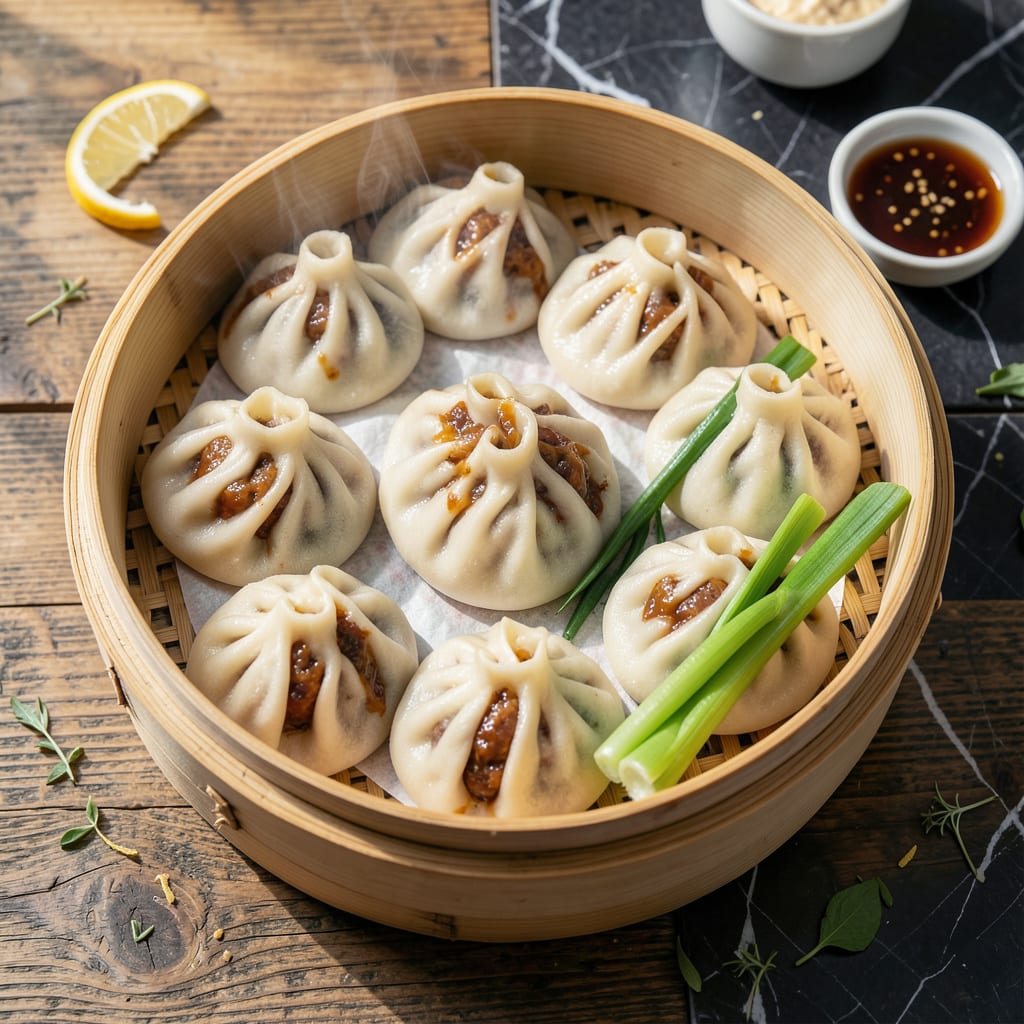
These fluffy, cloud-like buns redefine what vegan baking can achieve. The dough comes together with simple pantry staples and a touch of patience.
Steaming is the key to their signature soft texture. Each bite delivers a delicate, slightly sweet wrapper perfect for savory fillings or enjoying plain.
Ingredients for Vegan Steamed Bao Buns
Simple pantry ingredients create these pillowy soft vegan buns with ease.
| Ingredient | Amount | Notes |
|---|---|---|
| All-Purpose Flour 🌾 | 3 cups | Plus extra for dusting |
| Instant Yeast 🍃 | 2 ¼ tsp | Or active dry yeast |
| Granulated Sugar 🍚 | ¼ cup | For activating yeast |
| Warm Water 💧 | 1 cup | 110°F, not hot |
| Unsweetened Soy Milk 🥛 | ½ cup | Warmed, vegan alternative |
| Vegetable Oil 🫒 | 2 tbsp | Neutral flavor preferred |
| Baking Powder 🧂 | 1 tsp | For extra lift |
| Salt 🧂 | ½ tsp | Fine sea salt |
| Rice Vinegar 🍋 | 1 tsp | Or apple cider vinegar |
| Cornstarch 🌽 | 1 tbsp | For soft texture |
| Sesame Oil 🫒 | ½ tsp | For brushing buns |
The flour quality matters here. King Arthur or Bob’s Red Mill all-purpose gives consistent results. Instant yeast is ideal for quick activation, but active dry yeast works with an extra 5-10 minutes proofing time. Use a thermometer for the warm water—110°F is perfect (too hot kills the yeast, too cold slows activation). The soy milk adds richness without dairy; Silk or Westsoy brands are reliable.
No soy milk? Oat or almond milk works at a 1:1 ratio. Out of instant yeast? Use active dry at the same amount—just let it bloom first. The vegetable oil can be swapped for melted coconut oil (neutral flavor). For extra softness, some bakers add 1 tbsp vital wheat gluten, but it’s not essential. The rice vinegar helps tenderize the dough—don’t skip it (or sub apple cider vinegar).
The dough can rest overnight in the fridge for deeper flavor. Once steamed, buns keep 3-4 days sealed at room temperature. Freeze for up to 1 month—re-steam straight from frozen. Always bring ingredients to room temperature before mixing for best rise.
Why You’ll Love This Recipe
- No Fuss Dough: I love that the instant yeast means I can skip the long proofing time—just mix, shape, and steam.
- Pillowy Perfection: The soy milk gives them this melt-in-your-mouth softness that’s honestly addictive.
- Fill or Feast: I stuff them with BBQ jackfruit one day, sweet red bean paste the next. Endless options.
- Budget Friendly: All-purpose flour and a few pantry staples make a dozen buns for pennies. Leftovers? They freeze beautifully.
Step-by-Step Instructions for Vegan Steamed Bao Buns
Master the technique for achieving that signature fluffy texture and soft, pillowy finish.
Step 1: Activate the Yeast and Prepare Wet Mixture
In a stand mixer bowl, whisk together the 1 cup Warm Water, 0.25 cup Granulated Sugar, and 2.25 tsp Instant Yeast. Let this sit for 5-7 minutes until the mixture becomes frothy and cloudy—this confirms your yeast is active and ready to work its magic.
Once the yeast mixture is bubbling, add the 0.5 cup Unsweetened Soy Milk, 2 tbsp Vegetable Oil, 1 tsp Rice Vinegar, and 0.5 tsp Salt. The vinegar and soy milk combination creates the ideal environment for a soft, slightly tangy dough that’s perfectly vegan.
Step 2: Incorporate Dry Ingredients and Knead
In a separate bowl, sift together the 3 cups All-Purpose Flour, 1 tsp Baking Powder, and 1 tbsp Cornstarch. The cornstarch is the secret to that ultra-soft, velvety texture bao buns are known for. Slowly add the dry ingredients to the wet mixture in the stand mixer.
Using the dough hook attachment, knead on medium-low speed for 8-10 minutes until the dough is smooth, elastic, and slightly tacky but not sticky. If the dough clings to the bowl, add a small amount of flour, 1 tablespoon at a time, but avoid adding too much—this dough should remain soft for the best results.
Step 3: First Rise Until Doubled in Size
Transfer the dough to a lightly floured surface and shape it into a smooth ball. Place it in a greased bowl, cover with a damp kitchen towel, and let it rise in a warm, draft-free place for 1 to 1.5 hours, or until it has doubled in size.
The ideal rising environment is between 80-85°F. I recommend placing the bowl on top of the oven (turned off) with a bowl of hot water beneath it to create a warm, humid atmosphere. The dough should spring back slowly when gently pressed with a finger.
Step 4: Shape and Second Rise
Once the dough has risen, punch it down gently to release the air. Turn it out onto a floured surface and divide it into 12 equal portions, about 70-75 grams each. Roll each piece into a ball, then flatten into a 3-inch circle, leaving the center slightly thicker than the edges for a classic bao shape.
Place each shaped bun on a square of parchment paper to prevent sticking during steaming. Cover the buns with a damp towel and let them rise for 30-45 minutes until they have puffed up noticeably. This second rise ensures the buns will be light and airy after steaming.
Step 5: Steam to Pillowy Perfection
Bring 1-2 inches of water to a rolling boil in a wok or large pot fitted with a bamboo steamer. Line the steamer with additional parchment paper if needed. Place the buns in the steamer, leaving 1 inch of space between each to allow for expansion.
Cover and steam over high heat for 15 minutes. Do not lift the lid during steaming, as the sudden temperature change can cause the buns to deflate. Once done, turn off the heat and let them sit covered for 2 minutes before removing. Brush the tops with 0.5 tsp Sesame Oil for a subtle aroma and sheen. Serve warm.
Pro Tips For Making Vegan Steamed Bao Buns
- Proof Properly: Let the dough rise in a warm spot for 1-2 hours until doubled—rushing this step with cold water or a drafty kitchen gives you dense, sad buns.
- Use Warm Liquids: Mix your yeast with water and soy milk at about 110°F, any hotter and you’ll kill the yeast, any cooler and it won’t activate.
- Skip Cold Ingredients: Pull your soy milk out of the fridge 30 minutes early—cold liquids shock the yeast and slow down the rise.
- Steam on High: Bring your steaming water to a full rolling boil before adding the buns, then keep the heat high for 15 minutes to get that perfect puff.
Storing and Reheating This vegan steamed bao buns
Room Temperature Storage
Let the buns cool completely before storing to prevent condensation. Place them in an airtight container lined with a paper towel to absorb moisture. They’ll stay soft for 3-4 days at room temperature, though I find they’re best within 2 days. 💡
Refrigerator Storage
For longer freshness, refrigerate in a sealed container with parchment between layers. They’ll keep for up to 1 week. To revive, steam for 5-7 minutes until warm and fluffy again. The cold can dry them slightly, but steaming restores their texture.
Freezing for Later
Freeze cooled buns in a single layer on a tray first, then transfer to a freezer bag. They’ll last 1 month without texture loss. For best results, I use quart-sized freezer bags and press out excess air before sealing. ❄️
Reheating from Frozen
No need to thaw—steam directly from frozen for 10-12 minutes. Add 1 inch of boiling water to your steamer and cover tightly. The buns will emerge as soft and pillowy as the day you made them.
Microwave Shortcut
For a quick fix, wrap a bun in a damp paper towel and microwave for 20-30 seconds. This works in a pinch, though steaming yields better texture. Avoid overcrowding the microwave to prevent sogginess.
Nutrition Facts
Frequently Asked Questions
Can I make the dough ahead of time?
Yes! Prepare the dough and let it rise in the fridge overnight for deeper flavor. Bring to room temperature before shaping and the second rise.
Why did my buns turn out dense?
Underproofed dough or cold ingredients often cause this. Ensure the first rise doubles the size and all liquids are 80-85°F. Steaming too early can also create dense texture.
What fillings work best?
Try BBQ jackfruit, tofu scramble, or mushrooms. Keep fillings dry to prevent sogginess. For sweet versions, red bean paste or coconut custard pair perfectly.
Can I use a metal steamer instead of bamboo?
A metal steamer works fine, but line it with parchment to prevent sticking. Bamboo allows better airflow, so add 1-2 minutes to cooking time with metal.

- 6 Egg Cake Recipe with Oil: Light as Air With Buttery Moisture - October 4, 2026
- 4 Bean Casserole Recipe: One-Pan Heartiness With Smoky Paprika Depth - October 4, 2026
- 3-Ingredient Keto Mug Cake Recipe: Microwave Magic in 2 Minutes - October 4, 2026