
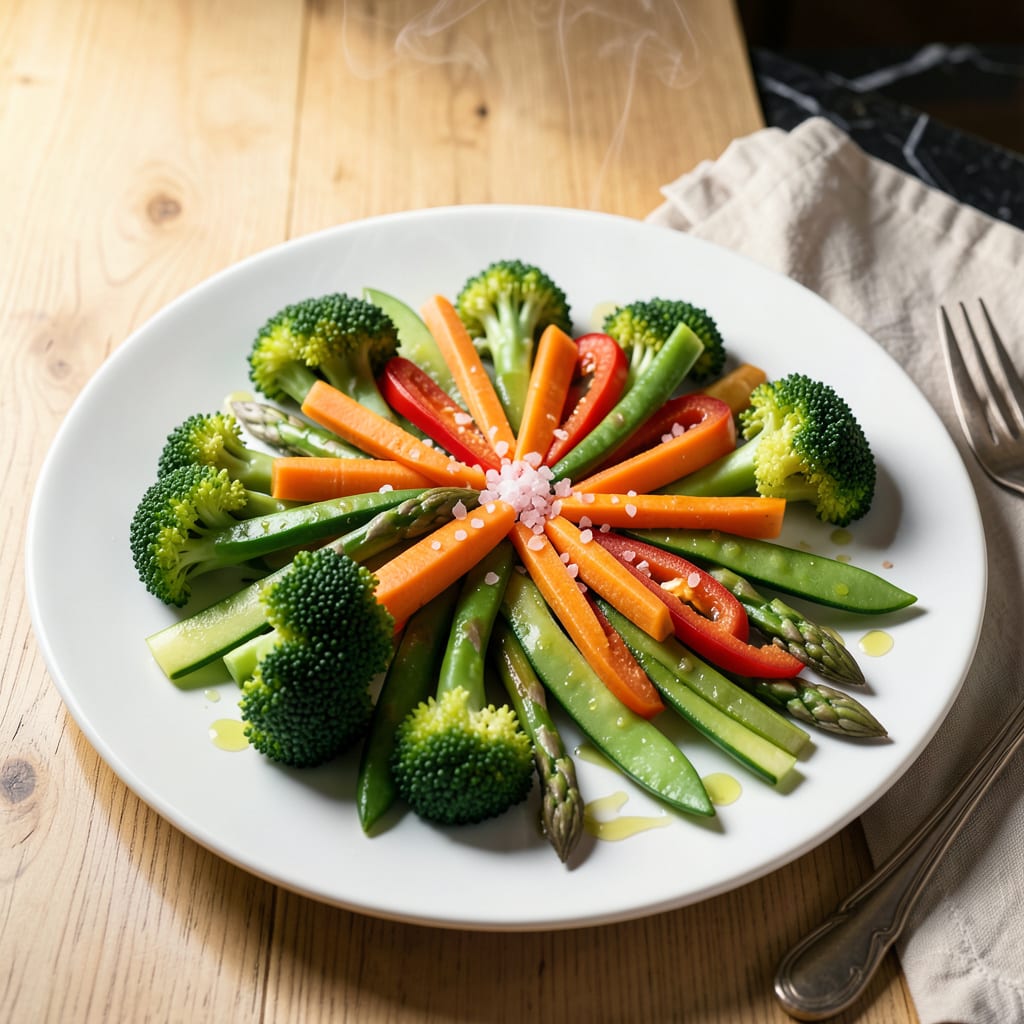
Steaming vegetables preserves their natural flavors, colors, and nutrients better than any other cooking method. This vegan approach guarantees a vibrant, crisp result every time.
With just 15 minutes and simple ingredients, you can create a bright, healthy side dish that complements any meal. The key is using fresh, seasonal produce and proper timing for each vegetable.
Ingredients for Vegan Steamed Vegetables
Fresh, seasonal produce steamed to vibrant, crisp perfection in minutes.
| Ingredient | Amount | Notes |
|---|---|---|
| Broccoli Florets 🥦 | 3 cups | Cut into even-sized pieces |
| Carrots 🥕 | 2 whole | Peeled and sliced into sticks |
| Asparagus Spears 🌱 | 8 pieces | Trimmed and cut into 2-inch pieces |
| Zucchini 🥒 | 1 whole | Sliced into half-moons |
| Red Bell Pepper 🌶️ | 1 whole | Seeded and cut into strips |
| Snow Peas 🌿 | 1 cup | Strings removed if necessary |
| Extra-Virgin Olive Oil 🫒 | 1 tbsp | For finishing, optional |
| Lemon Juice 🍋 | 1 tbsp | Freshly squeezed preferred |
| Sea Salt 🧂 | ½ tsp | Fine grain preferred |
| Freshly Ground Black Pepper 🌶️ | ¼ tsp | To taste |
| Fresh Parsley 🌿 | 2 tbsp | Chopped, for garnish |
| Garlic Cloves 🧄 | 2 cloves | Minced, optional for extra flavor |
Selecting the freshest produce is essential for optimal results. Farmers markets or well-stocked grocery stores like Whole Foods offer the best seasonal variety. Look for vegetables with vibrant color and firm texture—avoid anything wilted or soft. Organic isn’t mandatory, but it often delivers superior flavor. For the carrots and broccoli, uniform sizing ensures even cooking (worth the extra minute to trim them properly).
Feel free to swap based on preference or availability. Green beans or cauliflower work beautifully in place of asparagus or zucchini. No fresh parsley? Fresh cilantro or basil at equal amounts adds a different but delicious note. The lemon juice can be lime juice or apple cider vinegar—just keep the amount the same. For extra richness, a drizzle of toasted sesame oil instead of olive oil adds depth.
Steamed vegetables are best served immediately but can be reheated gently. Store leftovers in an airtight container in the fridge for up to 3 days. To revive, sprinkle with a little water and warm in a skillet or microwave. Avoid overcrowding the steamer basket—cook in batches if making a large quantity.
Why You’ll Love This Recipe
- Minimal Effort: I just toss the broccoli, carrots, and asparagus in the steamer and walk away. No babysitting required.
- Bright and Fresh: The zucchini and red bell pepper stay crisp while soaking up that clean, veggie-sweet flavor.
- Meal Prep Hero: I make a big batch Sunday night and it’s ready for lunches or quick sides all week.
- Budget Friendly: A pound of these veggies costs less than a takeout salad and feeds us twice.
Step-by-Step Instructions for Steamed Vegetables
This method preserves the vibrant colors and crisp textures of your fresh produce perfectly.
Step 1: Prepare All Vegetables Uniformly
Begin by prepping all the vegetables as specified: cut the 3 cups broccoli florets into even-sized pieces, peel and slice the 2 whole carrots into sticks, and trim the 8 pieces asparagus spears into 2-inch lengths. Uniform sizing ensures even cooking.
Slice the 1 whole zucchini into half-moons, seed and strip the 1 whole red bell pepper, and remove strings from the 1 cup snow peas if needed. This preliminary work guarantees consistent doneness across all varieties.
Step 2: Arrange in Steamer Basket
Fill a large pot with 1-2 inches of water and bring to a boil. Place a steamer basket inside, ensuring the water doesn’t touch the bottom. Arrange the denser vegetables—carrots and broccoli florets—on the bottom layer where they’ll receive the most direct steam.
Add the more delicate vegetables—zucchini, red bell pepper, snow peas, and asparagus spears—to the upper level or around the edges. This strategic placement prevents overcooking of the more tender varieties.
Step 3: Steam to Crisp-Tender Perfection
Cover the pot and steam the vegetables for 5-7 minutes. Check for doneness by piercing the thickest pieces—the carrots—with a fork. They should be tender but still crisp, with a slight resistance.
The asparagus spears and snow peas will cook faster, so monitor them closely. You want all vegetables to retain their bright colors and slight bite. Remove the basket immediately once the carrots reach the desired tenderness to prevent overcooking.
Step 4: Season and Finish
Transfer the steamed vegetables to a serving platter. Drizzle with the 1 tbsp extra-virgin olive oil and 1 tbsp lemon juice, then sprinkle evenly with the 0.5 tsp sea salt and 0.25 tsp freshly ground black pepper.
For added flavor, mince the 2 cloves garlic cloves finely and sprinkle over the vegetables along with the 2 tbsp fresh parsley. Toss gently to coat all pieces evenly, allowing the flavors to meld for 1-2 minutes before serving.
Pro Tips For Making Vegan Steamed Vegetables
- Cut Evenly: I learned this the hard way—slice carrots and zucchini into ¼-inch sticks so they cook at the same rate as the broccoli florets.
- Skip the Crowding: Sounds obvious, but pack the steamer basket loosely or the veggies will steam unevenly and turn mushy.
- Start with Boiling: Drop the veggies in only after the water’s at a full, rolling boil—this keeps the color bright and the texture crisp.
- Shock in Ice: Plunge the steamed veggies into ice water for 30 seconds right after cooking to stop the cooking process and lock in that snap.
Make-Ahead Tips for This Dish
Batch Prep Strategy
I prep all vegetables the night before and store them in the fridge in separate airtight containers with damp paper towels. This keeps them crisp for up to 24 hours before steaming.
Morning Assembly
In the morning, I arrange the prepped veggies in the steamer basket, cover with a damp towel, and refrigerate. This saves 10-15 minutes of prep work at dinnertime. 💡
Partial Steaming
For meal prep, I steam the denser vegetables (carrots and broccoli) for 3 minutes only, then cool and refrigerate. The next day, I add the delicate veggies and finish steaming.
Storage Tips
Cooked vegetables stay fresh in shallow airtight containers for up to 3 days. I spread them in a single layer to prevent sogginess. ❄️
Reheating Method
To revive, I place them in a skillet with 2 tbsp water over medium heat for 3-4 minutes. This restores crispness better than microwaving.
Freezing Option
For longer storage, I blanch the vegetables for 2 minutes in boiling water, then freeze in portions. This preserves texture for up to 2 months.
Nutrition Facts
Frequently Asked Questions
What’s the best way to keep vegetables crisp when steaming?
Use uniform pieces and don’t overcrowd the basket. Steam for 5-7 minutes max, checking denser veggies like carrots last. Plunge into ice water after if you need to stop cooking immediately.
Can I use frozen vegetables instead of fresh?
Yes, but thaw and pat them completely dry first. Add 1-2 minutes extra steaming time since they release more moisture. Fresh is ideal for best texture.
How do I prevent a soggy result?
Avoid lifting the lid while cooking—it releases steam and lowers the temperature. Also, toss with seasonings after steaming, not before, to preserve crispness.
Which vegetables should I add first?
Place denser veggies like carrots and broccoli at the bottom. Delicate ones like zucchini and snow peas go on top to cook more gently.

- 6 Egg Cake Recipe with Oil: Light as Air With Buttery Moisture - October 4, 2026
- 4 Bean Casserole Recipe: One-Pan Heartiness With Smoky Paprika Depth - October 4, 2026
- 3-Ingredient Keto Mug Cake Recipe: Microwave Magic in 2 Minutes - October 4, 2026