
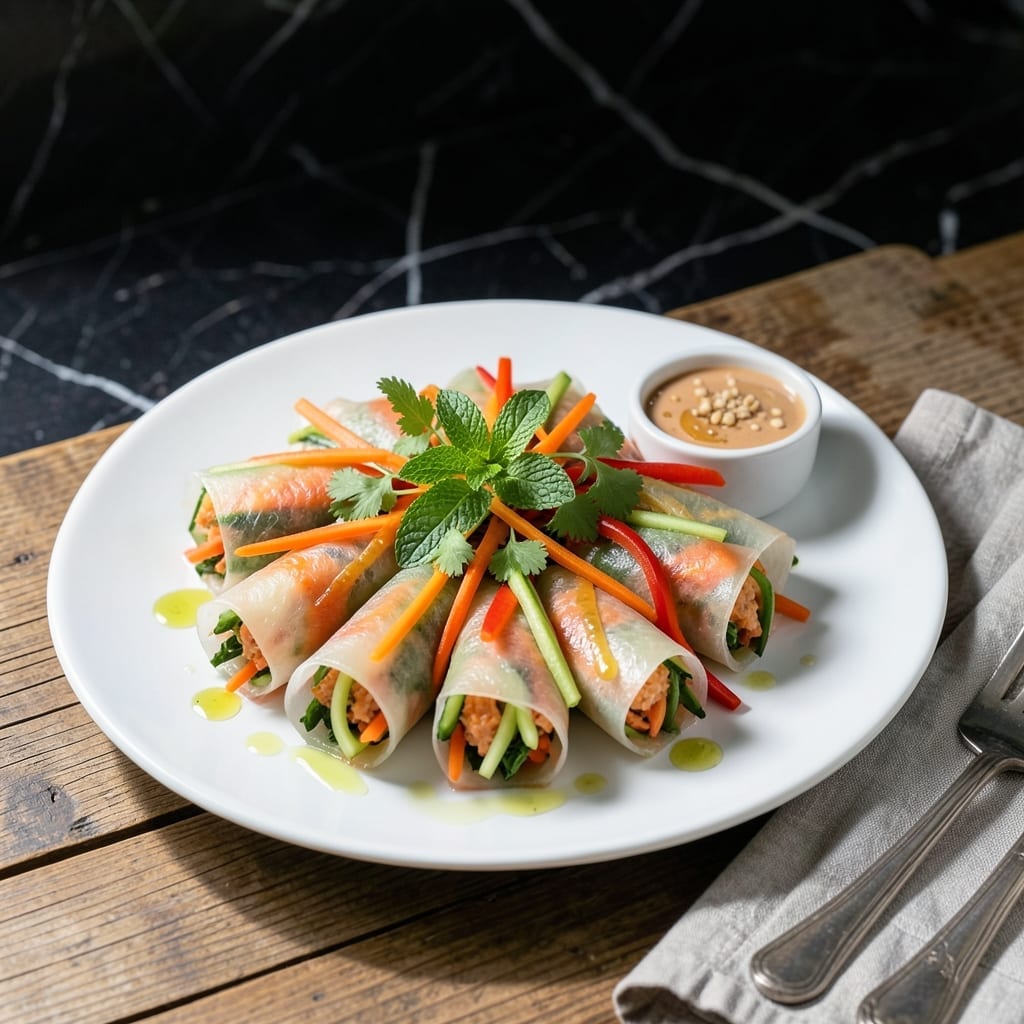
These delicate rolls capture the essence of Vietnamese street food with every fresh, vibrant bite. I’ve perfected the technique to ensure they stay intact without tearing, using a simple method that works every time.
The secret lies in the balance of textures—crunchy vegetables, tender herbs, and chewy rice paper. A quick soak in warm water softens the wrappers just enough for easy rolling while keeping them sturdy.
What emerges is a dish that’s light yet satisfying, packed with bright flavors and a satisfying snap from the veggies. The dipping sauce, tangy and slightly sweet, ties everything together beautifully.
Serve as an appetizer or a light meal. Here’s how to assemble them perfectly.
Ingredients for Vietnamese Rice Paper Rolls
Fresh herbs, crunchy veggies, and rice paper create these vibrant rolls with ease.
| Ingredient | Amount | Notes |
|---|---|---|
| Rice Paper Wrappers 🍚 | 8 sheets | 22cm diameter preferred |
| Carrots 🥕 | 2 whole | Julienned for crunch |
| Cucumber 🥒 | 1 whole | Seeds removed, julienned |
| Red Bell Pepper 🌶️ | 1 whole | Thinly sliced |
| Fresh Mint Leaves 🌿 | 1 cup | Loosely packed |
| Fresh Cilantro Leaves 🌿 | 1 cup | Loosely packed |
| Fresh Thai Basil Leaves 🌿 | ½ cup | Loosely packed |
| Rice Vermicelli Noodles 🍜 | 3 oz | Cooked according to package |
| Green Leaf Lettuce 🥬 | 4 whole | Butter or romaine works too |
| Peanut Butter 🥜 | ¼ cup | Creamy, unsweetened |
| Hoisin Sauce 🍯 | 2 tbsp | Vegan variety recommended |
| Soy Sauce 🍶 | 1 tbsp | Low-sodium preferred |
| Lime Juice 🍋 | 2 tbsp | Freshly squeezed |
| Agave Nectar 🍯 | 1 tbsp | Or maple syrup |
| Sriracha 🔥 | 1 tsp | Adjust to spice preference |
The rice paper wrappers are key—look for the 22cm diameter at Asian markets or the international aisle at Whole Foods. They should be translucent and free of tears. For the herbs, freshness is non-negotiable; Thai basil is often at Vietnamese grocery stores, but regular basil works in a pinch (the flavor will differ slightly).
No rice vermicelli? Thin rice noodles or even angel hair pasta can substitute—just don’t overcook. Sunflower seed butter replaces peanut butter for nut allergies. If hoisin isn’t available, mix soy sauce with a touch of molasses for a similar depth. The lime juice can be bottled (fresh is better), but avoid the pre-squeezed varieties with preservatives.
Wrappers keep indefinitely in a dry pantry. Prep all veggies and herbs before soaking the rice paper—they dry out in minutes. The dipping sauce holds for 5 days refrigerated, but the rolls are best served fresh (same day).
Why You’ll Love This Recipe
- No Cook Needed: I just soak the rice paper wrappers in warm water and fill them—no oven, no stove, no fuss.
- Crunch & Freshness: The raw carrots, cucumber, and red bell pepper give that satisfying bite, while the mint adds a bright, cool finish.
- Lunchbox Hero: I pack these for picnics, work lunches, or even a light dinner—honestly, they travel better than any sandwich.
- Budget Stretcher: A bag of rice paper and a handful of veggies feed four for less than a takeout salad.
Step-by-Step Instructions for Vietnamese Rice Paper Rolls
Master the technique with these precise steps for perfectly rolled, fresh spring rolls every time.
Step 1: Prepare and Cook the Vermicelli Noodles
Cook the 3 oz rice vermicelli noodles according to package instructions until tender but still firm. Drain and rinse immediately under cold water to stop the cooking process and prevent sticking.
This shock of cold water removes excess starch, keeping the noodles separate and easy to work with. I cut the noodles into 3-inch lengths with kitchen shears after cooling—this makes them more manageable for rolling. Set aside to drain completely before using.
Step 2: Slice and Prepare All Vegetables
Julienne the 2 whole carrots into matchstick-sized pieces for even texture. For the 1 whole cucumber, cut in half lengthwise, remove seeds with a spoon, then julienne the flesh. Thinly slice the 1 whole red bell pepper into strips.
Separate the 4 whole green leaf lettuce into individual leaves, then cut each in half lengthwise to create flexible strips. Having all vegetables prepped and organized in small bowls makes the rolling process smooth and efficient. The uniform cuts ensure every bite has the right balance of crunch and freshness.
Step 3: Soften the Rice Paper Wrappers
Fill a shallow dish with warm water (not hot—about 85-90°F). Submerge 1 rice paper wrapper at a time for 5-8 seconds until pliable but still slightly firm. Over-soaking makes them tear too easily.
Lay the softened wrapper on a clean, damp kitchen towel. The towel prevents sticking while you work. You’ll notice the wrapper continues to soften as you arrange the fillings—this is normal. Work with one wrapper at a time to prevent drying out or over-softening.
Step 4: Assemble and Roll Tightly
Place a few pieces of the cooked noodles on the bottom third of the wrapper. Add a small handful of the prepared vegetables: carrots, cucumber, and red bell pepper. Top with 1-2 leaves each of fresh mint leaves, fresh cilantro leaves, and fresh Thai basil leaves.
Fold the sides inward, then roll tightly from the bottom up, similar to a burrito. The first roll is the most important—keep the tension even but not too tight. Place each finished roll seam-side down on a serving platter covered with parchment paper to prevent sticking.
Step 5: Make the Peanut Dipping Sauce
In a small bowl, whisk together the 0.25 cup peanut butter, 2 tbsp hoisin sauce, 1 tbsp soy sauce, 2 tbsp lime juice, 1 tbsp agave nectar, and 1 tsp sriracha until smooth. If the sauce is too thick, add 1-2 teaspoons of warm water to reach your desired consistency.
Taste and adjust seasoning if needed—more lime for tang, more agave for sweetness, or more sriracha for heat. The sauce should be thick enough to cling to the rolls but fluid enough to dip easily. Serve immediately with the rice paper rolls for the best freshness and texture.
Pro Tips For Making Vietnamese Rice Paper Rolls
- Soak briefly: Dip rice paper for 5-7 seconds in warm water—any longer and it tears when rolling. I learned this the hard way after ruining three wrappers in a row.
- Julienne evenly: Cut carrots, cucumber, and bell pepper into thin, matchstick-sized strips. Uniform pieces make rolling easier and every bite more balanced.
- Skip wet fillings: Pat all veggies dry before adding to the roll, or the wrapper will turn soggy before you finish. Sounds tedious, but it works.
- Use warm water: Room temperature water makes rice paper gummy and hard to work with. Warm water (just above body temp) softens it quickly without overcooking.
Pro Cooking Tips for This Recipe
Wrapper Preparation
Use warm water between 85-90°F in a shallow dish. Soak each 22cm wrapper for 5-8 seconds only—any longer and they become too fragile. I learned this the hard way with torn rolls.
Rolling Technique
Lay the wrapper on a damp towel, then place fillings in the bottom third. Fold sides in, then roll tightly like a burrito. Keep tension even but gentle. The first roll sets the pattern for all others.
Filling Distribution
Use 3-inch noodle pieces and matchstick veggies for even bites. Overfilling causes tears—aim for ¼ cup total fillings per wrapper. I keep small bowls of each ingredient organized.
Sauce Consistency
Whisk the peanut sauce until smooth, adding 1-2 tsp warm water if needed. It should cling to rolls but still dip easily. Taste and adjust—more lime for tang or agave for sweetness. 💡
Preventing Sticking
Place finished rolls seam-side down on parchment paper. A damp towel over the stack prevents drying while you work. Never stack rolls directly—they’ll fuse together.
Herb Handling
Use whole herb leaves for best texture. Delicate herbs like Thai basil tear easily, so handle gently. The combination of mint, cilantro, and basil creates authentic flavor. 🌿
Nutrition Facts
Frequently Asked Questions
How long do I soak the rice paper?
Soak each wrapper in 85-90°F water for 5-8 seconds until pliable but still slightly firm. Over-soaking makes them prone to tearing.
Can I make these ahead of time?
Best served fresh, but you can prep fillings 1 day ahead and store separately. Assemble rolls 2 hours max before serving, covered with a damp towel.
What if my rolls keep breaking?
Use warm water (not hot) and soak briefly. Avoid overfilling—¼ cup total fillings per wrapper is ideal. Roll gently but firmly.
Can I substitute the herbs?
Thai basil is traditional, but regular basil works in a pinch. If cilantro isn’t available, try parsley. Always use fresh herbs for best flavor.

- 6 Egg Cake Recipe with Oil: Light as Air With Buttery Moisture - October 4, 2026
- 4 Bean Casserole Recipe: One-Pan Heartiness With Smoky Paprika Depth - October 4, 2026
- 3-Ingredient Keto Mug Cake Recipe: Microwave Magic in 2 Minutes - October 4, 2026