
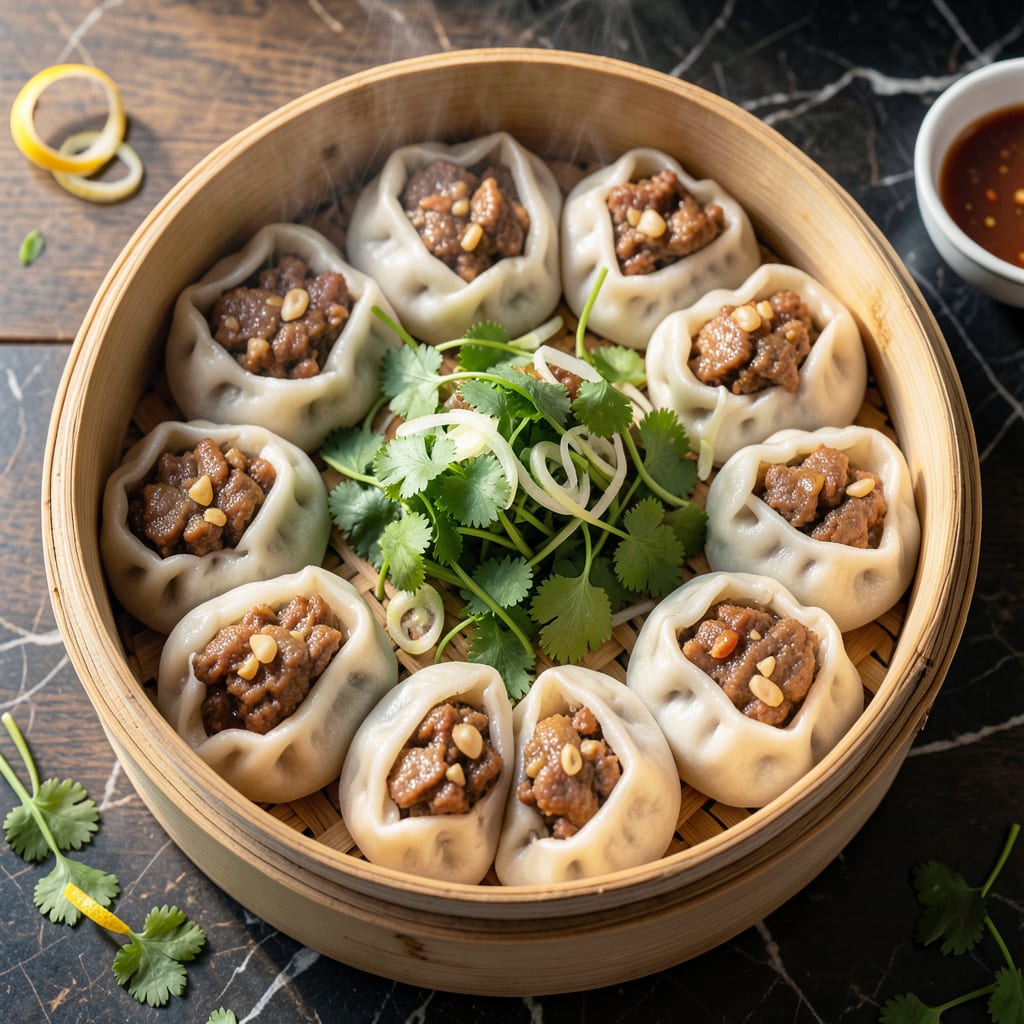
These soft, fluffy buns deliver authentic Vietnamese flavors in every bite. The secret lies in the balance of sweet, savory pork filling and perfectly steamed dough.
I’ve refined this method to ensure pillowy texture and rich garlic-pork filling. The result is a dish that’s both comforting and impressive, with traditional techniques made accessible.
Ingredients for Vietnamese Steamed Pork Buns
Authentic Vietnamese flavors start with these carefully balanced ingredients for perfect steamed buns every time.
| Ingredient | Amount | Notes |
|---|---|---|
| All-Purpose Flour 🌾 | 3 cups | Plus extra for dusting work surface |
| Instant Yeast 🍞 | 2 tsp | Active dry yeast works too |
| Granulated Sugar 🍚 | ¼ cup | Divided for dough and filling |
| Warm Water 💧 | 1 cup | About 110°F for yeast activation |
| Ground Pork 🥩 | 1 lb | 80/20 fat ratio preferred |
| Garlic Cloves 🧄 | 6 cloves | Minced for filling |
| Green Onions 🧅 | 4 whole | Thinly sliced, white and green parts |
| Fish Sauce 🐟 | 2 tbsp | Vietnamese brand preferred (Red Boat or Three Crabs) |
| Soy Sauce 🥢 | 2 tbsp | Low-sodium for balance |
| Sesame Oil 🫒 | 1 tbsp | Toasted variety for depth |
| Fresh Ginger 🌿 | 1 tbsp | Peeled and minced |
| Neutral Oil 💧 | 1 tbsp | For cooking pork filling |
| Salt 🧂 | 1 tsp | Divided for dough and filling |
| Baking Powder 🧂 | 1 tsp | For extra lift in dough |
| Cornstarch 🌽 | 1 tbsp | For thickening filling |
The flour is foundational—King Arthur or Bob’s Red Mill all-purpose deliver consistent results. For the pork, ground pork shoulder offers ideal fat content for juicy filling. Asian markets carry superior fish sauce brands like Red Boat, but most well-stocked supermarkets now stock quality options. Fresh ginger and garlic are non-negotiable for authentic flavor—avoid pre-minced jars.
No ground pork? Ground chicken or turkey work in a pinch, though flavor will differ. For fish sauce substitutions, soy sauce plus a pinch of MSG approximates the umami. Out of green onions? Shallots or chives add similar brightness. The sesame oil can be swapped with perilla oil for a Korean twist, but it changes the flavor profile. Don’t skip the cornstarch—it keeps the filling juicy without being soggy.
Uncooked filling keeps 24 hours refrigerated, dough 12 hours (before shaping). Steamed buns freeze beautifully for 3 months—reheat by steaming from frozen. Always use parchment paper when steaming to prevent sticking. Leftovers? Re-steam to revive that pillowy texture.
Why You’ll Love This Recipe
- No-Fuss Dough: Honestly, the dough comes together with just flour, yeast, sugar, and warm water—no kneading marathon, no fancy stand mixer required.
- Pork Perfection: The ground pork filling, lightly seasoned, steams into tender, juicy bites that hit the spot every time.
- Crowd-Pleasing Appetizer: I bring these to potlucks and they disappear first—great for gatherings or a cozy weekend project.
- Budget Stretch: Five simple ingredients, most of which I already have, and it makes a batch big enough for leftovers that reheat beautifully.
Step-by-Step Instructions for Vietnamese Steamed Pork Buns
Master the art of pillowy bao with this precise method for dough and filling.
Step 1: Activate Yeast and Prepare Dough
In a stand mixer bowl, combine the 1 cup warm water, 2 tsp instant yeast, and 0.25 cup granulated sugar. Let sit for 5-7 minutes until foamy—this confirms yeast activation. The mixture should develop a thick, bubbly layer on top.
Add the 3 cups all-purpose flour, 1 tsp baking powder, and ½ tsp salt (reserve the remaining salt for filling). Mix on low with the dough hook until combined, then increase to medium speed for 8-10 minutes until smooth and elastic. The dough should pull away from bowl sides but remain slightly tacky.
Step 2: Create the Garlic Pork Filling
Heat the 1 tbsp neutral oil in a skillet over medium-high heat. Add the 1 lb ground pork, breaking it up with a wooden spoon. Cook for 5-6 minutes until no pink remains and the pork starts to brown.
Stir in the minced 6 cloves garlic cloves, 1 tbsp fresh ginger, and sliced 4 whole green onions. Add the 2 tbsp fish sauce, 2 tbsp soy sauce, remaining ½ tsp salt, and 1 tbsp cornstarch. Cook for 2-3 minutes until thickened. Finish with 1 tbsp sesame oil and cool completely.
Step 3: Shape and Fill the Buns
Turn the rested dough onto a lightly floured surface and divide into 12 equal portions (about 70g each). Roll each into a ball, then flatten into a 4-inch circle with a rolling pin, leaving the center slightly thicker than the edges.
Place 1-2 tbsp of cooled pork filling in the center of each dough circle. Pleat the edges upward, pinching to seal tightly at the top while gently rotating the bun. The pleats should be even and the seal completely closed to prevent filling leakage during steaming.
Step 4: Proof and Steam to Perfection
Arrange the shaped buns on parchment squares in a steamer basket, leaving 1 inch between each. Cover and let proof for 30-45 minutes until puffed by about 50%. The buns should look noticeably larger but still hold their shape.
Bring 2 inches of water to a boil in a pot fitted with the steamer. Steam the buns in batches for 12-15 minutes with the lid on. They’re done when the dough is translucent and the buns have expanded fully. Avoid opening the lid during steaming to prevent temperature drops.
Pro Tips For Making Vietnamese Steamed Pork Buns
- Proof the Dough: Let the dough double in size in a warm, draft-free spot—this usually takes about 1 hour, but don’t rush it. I learned this the hard way when my buns came out dense and chewy instead of light and fluffy.
- Chill the Pork: Mix your pork filling and then refrigerate it for at least 30 minutes before assembling. This makes it easier to shape and keeps the fat from rendering too quickly during steaming.
- Skip Overfilling: Use about 1 tablespoon of pork filling per bun—any more and they’ll burst open while steaming. After ruining a batch by being too generous, I now measure every time.
- Use Parchment Squares: Cut parchment paper into small squares to place under each bun before steaming. Sounds weird, but it works: prevents sticking and makes cleanup a breeze.
Essential Equipment for Great vietnamese steamed pork buns
Steamer Basket
A bamboo steamer is ideal for these buns, as it allows steam to circulate evenly. I recommend a 10-inch diameter for home use—it fits most pots. Look for EcoNest or Helen’s Asian Kitchen brands for quality. Line with parchment paper to prevent sticking. 💡
Stand Mixer
Kneading dough by hand is possible, but a stand mixer with dough hook saves time and ensures consistent texture. I use my KitchenAid for 8-10 minutes on medium speed. The dough should pull away from the bowl but remain slightly tacky.
Digital Scale
Precision matters for even buns. A digital kitchen scale helps divide dough into 12 equal portions (about 70g each). I prefer OXO or Escali for accuracy. Weighing also ensures your filling portions are consistent.
Rolling Pin
A French rolling pin (without handles) gives you the best control for rolling thin, even dough circles. Roll each piece to about 4-inch diameter, keeping the center slightly thicker than the edges. This helps the buns puff properly during steaming.
Parchment Paper
Cut parchment into 3-inch squares to place under each bun before steaming. This prevents sticking and makes removal easier. I like pre-cut parchment rounds for convenience. Avoid wax paper—it doesn’t handle the heat well.
Thermometer
Check your water temperature for yeast activation—it should be 110°F. A simple instant-read thermometer ensures you don’t kill the yeast with water that’s too hot. I keep a ThermoWorks in my kitchen drawer for this exact purpose. 🌡️
Nutrition Facts
Frequently Asked Questions
Can I use active dry yeast instead of instant?
Yes, but dissolve it in the warm water first and let it sit for 5-7 minutes until foamy before mixing with other ingredients.
Why did my buns collapse after steaming?
This usually happens if they’re overproofed or the steamer lid is opened too soon. Let them rest for 2 minutes in the steamer after cooking to set properly.
How do I store leftovers?
Refrigerate in an airtight container for up to 3 days. Reheat by steaming for 5-6 minutes until warm.
Can I make the filling ahead?
Prepare it up to 24 hours in advance and store it covered in the fridge. This lets flavors meld beautifully.

- 6 Egg Cake Recipe with Oil: Light as Air With Buttery Moisture - October 4, 2026
- 4 Bean Casserole Recipe: One-Pan Heartiness With Smoky Paprika Depth - October 4, 2026
- 3-Ingredient Keto Mug Cake Recipe: Microwave Magic in 2 Minutes - October 4, 2026