
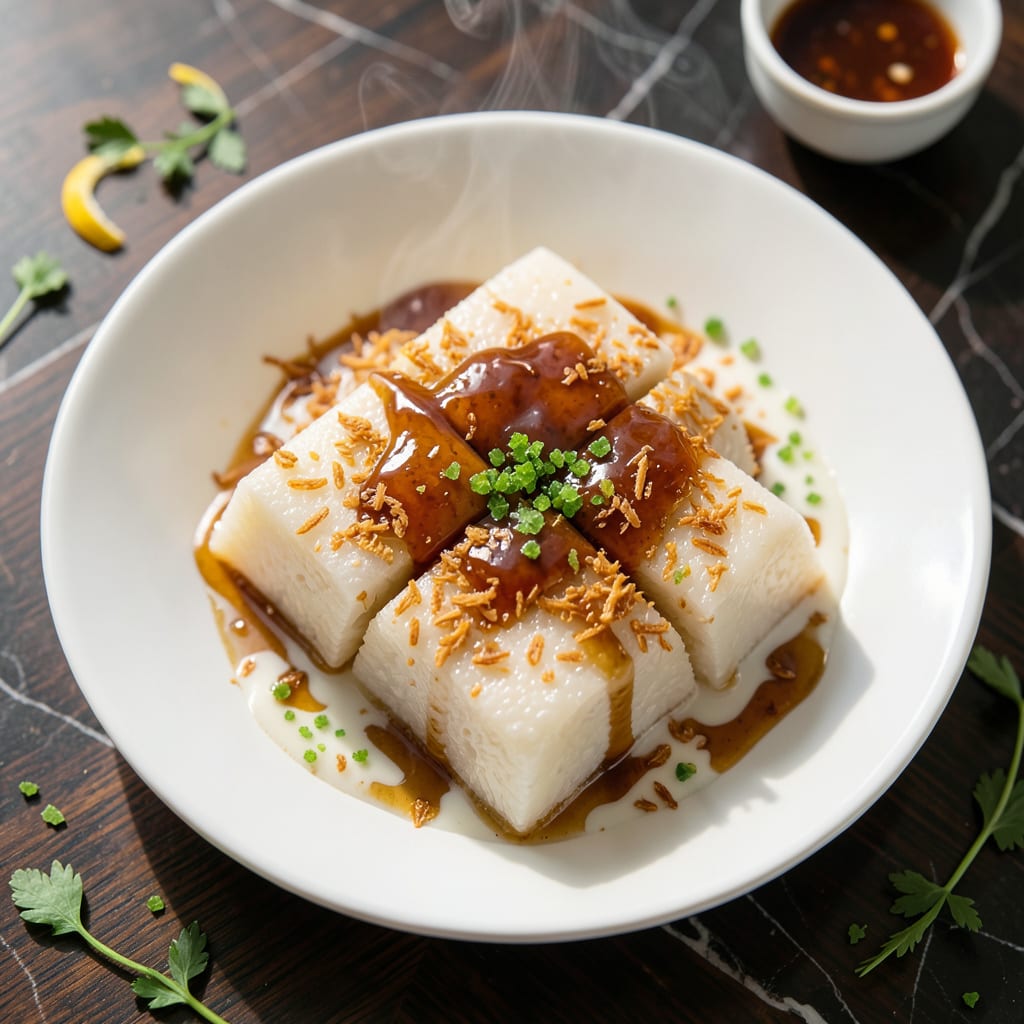
This traditional Vietnamese dessert brings a taste of Southeast Asia to your kitchen with its delicate texture and coconut-infused flavor.
The secret lies in the steaming process, which creates a moist, slightly chewy cake that’s both satisfying and subtly sweet. It’s a beloved treat that showcases the beauty of simple ingredients transformed through time-honored techniques.
Ingredients for Vietnamese Steamed Rice Cake
Simple ingredients transform into this delicate coconut-infused Vietnamese dessert through traditional techniques.
| Ingredient | Amount | Notes |
|---|---|---|
| Glutinous Rice Flour 🌾 | 1 ½ cups | Also called sweet rice flour |
| Tapioca Starch 🌾 | ½ cup | For chewy texture |
| Coconut Milk 🥥 | 1 ¼ cups | Full-fat for richness |
| Sugar 🍚 | ¾ cup | Granulated or coconut sugar |
| Water 💧 | ¾ cup | Warm for mixing |
| Shredded Coconut 🥥 | ½ cup | Unsweetened, for topping |
| Salt 🧂 | ¼ tsp | Fine grain preferred |
| Pandan Extract 🌿 | 1 tsp | Optional, for authentic flavor |
| Vegetable Oil 🫒 | 2 tbsp | For greasing molds |
| Mung Bean Flour 🌱 | ¼ cup | For traditional texture |
The glutinous rice flour is non-negotiable here—it provides the signature chewy texture. Look for brands like Bob’s Red Mill or visit an Asian market for authentic varieties. Coconut milk should be full-fat; Thai Kitchen or Native Forest are reliable. Pandan extract (found at specialty stores) adds authentic aroma, but vanilla can work if unavailable.
No pandan? Vanilla extract at half the amount works. For a gluten-free version, ensure all flours are certified. Shredded coconut can be sweetened if preferred—just reduce added sugar slightly. Tapioca starch substitutes include arrowroot powder, but texture may vary. Always use warm water for even mixing.
Store dry ingredients in airtight containers at room temperature for 6-12 months. Prepared cakes keep in the fridge for 3-4 days or freeze for 1 month. Re-steam to refresh before serving. The coconut milk can separates—stir well before using.
Why You’ll Love This Recipe
- One Bowl Wonder: I just mix the rice flour, tapioca starch, coconut milk, and sugar in one bowl—no fancy steps, no mess.
- Coconut Cloud: The coconut milk makes these cakes so soft and subtly sweet, with that rich, creamy aroma that lingers.
- Breakfast or Dessert: I serve them warm for breakfast with a drizzle of honey, or chilled as a light, satisfying sweet after dinner.
- Budget Stretcher: A bag of glutinous rice flour goes so far, and this recipe uses just a handful of pantry staples I always have.
Step-by-Step Instructions for Vietnamese Steamed Rice Cake
Master the technique for this traditional treat with precise steps and authentic results.
Step 1: Combine Dry Ingredients for Foundation
In a large mixing bowl, whisk together the 1.5 cups Glutinous Rice Flour, 0.5 cup Tapioca Starch, 0.25 cup Mung Bean Flour, 0.75 cup Sugar, and 0.25 tsp Salt until no lumps remain. The mung bean flour adds that traditional density, while the tapioca starch ensures the proper chewy texture.
This dry blend creates the structural base for your cake. I always sift these ingredients first to prevent any graininess in the final product. The mixture should look uniform and feel smooth when rubbed between your fingers.
Step 2: Incorporate Wet Components for Batter
In a separate bowl, combine the 1.25 cups Coconut Milk, 0.75 cup Water, 2 tbsp Vegetable Oil, and 1 tsp Pandan Extract. Warm the water slightly first to help dissolve the coconut milk’s natural fats. The pandan extract provides that distinctive aromatic quality essential to authentic banh bo nuong.
Gradually pour the wet mixture into the dry ingredients while whisking continuously. The batter should be smooth with the consistency of heavy cream. If it appears too thick, add a tablespoon of water, but avoid making it runny—this affects the final texture.
Step 3: Prepare Molds and Steam the Cake
Lightly grease your steaming molds or ramekins with some of the 2 tbsp Vegetable Oil. This prevents sticking and helps achieve that characteristic slightly crisp outer layer. Pour the batter into the prepared molds, filling them about three-quarters full to allow for expansion.
Place the molds in a steamer with at least 2 inches of boiling water. Cover with a tight lid and steam over medium-high heat for 25-30 minutes. Check that the water doesn’t evaporate completely during steaming—add more boiling water if needed.
Step 4: Add Coconut Topping and Final Steam
After the initial steaming, carefully sprinkle the 0.5 cup Shredded Coconut evenly over the top of each cake. The coconut should adhere slightly to the moist surface. Return the cakes to the steamer for an additional 5-7 minutes to set the topping.
You’ll know they’re done when a toothpick inserted in the center comes out clean and the top springs back lightly when touched. The shredded coconut will appear slightly toasted and fragrant, indicating it’s properly incorporated.
Step 5: Cool and Serve
Remove the cakes from the steamer and let them cool in the molds for 10 minutes. This cooling period allows them to set completely and makes removal easier. Run a thin knife around the edges if they stick slightly.
Serve warm or at room temperature. The ideal texture features a slightly crisp coconut top layer giving way to a soft, jelly-like interior with a subtle chew. The pandan aroma should be noticeable but not overpowering, complementing the rich coconut flavor.
Pro Tips For Making Vietnamese Steamed Rice Cake
- Steam Evenly: Use a clean kitchen towel under the lid to catch condensation—otherwise, water drips back onto the cake and creates uneven texture.
- Whisk the Batter: Beat the glutinous rice flour and tapioca starch into the coconut milk for at least 2 minutes until completely smooth, or you’ll get lumpy cakes that don’t set right.
- Skip the Cold Water: I learned this the hard way—use room temperature or slightly warm water in the batter, because cold water makes the coconut milk clump and the starches resist mixing.
- Prep the Molds: Lightly oil your steaming cups or molds before filling—sounds tedious, but it’s the only way to guarantee clean release without tearing the delicate cakes.
Make-Ahead Tips for vietnamese steamed rice cake
Prep Batter Ahead
Mix your dry ingredients and wet components separately the night before, storing them covered at room temperature. In the morning, simply whisk them together and steam. This saves 15 minutes of prep time while maintaining freshness. 💡
Portion Control
Pour your batter into greased molds, cover with plastic wrap, and refrigerate for up to 24 hours. When ready to cook, let the molds sit at room temperature for 30 minutes before steaming to ensure even cooking.
Freezer-Friendly
Steam the cakes without the coconut topping, then freeze in airtight containers for up to 1 month. To serve, thaw overnight in the fridge and re-steam for 5-7 minutes with fresh shredded coconut on top.
Coconut Topping Hack
Toast your shredded coconut in advance and store it at room temperature. This keeps it fresh and ready to sprinkle on just before the final steam, saving 5 minutes of prep time.
Steamer Setup
If using a bamboo steamer, line it with parchment paper the night before. This prevents sticking and makes cleanup easier. I always keep a roll of parchment on hand for this exact purpose.
Room Temperature Tip
For best results, ensure all ingredients are at room temperature before mixing. This creates a smoother batter. I pull my coconut milk out of the fridge 1 hour before starting. ✨
Nutrition Facts
Frequently Asked Questions
What can I use instead of pandan extract?
Vanilla extract works well at half the amount. Some cooks use a bit of almond extract for a different aromatic twist.
Why is my cake dense instead of light?
Overmixing the batter or using too much mung bean flour can cause this. Ensure you whisk just until smooth and measure flours accurately.
How do I prevent the coconut topping from sliding off?
Sprinkle it during the last 5-7 minutes of steaming when the surface is tacky. Press lightly to help it adhere.
Can I use regular rice flour instead of glutinous?
No—regular rice flour lacks the sticky texture. Glutinous rice flour is essential for the traditional chewy consistency.

- 6 Egg Cake Recipe with Oil: Light as Air With Buttery Moisture - October 4, 2026
- 4 Bean Casserole Recipe: One-Pan Heartiness With Smoky Paprika Depth - October 4, 2026
- 3-Ingredient Keto Mug Cake Recipe: Microwave Magic in 2 Minutes - October 4, 2026