
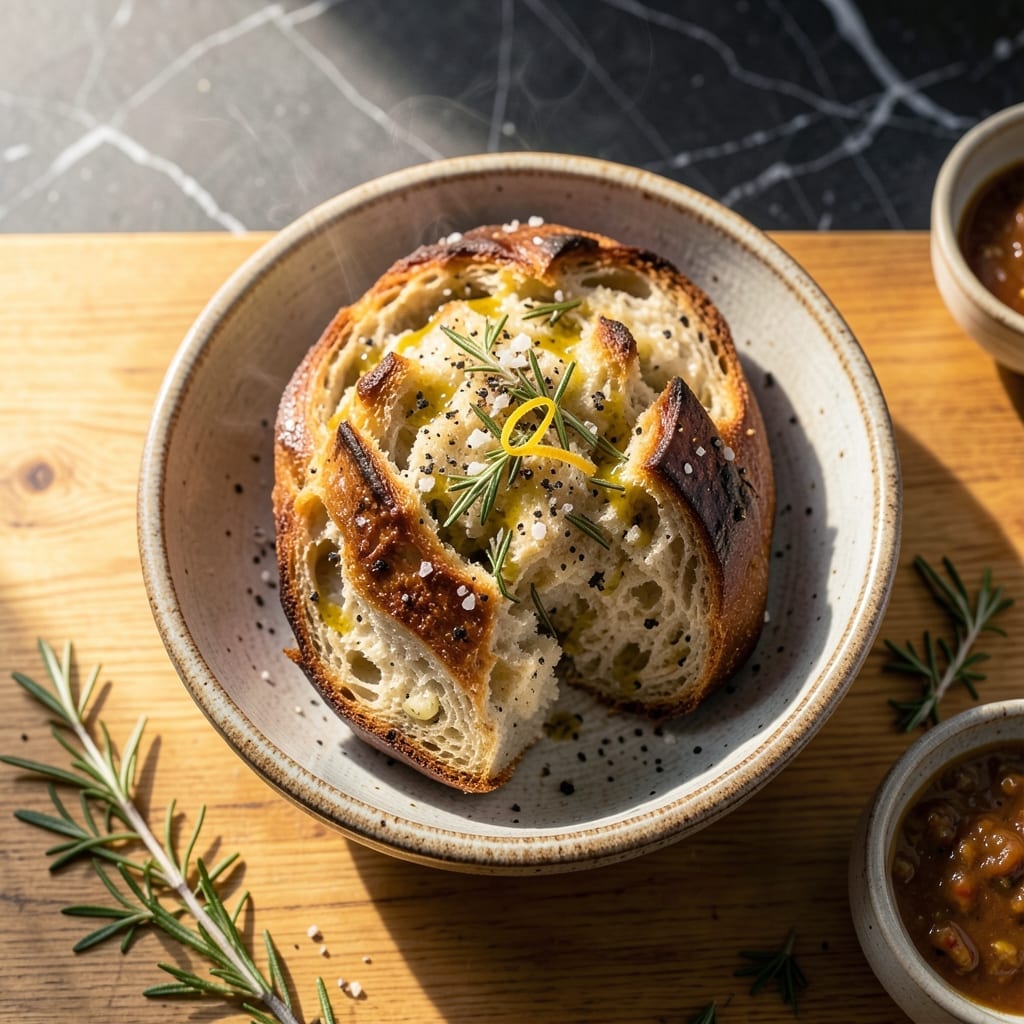
The first time I pulled this bread from the oven, its golden crust and aromatic scent convinced me I’d cracked the bakery code. This creation brings together bold garlic and Italian herbs for a crust that’s both crisp and tender.
With a no-fuss dough and 30-minute rest, it’s simpler than it tastes. The secret lies in brushing the loaf with garlic-infused oil before baking, which locks in moisture and layers on flavor.
What emerges is a loaf with a golden brown exterior and a soft, herb-speckled interior. Every bite delivers the rustic charm of Tuscan bakeries without leaving your kitchen.
Perfect alongside pasta, soups, or as a standalone star. Here’s how to make it.
Ingredients for Wegmans Garlic Tuscan Bread
Simple pantry staples plus fresh herbs create this bakery-style bread at home.
| Ingredient | Amount | Notes |
|---|---|---|
| All-Purpose Flour 🌾 | 4 cups | Plus extra for dusting |
| Warm Water 💧 | 1 ½ cups | About 110°F for yeast |
| Active Dry Yeast 🍞 | 1 package | Or 2.25 tsp from jar |
| Granulated Sugar 🍚 | 1 tbsp | To activate yeast |
| Salt 🧂 | 1 ½ tsp | Fine sea salt preferred |
| Extra-Virgin Olive Oil 🫒 | ¼ cup | Plus extra for greasing |
| Garlic Cloves 🧄 | 6 cloves | Minced for oil infusion |
| Fresh Rosemary 🌿 | 2 tbsp | Finely chopped, stems removed |
| Fresh Thyme Leaves 🍃 | 1 tbsp | Stems removed before using |
| Dried Oregano 🌿 | 1 tsp | Rubbed between fingers |
| Parmesan Cheese 🧀 | ½ cup | Freshly grated for topping |
| Cornmeal 🌽 | 2 tbsp | For dusting baking sheet |
The herbs make this special. Wegmans has great fresh rosemary and thyme in the produce section—look for bright green, not wilted. Parmesan matters too; Wegmans Italian Classics block is my go-to for grating fresh. The garlic? Pick firm heads with tight skin. For yeast, check the expiration date—old yeast won’t rise properly.
No fresh herbs? Dried at one-third the amount works in a pinch. Short on garlic? Garlic powder in the dough adds flavor (use 1 tsp). Swap Parmesan for Pecorino Romano if you want more bite. The olive oil can be any good quality—Wegmans Italian Extra Virgin is a solid everyday choice.
Dough rests best in a warm spot (I use my turned-off oven with the light on). Baked loaves keep 2-3 days wrapped at room temp. Freeze extras for up to 1 month—reheat wrapped in foil to revive that fresh-baked feel.
Why You’ll Love This Recipe
- One-Bowl Wonder: I mix everything right in my stand mixer—no messy counters, just flour, water, yeast, sugar, and salt coming together effortlessly.
- Garlic Kissed Crust: The garlic oil brushed on top gives it that irresistible aromatic punch with every bite.
- Weeknight Hero: Between us, it’s my secret for turning soup night into something special without extra fuss.
- Budget Stretcher: A loaf costs pennies compared to bakery bread, and leftovers make killer garlic bread for days.
Step-by-Step Instructions for Garlic Tuscan Bread
This method delivers that signature bakery-style crust with rich herb and garlic flavor in every bite.
Step 1: Activate the Yeast and Begin the Dough
In a large bowl, combine the 1.5 cups warm water, 1 package active dry yeast, and 1 tbsp granulated sugar. Let this sit for 5-7 minutes until the mixture becomes frothy and bubbly—this confirms your yeast is alive and active.
Stir in the 0.25 cup extra-virgin olive oil and 1.5 tsp salt. Gradually add the 4 cups all-purpose flour, mixing until a shaggy dough forms. I find using a wooden spoon at first prevents flour from flying everywhere.
Step 2: Knead and Incorporate the Herbs
Turn the dough onto a lightly floured surface and knead for 8-10 minutes until smooth and elastic. You’ll notice the dough becomes less sticky as you work it, which means the gluten is developing properly.
Finely chop the 2 tbsp fresh rosemary and 1 tbsp fresh thyme leaves, then rub the 1 tsp dried oregano between your fingers to release its oils. Work these herbs into the dough during the last minute of kneading for even distribution. The dough should be soft but not sticky at this point.
Step 3: First Rise Until Doubled
Lightly oil a clean bowl with some extra olive oil, place the dough inside, and turn to coat all sides. Cover with a damp towel and let rise in a warm, draft-free spot for 1-1.5 hours or until doubled in size.
I like to check after 1 hour—if the dough springs back slowly when gently pressed with a finger, it’s ready. If it springs back quickly, give it more time. This rise develops the flavor and texture that makes this bread special.
Step 4: Shape, Infuse with Garlic, and Second Rise
Punch down the risen dough and turn it onto a lightly floured surface. Shape into a round or oval loaf. Mince the 6 cloves garlic cloves and mix with 1 tbsp extra-virgin olive oil for the topping.
Dust a baking sheet with the 2 tbsp cornmeal to prevent sticking, then place the dough on top. Make several shallow slashes in the top of the loaf with a sharp knife. Brush with the garlic oil mixture. Cover and let rise for 30-45 minutes until puffy.
Step 5: Bake and Add the Finishing Touches
Preheat your oven to 400°F. Bake the bread for 25-30 minutes until the top is golden brown and the loaf sounds hollow when tapped on the bottom. This visual and auditory cue tells you it’s perfectly baked through.
Remove from the oven and immediately sprinkle the top with the 0.5 cup parmesan cheese. Let it cool on a wire rack for at least 20 minutes before slicing. The cheese will melt slightly from the residual heat, creating a beautiful, flavorful crust.
Pro Tips For Making Wegmans Garlic Tuscan Bread
- Test Your Yeast: After burning a loaf to a sad, dense brick, I now proof the yeast in warm water with a pinch of sugar first—if it doesn’t bubble in 5 minutes, start over with fresh yeast.
- Warm the Water Right: Use water at 110°F, no hotter—I learned this the hard way when 120°F killed my yeast and left me with a flat, lifeless dough.
- Knead Longer: Don’t stop at 5 minutes; go for 8-10 until the dough is smooth and elastic, or your bread will be tough instead of light and airy.
- Salt Last: Add the salt after the yeast has started foaming in the water, or it can slow down activation—I was skeptical until I tried it and saw the difference.
Serving Suggestions for This Dish
As a Pasta Side
This bread is a natural pairing with Italian pasta dishes. I love serving it warm alongside spaghetti carbonara or fettuccine alfredo—the garlic and herb flavors complement the creamy sauces perfectly. The crust stays crisp enough to soak up every last bit of sauce. 💪
Soup Companion
For cooler evenings, slice this thick and serve with tomato basil soup or minestrone. The bread’s sturdy texture holds up beautifully to dipping. I recommend toasting slices lightly before serving to enhance the garlic aroma.
Charcuterie Essential
Create an Italian-inspired board with this bread as the star. Pair with prosciutto, aged cheddar, and marinated olives. The herb notes in the crust balance the saltiness of cured meats beautifully.
Salad Topper
Cut into croutons and use to top Caesar salad or Caprese salad. Toss 1-inch cubes with 1 tbsp olive oil and toast at 375°F for 5-7 minutes until golden. These add crunch and garlic flavor to any green salad.
I make extra just to snack on throughout the week. ✨
Bruschetta Base
Slice thin and toast for bruschetta. Top with diced tomatoes, fresh basil, and a balsamic glaze. The garlic-infused crust takes this classic appetizer to the next level.
Nutrition Facts
Frequently Asked Questions
Can I use dried herbs instead of fresh?
Yes, use 1/3 the amount of dried herbs. For this recipe, that would be about 2 tsp dried rosemary and 1 tsp dried thyme. The flavor will be slightly more concentrated.
How do I know when the bread is done?
Look for a golden brown crust and a hollow sound when tapping the bottom. The internal temperature should reach 190-200°F if you use a thermometer.
Can I make this ahead of time?
The dough can rise in the fridge overnight for a slower fermentation. Baked loaves keep well wrapped at room temperature for 2-3 days.
What if my dough isn’t rising?
Check your yeast’s expiration date first. If that’s fine, place the bowl in a warmer spot (like an oven with the light on). Drafts can slow rising significantly.

- 6 Egg Cake Recipe with Oil: Light as Air With Buttery Moisture - October 4, 2026
- 4 Bean Casserole Recipe: One-Pan Heartiness With Smoky Paprika Depth - October 4, 2026
- 3-Ingredient Keto Mug Cake Recipe: Microwave Magic in 2 Minutes - October 4, 2026