
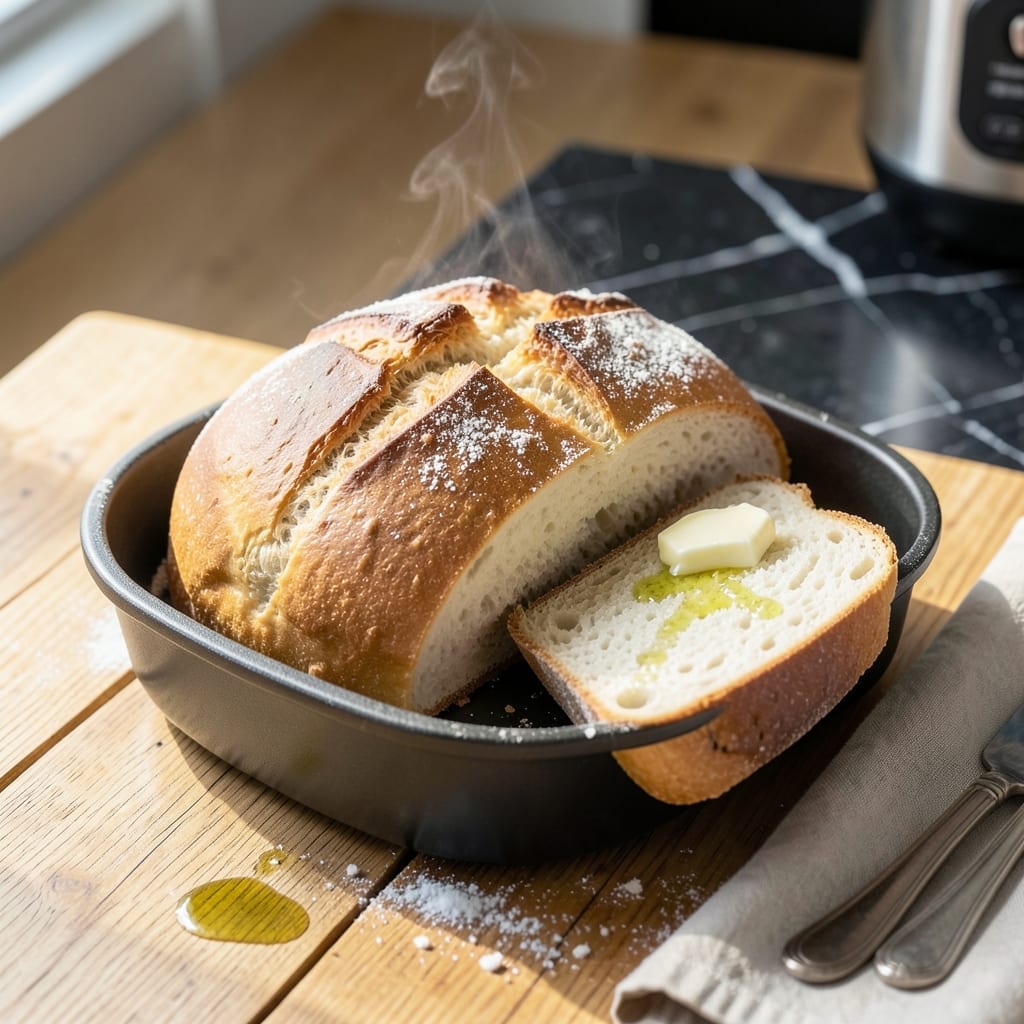
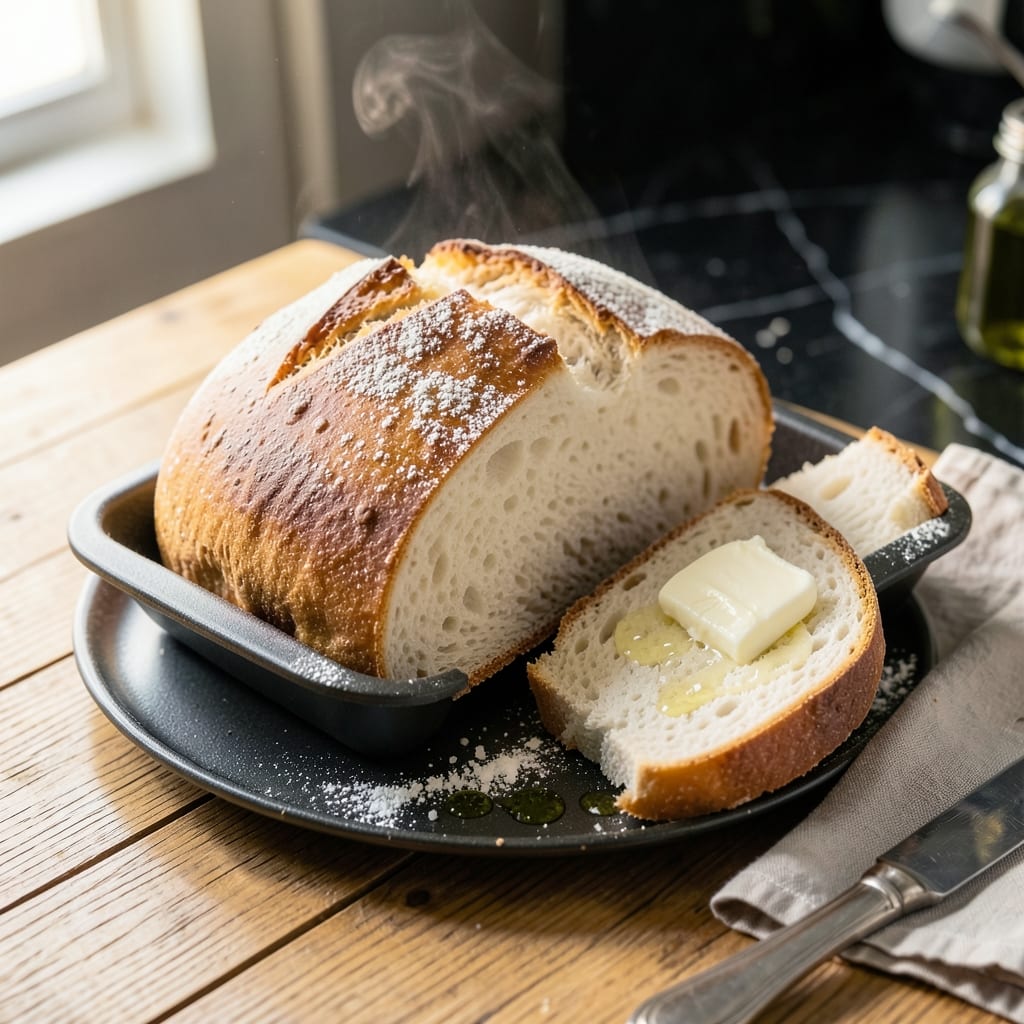
There’s something special about the smell of fresh bread filling your kitchen. This recipe delivers a perfectly soft loaf with minimal effort, letting your bread maker do all the work.
With just a few pantry staples and the right settings, you’ll have a warm, homemade loaf ready in hours. No kneading, no mess—just pure, simple satisfaction.
Ingredients for White Bread Recipe for a Bread Maker
Pantry staples plus a few extras for that bakery-soft texture. Simple, honest ingredients.
| Ingredient | Amount | Notes |
|---|---|---|
| Bread Flour 🌾 | 3 ½ cups | All-purpose works in a pinch |
| Warm Water 💧 | 1 ¼ cups | 110°F, not hot |
| Granulated Sugar 🍚 | 2 tbsp | Feeds the yeast for rise |
| Active Dry Yeast 🍞 | 2 ¼ tsp | One packet, check expiration |
| Salt 🧂 | 1 ½ tsp | Fine sea salt preferred |
| Unsalted Butter 🧈 | 2 tbsp | Softened or melted |
| Whole Milk 🥛 | ¼ cup | Warm, enhances softness |
| Vital Wheat Gluten 🌾 | 1 tbsp | Optional, for extra lift |
| Non-Fat Dry Milk Powder 🥛 | 2 tbsp | For richer texture |
| Vegetable Oil 🫒 | 1 tbsp | For pan coating |
The flour is the foundation here—King Arthur bread flour is my go-to for consistent results. You can find it at most grocery stores or order in bulk online. The yeast needs to be fresh (check that expiration date!) and the water just warm to the touch, not scalding. I always keep a jar of vital wheat gluten on hand for that extra chewy texture, but it’s totally optional.
No bread flour? All-purpose works fine, though your loaf might be slightly denser. Out of dry milk powder? Skip it or use an extra splash of warm milk. The butter can be swapped for vegetable oil if that’s what you’ve got. Just don’t mess with the yeast amount—it’s doing the heavy lifting here. And always measure your flour by spooning it into the cup, not scooping (trust me on this one).
Store yeast in the freezer to extend its life—it’ll last months. The flour and dry milk powder keep in the pantry for 6-12 months if sealed tight. Once baked, the loaf stays fresh for 3-4 days in a bread box or wrapped tightly.
Why You’ll Love This Recipe
- I’ll be real: a pound of bread flour costs pennies, and one batch gives me two loaves for the price of one at the store.
- Set It and Forget It: I just dump the flour, water, sugar, yeast, and salt in the machine and walk away—no kneading, no fuss.
- Warm Comfort: Honestly, nothing beats the smell of fresh-baked white bread with that slightly sweet, buttery flavor from the sugar.
- Sandwich Savior: Between us, this loaf makes the best PB&Js and grilled cheese—my kids haven’t bought store bread since I started.
Step-by-Step Instructions for White Bread in a Bread Maker
This foolproof method delivers a soft, golden loaf with minimal effort on your part.
Step 1: Prepare the Liquid Ingredients
Begin by adding the 1.25 cups Warm Water to your bread maker pan. The water should be exactly 110°F—any hotter and you risk killing the yeast. Next, pour in the 0.25 cup Whole Milk and 1 tablespoon Vegetable Oil. These liquids create the foundation for a tender, moist crumb.
I always double-check the water temperature with an instant-read thermometer. Too hot and the yeast dies; too cold and it won’t activate properly. The milk adds richness, while the oil ensures the bread stays soft for days.
Step 2: Add Dry Ingredients and Yeast
Measure the 3.5 cups Bread Flour into the pan, spreading it evenly over the liquid layer. Sprinkle the 2 tablespoons Granulated Sugar, 1.5 teaspoons Salt, 2 tablespoons Non-Fat Dry Milk Powder, and 1 tablespoon Vital Wheat Gluten over the flour. The sugar feeds the yeast, while the dry milk powder and gluten enhance texture and rise.
Here’s the thing—make a small well in the center of the dry ingredients and add the 2.25 teaspoons Active Dry Yeast there. This keeps the yeast separate from the liquids until the machine starts mixing, preventing premature activation. Trust me, skipping this step can lead to dense, under-risen bread.
Step 3: Add Butter and Select the Setting
Cut the 2 tablespoons Unsalted Butter into small pieces and place them in the corners of the pan. This ensures even distribution as the machine kneads. If your butter isn’t softened, microwave it in 5-second bursts until just pliable—never melted.
Close the lid, select the basic white bread setting, and set the crust to medium. Most machines take about 3-4 hours for a complete cycle, including kneading, rising, and baking. I recommend staying nearby for the first 10 minutes to ensure the dough forms a smooth, elastic ball.
Step 4: Monitor and Adjust as Needed
About 15 minutes into the cycle, check the dough. If it looks too wet and sticky, add 1 tablespoon of Bread Flour at a time. If it’s too dry and crumbly, sprinkle in 1 teaspoon of Warm Water. The dough should pull away from the sides of the pan and form a smooth, slightly tacky ball.
Resist the urge to open the lid once the baking cycle begins. The sudden temperature change can cause the loaf to collapse. Instead, rely on the machine’s timer and trust the process. The aroma of baking bread will let you know it’s almost ready.
Step 5: Cool and Slice for Best Results
When the cycle completes, use oven mitts to carefully remove the pan from the machine. Let the bread cool in the pan for 5 minutes, then transfer it to a wire rack. This step prevents the crust from becoming soggy as it cools.
Allow the loaf to cool for at least 1 hour before slicing. I know it’s tempting to dive in right away, but cutting too soon can result in a gummy texture. Once cooled, slice with a serrated knife for clean, even pieces. Store leftovers in an airtight bag at room temperature for up to 3 days.
Pro Tips For Making White Bread Recipe For A Bread Maker
- Check Water Temp: Warm water should feel like bathwater—around 110°F. Too hot kills the yeast, too cold slows the rise.
- Layer Ingredients Right: Add yeast last, on top of dry ingredients, to keep it from activating too early in the bread maker.
- Skip Packed Flour: Spoon flour into the measuring cup and level it off—scooping packs it down and makes bread dense.
- Use Bread Flour: All-purpose works, but bread flour’s extra gluten gives that soft, chewy texture you actually want.
Wine and Beer Pairings for This Recipe
Beer Pairings
Light and crisp beers complement the mild, slightly sweet flavor of homemade white bread. A Pilsner, like Stella Artois or Heineken, offers a clean, refreshing contrast with its subtle hop bitterness and citrus notes. For a richer pairing, try a Hefeweizen such as Weihenstephaner, which brings a touch of banana and clove that enhances the bread’s softness.
Wine Pairings
White bread’s simplicity makes it a versatile match for both light and medium-bodied wines. A Pinot Grigio, like Santa Margherita, pairs beautifully with its crisp acidity and hints of green apple. For something a bit bolder, a Chardonnay such as Kendall-Jackson adds buttery richness that mirrors the bread’s texture.
Non-Alcoholic Options
For non-alcoholic pairings, sparkling apple cider or a San Pellegrino Aranciata brings a zesty, effervescent lift to each bite. Herbal teas, like chamomile or mint, also work well, offering a soothing balance to the bread’s subtle sweetness.
Nutrition Facts

- 6 Egg Cake Recipe with Oil: Light as Air With Buttery Moisture - October 4, 2026
- 4 Bean Casserole Recipe: One-Pan Heartiness With Smoky Paprika Depth - October 4, 2026
- 3-Ingredient Keto Mug Cake Recipe: Microwave Magic in 2 Minutes - October 4, 2026