
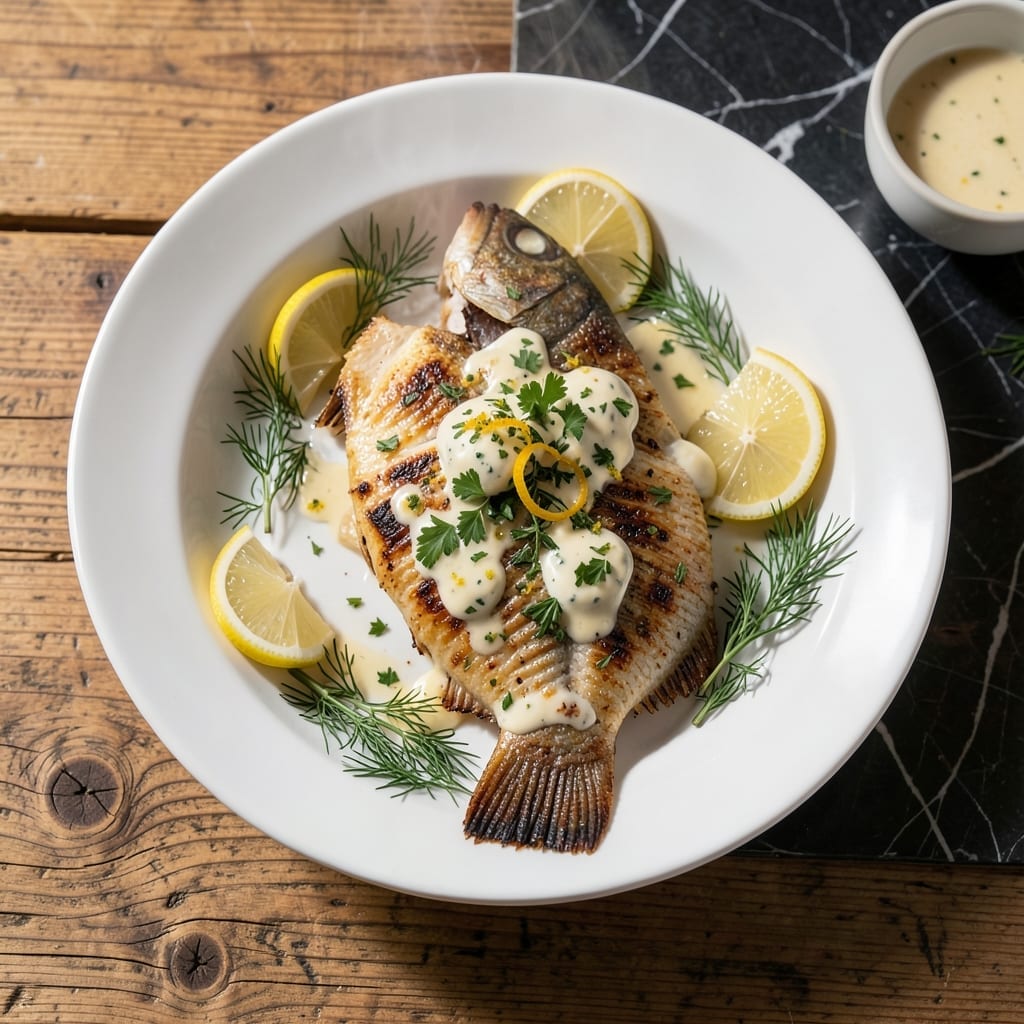
This whole flounder preparation transforms simple ingredients into an elegant centerpiece worthy of special occasions. The butter, lemon and fresh herbs create a fragrant stuffing that infuses the delicate fish with bright, complementary flavors.
The technique ensures even cooking while keeping the flesh moist and tender. A hot oven and precise timing guarantee the skin crisps beautifully without overcooking the flaky interior.
What emerges is a visually stunning dish with natural presentation—no elaborate plating required. The lemon-herb butter bastes the fish as it cooks, resulting in perfectly seasoned, juicy flounder.
Serve directly from the baking dish for a restaurant-quality meal that impresses with minimal effort.
Ingredients for Whole Flounder
Elegant yet approachable ingredients create this showstopping stuffed flounder with vibrant citrus and herbs.
| Ingredient | Amount | Notes |
|---|---|---|
| Whole Flounder 🐟 | 2 lb | Fresh, scaled, gutted |
| Unsalted Butter 🧈 | ½ cup | Softened for stuffing |
| Fresh Lemon 🍋 | 2 whole | Zested and juiced |
| Fresh Parsley 🌿 | ¼ cup | Finely chopped |
| Fresh Dill 🌿 | ¼ cup | Finely chopped |
| Fresh Thyme Sprigs 🌿 | 4 whole | Leaves stripped |
| Garlic Cloves 🧄 | 3 cloves | Minced finely |
| Shallot 🧅 | 1 whole | Finely diced |
| Kosher Salt 🧂 | 1 ½ tsp | Divided for seasoning |
| Freshly Ground Black Pepper 🌶️ | ½ tsp | To taste |
| Dry White Wine 🍷 | ½ cup | For deglazing |
| Extra-Virgin Olive Oil 🫒 | 2 tbsp | For baking dish |
| Lemon Slices 🍋 | 4 slices | For garnish |
The flounder is the star—source from a trusted fishmonger for the freshest catch. Look for bright eyes, firm flesh, and a mild ocean scent. Whole Foods and local seafood markets typically carry quality whole flounder. The butter should be European-style for superior richness. Fresh herbs are non-negotiable; avoid dried substitutes for this preparation.
No fresh dill? Fresh tarragon offers a similar anise note. Substitute fresh chives for a milder onion flavor if shallots are unavailable. The white wine can be replaced with seafood stock or additional lemon juice. For a non-alcoholic option, dry vermouth works well. Ensure the lemon is organic if zesting to avoid bitter pesticides.
Prepare the fish the day of cooking for optimal freshness. The compound butter can be made 24 hours ahead and refrigerated. Leftovers, though rare, keep for 2 days refrigerated. Reheat gently to preserve the delicate texture of the flounder.
Why You’ll Love This Recipe
- One Pan Wonder: Honestly, I just butter the flounder, stuff it with lemon and herbs, and bake—no flipping, no fuss.
- Bright and Zesty: That fresh dill and lemon inside the cavity makes every bite taste like a seaside dinner.
- Weeknight Friendly: I’ve served this for casual Tuesdays and fancy date nights—same recipe, zero stress.
- Budget Winner: A whole flounder feeds four for less than steak, and the leftovers make killer fish tacos the next day.
Step-by-Step Instructions for Whole Flounder
Master the technique of stuffing and baking this delicate fish to flaky, buttery perfection.
Step 1: Prepare the Herb Butter Stuffing
In a small bowl, combine the 0.5 cup Unsalted Butter with the zest of 2 whole Fresh Lemon, 0.25 cup Fresh Parsley, 0.25 cup Fresh Dill, and the leaves from 4 whole Fresh Thyme Sprigs. The butter should be softened but not melted for proper incorporation of the herbs.
Add the 3 cloves Garlic Cloves (minced finely) and 1 whole Shallot (finely diced) to the butter mixture. Season with 1 tsp Kosher Salt and 0.5 tsp Freshly Ground Black Pepper. Mix thoroughly until all components are evenly distributed. This compound butter will infuse the flounder with bright, aromatic flavors.
Step 2: Stuff and Season the Flounder
Pat the 2 lb Whole Flounder completely dry with paper towels, inside and out. This ensures the skin crisps properly during baking. Season the cavity with the remaining 0.5 tsp Kosher Salt.
Gently stuff the cavity with the herb butter mixture, distributing it evenly from head to tail. If desired, make 2-3 shallow diagonal slashes on each side of the fish to allow the flavors to penetrate the flesh. Arrange the 4 slices Lemon Slices inside the cavity as well for added citrus aroma.
Step 3: Prepare the Baking Dish and Oven
Preheat your oven to 400°F. This high temperature ensures the skin crisps while the fish cooks through evenly. Brush a baking dish large enough to hold the flounder with the 2 tbsp Extra-Virgin Olive Oil to prevent sticking.
Place the stuffed flounder in the prepared dish. Drizzle any remaining herb butter from the bowl over the top of the fish. Pour the 0.5 cup Dry White Wine into the dish around the fish—this creates steam that keeps the flesh moist during baking.
Step 4: Bake to Flaky Perfection
Bake the flounder for 15-20 minutes, depending on thickness. The fish is done when the flesh flakes easily with a fork and the internal temperature reaches 145°F at the thickest part. The skin should be golden brown and crisp to the touch.
Avoid overcooking—the flounder will continue to cook slightly from residual heat once removed from the oven. The wine in the dish will have reduced to a light, flavorful sauce that complements the buttery, herb-infused fish.
Step 5: Rest and Serve Immediately
Transfer the flounder to a serving platter and let it rest for 3-5 minutes. This brief rest allows the juices to redistribute throughout the flesh, ensuring each bite is moist and tender.
Spoon the pan juices over the fish before serving. Garnish with additional fresh herbs if desired. Serve whole at the table for dramatic presentation, or fillet into portions for easier serving. The delicate flesh should separate easily from the bone with minimal effort.
Pro Tips For Making Whole Flounder
- Score the Skin: Make shallow cuts on both sides of the flounder before cooking—about 3-4 diagonal slashes per side. I learned this the hard way after my first few flounders curled up like tacos in the pan.
- Warm the Butter: Let the unsalted butter sit out for 20 minutes before using, or microwave for 10 seconds. Cold butter won’t melt evenly over the fish, and you’ll end up with sad, uneven basting.
- Skip the Overcrowding: If your pan isn’t big enough for the whole flounder, use two or cook in batches. Steaming from overcrowding turns the skin soggy instead of crisp.
- Zest Before Juicing: Grate the lemon zest directly into the butter mixture before squeezing the juice—it packs way more flavor than juice alone. Sounds weird, but it works.
Essential Equipment for Great whole flounder
Baking Dish
A large ceramic or glass baking dish (at least 13×9 inches) is ideal for even heat distribution. I prefer Le Creuset stoneware for its durability and heat retention. Avoid metal pans, which can cause uneven cooking with such a delicate fish.
Fish Spatula
A thin, flexible fish spatula is essential for transferring the flounder without breaking it. I use a Mercer Culinary offset spatula—it slides under the fish cleanly and lifts it intact. The thin edge also helps remove the crispy skin from the dish.
Instant-Read Thermometer
Precision matters with flounder. A ThermoWorks ThermoPop gives accurate readings in 3-4 seconds. Check the thickest part near the bone—145°F is your target. This prevents overcooking the delicate flesh. 🌡️
Pastry Brush
Use a silicone pastry brush to coat the baking dish with 2 tbsp olive oil evenly. I like OXO Good Grips for its heat resistance and comfortable handle. A well-oiled dish ensures the skin doesn’t stick and crisps beautifully.
Citrus Zester
A Microplane zester extracts maximum lemon zest without the bitter pith. I’ve tried cheaper versions, but Microplane’s stainless steel stays sharp and lasts. The fine zest blends perfectly into the herb butter for even flavor distribution.
Kitchen Shears
For trimming fins or opening the cavity, sharp kitchen shears are safer than knives. I recommend Wüsthof Come-Apart Shears—they disassemble for easy cleaning. Trim carefully to maintain the fish’s natural presentation. ✨
Nutrition Facts
Frequently Asked Questions
Can I use a different type of fish for this stuffing?
Yes, this herb butter works well with other whole fish like branzino or sea bass. Adjust baking time based on thickness—check for 145°F internal temperature.
How do I know when the flounder is done?
The flesh should flake easily with a fork and reach 145°F at the thickest part. The skin will turn golden brown and crisp.
Can I prepare this in advance?
Stuff the fish up to 2 hours ahead and refrigerate. Bake just before serving for best texture. Avoid stuffing the night before as herbs may overpower.
What if my flounder skin doesn’t crisp?
Pat the fish thoroughly dry before baking and use 400°F oven. Ensure the baking dish is well-oiled to prevent sticking.

- 6 Egg Cake Recipe with Oil: Light as Air With Buttery Moisture - October 4, 2026
- 4 Bean Casserole Recipe: One-Pan Heartiness With Smoky Paprika Depth - October 4, 2026
- 3-Ingredient Keto Mug Cake Recipe: Microwave Magic in 2 Minutes - October 4, 2026